
Instant ambiance, zero venting, any room in Licking County.
From condos near Denison University in Granville to finished basements in Pataskala and historic homes in downtown Newark, electric fireplaces add zone heat and real ambiance without a chimney. Find the right unit and connect with a trusted local dealer.
Every Project Starts From One of These Five Situations
The convenience play in a county built on wood heat.
Licking County's roughly 137,000 residents are spread across Newark, Granville, Pataskala, Heath, Johnstown, and a wide swath of rural townships—the kind of central-Ohio geography where oak, hickory, maple, and cherry have fueled wood stoves for generations. But climate zone 5A, an average winter low of 18°F, and 5,921 heating degree days a year don't require a chimney to feel warmth in every room. That's where electric fireplaces have found their footing here, especially in spaces where venting isn't practical or wanted.
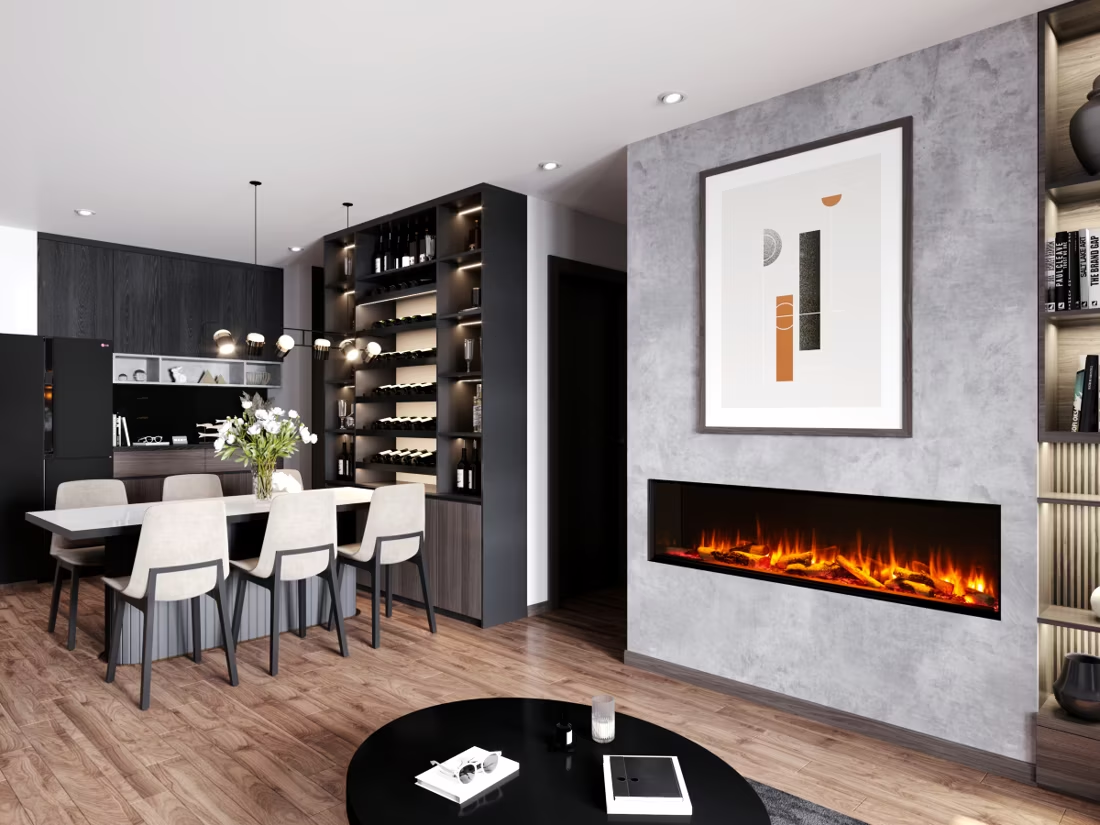
Growth around Pataskala and Etna Township has brought newer subdivisions with finished basements and open-concept living rooms—exactly the kind of space where a linear electric insert or wall-mount unit adds a focal point without gas lines or masonry work. In older Newark and Granville homes where adding a flue isn't feasible, or in rental units and condos where landlords won't allow solid fuel, electric solves the same problem: real flame appearance, supplemental warmth, and none of the venting, ash, or creosote that come with wood or gas. It won't replace the furnace on a January night when the AEP Ohio or South Central Power Company grid is delivering power through single-digit wind chills, but it fills the gap a plain living room leaves behind.
Three steps. No salesperson until you're ready.
Tell us about your project
Your zip code, your situation, and the fuel you're leaning toward—or let the answers point you to one.
See what's actually available
The brands dealers within 100 miles genuinely carry—real options, never a catalog mirage.
Get your dealer & Project Guide
A trusted local dealer, plus the free Project Guide & Parts List that names every component of the job.
Frequently Asked Questions
How much does an electric fireplace installation cost in Licking County?
Plug-in electric fireplace inserts that use a standard outlet run $300 to $1,200 installed, since there's often no electrical work needed beyond mounting. Built-in units that require a dedicated 20-amp circuit—common for larger linear fireplaces or full mantel packages—typically run $1,200 to $2,500 once a licensed electrician runs new wiring. Costs trend toward the higher end for recessed wall installations in finished basements around Pataskala and Heath, where framing and drywall patching add to the job. Local dealers will quote a firm number after seeing your wall type and existing electrical panel capacity.
Will an electric fireplace actually heat my Licking County home?
Most electric fireplaces are built around a 1,500-watt heater rated for roughly 400 to 1,000 square feet, which makes them solid zone heat for a family room or finished basement but not a replacement for central heat. With Licking County averaging 5,921 heating degree days and winter lows around 18°F, homes here still lean on a furnace or heat pump as the primary system. The electric fireplace's job is to let you turn the thermostat down a degree or two while heating the room you're actually sitting in—a supplemental role, not a whole-home one.
Do I need a permit to install an electric fireplace in Licking County?
A plug-in unit that uses an existing outlet generally doesn't require a permit. A built-in electric fireplace that needs a new dedicated circuit does require an electrical permit, and the process depends on where you are in the county—Newark, Granville, Pataskala, and Heath each handle permitting through their own building departments, while unincorporated townships go through Licking County. Any licensed electrician doing the circuit work will typically pull the permit as part of the job, so it's worth confirming that's included in your quote.
Why choose electric over wood or gas in a county known for wood heat?
Licking County has deep roots in wood heat—oak, hickory, maple, and cherry are all common local firewood species, and plenty of homes still burn cordwood as a primary or backup source. Electric fireplaces appeal to a different need: condos and rentals where solid fuel isn't allowed, HOA-restricted neighborhoods, historic Newark and Granville homes where adding a flue means major renovation, and homeowners who want the look of a fire without hauling wood or scheduling chimney sweeps. It's less about which fuel is superior and more about which one fits the room and the lifestyle.
What types of electric fireplaces are available?
Wall-mount units hang like a flat-screen TV and need only a nearby outlet or a short electrician run. Mantel packages pair a freestanding surround with an insert for a traditional look without any masonry. Recessed linear inserts build into a wall for a modern, built-in appearance and are popular in newer Pataskala and Etna Township construction. True fireplace inserts can also slot into an existing masonry firebox, letting Newark and Granville homeowners convert an old wood-burning fireplace to electric without touching the chimney structure.
Will my electric fireplace work during a power outage?
No—electric fireplaces stop working the moment the power does, which matters in parts of rural Licking County served by South Central Power Company, where ice storms can knock out power for hours or longer. If backup heat during outages is a priority, an electric fireplace shouldn't be your only heating appliance; pairing it with a wood stove, gas unit, or a home generator covers that gap. For homes where outages are rare and the fireplace is purely for supplemental warmth and ambiance in daily use, this isn't usually a dealbreaker.
What's the best electric fireplace for everyday use, not just looks?
If heat output matters as much as appearance, look for units from Dimplex, Napoleon, or Amantii with a full 1,500-watt heater rather than a decorative-only flame effect—some lower-end models skip the heater entirely. Realistic flame technology has improved enough that even mid-range units look convincing from across the room. A local dealer can show you the difference between a unit built for genuine zone heating and one that's essentially a light show, which matters if you're hoping to offset furnace use on cold Licking County evenings.
How much does it cost to run an electric fireplace in Licking County?
At typical AEP Ohio and South Central Power Company residential rates, a 1,500-watt electric fireplace running on high for a few hours a night costs roughly $10 to $20 a month in electricity—far less than the price of a cord of oak or hickory, and with none of the delivery or storage hassle. It's not going to move the needle on a whole-house heating bill the way a wood stove or gas insert can, but as a low-commitment way to warm one room, the operating cost is modest.
Electric vs. pellet stove—which makes more sense for my home?
Pellet stoves from regional suppliers like Indeck Energy Services, Lignetics, and Somerset Pellet Fuel put out real whole-room heat—often enough to serve as a primary heat source—and burn cleaner and cheaper per BTU than electricity. But they still need power to run the auger and blower, so they're not outage-proof either, and they require venting, a hopper to load, and periodic ash cleanup. Electric fireplaces skip all of that: no venting, no fuel to store, no moving parts to maintain, just plug-in ambiance and modest supplemental heat. For homeowners who want real heating capacity and don't mind the upkeep, pellet wins; for simplicity and zero maintenance, electric is the easier path.
Can I put a TV above my fireplace?
Yes—with an asterisk. Fireplaces are hot and TVs don't like heat. Either put a mantel between them to deflect rising warmth, or choose a fireplace with heat-management technology that creates a cool zone on the wall above—the wall stays around 125 degrees, barely warm, while the room still gets full heat. If you like clean lines and don't want a mantel, heat management is the answer.
What fireplace styles should I know before shopping?
Four cover most of the market: screen-front traditional (mesh front, open feel, fits craftsman homes), traditional door set (the classic look you grew up with), modern linear (wide, low, the statement piece for entertaining), and clean face contemporary (no trim—your tile or stone runs right to the fire's edge). Walk in knowing those four terms and you're ahead of most buyers.
Does a fireplace add value to my home?
On average, a fireplace adds back to the home about the same amount you spent installing it. Add the monthly savings from heating the rooms you actually use instead of the whole house—often hundreds of dollars a year—and the value case is strong before you even count what a fire does for how your family uses the room.
How much should I budget for a fireplace?
For an average home—covering the fireplace, the vent pipe, and basic installation—a budget between $3,900 and $5,500 gives you a lot of options across wood, gas, and pellet. By the time you add finish work, gas line, and electrical, the average complete installation lands between $5,000 and $12,000 all-in. In a remodel or new build, a good rule is to put about 2.5% of the total project cost toward the fireplace.
Stove and Fireplace Dealers in Licking County
Find your electric fireplace in Licking County.
Tell us a bit about your home and we'll match you with the right electric fireplace or insert, plus a free Project Guide & Parts List—the exact parts and a recommended local Licking County dealer to get it installed right.
Find Your Fireplace →