
Set-it-and-forget-it heat for Muskingum County winters.
From Zanesville to the rural stretches along the Muskingum River, pellet stoves give you steady, thermostat-controlled warmth without splitting or seasoning cordwood. Find the right unit and connect with a trusted local dealer.
Every Project Starts From One of These Five Situations
Efficient heat, without the wood-splitting.
Muskingum County sits in the Appalachian foothills of southeastern Ohio, with Zanesville and its historic Y-Bridge anchoring a county that's still largely rural farmland and hardwood forest. At 5,268 heating degree days and average winter lows around 22°F, winters here are solidly cold—colder than most of the Ohio Valley to the south, though nowhere near the brutal stretch you'd see in Madison, WI or Duluth, MN. It's the kind of climate zone 5A winter where a home needs real, sustained heat from October through April, but not the kind of extreme cold that demands a stove built for sub-zero overnight lows.
Oak, hickory, maple, and cherry grow throughout the county and have powered generations of wood stoves here—but not every homeowner wants to source, split, stack, and season cordwood every year. Pellet stoves fill that gap: load the hopper, set the thermostat, and get consistent heat without the labor. Bagged pellets from producers like Lignetics and Somerset Pellet Fuel, along with regional supply through Indeck Energy Services, are stocked at hardware stores and farm supply retailers throughout the area, so fuel access in Muskingum County is straightforward. The tradeoff is that pellet stoves need electricity to run the auger and blower, which matters if you're weighing backup heat for winter power outages in the county's more rural townships.
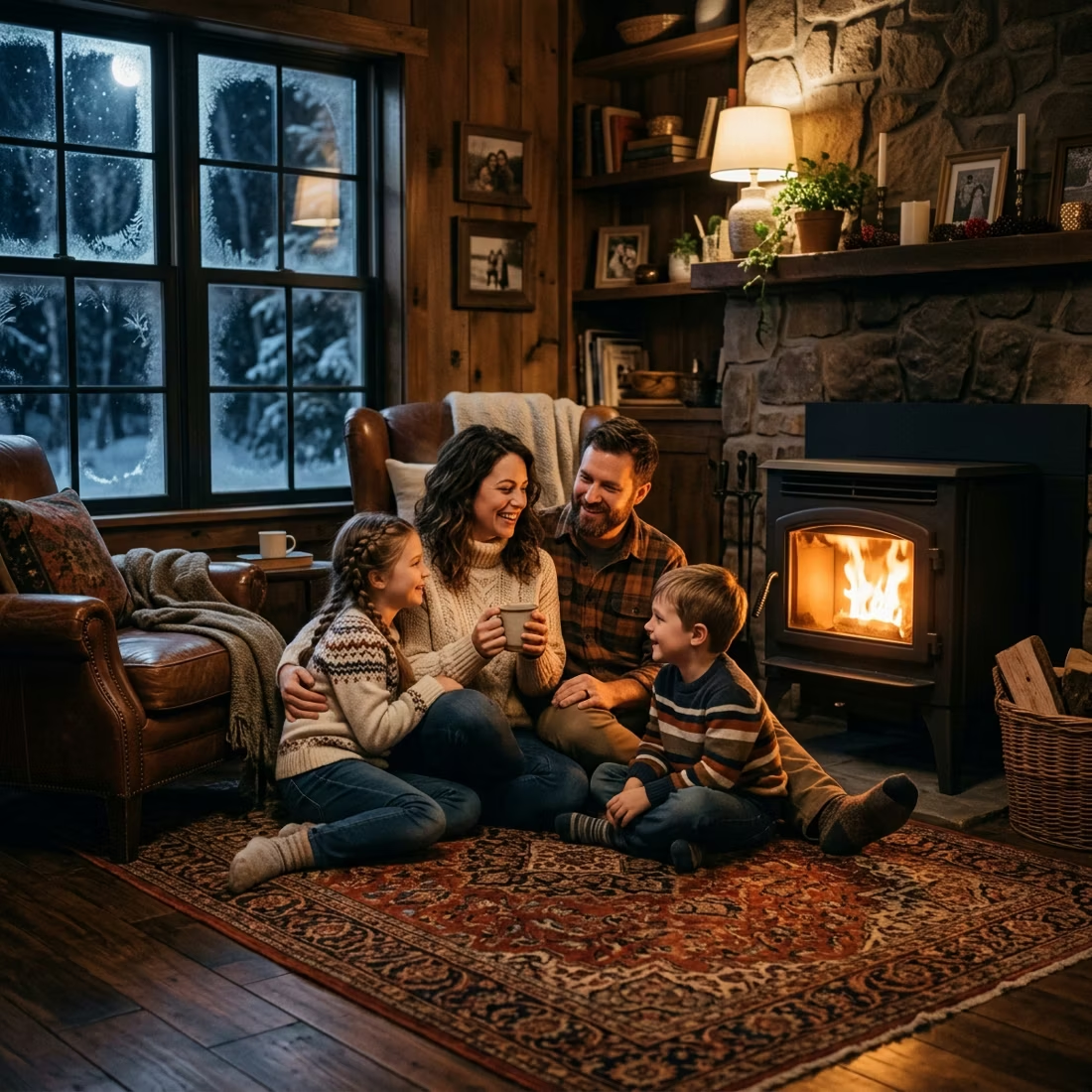
Three steps. No salesperson until you're ready.
Tell us about your project
Your zip code, your situation, and the fuel you're leaning toward—or let the answers point you to one.
See what's actually available
The brands dealers within 100 miles genuinely carry—real options, never a catalog mirage.
Get your dealer & Project Guide
A trusted local dealer, plus the free Project Guide & Parts List that names every component of the job.
Frequently Asked Questions
How much does a pellet stove installation cost in Muskingum County?
A freestanding pellet stove installation typically runs $3,000 to $6,000 in Muskingum County, covering the unit, wall-thermostat wiring, a dedicated electrical outlet, and PL venting through an exterior wall. A pellet insert going into an existing masonry fireplace usually runs a bit higher—often $4,000 to $7,500—because the installer has to run flexible venting up through the existing chimney and may need to address the firebox opening. Homes without an existing 120V outlet near the install location will see a modest add for electrical work. Local dealers will give you a firm number after seeing the space in person.
Do I need a permit to install a pellet stove in Muskingum County?
Yes—a building permit is generally required for any new solid-fuel appliance installation, whether you're inside Zanesville city limits or in unincorporated Muskingum County. The city of Zanesville handles permits for in-town addresses; township and rural properties go through the Muskingum County Building Department. Most hearth dealers in the area handle the permit paperwork and schedule the inspection as part of the install, so it's rarely something the homeowner has to manage directly. Because pellet stoves also need an electrical circuit for the auger and blower, some installs require an electrical permit alongside the building permit.
Where can I buy pellets in Muskingum County?
Bagged hardwood and softwood pellets from brands like Lignetics and Somerset Pellet Fuel are commonly stocked at farm supply and hardware retailers throughout the county, with additional regional supply available through Indeck Energy Services. Pellets typically run in the $250-$300 per ton range, sold in 40-lb bags, and a season's supply for a primary-heat home usually falls between 2 and 3 tons depending on square footage and how many hours a day the stove runs. Buying a full season's supply in late summer or early fall—before demand picks up with the first cold snap—is the most reliable way to lock in stock and pricing.
What size pellet stove do I need for my Muskingum County home?
Sizing depends on square footage, ceiling height, and how well-insulated the home is—older farmhouses common in the county's rural townships lose heat faster than newer construction in Zanesville subdivisions. As a rough guide: smaller pellet stoves (under 1,000 sq ft) suit a single large room or open-concept ranch, mid-size units (1,000-1,800 sq ft) cover most main living areas, and larger stoves handle 1,800-2,500 sq ft when used as the primary heat source. At 5,268 heating degree days, most Muskingum County homes do fine with a mid-size unit unless the goal is whole-house primary heat, in which case sizing up slightly is the safer call. A local dealer will size it correctly during an in-home visit—this is one area where a rough online calculator falls short of an actual walkthrough.
Will my pellet stove work during a power outage?
Not without a backup power source. Pellet stoves rely on an electric auger to feed fuel and a blower to circulate heat, so a standard unit shuts down the moment power drops. For rural parts of Muskingum County where ice storms occasionally knock out power for extended stretches, some homeowners pair a pellet stove with a small battery backup unit or a portable generator sized to run the stove's low electrical draw. If backup heat during outages is a top priority, it's worth discussing wood-burning alternatives with your dealer alongside the pellet option—wood stoves need no electricity at all.
Pellet stove vs. wood stove—which makes more sense here?
Muskingum County has abundant local hardwood—oak, hickory, maple, and cherry are all common on rural properties—so wood stoves remain a practical, often cheaper option for anyone able to source, split, and season their own cordwood. Pellet stoves trade that labor for convenience: no splitting, no seasoning, more even heat output, and easier ash cleanup, but you're buying fuel by the ton and you need reliable electricity to run it. For in-town Zanesville homes without wood access or storage space, pellet is often the simpler fit. For rural properties with wooded acreage and a woodshed already in place, wood can make more financial sense over time. Local dealers carry both and can walk through the tradeoffs for your specific property.
How much maintenance does a pellet stove need?
Pellet stoves need more routine attention than a wood stove but far less than people expect. Plan on emptying the ash pan every few days during regular use, cleaning the glass weekly, and vacuuming the burn pot and heat exchanger tubes every 1-2 weeks depending on pellet quality. A full professional cleaning—including the exhaust venting and combustion blower—is recommended once a year, typically at the end of the burning season or before the next one starts. Skipping the annual service is the most common reason pellet stoves lose efficiency or start feeding unevenly.
What pellet stove brands are available through local dealers?
Hearth dealers serving Muskingum County typically carry a mix of established pellet stove manufacturers alongside the regional pellet fuel supply from Lignetics and Somerset Pellet Fuel. Availability varies by dealer, and the right brand often comes down to hopper capacity, feed-rate control, and warranty support in this specific area rather than brand name alone. Rather than shopping brand-first, it's worth getting matched with a dealer who can show you what they actually stock, service, and can get parts for locally—that matters more long-term than the sticker on the front of the stove.
Are there rebates or tax credits for installing a pellet stove?
Yes—pellet stoves meeting a 75% efficiency threshold qualify for the federal biomass stove tax credit (Section 25C), currently worth 30% of the total cost including installation, up to $2,000 per year. This applies nationwide, including Muskingum County, and covers both the appliance and qualifying installation costs like venting. Keep your itemized receipt and the manufacturer's certification statement for your tax filing. Your local dealer can confirm which specific models in their lineup meet the efficiency threshold before you buy.
How often does a pellet stove need cleaning?
A clean pellet stove is a happy pellet stove. Plan on cleaning the burn pot about once a week when you're burning regularly—ash and clinkers gum up the air holes just like a pellet barbecue. Most pellet stove problems trace back to skipped cleaning that nobody explained up front. Some designs make it easy with a trapdoor burn pot: pull a lever and the gunk drops into the ash pan.
What's the difference between an insert and a zero-clearance fireplace?
An insert is a fireplace that slides into a pre-existing wood-burning fireplace—if you don't have one, there's nothing to insert it into. A zero-clearance fireplace is built into a framed wall, which makes it the answer for remodels and new construction. Simple test: existing masonry fireplace means insert; blank or framed wall means zero-clearance.
How much should I budget for a fireplace?
For an average home—covering the fireplace, the vent pipe, and basic installation—a budget between $3,900 and $5,500 gives you a lot of options across wood, gas, and pellet. By the time you add finish work, gas line, and electrical, the average complete installation lands between $5,000 and $12,000 all-in. In a remodel or new build, a good rule is to put about 2.5% of the total project cost toward the fireplace.
Does a fireplace add value to my home?
On average, a fireplace adds back to the home about the same amount you spent installing it. Add the monthly savings from heating the rooms you actually use instead of the whole house—often hundreds of dollars a year—and the value case is strong before you even count what a fire does for how your family uses the room.
Stove and Fireplace Dealers in Muskingum County
Pellet Brands Stocked Around Muskingum County
Manufacturers will point you to the nearest stocking dealer.
Find your pellet stove in Muskingum County.
Tell us a bit about your home and we'll put together a free Project Guide & Parts List—the exact parts, venting, and a matched local dealer for your pellet project in Muskingum County.
Find Your Fireplace →