
Find your electric fireplace in Miami County.
No venting, no gas line, no chimney—just plug-in warmth and ambiance for homes across Troy, Piqua, Tipp City, and the rest of Miami County. Find the right unit and connect with a trusted local dealer.
Every Project Starts From One of These Five Situations
Simple heat and ambiance for Miami County homes.
Miami County sits in Ohio's Zone 5A, where winter lows average 21°F and the region logs roughly 5,406 heating degree days a year—cold enough to want supplemental warmth, but not the kind of extreme cold that demands a wood-burning workhorse. Between the Great Miami River towns of Troy and Piqua and the rooftops of Tipp City, a lot of homeowners are looking for something simpler than a chimney project: an electric fireplace or insert that adds real ambiance and zone heat without touching the gas line or the roofline.
Because there's no venting requirement, electric units go into spaces that wood and gas simply can't—finished basements, condos, apartments, bedrooms, and older Miami County homes where running a flue isn't practical. Installation is often as simple as a dedicated 120V or 240V circuit, which keeps costs low and timelines short. For a county without major air quality restrictions to navigate, electric is the low-friction option for homeowners who want the look of a fireplace without the maintenance of wood or the permitting of gas.
Three steps. No salesperson until you're ready.
Tell us about your project
Your zip code, your situation, and the fuel you're leaning toward—or let the answers point you to one.
See what's actually available
The brands dealers within 100 miles genuinely carry—real options, never a catalog mirage.
Get your dealer & Project Guide
A trusted local dealer, plus the free Project Guide & Parts List that names every component of the job.
Frequently Asked Questions
How much does an electric fireplace installation cost in Miami County?
A typical electric fireplace or insert installation in Miami County runs between $400 and $1,200, depending on whether it's a plug-in unit or a built-in model requiring a dedicated circuit. A simple plug-in insert into an existing fireplace opening is on the low end. A built-in wall unit or a larger electric insert that needs an electrician to run a dedicated 240V circuit sits toward the higher end. Because there's no venting or gas line involved, electric installs in Miami County are consistently the fastest and least expensive fireplace option—most are done in a single day.
Do I need a permit to install an electric fireplace in Miami County?
In most cases, no separate fireplace permit is required for a plug-in electric unit, since it's treated like any other appliance. If your installation requires new electrical wiring—a dedicated circuit for a built-in unit, for example—that work typically falls under standard electrical permitting through your local jurisdiction, whether that's the City of Troy, City of Piqua, or Miami County's building department for unincorporated areas. A licensed electrician handling the circuit work will usually pull any required permit as part of the job.
Can an electric fireplace actually heat a room, or is it just for looks?
Modern electric fireplaces can genuinely heat a room—most units put out around 5,000 BTU, enough to comfortably warm a 400-to-1,000 square foot space depending on insulation and ceiling height. That's plenty for supplemental heat in a Miami County living room, den, or finished basement during the shoulder seasons or as a backup to central heat on the coldest nights. What they won't do is replace a furnace as the primary heat source through a full Ohio winter with 5,406 heating degree days—think of electric as zone heat for the room you're in, with the flame effect running independently of the heater if you just want ambiance without the warmth.
What's the difference between an electric fireplace, insert, and stove?
An electric fireplace is typically a built-in unit designed for a wall opening or a mantel surround. An electric insert is sized to slide into an existing wood or gas fireplace opening, instantly converting an old masonry firebox into a clean, maintenance-free heat source—a common upgrade in older Miami County homes with fireplaces that haven't been used in years. An electric stove is a freestanding unit styled like a traditional wood stove but with no venting requirement, which makes it a flexible option for a room where a built-in isn't practical. All three plug into a standard outlet unless you're going with a larger built-in model that needs a dedicated circuit.
Will my electric fireplace work during a power outage?
No—this is the one real tradeoff to know about. Because electric fireplaces run entirely on household power, they shut off the moment the power does, unlike a wood stove or a gas unit with battery-backup ignition. For Miami County homes that experience occasional outages during winter storms, an electric fireplace shouldn't be your only backup heat plan. Many homeowners pair an electric unit for everyday ambiance and zone heat with a wood stove or gas fireplace elsewhere in the home for outage resilience.
What's the best electric fireplace for a Miami County home?
For most Miami County living rooms, a built-in electric fireplace with a realistic flame effect and a 5,000 BTU heater covers both the ambiance and the supplemental-heat use case. For homeowners converting an old, unused masonry fireplace—common in older homes around Troy and Piqua—an electric insert is usually the better fit since it uses the existing opening. For finished basements or condos in Tipp City and elsewhere where there's no fireplace opening at all, a freestanding electric stove or a slim wall-mounted unit gives flexibility without any construction. A local dealer can walk through the specific room dimensions and help you pick a model.
Do electric fireplaces need any maintenance?
Very little compared to wood or gas. There's no chimney to sweep, no gas lines to inspect, and no ash or soot to clean up. Maintenance is mostly limited to occasionally dusting the unit, checking that the fan and light components are working, and replacing LED bulbs on older models if the flame effect dims over time. This low-maintenance profile is a big part of why electric appeals to Miami County homeowners who want fireplace ambiance without an annual service call.
Is natural gas or propane a better option than electric in Miami County?
It depends on the goal. Gas fireplaces put out significantly more heat and can serve as genuine supplemental or even primary zone heat through a Miami County winter, and many models keep working during a power outage with battery-backup ignition. Electric wins on installation simplicity and cost—no gas line, no venting, and a fraction of the install price. For a room where real heat output matters, gas is usually the stronger choice. For a room where ambiance, low cost, and flexible placement matter most—a bedroom, a rental property, a basement without gas service—electric is hard to beat.
Can I install an electric fireplace myself, or do I need a professional?
A basic plug-in electric insert or freestanding stove is genuinely a DIY-friendly project—plug it in, and you're done. Where a professional matters is any built-in unit requiring a dedicated 240V circuit, or any installation where you want the unit recessed into a wall or surrounded by a custom mantel. In those cases, a licensed electrician handles the circuit work and a hearth dealer or contractor handles the surround and framing. Local Miami County dealers can advise on which path your specific model needs.
Does an electric fireplace need a vent or chimney?
No—that's its superpower. An electric fireplace needs a wall and an outlet, period. No vent pipe, no gas line, no clearances to design around, which is why it works in bedrooms, offices, apartments, and walls where venting a gas or wood unit would be impractical or impossible. Installation is typically the simplest and least expensive of any fireplace type.
Can I put a TV above my fireplace?
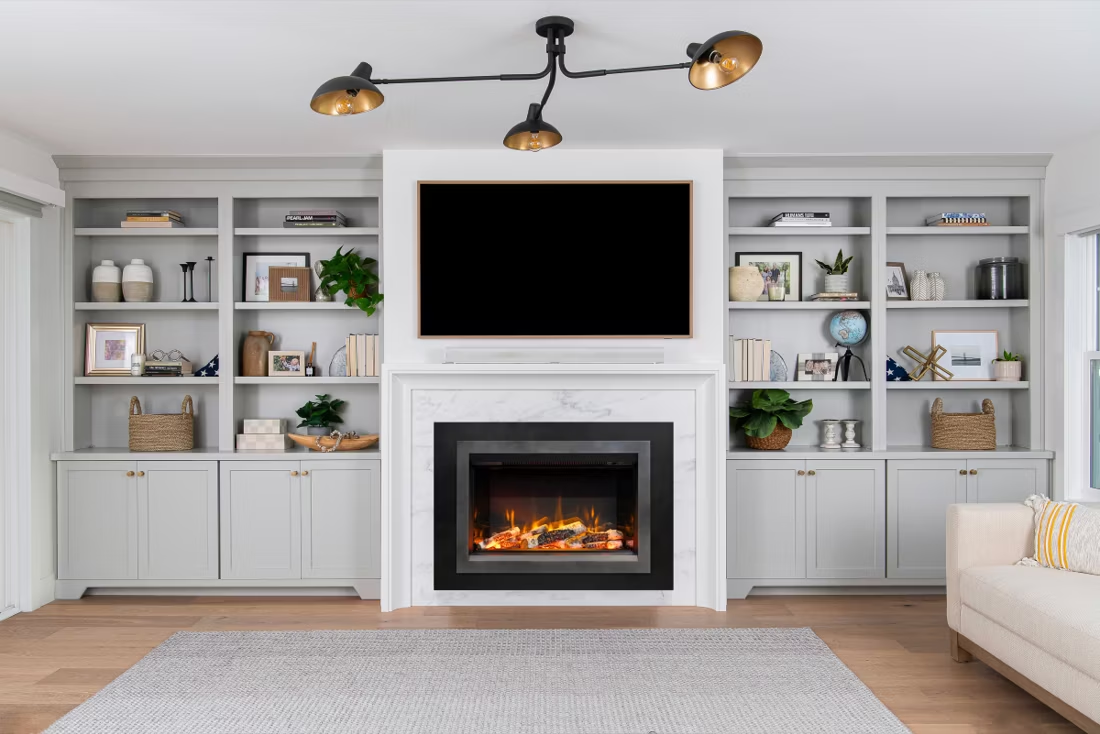
Yes—with an asterisk. Fireplaces are hot and TVs don't like heat. Either put a mantel between them to deflect rising warmth, or choose a fireplace with heat-management technology that creates a cool zone on the wall above—the wall stays around 125 degrees, barely warm, while the room still gets full heat. If you like clean lines and don't want a mantel, heat management is the answer.
Can a fireplace actually lower my heating bill?
Yes—by creating a comfort zone. A furnace heats every square foot of the house just to warm the one room you're in; a gas fireplace on low burns roughly a sixth of the gas a typical furnace does. Set the furnace around 55–60 degrees as a baseline, then heat the rooms your family actually uses. Families who heat this way commonly save $20–$60 a month.
How much should I budget for a fireplace?
For an average home—covering the fireplace, the vent pipe, and basic installation—a budget between $3,900 and $5,500 gives you a lot of options across wood, gas, and pellet. By the time you add finish work, gas line, and electrical, the average complete installation lands between $5,000 and $12,000 all-in. In a remodel or new build, a good rule is to put about 2.5% of the total project cost toward the fireplace.
Stove and Fireplace Dealers in Miami County
Get your Miami County electric fireplace Project Guide & Parts List.
Tell us a bit about your home and we'll match you with a trusted local dealer and send a free Project Guide & Parts List—the exact parts for your electric fireplace project in Miami County, and who to call to get it installed right.
Find Your Fireplace →