
Consistent pellet heat for Mercer County's long winters.
With a long, steady heating season and winter lows averaging 19°F, Mercer County homes need heat that runs steady for months at a time. Find the right pellet stove or insert and get matched with a trusted local dealer.
Every Project Starts From One of These Five Situations
Set it, load it, forget about it—through a long Ohio winter.
Mercer County sits in climate zone 5A, in the flat farm country of west-central Ohio near the Indiana line. Winters here run long and grey rather than brutally cold—average lows near 19°F and a long, steady heating season, comparable to Madison, WI, though without the lake-effect swings. For homeowners around Celina, Coldwater, St. Marys, and the townships surrounding Grand Lake St. Marys, that means months of steady, moderate cold rather than deep-freeze extremes, which is exactly the kind of demand a pellet stove handles well.
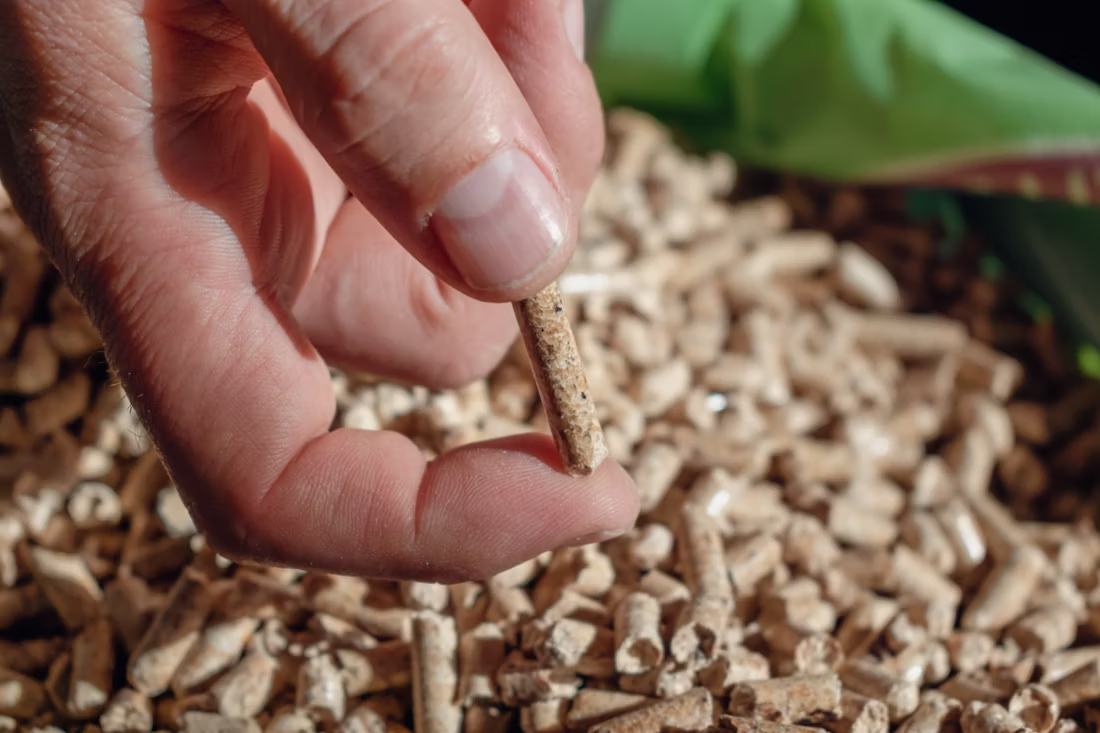
Pellet fuel is easy to source locally, with regional suppliers like Indeck Energy Services, Lignetics, and Somerset Pellet Fuel serving the area—no need to season firewood or track down a Forest Service cutting permit, since Mercer County has no significant public forest land for self-cut wood. Compared to the region's traditional cordwood heritage (oak, hickory, maple, and cherry are the common local hardwoods), a pellet stove trades the hands-on ritual of wood heat for a hopper you fill every day or two and a thermostat that holds a steady temperature through Mercer County's flat, open-country winters.
Three steps. No salesperson until you're ready.
Tell us about your project
Your zip code, your situation, and the fuel you're leaning toward—or let the answers point you to one.
See what's actually available
The brands dealers within 100 miles genuinely carry—real options, never a catalog mirage.
Get your dealer & Project Guide
A trusted local dealer, plus the free Project Guide & Parts List that names every component of the job.
Frequently Asked Questions
How much does a pellet stove installation cost in Mercer County?
A typical pellet stove or insert installation in Mercer County runs roughly $4,500 to $7,500, depending on whether it's a freestanding stove or an insert going into an existing masonry fireplace, and whether new venting or an electrical outlet needs to be added near the install location. Pellet stoves vent through a smaller-diameter pipe than wood stoves and don't require the same chimney work, which tends to keep labor costs more predictable. Local dealers will give a firm number after seeing the room and the venting path.
How much do pellets cost and where do I buy them in Mercer County?
Pellets are widely available through regional suppliers including Indeck Energy Services, Lignetics, and Somerset Pellet Fuel, either through local hearth dealers or farm and hardware stores that stock bagged fuel by the ton. Pricing fluctuates seasonally, so it's worth buying in the off-season (spring or summer) when supply is more available and prices are typically lower, rather than waiting until the first cold snap in November when demand spikes across west-central Ohio.
Do I need electricity for a pellet stove to work?
Yes—pellet stoves rely on an electric auger to feed pellets into the burn pot and a blower to distribute heat and exhaust combustion gases, so they won't run during a power outage without a backup power source. Some homeowners in rural Mercer County, where outages can stretch longer than in Celina or St. Marys proper, pair a pellet stove with a small battery backup or generator specifically to keep it running through storm-related outages. If uninterrupted backup heat during outages is the top priority, a wood stove is worth comparing against a pellet unit—ask a local dealer to walk through both.
What size pellet stove do I need for my home?
Sizing depends on square footage, ceiling height, insulation quality, and whether the stove is your primary or supplemental heat source. Given Mercer County's long, steady heating season stretching over much of the year, most homes in the 1,500 to 2,500 square foot range do well with a mid-size pellet stove rated for supplemental or whole-home heat, while smaller spaces or secondary living areas can run on a compact unit. Older farmhouses common around Coldwater and the rural townships often have lower insulation values, which can push sizing up a notch. A local dealer will size the unit correctly during an in-home visit—oversizing wastes fuel and undersizing leaves you cold on the coldest January nights.
What's the difference between a pellet stove and a pellet insert?
A pellet stove is a freestanding unit that sits on a hearth pad and can go almost anywhere in a room with the right clearances and a short vent run through a wall. A pellet insert is built to slide into an existing masonry fireplace opening, converting an old wood-burning fireplace into an automated, thermostat-controlled heat source while using the existing chimney chase for venting. For Mercer County homes with an existing fireplace they no longer use for wood, an insert is usually the more efficient path since it repurposes what's already there.
Do I need a permit to install a pellet stove in Mercer County?
Most pellet stove and insert installations require a building permit through the local county or village building department, since the unit involves venting through an exterior wall and sometimes new electrical work for the auger and blower. Requirements can vary slightly between incorporated areas like Celina or St. Marys and unincorporated Mercer County townships, so it's worth confirming with your specific jurisdiction. Local dealers who install pellet equipment regularly typically handle the permitting process as part of the job.
How often does a pellet stove need to be cleaned and serviced?
Pellet stoves need more frequent attention than gas units but less than wood—plan on emptying the ash pan every few days to weekly depending on use, a deeper cleaning of the burn pot and glass every one to two weeks during heavy-use months, and a full annual service that includes cleaning the exhaust venting and checking the auger motor and igniter. Given the length of Mercer County's heating season, a stove running from October through April will need more frequent ash removal than one used only a few weeks a year. Skipping the annual service is the most common cause of poor burns and premature auger wear.
Are pellet stoves eligible for any tax credits or rebates?
Pellet stoves and inserts meeting a 75% or higher efficiency rating can qualify for the federal biomass stove tax credit (25D), which covers a percentage of both equipment and installation costs. This has made pellet units an attractive option for Mercer County homeowners looking to upgrade older, less efficient wood stoves or add supplemental heat without taking on the ongoing labor of cordwood. Ask your local dealer which specific models in stock currently qualify, since efficiency ratings vary by manufacturer and model year.
Pellet vs. wood stove—which is right for my home?
Wood stoves burn cordwood (oak, hickory, maple, and cherry are the common species around Mercer County), run without electricity, and offer the most authentic fire—but they demand hands-on tending, regular chimney sweeping, and a supply of seasoned firewood. Pellet stoves trade that hands-on ritual for hopper-fed convenience, more consistent heat output, and easier day-to-day operation, at the cost of needing electricity to run the auger and blower. For Mercer County's long, steady heating season, pellet stoves suit homeowners who want reliable warmth without the labor of cordwood, while wood remains the better choice for anyone prioritizing backup heat during power outages. Local dealers carry both and can help weigh the tradeoffs against your specific home.
What's the difference between an insert and a zero-clearance fireplace?
An insert is a fireplace that slides into a pre-existing wood-burning fireplace—if you don't have one, there's nothing to insert it into. A zero-clearance fireplace is built into a framed wall, which makes it the answer for remodels and new construction. Simple test: existing masonry fireplace means insert; blank or framed wall means zero-clearance.
Why is a fireplace insert so efficient?
An insert does two things: it seals the chimney completely, so you stop losing air you already paid to heat, and it radiates warmth into the room through the firebox and glass. Most add a heat-exchange fan that pulls cool room air underneath, wraps it around the hot firebox, and pushes it back out warm. Your home is more efficient before you've even lit the first fire.
Can I install a fireplace myself?
If you're putting a fire in your house on purpose, it's best to work with an expert. Unless you're genuinely experienced in framing, gas line, vent pipe, and the national code on clearances to combustibles, have a professional do it—and ideally the same company that sells you the fireplace, so warranty, service, and liability all live under one roof.
How much should I budget for a fireplace?
For an average home—covering the fireplace, the vent pipe, and basic installation—a budget between $3,900 and $5,500 gives you a lot of options across wood, gas, and pellet. By the time you add finish work, gas line, and electrical, the average complete installation lands between $5,000 and $12,000 all-in. In a remodel or new build, a good rule is to put about 2.5% of the total project cost toward the fireplace.
Stove and Fireplace Dealers in Mercer County
Pellet Brands Stocked Around Mercer County
Manufacturers will point you to the nearest stocking dealer.
Find your pellet stove in Mercer County.
Tell us a bit about your home and we'll put together a free Project Guide & Parts List for your Mercer County pellet project—the right unit, the vent kit it needs, and a trusted local dealer to install it.
Find Your Fireplace →