
Steady, hopper-fed pellet heat for Logan County's long winters.
With winter lows averaging 18°F and a heating season in the same range as Buffalo, NY, Logan County homes and Indian Lake cottages need heat that runs on its own schedule. Find the right pellet stove or insert and get matched with a trusted local dealer.
Every Project Starts From One of These Five Situations
Set-it-and-forget-it heat for a genuinely cold county.
Logan County sits in west-central Ohio around Bellefontaine and Campbell Hill—at 1,549 feet, the highest natural point in the state—with rolling farmland running out to West Liberty, Zanesfield, and Rushsylvania and a large seasonal population around Indian Lake. Winters here are long and consistently cold, with average lows near 18°F and a heating season about as demanding as Buffalo, NY. That's enough sustained cold that homeowners want a heat source that doesn't require constant attention.
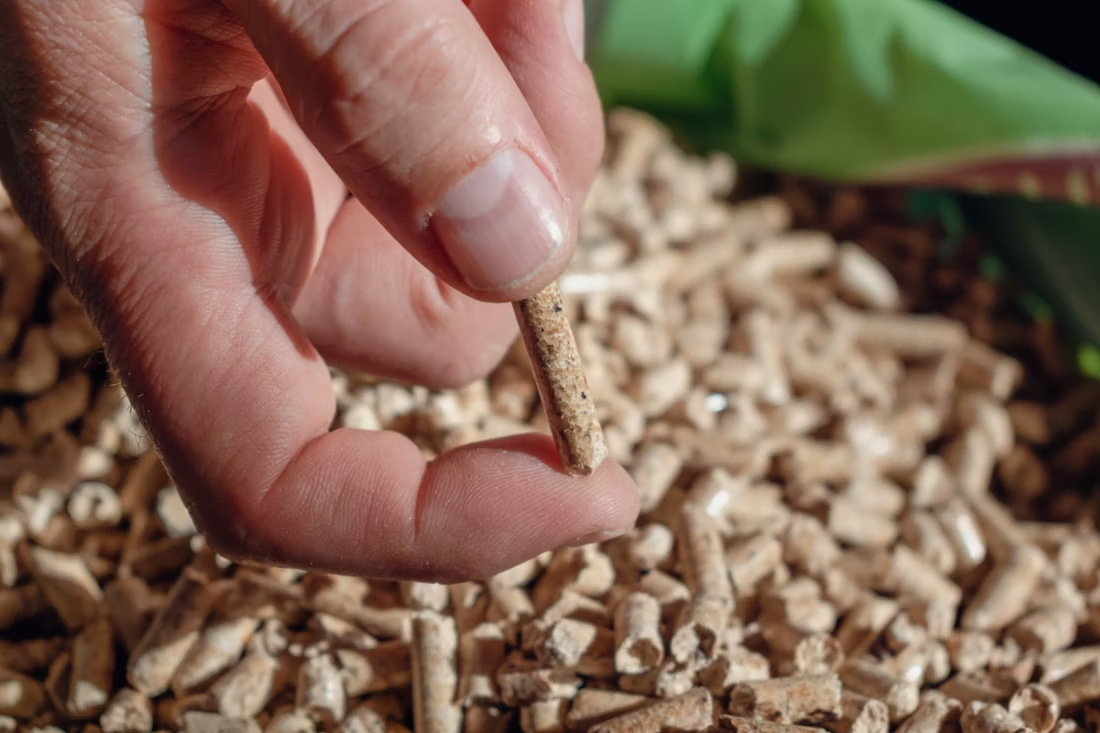
Local hardwood forests supply plenty of oak, hickory, maple, and cherry for traditional wood burning, but pellet stoves in Logan County run on manufactured hardwood pellets sourced through regional producers like Indeck Energy Services, Lignetics, and Somerset Pellet Fuel rather than anything cut on-site. That distinction matters: a pellet stove loads from a bag instead of a woodpile, holds a steady thermostat-controlled temperature, and produces a fraction of the ash of a wood stove. Logan County has no current air quality advisories or wood-burning curtailment periods, so the appeal here isn't regulatory—it's convenience, especially for Indian Lake cottage owners who want automated heat running reliably in a place they don't check on every day.
Three steps. No salesperson until you're ready.
Tell us about your project
Your zip code, your situation, and the fuel you're leaning toward—or let the answers point you to one.
See what's actually available
The brands dealers within 100 miles genuinely carry—real options, never a catalog mirage.
Get your dealer & Project Guide
A trusted local dealer, plus the free Project Guide & Parts List that names every component of the job.
Frequently Asked Questions
How much does a pellet stove installation cost in Logan County?
Pellet stove installation costs in Logan County are generally lower than wood stove installs because venting is simpler—pellet units vent through a small-diameter PL pipe run through an exterior wall rather than a full masonry or Class A chimney. Expect the bulk of the cost to be the unit itself, plus a dedicated electrical outlet near the stove (the auger, igniter, and combustion blower all run on standard household power) and the wall-penetration venting kit. Larger hopper capacities and higher-BTU units for whole-home heating in a farmhouse or older Bellefontaine home run more than a smaller supplemental unit meant for a den or a lake cottage at Indian Lake. A local dealer can give you a firm number after seeing the space and the venting path.
What size pellet stove do I need for my Logan County home?
Sizing depends on square footage, ceiling height, and how drafty the structure is—older farmhouses around Zanesfield and Rushsylvania with less insulation typically need more output than a newer, tightly built home of the same size. Given Logan County's average winter lows near 18°F, most homeowners size for supplemental or zone heat in a main living area rather than assuming a single stove will carry an entire multi-story house. Indian Lake cottages used seasonally often do well with a mid-size unit set to hold a lower background temperature when unoccupied and ramp up on arrival. A local dealer will walk your space and size it properly rather than guessing off square footage alone.
Where do I buy pellets in Logan County?
Hardwood pellets are widely available through regional producers and their dealer networks, including Indeck Energy Services, Lignetics, and Somerset Pellet Fuel—all of which distribute into Ohio farm and hardware stores as well as dedicated hearth retailers. Most Logan County pellet stove owners buy by the ton or in bulk pallets of 40-pound bags before winter, since pellet demand and pricing can tighten up mid-season during cold stretches. Buying early and storing pellets in a dry garage or basement—away from Ohio's humid summers—keeps them from clumping or degrading before you burn them.
Will my pellet stove work if the power goes out?
Not without help. Pellet stoves rely on an electric auger to feed fuel and a blower to move combustion air and distribute heat, so a standard unit stops working the moment power drops—a real consideration for rural Logan County and Indian Lake properties where ice storms can knock out power for hours or longer. Some homeowners pair a pellet stove with a small backup battery system or generator sized to keep the auger and igniter running through an outage. If uninterrupted backup heat during outages is a priority, a wood stove burning local oak or hickory is worth considering as a second heat source—ask a local dealer about running both.
Do I need a permit to install a pellet stove in Logan County?
Yes—new pellet stove installations in Logan County typically require a building permit, and most jurisdictions also want the venting and electrical work to meet current manufacturer specifications and local code. Most local hearth dealers handle the permitting as part of the installation, so you're not filing paperwork yourself. Because pellet stoves vent through a wall rather than a full chimney, the permit review is usually more straightforward than a wood stove or masonry fireplace install—but it's still required, and skipping it can be a problem at resale or insurance time.
What's the best pellet stove for Logan County's climate?
For a climate with a long, cold heating season and regular sub-20°F nights, look for a unit with a larger hopper capacity so it can run through a cold overnight stretch without a refill, along with a reliable auger feed system and a good thermostat range. Brands commonly sold and serviced by hearth dealers in this part of Ohio include Harman, Lopi, Quadra-Fire, and England's Stove Works—all of which offer models suited to either whole-room primary heat or smaller supplemental units for a cottage at Indian Lake. A local dealer can match hopper size and BTU output to your specific home rather than a one-size answer.
How much maintenance does a pellet stove need?
Pellet stoves need more routine attention than a gas unit but far less than a wood stove and chimney. Plan on emptying the ash pot every few days to weekly depending on use, cleaning the burn pot and heat exchanger tubes every couple of weeks during the season, and scheduling an annual professional service to check the auger motor, blower, and venting. Because pellet stoves in Logan County run through the full length of a long, Buffalo-caliber winter, owners who use the stove as a primary heat source should stay ahead of ash buildup—it directly affects burn efficiency and how evenly the stove heats a room.
Pellet stove vs. wood stove—which is right for my Logan County home?
Wood stoves burning local oak, hickory, maple, or cherry work without electricity, which matters for backup heat during Logan County ice storms, and fuel can often be sourced or cut locally at lower cost than bagged pellets. Pellet stoves trade that off for real convenience: load the hopper, set the thermostat, and let the auger handle the rest, with less ash and a cleaner overall burn—a good fit for homeowners who don't want to split, stack, or haul firewood, or for a lake cottage that needs heat running reliably with minimal hands-on tending. Some Logan County homes run both: a wood stove for backup and ambiance, a pellet stove for daily convenience heat.
How should I store pellets so they don't degrade?
Hardwood pellets absorb moisture quickly, and Ohio's humid summers can turn a bag of good pellets into unusable sawdust-clumps if they're stored in a damp garage or shed. Keep bags off concrete floors (moisture wicks up through slab), stack them on pallets or shelving, and store them somewhere dry year-round rather than moving them outdoors for the off-season. Buying from regional producers like Indeck Energy Services, Lignetics, or Somerset Pellet Fuel in sealed bags and keeping them sealed until use is the simplest way to protect a season's supply.
How often does a pellet stove need cleaning?
A clean pellet stove is a happy pellet stove. Plan on cleaning the burn pot about once a week when you're burning regularly—ash and clinkers gum up the air holes just like a pellet barbecue. Most pellet stove problems trace back to skipped cleaning that nobody explained up front. Some designs make it easy with a trapdoor burn pot: pull a lever and the gunk drops into the ash pan.
Why is a fireplace insert so efficient?
An insert does two things: it seals the chimney completely, so you stop losing air you already paid to heat, and it radiates warmth into the room through the firebox and glass. Most add a heat-exchange fan that pulls cool room air underneath, wraps it around the hot firebox, and pushes it back out warm. Your home is more efficient before you've even lit the first fire.
How much should I budget for a fireplace?
For an average home—covering the fireplace, the vent pipe, and basic installation—a budget between $3,900 and $5,500 gives you a lot of options across wood, gas, and pellet. By the time you add finish work, gas line, and electrical, the average complete installation lands between $5,000 and $12,000 all-in. In a remodel or new build, a good rule is to put about 2.5% of the total project cost toward the fireplace.
Can I install a fireplace myself?
If you're putting a fire in your house on purpose, it's best to work with an expert. Unless you're genuinely experienced in framing, gas line, vent pipe, and the national code on clearances to combustibles, have a professional do it—and ideally the same company that sells you the fireplace, so warranty, service, and liability all live under one roof.
Stove and Fireplace Dealers in Logan County
Pellet Brands Stocked Around Logan County
Manufacturers will point you to the nearest stocking dealer.
Find your pellet stove in Logan County.
Tell us about your home and how you plan to use the stove, and we'll match you with a trusted local dealer and send over a free Project Guide & Parts List—the exact parts, including the vent kit, and the dealer we recommend for your Logan County pellet project.
Find Your Fireplace →