
Pellet stoves are a niche choice in Lancaster, Ohio—but not a dead end.
With natural gas running through most established Lancaster neighborhoods, pellet heat isn't the default here—but for the right home, it still has a place. We'll help you find out if it's yours, and match you with a dealer who actually stocks it.
Every Project Starts From One of These Five Situations
Where natural gas leads, pellet fills a narrow but real niche.
Lancaster sits in Fairfield County about 30 miles southeast of Columbus, in climate zone 5A with a winter heating season comparable to central Ohio's norm and an average winter low near 22°F. That's a real heating season—colder than the mid-Atlantic, milder than places like Madison, WI or Duluth, MN—but it's not the kind of extreme cold that pushes homeowners toward niche heating equipment out of necessity. Fairfield County also sits on abundant hardwood ground, with oak, hickory, maple, and cherry all common locally, which means the region's solid-fuel heating tradition has historically run through wood stoves and fireplaces rather than manufactured pellets.
Add to that widespread natural gas service across most of Lancaster's established neighborhoods, and pellet stoves end up filling a narrow gap: homeowners who want the look and radiant feel of a solid-fuel appliance without hauling and seasoning cordwood, or who want a zone-heating option for a family room or finished basement. Pellet fuel itself is available regionally through suppliers like Indeck Energy Services, Lignetics, and Somerset Pellet Fuel, but it's typically sold in bagged form through farm-supply or hardware stores rather than dedicated pellet depots the way it might be in New England or the Pacific Northwest. Because pellet stoves run on electricity for the auger and blower, Ohio Power Co's residential rate of about 14.35¢/kWh is also worth factoring into the real cost of running one, on top of the pellets themselves.
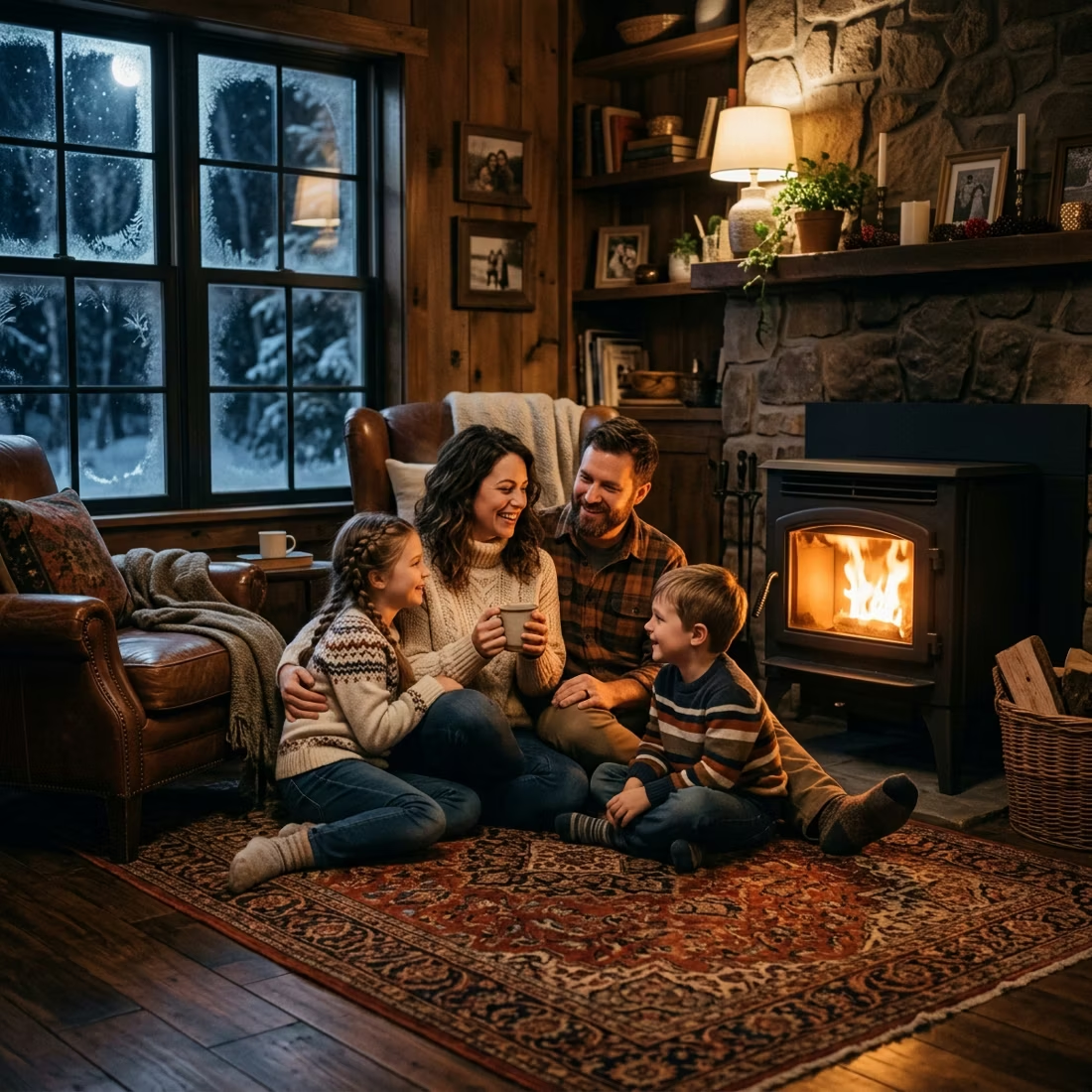
Three steps. No salesperson until you're ready.
Tell us about your project
Your zip code, your situation, and the fuel you're leaning toward—or let the answers point you to one.
See what's actually available
The brands dealers within 100 miles genuinely carry—real options, never a catalog mirage.
Get your dealer & Project Guide
A trusted local dealer, plus the free Project Guide & Parts List that names every component of the job.
Frequently Asked Questions
Are pellet stoves a common choice for heating in Lancaster, Ohio?
Not really. Most Lancaster homes either have natural gas service already or use it as their primary heat source, and the area's moderate winters—a heating season typical for central Ohio, with average lows around 22°F—don't create the kind of urgent, off-grid heating need that drives pellet stove adoption in colder or more rural regions. That said, a small number of homeowners here install pellet stoves for supplemental zone heat, wood-look ambiance without the chimney maintenance, or as a secondary heat source for a finished basement or addition.
Why don't more homes in Fairfield County use pellet stoves?
Two things work against pellet stoves locally. First, natural gas infrastructure already reaches most of Lancaster's established neighborhoods, so homeowners get whole-home heat without managing fuel deliveries or hoppers. Second, central Ohio doesn't have the deep pellet-stove retail culture you'd find in the Northeast or Pacific Northwest—regional suppliers like Indeck Energy Services and Lignetics move a lot of product for industrial and bulk residential heating markets, but only a handful of local farm-supply or hardware stores keep bagged pellets on hand for stove use.
Can I still get a pellet stove installed if I want one in Lancaster?
Yes, but expect a smaller pool of installers than you'd find for gas or electric fireplaces. Lancaster's population of about 40,600 doesn't support a dedicated pellet-only hearth shop, so most homeowners end up working with a hearth dealer based in the greater Columbus market, roughly 30 miles northwest, who carries pellet units as part of a broader product line. We match homeowners here with a trusted dealer who genuinely stocks and installs pellet equipment, rather than one who'll talk you into gas because that's what's on the showroom floor.
How does a pellet stove work, and how is it different from a wood stove?
A pellet stove burns compressed hardwood or biomass pellets fed automatically from a hopper by an electric auger, with a blower distributing heat into the room—it's a more automated, thermostat-controlled experience than a wood stove. A traditional wood stove burns split logs you load and manage by hand. In Lancaster, where oak, hickory, maple, and cherry are all locally abundant, many homeowners who want solid-fuel heat already have access to seasoned firewood, which is part of why wood-burning appliances have more of a local foothold than pellet units—pellets have to be purchased and hauled in bags rather than sourced from a woodlot.
Will a pellet stove keep my house warm if the power goes out?
No, not without a backup power source. The auger and blower both require continuous electricity, so a standard pellet stove shuts down in an outage just like a gas furnace with an electric igniter. Ohio Power Co's service area doesn't see frequent long-duration outages, but if backup heat during a storm matters to you, pair a pellet stove with a small battery backup or generator, or consider a wood-burning stove or fireplace instead, since those need no electricity to produce heat.
What size pellet stove would work for a typical Lancaster home?
Given the area's moderate heating load—a winter season typical for central Ohio, with lows averaging 22°F—most Lancaster homes that install a pellet stove are using it for supplemental or zone heat rather than as the sole heat source. A small unit (rated for 500-1,000 sq ft) handles a family room or finished basement; a medium unit (1,000-1,800 sq ft) can offset furnace use across an open main floor. Very few local homes need a pellet stove sized to heat the whole house, since natural gas or electric furnaces are already doing that job.
Where can I buy pellet fuel near Lancaster?
Pellet fuel from regional producers like Indeck Energy Services, Lignetics, and Somerset Pellet Fuel is available through farm-supply and hardware stores in and around Fairfield County, usually sold in 40-pound bags rather than by the ton from a dedicated depot. Expect to pay somewhere in the $230-$300 per ton range typical for the Midwest, though exact pricing varies more here than in regions with a bigger pellet-buying customer base, so it's worth calling ahead before making a special trip.
How does the cost of pellet heat compare to natural gas in Lancaster?
Natural gas has the cost advantage in Lancaster simply because the delivery infrastructure is already built out across most established neighborhoods, making it the cheapest heat per BTU for homes already connected. Pellet stoves add the cost of buying and storing bagged fuel plus the electricity to run the auger and blower—Ohio Power Co bills residential electric at about 14.35¢/kWh, which is a modest but real ongoing cost. Pellet heat tends to make more financial sense as a supplement that offsets furnace runtime in one or two rooms rather than as a wholesale replacement for gas.
Pellet vs. gas—which makes more sense for my Lancaster home?
For most Lancaster homeowners, gas wins on pure practicality: it's already piped to most neighborhoods, requires no fuel storage, and has a deeper bench of local installers and service technicians. Pellet makes sense in narrower cases—homeowners who want the visual and radiant feel of a solid-fuel fire without managing cordwood, who need zone heat in a room the furnace doesn't reach well, or who simply prefer the aesthetics of a pellet insert over a gas unit. If backup heat during outages is the priority, neither is ideal without a battery or generator, and a wood stove using locally available oak or hickory may be worth considering instead.
How often does a pellet stove need cleaning?
A clean pellet stove is a happy pellet stove. Plan on cleaning the burn pot about once a week when you're burning regularly—ash and clinkers gum up the air holes just like a pellet barbecue. Most pellet stove problems trace back to skipped cleaning that nobody explained up front. Some designs make it easy with a trapdoor burn pot: pull a lever and the gunk drops into the ash pan.
What does it take to replace an existing fireplace?
Fireplaces are like icebergs—bigger behind the wall than in front of it. Replacement means removing the surrounding tile or stone (the finish material laps onto the fireplace face), pulling the old unit, setting the new one in the same enclosure, and re-finishing the wall. A hearth professional can determine what's behind your wall without demolition during an in-home preview.
Does a fireplace add value to my home?
On average, a fireplace adds back to the home about the same amount you spent installing it. Add the monthly savings from heating the rooms you actually use instead of the whole house—often hundreds of dollars a year—and the value case is strong before you even count what a fire does for how your family uses the room.
How much should I budget for a fireplace?
For an average home—covering the fireplace, the vent pipe, and basic installation—a budget between $3,900 and $5,500 gives you a lot of options across wood, gas, and pellet. By the time you add finish work, gas line, and electrical, the average complete installation lands between $5,000 and $12,000 all-in. In a remodel or new build, a good rule is to put about 2.5% of the total project cost toward the fireplace.
Nearby Dealers
Hearth shops serving Lancaster and the surrounding area.
Pellet Brands Stocked Around Lancaster
Manufacturers will point you to the nearest stocking dealer.
See if a pellet stove is right for your Lancaster home.
Tell us about your home and heating goals, and we'll match you with a trusted local dealer who genuinely stocks pellet equipment—plus a free Project Guide & Parts List with the exact components, including the vent kit, for your Lancaster project.
Find Your Fireplace →