
On-demand warmth for Lakewood's lake-effect winters.
With a long, demanding heating season and winter lows averaging 22°F off Lake Erie, Lakewood homes lean hard on gas heat. I'll match you with a vetted local dealer who knows this city's century-old housing stock and can install it right.
Every Project Starts From One of These Five Situations
Built into Lakewood's oldest housing stock.
Lakewood sits right on the Lake Erie shoreline at 705 feet, and that proximity means real lake-effect snow squalls layered on top of a already-cold Zone 5A climate—a long, demanding heating season and winter lows averaging 22°F, a pattern closer to Buffalo, NY than to most of inland Ohio. It's a climate that keeps furnaces and supplemental heat sources working hard from November through March, and it's part of why gas fireplaces have become the default upgrade in this city rather than a decorative afterthought.
Lakewood is one of Ohio's densest, most walkable inner-ring suburbs, built out almost entirely between 1900 and 1935 with brick colonials, Tudors, and duplexes packed onto narrow lots—there's rarely room for a woodpile or the clearances a wood stove needs, which is why wood and pellet appliances see essentially no demand here. Natural gas service from Dominion Energy Ohio (the old East Ohio Gas territory) reaches nearly every home in the 44107 zip code, so running a line to a fireplace is rarely the obstacle it can be in more rural markets. With no local air-quality non-attainment concerns to navigate, a direct-vent gas insert dropped into an existing masonry firebox is by far the most common project in Lakewood's older homes.
Three steps. No salesperson until you're ready.
Tell us about your project
Your zip code, your situation, and the fuel you're leaning toward—or let the answers point you to one.
See what's actually available
The brands dealers within 100 miles genuinely carry—real options, never a catalog mirage.
Get your dealer & Project Guide
A trusted local dealer, plus the free Project Guide & Parts List that names every component of the job.
Frequently Asked Questions
How much does a gas fireplace installation cost in Lakewood?
Most Lakewood installs run in the $4,000 to $9,500 range. A direct-vent insert going into an existing masonry firebox—the standard setup in the city's 1920s and 1930s colonials and Tudors—sits toward the lower end, especially if a gas line already runs near the chimney. New construction or a full remodel that requires framing, a fresh gas line, and exterior venting runs higher. Century-old chimneys here sometimes need a liner inspection or repair before an insert goes in, which a local installer will flag during the site visit rather than after signing the contract.
Can I convert my existing fireplace to gas?
Yes, and it's the most common project type in Lakewood. Because so much of the housing stock predates 1940 and still has the original masonry firebox, a gas insert with a stainless liner run up the existing chimney is a straightforward retrofit. Since almost nobody in Lakewood is burning wood in these fireplaces anymore—small lots and tight urban clearances make it impractical—converting the old firebox to a sealed, on-demand gas insert is typically the upgrade homeowners want when they buy one of these older homes.
Will I need propane, or does natural gas reach my house?
Natural gas from Dominion Energy Ohio covers essentially all of Lakewood, so propane is rarely a consideration here the way it is in more rural parts of Cuyahoga County. If your home already has gas service for a furnace, water heater, or range, running a branch line to a fireplace location is usually a modest add for a licensed gas-fitter rather than a major project.
Will my gas fireplace still work if the power goes out?
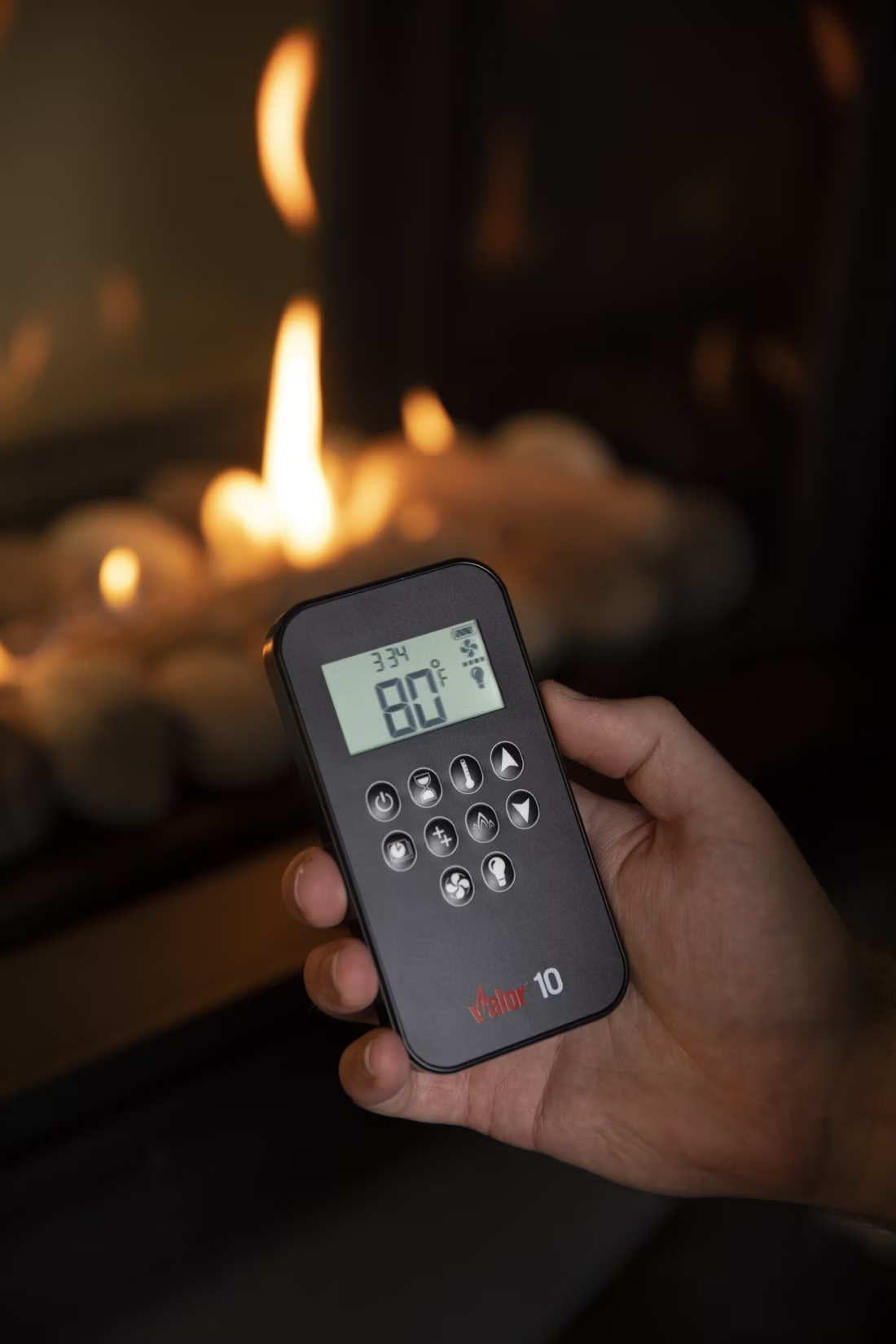
Most will, and it's a fair question in Lakewood given how lake-effect storms off Erie occasionally knock out power for a night or two. Units with intermittent pilot ignition (IPI) run on AA battery backup that kicks in the moment the power drops. Some Valor models skip the battery entirely—their pilot generates its own current through a thermocouple. If backup heat during a winter outage matters to you, ask your local dealer which ignition system is on the model you're considering before you buy.
What's the difference between a gas fireplace, insert, and stove?
A gas fireplace is a built-in unit framed into a wall—common in newer construction or a full remodel. A gas insert fits inside an existing masonry firebox, which describes most of the fireplaces already sitting in Lakewood's older colonials and Tudors. A gas stove is freestanding on a hearth pad, more common where there's no existing chimney chase to reuse. Given how much of Lakewood's housing predates 1940 with a fireplace already built in, an insert is by far the most common route homeowners take here.
Do I need a permit to install a gas fireplace in Lakewood?
Yes. You'll need a building permit through the City of Lakewood's Building Department, plus a separate gas line permit pulled by a licensed gas-fitter for any new or modified gas piping. Most hearth dealers who regularly work in Lakewood coordinate both permits and the final inspection as part of the installation, which matters in a city with such a high share of century-old homes where the inspector may also want to see the chimney liner condition documented.
Vented vs. vent-free gas fireplaces—what should I know for a Lakewood home?
Vented (direct-vent) units draw combustion air from outside and exhaust it back outside through sealed venting—this is the option most local dealers recommend and install. Vent-free units burn directly into the room and are legal under Ohio code but come with strict minimum room-size requirements, which matters in Lakewood's smaller, older rooms—a lot of the city's Tudor-style dens and sunrooms are tight enough that vent-free sizing rules can actually rule the option out. A dealer who measures the room before quoting will tell you quickly whether vent-free is even on the table.
How often should a gas fireplace be serviced?
Plan on an annual inspection, ideally in September or October before Lakewood's heating season really sets in. A technician checks the burner, pilot assembly, gas connections, and venting, and cleans the glass. It's a lighter service than a wood chimney sweep, but skipping it on a unit running daily through a long, demanding heating season is how you end up with an ignition failure exactly when you need the heat most. Expect roughly $150-$250 for a standard visit from a local hearth technician.
Gas vs. electric—which makes more sense for a Lakewood home?
Gas generally wins on cost of heat output here: Lakewood's electric utilities, Cleveland Electric Illuminating Co and the City of Cleveland's municipal system, carry residential rates that range from about $0.094 to $0.149 per kWh depending on which serves your address, and resistance electric heat is expensive to run through a long, demanding heating season compared to piped natural gas from Dominion Energy Ohio. Electric fireplaces still make sense for Lakewood's many apartments, condos, and rental duplexes along streets like Detroit and Madison, where there's no chimney or gas line access and a plug-in unit is the only realistic option. For anyone who owns their home and already has gas service, a vented gas insert is the more efficient long-term choice.
Is my gas fireplace wasting gas?
If it was installed more than 15 years ago, probably. Older gas fireplaces keep a standing pilot light burning all the time, and that little flame can cost a couple hundred dollars a year. Newer models use pilot-on-demand ignition—the pilot lights only when you use the fireplace and goes out when you turn it off.
What's the difference between an insert and a zero-clearance fireplace?
An insert is a fireplace that slides into a pre-existing wood-burning fireplace—if you don't have one, there's nothing to insert it into. A zero-clearance fireplace is built into a framed wall, which makes it the answer for remodels and new construction. Simple test: existing masonry fireplace means insert; blank or framed wall means zero-clearance.
Can I install a fireplace myself?
If you're putting a fire in your house on purpose, it's best to work with an expert. Unless you're genuinely experienced in framing, gas line, vent pipe, and the national code on clearances to combustibles, have a professional do it—and ideally the same company that sells you the fireplace, so warranty, service, and liability all live under one roof.
Should the dealer who sells my fireplace also install it?
Ideally, yes. A fireplace project involves vent pipe, gas line, electrical, and often tile or stone. Hire three or four separate trades and you own the liability and the game of telephone between them. One company selling and installing means one accountable party, start to finish—ask about factory training, on-time completion records, and what happens if an inspection fails.
Nearby Dealers
Hearth shops serving Lakewood and the surrounding area.
Get your free Project Guide & Parts List for a gas fireplace in Lakewood.
Tell me about your home and your gas access through Dominion Energy Ohio, and I'll match you with a trusted local dealer and send a free Project Guide & Parts List with the exact vent kit and parts your Lakewood project needs.
Find Your Fireplace →