
A Niche Fuel in a Natural-Gas Town.
In LaGrange, most homes heat with natural gas—but pellet stoves still work for garages, additions, and rural properties across Lorain County. We'll tell you honestly whether one fits your home, and connect you with a local dealer if it does.
Every Project Starts From One of These Five Situations
In LaGrange, pellet stoves are the exception, not the rule.
LaGrange is a small village of about 2,662 people in Lorain County, sitting at 817 feet with winters that average a low of 18°F and bring a long, demanding heating season—cold enough to land in the same range as Madison, Wisconsin. Despite that, natural gas service reaches most of the village, and the overwhelming majority of local homes heat with a gas furnace, often backed up by a gas fireplace or insert. Pellet stoves, which burn compressed wood pellets and need electricity to run their auger and blower, simply haven't become part of the local heating mix the way they have in more rural, off-grid-minded parts of the Midwest.
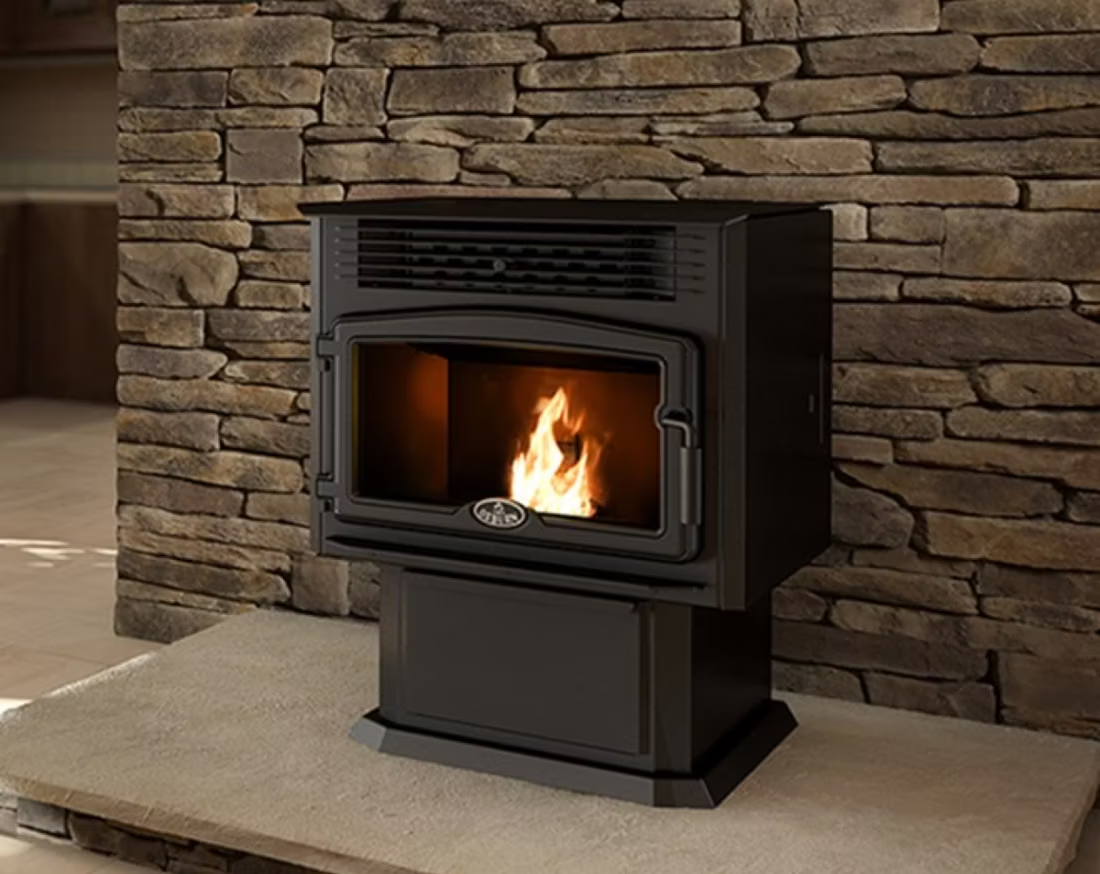
That doesn't mean pellet heat has no place in LaGrange. Homeowners with detached garages, workshop additions, older farmhouses on the edges of the village, or hobby-farm outbuildings still install pellet stoves for zone heat or as a lower-maintenance alternative to cordwood. Pellets themselves are easy to find in northern Ohio through regional suppliers like Indeck Energy Services, Lignetics, and Somerset Pellet Fuel, even though the number of local dealers who install and service pellet stoves in LaGrange itself is smaller than it is for gas equipment. If that's your situation, it's worth talking to someone who installs pellet stoves regularly rather than a big-box retailer unfamiliar with local venting and code requirements.
Three steps. No salesperson until you're ready.
Tell us about your project
Your zip code, your situation, and the fuel you're leaning toward—or let the answers point you to one.
See what's actually available
The brands dealers within 100 miles genuinely carry—real options, never a catalog mirage.
Get your dealer & Project Guide
A trusted local dealer, plus the free Project Guide & Parts List that names every component of the job.
Frequently Asked Questions
Are pellet stoves actually used in LaGrange, or is gas the only real option?
Gas is the default in LaGrange—natural gas service covers most of the village and the majority of homes here heat with a gas furnace, often with a gas fireplace or insert for supplemental warmth. Pellet stoves show up less often, but they're not unheard of. A handful of LaGrange and rural Lorain County homeowners install them in garages, additions, and older farmhouses where running new gas line isn't practical or where they want a solid-fuel option without cutting and stacking cordwood. If you're considering one, it helps to talk to a dealer who actually installs pellet equipment regularly rather than one who mostly sells gas.
What does a pellet stove installation typically cost?
Pellet stove installations nationally run somewhere in the $3,000 to $6,000 range for the stove, venting, and hearth pad, though because so few LaGrange-area dealers install pellet equipment as their main business, pricing can vary more here than it would for a common gas fireplace install. Expect the number to move based on whether you're venting through an exterior wall or an existing chimney, and whether the room needs a new hearth pad to meet clearance requirements. A local dealer who handles pellet installs regularly can give you a firm number after seeing the space.
Where do I buy pellets near LaGrange?
Wood pellets aren't hard to find in northern Ohio even though pellet stoves themselves are a minority appliance here. Regional producers and distributors including Indeck Energy Services, Lignetics, and Somerset Pellet Fuel supply much of the Midwest, and their bagged pellets typically show up at farm supply stores and hardware retailers throughout Lorain County. If you install a pellet stove, plan to buy in bulk before winter—a typical heating season runs 2 to 3 tons of pellets, and supply can tighten once cold weather sets in.
Will a pellet stove keep my house warm if the power goes out?
No—and this is one of the biggest reasons pellet stoves haven't caught on in LaGrange the way gas has. A pellet stove's auger and blower both run on electricity, so if Ohio Edison or Lorain-Medina Rural Electric Cooperative service goes down, the stove goes down with it. If backup heat during an outage is your main goal, a vented gas fireplace with battery-backup ignition or a wood-burning stove will serve you better than a pellet unit.
What's the real difference between a pellet stove and a wood stove for a LaGrange property?
Wood stoves burn cordwood—oak, hickory, maple, and cherry are the species most common on wooded lots around Lorain County—and they work with zero electricity, which makes them the better emergency backup option. Pellet stoves burn manufactured pellets, are easier to load and control with a hopper and thermostat instead of splitting and stacking wood, and burn cleaner with less ash, but they need power to run. In LaGrange, where most homes already default to gas, either solid-fuel option is a secondary or supplemental choice rather than a primary heat source—the decision usually comes down to whether you value the low-maintenance convenience of pellets or the off-grid reliability of cordwood.
Is natural gas available throughout LaGrange?
Yes, natural gas service reaches most of the village of LaGrange, which is a big reason gas fireplaces and furnaces are so dominant here compared to solid-fuel appliances. Homes just outside the village limits in unincorporated Lorain County are more likely to rely on propane or electric heat, and that's typically where you'll see more interest in wood or pellet stoves as an alternative.
How much does it cost to run a pellet stove in LaGrange?
Running costs come from two places: the pellets themselves and the electricity that powers the auger and blower. Electricity rates vary locally—Ohio Edison customers pay around 9.6 cents per kWh, while Lorain-Medina Rural Electric Cooperative customers pay closer to 17.3 cents per kWh—so the electric-bill impact of running a pellet stove will differ depending on which utility serves your address. On top of that, a pellet stove typically burns 40 to 60 pounds of pellets a day in cold weather, which adds up over a long, cold Lorain County winter season.
Can I install a pellet stove in an older LaGrange farmhouse?
Yes, and it's one of the more common real-world uses for pellet stoves in this area—older farmhouses on the outskirts of LaGrange sometimes have inconsistent gas furnace coverage in additions or converted spaces, and a pellet stove can fill that gap without running new gas line. You'll still need a building permit through your local jurisdiction, and the installer will need to run listed venting to an exterior wall since most farmhouses don't have a chimney sized for pellet exhaust. A dealer familiar with older Lorain County housing stock will know how to work around plaster walls, balloon framing, and other quirks that come with an older build.
Pellet vs. gas—which is right for my LaGrange home?
For most LaGrange homes, gas wins on convenience alone—natural gas service is already in the house, installation is straightforward, and a gas fireplace or insert gives instant heat at the flip of a switch. Pellet makes sense in narrower situations: a detached garage or workshop without gas service, an addition where running new gas line is impractical, or a homeowner who specifically wants a solid-fuel appliance without the work of cordwood. If you're not sure which fits your situation, a local dealer who installs both fuel types can walk through your specific space rather than defaulting to whichever they sell most.
Why is a fireplace insert so efficient?
An insert does two things: it seals the chimney completely, so you stop losing air you already paid to heat, and it radiates warmth into the room through the firebox and glass. Most add a heat-exchange fan that pulls cool room air underneath, wraps it around the hot firebox, and pushes it back out warm. Your home is more efficient before you've even lit the first fire.
Why is my open fireplace making my house colder?
Open fireplaces suck—literally. As the fire burns, it consumes air your furnace already paid to heat and pulls it out through the chimney, so the house is actually colder after the fire goes out than before you lit it. An insert fixes this: it seals the chimney, puts fixed glass across the front, and turns that hole in your house into a real heat source.
Does a fireplace add value to my home?
On average, a fireplace adds back to the home about the same amount you spent installing it. Add the monthly savings from heating the rooms you actually use instead of the whole house—often hundreds of dollars a year—and the value case is strong before you even count what a fire does for how your family uses the room.
Can a fireplace actually lower my heating bill?
Yes—by creating a comfort zone. A furnace heats every square foot of the house just to warm the one room you're in; a gas fireplace on low burns roughly a sixth of the gas a typical furnace does. Set the furnace around 55–60 degrees as a baseline, then heat the rooms your family actually uses. Families who heat this way commonly save $20–$60 a month.
Nearby Dealers
Hearth shops serving LaGrange and the surrounding area. Every listing shows whether it is a WhyFire partner, a dealer we have verified as authorized for the brands we recommend, or a local business carrying hearth products. No manufacturer pays for placement. How we verify dealers →
All Construction Services
The Place
Forte Builders, Inc.
Pellet Brands Stocked Around LaGrange
Manufacturers will point you to the nearest stocking dealer.
Find your pellet stove in LaGrange.
Tell us about your home and your project, and if pellet heat is the right fit, we'll match you with a trusted local dealer and send over a free Project Guide & Parts List—the exact parts, including venting, and who to call in Lorain County.
Find Your Fireplace →