
Warm Up Kettering Without Lifting a Log.
Instant, consistent heat for Kettering's Miami Valley winters—no wood to split, stack, or haul. Find the right gas fireplace or insert and get matched with a trusted local dealer.
Every Project Starts From One of These Five Situations
Gas heat fits right into Kettering's suburban grid.
Kettering sits at just over 1,000 feet in Ohio's Miami Valley, with roughly 5,432 heating degree days a year and average winter lows around 20°F. That's real cold—enough to run a furnace hard from November through March—but nowhere near the extremes of Minneapolis or Duluth. Combined with a densely built suburban footprint of about 57,700 residents across established mid-century neighborhoods, it's a market where gas fireplaces make more sense on paper than wood ever will: most homes already have gas service, lot sizes don't leave room for firewood storage, and many subdivisions have deed restrictions on outdoor wood stacks.
Most of Kettering is served by natural gas through the local distribution utility, CenterPoint Energy Ohio (the former Vectren/Dayton Power & Light gas system), which means adding a fireplace or insert is usually a matter of tapping an existing line rather than running new service. Dayton Power & Light still handles electric service citywide, so homeowners weighing a gas fireplace against an electric unit are choosing between two utilities they already have accounts with. Either way, gas delivers the kind of on-demand, thermostat-controlled heat that fits a commuter suburb where nobody wants to tend a fire before work.
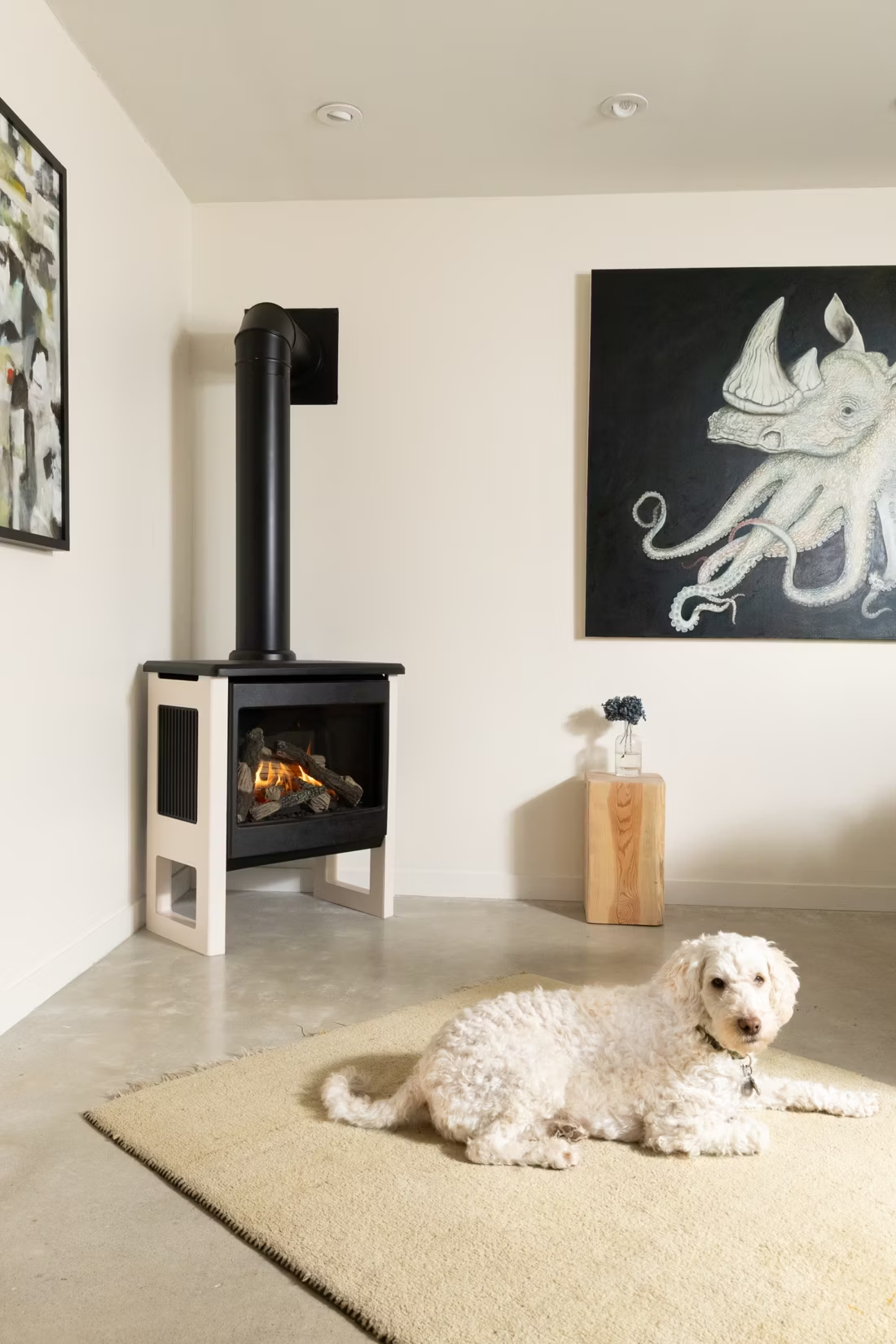
Three steps. No salesperson until you're ready.
Tell us about your project
Your zip code, your situation, and the fuel you're leaning toward—or let the answers point you to one.
See what's actually available
The brands dealers within 100 miles genuinely carry—real options, never a catalog mirage.
Get your dealer & Project Guide
A trusted local dealer, plus the free Project Guide & Parts List that names every component of the job.
Frequently Asked Questions
How much does a gas fireplace installation cost in Kettering?
Most gas fireplace and insert installations in the Kettering area run $3,500 to $10,000, depending on the unit, the venting run, and whether new gas line work is needed. A direct-vent insert dropped into an existing masonry fireplace with gas already nearby sits toward the lower end. A new built-in gas fireplace in a remodel—with framing, a fresh gas line from CenterPoint's meter, and full venting—lands in the middle to upper range. Homes on the older side of Kettering, particularly in the Southmoor Park or Wilmington Pike corridor neighborhoods with existing chimneys, often see lower costs since the chase is already in place. A local dealer will give you a firm number after walking the space.
Can I convert my existing wood fireplace to gas?
Yes, and it's one of the most common projects in Kettering's older housing stock—plenty of the ranch and colonial homes built through the 1950s-70s have a masonry fireplace that rarely gets used because splitting and stacking wood doesn't fit a suburban lot. A gas insert typically slides into that existing firebox, uses a stainless liner through your current chimney for venting, and ties into the gas line already serving your furnace or water heater. Expect $4,000 to $8,500 for a straightforward conversion, more if the chimney needs relining work or the gas line has to be extended from the meter.
Do I need natural gas to install a fireplace, or can I use propane?
Most Kettering homes already have natural gas through CenterPoint Energy Ohio, so if your water heater or furnace runs on gas, adding a fireplace is a straightforward tap into existing service. Propane is really only a consideration for the small number of properties without gas service or for outdoor installations away from the house. Nearly every gas fireplace and insert sold locally can be configured for either fuel—your installer sets the correct orifice and regulator—so the choice usually comes down to whether you already have a meter, not the equipment itself.
Will my gas fireplace work during a power outage?
Most will, with the right ignition system. Units with IPI (intermittent pilot ignition) run on a small battery backup that kicks in the moment DP&L power drops, so the fireplace still lights on demand—useful during the ice storms and downed-line outages that hit the Miami Valley a few times most winters. Valor fireplaces take it a step further: they generate their own power off the pilot's thermocouple, so there are no batteries to remember at all. If backup heat during an outage matters to you, ask your local dealer about the ignition system before you buy—it's not automatic on every model.
What's the difference between a gas fireplace, gas insert, and gas stove?
A gas fireplace is a fully built-in unit framed into a wall—the right call for new construction or a remodel where there's no existing chimney. A gas insert is built to drop into an existing masonry firebox, which describes a lot of the older housing around Kettering, and it uses your current chimney (relined) as the vent path. A gas stove is a freestanding cast-iron or steel unit that sits on the floor like a wood stove but runs on gas—a good option for a room without any fireplace at all. For most Kettering homeowners with an unused wood fireplace, an insert is the natural fit.
Do I need a permit to install a gas fireplace in Kettering?
Yes—the City of Kettering Building Division requires a permit for new gas fireplace installations, and any gas line work needs to be pulled by a licensed gas-fitter and inspected. Most established local hearth dealers include this in the installation price and handle the inspection scheduling, so you're not coordinating separate trades for the gas line, the venting, and the framing. It's worth confirming permit handling is included before you sign a contract.
What's the difference between vented and vent-free gas fireplaces?
Vented (direct-vent) fireplaces pull combustion air from outside and exhaust it back outside through sealed venting—they're the cleanest, safest option and what most Kettering installers recommend by default. Vent-free units burn gas directly into the room without external venting; they're legal in Ohio but come with strict room-size and ventilation requirements, plus an oxygen depletion sensor that shuts the unit off automatically. For a well-sealed suburban home, direct-vent is almost always the better call for indoor air quality, especially if anyone in the house has respiratory sensitivities. Ask your dealer to walk through both if you're deciding.
How often should my gas fireplace be serviced?
Plan on an annual inspection, ideally in early fall before the furnace and fireplace are both running hard. A technician checks the burner, pilot assembly, venting, and gas connections, and cleans the glass and interior—a much quicker job than a wood chimney sweep but just as important for carbon monoxide safety. Local gas appliance service techs in the Dayton area typically charge $150 to $225 for this visit.
Gas vs. wood—which is right for my Kettering home?
Honestly, wood is a niche choice here. Kettering's tight suburban lots, HOA restrictions in many subdivisions, and near-universal gas service mean wood-burning fireplaces and stoves are uncommon—a small number of homeowners with older masonry fireplaces still burn oak, hickory, or cherry sourced from the surrounding Miami Valley woodlands, mostly for ambiance rather than primary heat. Gas, on the other hand, is the default: instant on-off operation, no ash or creosote, and heat output you can dial in from a wall switch or remote. Pellet stoves are similarly rare locally for the same infrastructure reasons. Unless you specifically want the ritual of a wood fire and already have a working chimney, gas is the more practical fit for most homes in the city.
Is my gas fireplace wasting gas?
If it was installed more than 15 years ago, probably. Older gas fireplaces keep a standing pilot light burning all the time, and that little flame can cost a couple hundred dollars a year. Newer models use pilot-on-demand ignition—the pilot lights only when you use the fireplace and goes out when you turn it off.
Why is a fireplace insert so efficient?
An insert does two things: it seals the chimney completely, so you stop losing air you already paid to heat, and it radiates warmth into the room through the firebox and glass. Most add a heat-exchange fan that pulls cool room air underneath, wraps it around the hot firebox, and pushes it back out warm. Your home is more efficient before you've even lit the first fire.
How much should I budget for a fireplace?
For an average home—covering the fireplace, the vent pipe, and basic installation—a budget between $3,900 and $5,500 gives you a lot of options across wood, gas, and pellet. By the time you add finish work, gas line, and electrical, the average complete installation lands between $5,000 and $12,000 all-in. In a remodel or new build, a good rule is to put about 2.5% of the total project cost toward the fireplace.
What is an in-home preview and do I need one?
It's a visit where a hearth professional measures your space, confirms the model you picked actually works in your home, and walks the specs—framing, gas line, venting, finish work—before anything is ordered. Some details you just can't know until you see the house. Never make a down payment without one; it's the single most-skipped step that burns buyers.
Nearby Dealers
Hearth shops serving Kettering and the surrounding area.
Get your Kettering gas fireplace project planned right.
Tell us about your home and we'll send a free Project Guide & Parts List—the exact parts, vent kit, and a trusted local Kettering-area dealer to install your gas fireplace or insert correctly the first time.
Find Your Fireplace →