
Find a pellet stove that fits Jefferson County winters.
Steady, thermostat-controlled heat for the Ohio Valley's cold months—from Steubenville to Toronto and the rural stretches along the river. We match you with a trusted local dealer who knows what actually works here.
Every Project Starts From One of These Five Situations
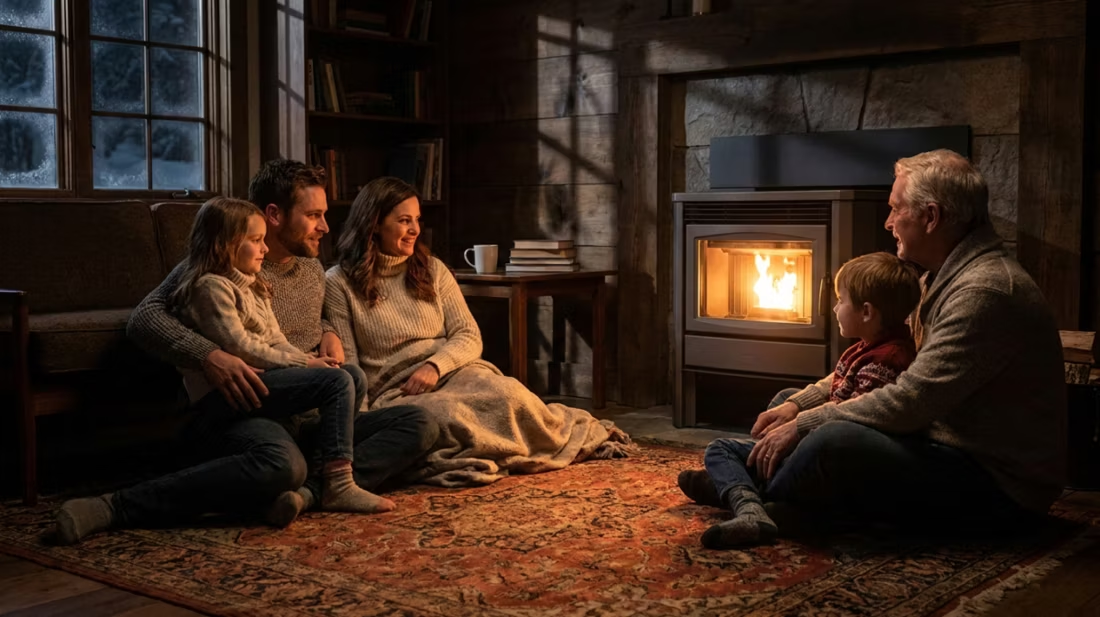
Consistent heat without the woodpile.
Jefferson County sits in the Ohio River Valley, with roughly 5,828 heating degree days a year and average winter lows around 19°F—a season on par with Madison, Wisconsin for length and steadiness, even if it rarely hits the extremes of the northern plains. Homes here span old river-town housing stock in Steubenville and Toronto to newer construction in Wintersville and the surrounding townships, and a lot of that older housing has masonry fireplaces that were never built for real heat output.
A pellet stove or insert fills that gap: load the hopper, set the thermostat, and get consistent output without splitting, stacking, or hauling cordwood—a real consideration in a county with plenty of oak, hickory, maple, and cherry available for wood burners but not everyone wanting to manage it. Regional pellet supply is solid here, with Indeck Energy Services, Lignetics, and Somerset Pellet Fuel all producing or distributing within reach of the county, which keeps fuel available and reasonably priced through the winter rather than something you're hunting for in a February cold snap.
Three steps. No salesperson until you're ready.
Tell us about your project
Your zip code, your situation, and the fuel you're leaning toward—or let the answers point you to one.
See what's actually available
The brands dealers within 100 miles genuinely carry—real options, never a catalog mirage.
Get your dealer & Project Guide
A trusted local dealer, plus the free Project Guide & Parts List that names every component of the job.
Frequently Asked Questions
How much does a pellet stove installation cost in Jefferson County?
Pellet stove and insert installations in Jefferson County typically run in the same general range seen across the Ohio Valley—expect the bulk of the cost to be the unit itself plus venting work, since pellet stoves vent through a smaller-diameter pipe than wood stoves and don't require full masonry chimney work in most cases. Installing an insert into an existing fireplace in Steubenville or Toronto is usually more straightforward than a freestanding stove in a home with no existing hearth or chimney, which needs new wall or roof penetration for the vent. A local dealer will give you a firm number after seeing your home, since venting length and electrical access (pellet stoves need a standard outlet for the auger and blower) both affect the final price.
Do pellet stoves work if the power goes out?
Not on their own. Pellet stoves rely on an electric auger to feed fuel and a blower to distribute heat, so a power outage stops the stove even with a full hopper. This is worth weighing seriously in Jefferson County, where winter storms along the Ohio River can knock out power for stretches. Some homeowners pair a pellet stove with a small battery backup or generator specifically to keep it running during outages; others in outage-prone rural parts of the county lean toward a wood stove instead, since wood burns without electricity. A local dealer can talk through backup options if reliability during outages matters to you.
Where can I buy pellets in Jefferson County?
Pellet supply is a real strength for this area—Indeck Energy Services and Lignetics both have production or distribution presence within reach of the Ohio Valley, and Somerset Pellet Fuel serves the broader region as well. Most hardware stores, farm supply outlets, and hearth dealers in and around Steubenville and Wintersville carry bagged pellets seasonally, and many will do bulk or pallet delivery for heavy users. Buying pellets in bulk (a full ton, delivered) ahead of the coldest months typically saves money over picking up individual bags through the winter, and premium hardwood pellets burn cleaner with less ash than budget softwood blends.
What's the difference between a pellet stove and a pellet insert?
A pellet stove is freestanding and sits on its own hearth pad, venting out through a wall or existing chimney chase—it works in homes with or without an existing fireplace. A pellet insert is built to slide into an existing masonry fireplace opening, using a liner run up the existing chimney for venting. For the older masonry-fireplace housing stock common in Steubenville and Toronto, an insert is often the cleaner install since it uses a chimney that's already there. Homes without an existing fireplace, or newer construction in Wintersville, are usually better candidates for a freestanding stove.
Do I need a permit to install a pellet stove in Jefferson County?
Most pellet stove and insert installations require a local building permit, since they involve venting through an exterior wall or roof and sometimes new electrical work for the outlet. Requirements are handled at the local township or city level depending on where in Jefferson County you're located, so the jurisdiction is different in Steubenville than in an unincorporated township. Most local dealers handle the permit application as part of the installation, which is one of the practical advantages of using a trusted local pro rather than trying to source and install a unit yourself.
What size pellet stove do I need for my home?
Sizing depends on square footage, ceiling height, insulation quality, and whether the stove is your primary heat source or supplemental. As a general guide for Jefferson County's climate—roughly 5,828 heating degree days, similar in overall demand to a Midwest heating season—a smaller unit works fine for a single room or a well-insulated smaller home, while heating a larger or older, less-insulated home (common in the county's older river-town housing) usually calls for a larger-capacity stove. Oversizing wastes fuel and can lead to short, inefficient burn cycles; undersizing leaves you cold on the coldest nights. A local dealer will size your specific home during an in-home visit rather than guessing from square footage alone.
How often does a pellet stove need to be cleaned or serviced?
Pellet stoves need more frequent attention than a once-a-year chimney sweep because of the ash and combustion byproducts from daily use. Plan on cleaning the burn pot and ash pan every few days to weekly depending on how much you're running the stove, a deeper cleaning of the exhaust passages and glass every few weeks during heavy winter use, and a full professional service and venting inspection once a year, typically before the season starts. Local hearth dealers who sell pellet equipment in Jefferson County generally offer this annual service, and staying current on it keeps the auger and igniter running reliably through the coldest stretch of winter.
Pellet vs. wood—which is right for my Jefferson County home?
Wood offers real heat during power outages, lower ongoing fuel cost if you're cutting your own from the county's abundant oak, hickory, maple, and cherry, and the traditional experience of tending a fire—but it means splitting, stacking, and hauling, plus more chimney maintenance. Pellet offers thermostat-set convenience, cleaner burning with less creosote buildup, and no need to source or season your own wood—but it depends entirely on electricity and a steady pellet supply. For homes in Steubenville or Wintersville where convenience matters more than self-sufficiency, pellet is usually the better fit. For rural properties concerned about outage resilience, or households with easy access to their own firewood, wood often wins out. Some homeowners in the county run both.
Are pellet stoves more efficient than wood stoves?
On paper, yes—pellet stoves typically run 75-83% efficiency thanks to the consistent, controlled burn from uniform fuel pellets and a metered auger feed, compared to a well-run EPA-certified wood stove in a similar range but more dependent on operator technique. The tradeoff is that pellet efficiency depends on clean power and consistent pellet quality, while wood stove efficiency depends on dry, properly seasoned wood—oak and hickory, both common in Jefferson County, need roughly a year or more of seasoning to burn efficiently. Neither is universally better; it comes down to which tradeoffs fit your household and your home's setup.
How often does a pellet stove need cleaning?
A clean pellet stove is a happy pellet stove. Plan on cleaning the burn pot about once a week when you're burning regularly—ash and clinkers gum up the air holes just like a pellet barbecue. Most pellet stove problems trace back to skipped cleaning that nobody explained up front. Some designs make it easy with a trapdoor burn pot: pull a lever and the gunk drops into the ash pan.
What's the difference between an insert and a zero-clearance fireplace?
An insert is a fireplace that slides into a pre-existing wood-burning fireplace—if you don't have one, there's nothing to insert it into. A zero-clearance fireplace is built into a framed wall, which makes it the answer for remodels and new construction. Simple test: existing masonry fireplace means insert; blank or framed wall means zero-clearance.
How much should I budget for a fireplace?
For an average home—covering the fireplace, the vent pipe, and basic installation—a budget between $3,900 and $5,500 gives you a lot of options across wood, gas, and pellet. By the time you add finish work, gas line, and electrical, the average complete installation lands between $5,000 and $12,000 all-in. In a remodel or new build, a good rule is to put about 2.5% of the total project cost toward the fireplace.
Can a fireplace actually lower my heating bill?
Yes—by creating a comfort zone. A furnace heats every square foot of the house just to warm the one room you're in; a gas fireplace on low burns roughly a sixth of the gas a typical furnace does. Set the furnace around 55–60 degrees as a baseline, then heat the rooms your family actually uses. Families who heat this way commonly save $20–$60 a month.
Stove and Fireplace Dealers in Jefferson County
Pellet Brands Stocked Around Jefferson County
Manufacturers will point you to the nearest stocking dealer.
Find your pellet stove in Jefferson County.
Tell us a bit about your home and we'll match you with a trusted local dealer and send over your free Project Guide & Parts List—a plan for your pellet project in Jefferson County with the exact parts, including the vent kit, and the dealer we recommend.
Find Your Fireplace →