
Instant warmth for Huber Heights, without the venting.
No chimney, no gas line, no permitted flue—just a fireplace that plugs in and works. Find the right unit for your Huber Heights home and connect with a trusted local dealer.
Every Project Starts From One of These Five Situations
A planned suburb built for electric heat.
Huber Heights grew up as one of the largest planned communities in Ohio, with tract after tract of split-levels and colonials built without masonry chimneys or hearths. That building pattern, combined with Montgomery County's suburban lot sizes, is a big part of why wood-burning stoves are essentially a non-factor here—even though oak, hickory, maple, and cherry are all common firewood species just outside the city. Most Huber Heights homes were simply never built with a place to vent one.
Winters here still bite: Huber Heights averages a 22°F winter low and racks up around 5,149 heating degree days a season under climate zone 5A. Electric fireplaces fill that gap well because they need no venting and no structural chimney work—just a wall, an outlet or a dedicated circuit. Dayton Power & Light's residential rate runs about 8.54 cents per kWh, meaningfully below the national average, which keeps zone-heating a bedroom or family room with a 1,500-watt unit genuinely cheap to run through a Dayton winter.
Three steps. No salesperson until you're ready.
Tell us about your project
Your zip code, your situation, and the fuel you're leaning toward—or let the answers point you to one.
See what's actually available
The brands dealers within 100 miles genuinely carry—real options, never a catalog mirage.
Get your dealer & Project Guide
A trusted local dealer, plus the free Project Guide & Parts List that names every component of the job.
Frequently Asked Questions
How much does an electric fireplace installation cost in Huber Heights?
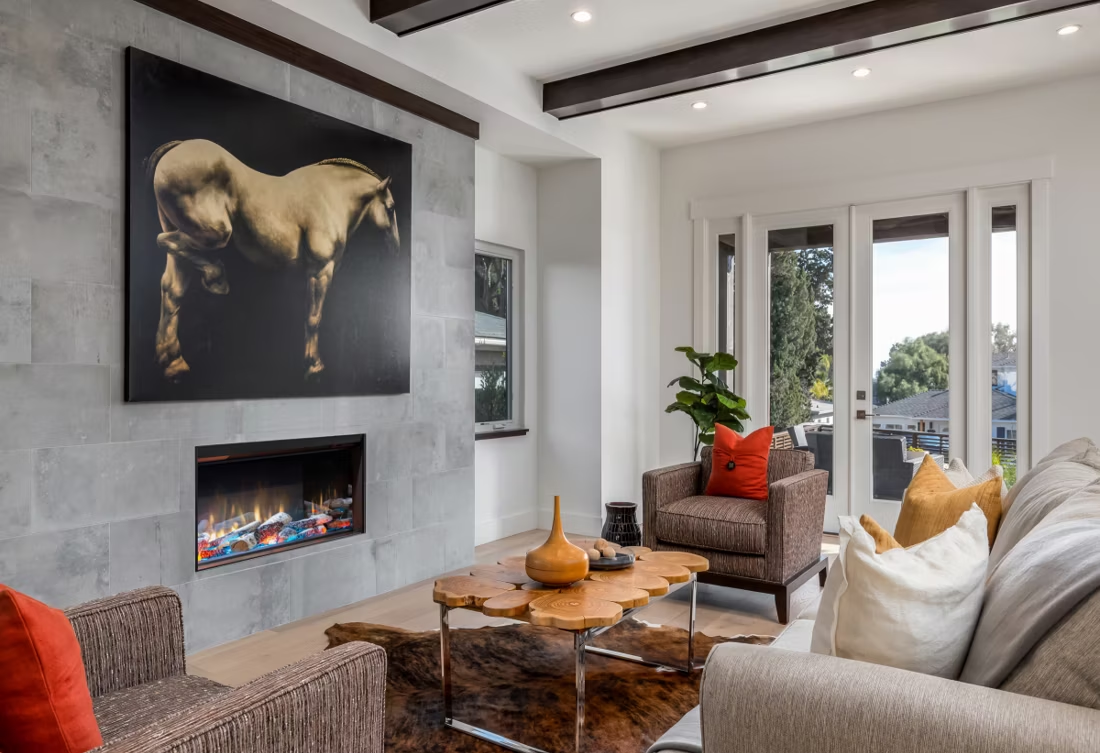
A plug-in electric insert or freestanding unit typically runs $300 to $1,500 installed, since most just need an existing outlet and a mounting bracket or a fireplace-shaped surround. A built-in wall unit—recessed into drywall with a dedicated 120V or 240V circuit run by an electrician—usually lands between $2,500 and $6,000 depending on the size of the unit and whether new framing or a mantel package is added. Given the split-level and colonial floor plans common across Huber Heights, recessed wall units in a family room or basement rec room are one of the more popular projects local dealers see.
How big of an electric fireplace do I need for my room?
Most residential electric fireplaces run on a standard 1,500-watt heating element, which puts out around 4,600–5,200 BTU—enough to comfortably heat 400 to 1,000 square feet depending on your home's insulation and ceiling height. For a typical Huber Heights family room or finished basement, that's usually sufficient as supplemental heat. If you're trying to heat a larger open-concept space, you may need two units or a larger linear model with dual heating zones—a local dealer can size this from your room's dimensions.
Do I need a permit to install an electric fireplace in Huber Heights?
A simple plug-in unit that uses an existing outlet generally doesn't require a permit. But a built-in wall unit that requires a new dedicated circuit, or any project that involves cutting into a wall or ceiling for wiring, typically needs an electrical permit through the City of Huber Heights Building Department. Most licensed electricians and hearth dealers handle this paperwork as part of the installation, so it's rarely something homeowners have to file themselves.
Will my electric fireplace still work during a power outage?
No—and this is the tradeoff worth knowing going in. Because electric fireplaces run entirely on household current, they shut off the moment the power does, with no pilot light or battery backup to fall back on. That's different from a gas unit with intermittent pilot ignition, which can keep running on battery power during an outage. If backup heat during winter storms is a priority for your household, an electric fireplace should be considered ambiance and supplemental heat rather than an emergency heat source.
What's the difference between an electric fireplace, insert, and mantel package?
An electric fireplace insert is a self-contained unit designed to drop into an existing opening—a wall cavity, an old masonry firebox, or a media console cutout. A built-in electric fireplace is recessed into new framing and finished flush with drywall, often flanked by shiplap or tile. A mantel package pairs a freestanding or insert-style electric unit with a surrounding cabinet or mantel shelf, requiring no wall modification at all. For Huber Heights homes without an existing fireplace opening, mantel packages and built-in units are both common; homes with an old, unused masonry firebox are good candidates for a drop-in insert.
What's a good electric fireplace for a Huber Heights winter?
For genuine supplemental warmth through a 22°F average winter low, look for a unit with a full 1,500-watt heating element rather than a decorative-only model—brands like Dimplex, Napoleon, and Touchstone all make widely available options in this category. Linear wall-mount styles work well in the open-concept family rooms common in newer Huber Heights construction, while stove-style freestanding units suit basements and smaller rooms. A local dealer can walk you through flame realism, heater output, and finish options based on your specific room.
How much does it cost to run an electric fireplace in Huber Heights?
At Dayton Power & Light's residential rate of roughly 8.54 cents per kWh, running a 1,500-watt electric fireplace on its heater setting costs about 13 cents an hour—call it $1 to run it for a full evening, or around $10 to $15 a month with regular daily use through the winter. Running it on flame-only mode without the heater draws only a few watts and costs next to nothing. That low per-hour cost is one of the more practical arguments for electric heat as a zone-heating supplement in this area.
Electric vs. gas fireplace—which makes more sense in Huber Heights?
Natural gas service is common throughout Huber Heights and a gas fireplace or insert will out-heat an electric unit by a wide margin, with real flame and the ability to run on a battery-backed pilot during an outage. But gas installation means venting and gas line work, generally landing in the $4,000-plus range once you factor in a technician. Electric skips all of that—no venting, no gas line, install in an afternoon—but it tops out as supplemental heat and goes dark the moment the power does. For a secondary room or a home addition without easy gas line access, electric is often the simpler, cheaper answer.
Why don't more homes in Huber Heights use wood stoves?
It's largely a function of how the city was built. Huber Heights developed rapidly as a planned postwar and late-century suburb, and the vast majority of its homes were framed without masonry chimneys or the clearances a wood stove needs. Regional firewood species like oak, hickory, maple, and cherry are plentiful just outside city limits, but retrofitting a modern Huber Heights home for a code-compliant wood-burning chimney is a significant, costly project—which is why wood heat here is genuinely rare rather than a mainstream option, and electric or gas fill that role instead.
Can I put a TV above my fireplace?
Yes—with an asterisk. Fireplaces are hot and TVs don't like heat. Either put a mantel between them to deflect rising warmth, or choose a fireplace with heat-management technology that creates a cool zone on the wall above—the wall stays around 125 degrees, barely warm, while the room still gets full heat. If you like clean lines and don't want a mantel, heat management is the answer.
What fireplace styles should I know before shopping?
Four cover most of the market: screen-front traditional (mesh front, open feel, fits craftsman homes), traditional door set (the classic look you grew up with), modern linear (wide, low, the statement piece for entertaining), and clean face contemporary (no trim—your tile or stone runs right to the fire's edge). Walk in knowing those four terms and you're ahead of most buyers.
How much should I budget for a fireplace?
For an average home—covering the fireplace, the vent pipe, and basic installation—a budget between $3,900 and $5,500 gives you a lot of options across wood, gas, and pellet. By the time you add finish work, gas line, and electrical, the average complete installation lands between $5,000 and $12,000 all-in. In a remodel or new build, a good rule is to put about 2.5% of the total project cost toward the fireplace.
Does a fireplace add value to my home?
On average, a fireplace adds back to the home about the same amount you spent installing it. Add the monthly savings from heating the rooms you actually use instead of the whole house—often hundreds of dollars a year—and the value case is strong before you even count what a fire does for how your family uses the room.
Nearby Dealers
Hearth shops serving Huber Heights and the surrounding area.
Electric Service in Huber Heights
An electric fireplace's heater draws about 1,500 watts—pennies per hour at local rates.
Dayton Power & Light Co
Find your electric fireplace in Huber Heights.
Tell us about your room and we'll put together a free Project Guide & Parts List—the right unit, mounting details, and a trusted local Huber Heights dealer to install it.
Find Your Fireplace →