
Steady pellet heat for Holmes County's long, cold winters.
With winter lows averaging 18°F and a long, demanding heating season across Holmes County's rolling farmland, a pellet stove offers automated, thermostat-controlled heat without the daily wood-splitting. Find the right unit and connect with a trusted local dealer.
Every Project Starts From One of These Five Situations
A practical fit for Ohio's Amish Country.
Holmes County sits in the rolling hill country of north-central Ohio—home to the largest Amish and Mennonite population in the world, and the county seat of Millersburg surrounded by Berlin, Charm, Walnut Creek, and Winesburg. Winters here run long: Climate Zone 5A, an average winter low near 18°F, and a heating season on par with what a household in Buffalo, NY faces most winters. The county's identity is also built on hardwood—oak, hickory, maple, and cherry feed the sawmills and furniture shops the region is famous for, and that same hardwood supply chain is what stocks regional pellet mills like Lignetics and Somerset Pellet Fuel, along with industrial suppliers such as Indeck Energy Services.
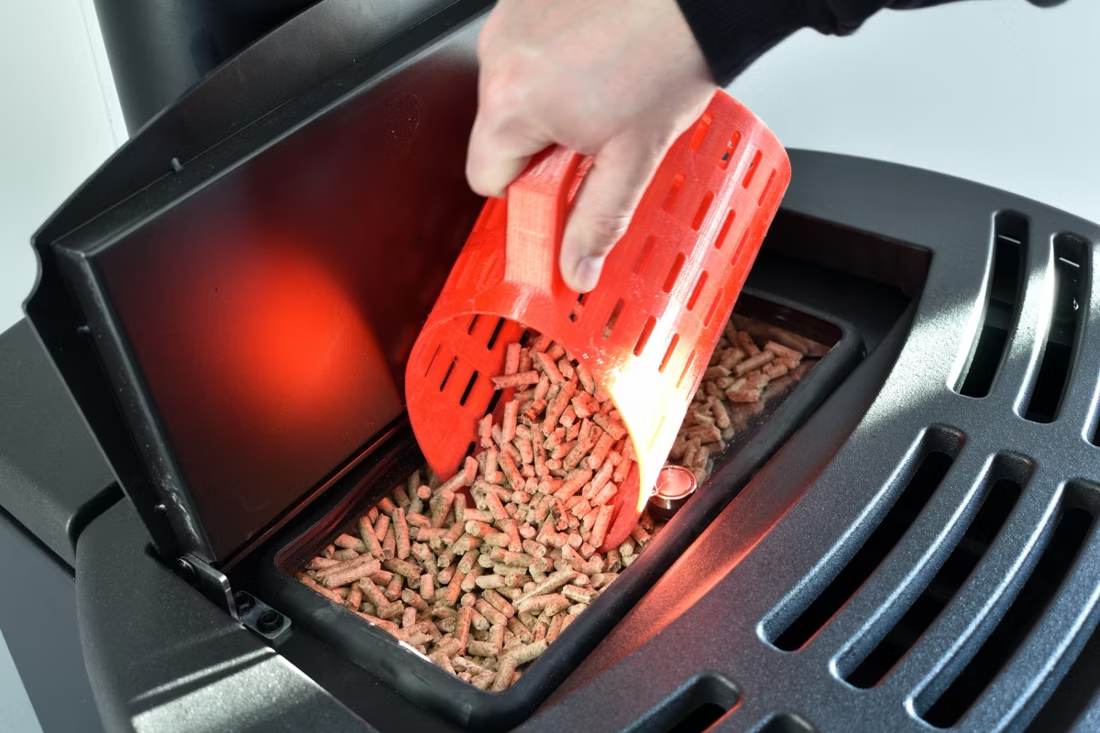
Pellet stoves have become a common choice in the county's English (non-Amish) households and in homes that already carry standard grid electric service, since the hopper, auger, and blower all run on it. That's worth being upfront about: pellet appliances are not a fit for off-grid or limited-electric homes, which is why many of the county's Amish and Mennonite households still rely on wood stoves instead. For homes with reliable power, though, a pellet stove trades the daily splitting-and-stacking routine of wood for a fill-the-hopper, set-the-thermostat rhythm—and with no air quality curtailment periods in Holmes County, there's no burn-ban season to plan around.
Three steps. No salesperson until you're ready.
Tell us about your project
Your zip code, your situation, and the fuel you're leaning toward—or let the answers point you to one.
See what's actually available
The brands dealers within 100 miles genuinely carry—real options, never a catalog mirage.
Get your dealer & Project Guide
A trusted local dealer, plus the free Project Guide & Parts List that names every component of the job.
Frequently Asked Questions
How much does a pellet stove installation cost in Holmes County?
Most pellet stove installations run in the $3,000 to $6,000 range once you account for the unit, the vent kit (typically a 3-inch or 4-inch PL vent run through an exterior wall), and any hearth pad work needed for clearance. Freestanding stoves going into a room with no existing chimney are usually on the lower end. Pellet insert conversions into an existing masonry fireplace, which reuse the chimney chase for the vent run, can land in the middle of that range depending on liner work. A local dealer will give you a firm number after seeing your home, since venting length and hearth clearance vary house to house across the county's older farmhouses and newer builds alike.
What size pellet stove do I need for my Holmes County home?
Sizing comes down to square footage, ceiling height, and how drafty the home is—a real consideration in a county with a lot of older farmhouse stock. As a rough guide for this climate: a small stove (under 40,000 BTU) suits a single room or a well-insulated addition, a mid-size unit (40,000–60,000 BTU) handles most main living areas, and a larger unit is worth considering for homes using pellet as a primary heat source through the coldest stretches, when overnight temperatures regularly sit near 18°F. Hopper capacity matters as much as BTU output here—a larger hopper (60+ lbs) means fewer refills during the long winter, which is the practical tradeoff most Holmes County homeowners weigh first.
Where do pellet stove owners in Holmes County buy pellets?
Hardwood pellets are relatively easy to source locally given the county's timber and sawmill base—Lignetics and Somerset Pellet Fuel both supply the broader region, and Indeck Energy Services operates in the biomass fuel space as well. Bagged pellets (40-lb bags) are the standard for home stoves and are typically sold by the ton (a season's supply for many homes runs 2 to 3 tons) at farm and hardware stores throughout the county. Because Holmes County sits in hardwood country, hardwood pellet blends are generally more available and often more competitively priced here than in regions that have to ship pellets in from farther away.
Will my pellet stove work if the power goes out?
No—this is the honest tradeoff with pellet stoves, and it's worth knowing before you buy. The hopper auger and combustion blower both run on standard household electric current, so a pellet stove will shut down in an outage unless you have it wired to a battery backup or a generator. For most Holmes County homes on grid power, that's a manageable inconvenience during a short outage. But it's a real reason some households in the county—particularly Amish and Mennonite homes without standard electric service—stick with wood stoves instead, since a wood stove needs no electricity at all to produce heat.
Do I need a permit to install a pellet stove in Holmes County?
Most jurisdictions in Holmes County require a building permit for a new pellet stove installation, particularly when it involves new wall penetrations for venting or hearth pad construction. Check with the building department for your specific township, or the county building office based in Millersburg, before work begins. Most established local dealers include permitting as part of the installation, so you typically won't need to file anything yourself—but it's worth confirming up front, especially if you're converting an existing wood fireplace to a pellet insert, since that changes the venting path.
Pellet stove vs. wood stove—which makes more sense in Holmes County?
Given how much oak, hickory, maple, and cherry moves through the county's sawmills, wood is genuinely cheap and available here, and a wood stove needs no electricity to run—a real advantage during winter outages. A pellet stove trades that self-sufficiency for convenience: no splitting, stacking, or hauling, more even heat output from a thermostat-controlled auger feed, and less ash to deal with day to day. For homes with reliable grid electric that want the more automated, lower-labor option, pellet is often the better fit. For homes that want backup heat independent of the power grid—or that already have a wood supply through local sawmill scraps or their own timber—wood remains the practical choice.
How much maintenance does a pellet stove need?
Pellet stoves need more routine attention than people expect, though less than a wood-burning chimney system. Plan on emptying the ash pan every few days during regular use, cleaning the burn pot weekly, and having the venting and internal components professionally cleaned at least once a year—ideally before the heating season starts in earnest. Because pellet stoves burn so consistently clean, the annual service is usually quicker and less involved than a wood chimney sweep, but skipping it can lead to auger jams or reduced efficiency right when you need the heat most.
What's the difference between a pellet stove and a pellet insert?
A pellet stove is a freestanding unit that sits on a hearth pad and vents through an exterior wall or existing chimney chase—it can go almost anywhere in a room with the right clearances. A pellet insert is built to slide into an existing masonry fireplace opening, converting an old wood fireplace into a pellet-fed heat source while reusing the existing chimney as the vent path. For Holmes County homes with an existing fireplace they want to upgrade without demolition, an insert is usually the more straightforward option. Homes without an existing fireplace opening are better suited to a freestanding stove.
What features matter most in a pellet stove for this climate?
With average winter lows near 18°F and a heating season that runs long, look for a stove with a larger hopper capacity so you're not refilling multiple times a day, along with a reliable auto-ignition system that restarts the fire without a manual lighter after brief outages or thermostat cycling. A digital thermostat interface is worth having too, since it lets the stove modulate output automatically rather than requiring you to adjust feed rate by hand through the coldest overnight stretches. Ask a local dealer which models in their lineup handle sustained cold-weather output best—hopper size and feed-rate range matter more than brand name here.
What's the difference between an insert and a zero-clearance fireplace?
An insert is a fireplace that slides into a pre-existing wood-burning fireplace—if you don't have one, there's nothing to insert it into. A zero-clearance fireplace is built into a framed wall, which makes it the answer for remodels and new construction. Simple test: existing masonry fireplace means insert; blank or framed wall means zero-clearance.
Why is a fireplace insert so efficient?
An insert does two things: it seals the chimney completely, so you stop losing air you already paid to heat, and it radiates warmth into the room through the firebox and glass. Most add a heat-exchange fan that pulls cool room air underneath, wraps it around the hot firebox, and pushes it back out warm. Your home is more efficient before you've even lit the first fire.
Can a fireplace actually lower my heating bill?
Yes—by creating a comfort zone. A furnace heats every square foot of the house just to warm the one room you're in; a gas fireplace on low burns roughly a sixth of the gas a typical furnace does. Set the furnace around 55–60 degrees as a baseline, then heat the rooms your family actually uses. Families who heat this way commonly save $20–$60 a month.
Does a fireplace add value to my home?
On average, a fireplace adds back to the home about the same amount you spent installing it. Add the monthly savings from heating the rooms you actually use instead of the whole house—often hundreds of dollars a year—and the value case is strong before you even count what a fire does for how your family uses the room.
Stove and Fireplace Dealers in Holmes County
Pellet Brands Stocked Around Holmes County
Manufacturers will point you to the nearest stocking dealer.
Find your pellet stove in Holmes County.
Tell us a bit about your home and we'll put together a free Project Guide & Parts List for your Holmes County pellet project—the right unit, the vent kit you'll need, and a match with a trusted local dealer who can install it.
Find Your Fireplace →