
Add heat and ambiance to any room in Highland County—no chimney required.
From farmhouses outside Hillsboro to apartments in Greenfield, electric fireplaces bring instant warmth and glow to rooms without a flue—plug-in or hardwired. Find the right unit and connect with a trusted local dealer.
Every Project Starts From One of These Five Situations
Simple heat for a rural county without the chimney work.
Highland County sits in south-central Ohio's climate zone 5A, with a winter heating load similar to a long, cold season and winter lows averaging 19°F—real cold, though not the extreme, sustained deep freezes you'd see farther north. Housing stock here is a mix: older farmhouses around Hillsboro and Greenfield, ranch homes in Leesburg and Mowrystown, and a meaningful share of manufactured and modular housing across the county's rural townships. A lot of that stock either lacks a masonry chimney entirely or has an existing zero-clearance wood firebox that's expensive to keep code-compliant.
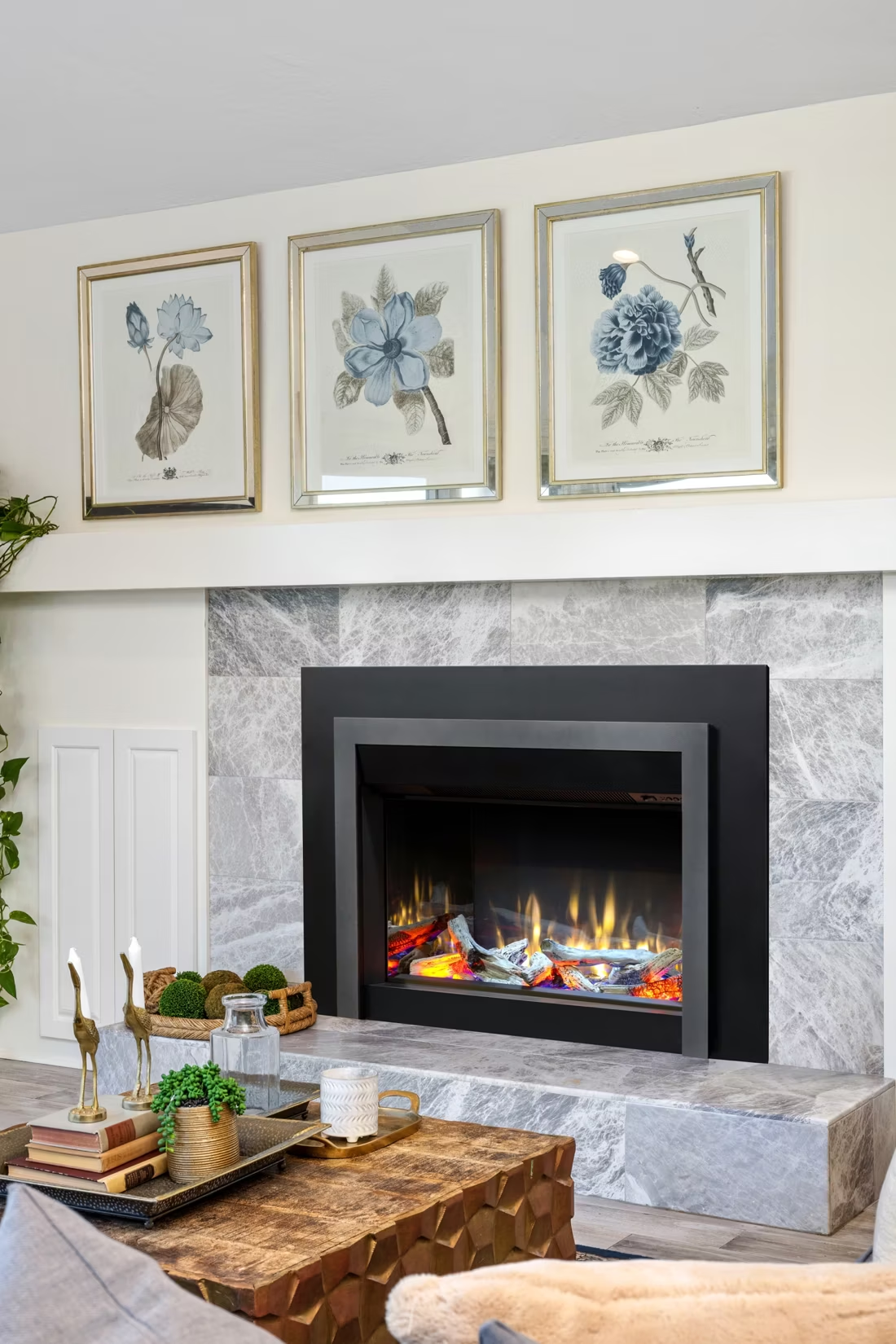
That's where electric fireplaces do real work locally. A plug-in insert can drop into an existing wood or gas firebox opening in an afternoon with no venting, no gas line, and no permit in most cases. A built-in linear unit for a new room addition or finished basement usually needs a dedicated 120V or 240V circuit, which means an electrician and a quick sign-off from the Highland County Building & Zoning Department—but still nothing close to the scope of chimney or venting work. For rental units in Hillsboro, seasonal cabins, or homeowners who want supplemental heat and fire ambiance without the upkeep of oak, hickory, or maple firewood, electric is a straightforward answer.
Three steps. No salesperson until you're ready.
Tell us about your project
Your zip code, your situation, and the fuel you're leaning toward—or let the answers point you to one.
See what's actually available
The brands dealers within 100 miles genuinely carry—real options, never a catalog mirage.
Get your dealer & Project Guide
A trusted local dealer, plus the free Project Guide & Parts List that names every component of the job.
Frequently Asked Questions
How much does an electric fireplace installation cost in Highland County?
Most electric fireplace projects in Highland County run $300 to $1,500. A plug-in insert that slides into an existing fireplace opening or a freestanding stove-style unit sits at the low end—no electrician needed, just a standard outlet. A built-in linear electric fireplace set into new framing, with a dedicated circuit run by a licensed electrician, lands toward the higher end, especially for larger 50-inch-plus units. Local dealers serving Hillsboro, Greenfield, and the surrounding townships will size the job after seeing the room and the existing wiring.
Can an electric fireplace actually heat a room, or is it just for looks?
Most electric fireplaces put out around 1,500 watts, which translates to roughly 5,000 BTUs—enough to comfortably supplement a 400 to 1,000 square foot room depending on insulation and ceiling height. With Highland County averaging 19°F on winter nights and a long, demanding heating season, an electric fireplace works well as zone heat in a den, bonus room, or finished basement, but it isn't sized to replace a furnace as your only heat source through a full Ohio winter.
Do I need a permit to install an electric fireplace in Highland County?
A plug-in insert or freestanding electric fireplace that uses an existing outlet typically doesn't require a permit. If your installer is adding a new dedicated circuit or doing any panel work for a hardwired built-in unit, that electrical work needs to be pulled through the Highland County Building & Zoning Department and performed by a licensed electrician. Most local dealers coordinate that permit as part of the installation, so it's rarely something you have to manage yourself.
What's the difference between an electric fireplace insert and a built-in electric fireplace?
An insert is designed to slide into an existing fireplace opening—masonry, zero-clearance wood, or even an old gas firebox—and usually just needs a standard outlet behind or beside the opening. A built-in electric fireplace is framed into a wall like new construction, often wired on its own circuit, and gives a cleaner, more custom look for a room addition or remodel. For Highland County homeowners with an existing fireplace they no longer want to burn wood in, an insert is usually the faster, cheaper path. For new spaces without any existing firebox, a built-in unit is the better fit.
Can I convert my old wood-burning fireplace to electric?
Yes, and it's a common request from Highland County homeowners with an aging zero-clearance wood fireplace they don't want to keep sweeping or feeding oak and hickory into every winter. An electric insert sized to your existing opening drops in without any chimney work, and many models include a blower for real supplemental heat rather than just visual flame. The conversion typically costs far less than a gas insert conversion since there's no gas line or venting to run—just the insert itself and, in some cases, a nearby outlet.
What will an electric fireplace cost to run on my electric bill?
A typical 1,500-watt electric fireplace run for four hours an evening adds roughly $0.60 to $1.00 a day depending on your rate, whether you're served by South Central Power Company, Frontier Power, or AEP Ohio in your part of the county. Most models let you run the flame effect alone with the heater off, which uses only a few watts—useful if you want the ambiance without adding to the heating bill on a mild evening.
What are the best electric fireplace brands for Highland County homes?
Dimplex and Napoleon are the two most widely stocked brands among hearth dealers serving south-central Ohio, known for realistic flame technology and reliable heaters that hold up to daily winter use. Touchstone is a common choice for smaller rooms or apartments in Hillsboro and Greenfield where a slimmer wall-mount unit fits better than a full insert. Ask your local dealer which models they carry and service directly—that matters more for warranty support than the brand name alone.
Will my electric fireplace still work if the power goes out?
No—unlike a wood stove or a battery-backed gas unit, an electric fireplace needs grid power to run, both for the flame effect and the heater. In Highland County's rural townships, where outages during winter ice storms can stretch for hours, that's worth planning around if you're relying on any single unit as backup heat. Homeowners who want both convenience and outage protection often pair an electric fireplace in the main living space with a wood stove or insert elsewhere in the house, burning local oak, hickory, or cherry as true backup heat.
Electric fireplace vs. a portable space heater—what's the real difference?
A portable space heater is a temporary, movable appliance with none of the styling or resale value of a fireplace. An electric fireplace insert or built-in unit uses similar wattage but is designed as a permanent fixture—better looking, safer around furniture and pets with cool-touch glass on most modern units, and it can increase a home's appeal when you sell, especially in older Highland County homes with an existing fireplace opening that's otherwise sitting unused. If you just need short-term heat in one spot, a space heater is cheaper. If you want a permanent, attractive heat source in a room without a chimney, an electric fireplace is the better long-term investment.
Can I put a TV above my fireplace?
Yes—with an asterisk. Fireplaces are hot and TVs don't like heat. Either put a mantel between them to deflect rising warmth, or choose a fireplace with heat-management technology that creates a cool zone on the wall above—the wall stays around 125 degrees, barely warm, while the room still gets full heat. If you like clean lines and don't want a mantel, heat management is the answer.
Does an electric fireplace need a vent or chimney?
No—that's its superpower. An electric fireplace needs a wall and an outlet, period. No vent pipe, no gas line, no clearances to design around, which is why it works in bedrooms, offices, apartments, and walls where venting a gas or wood unit would be impractical or impossible. Installation is typically the simplest and least expensive of any fireplace type.
Can a fireplace actually lower my heating bill?
Yes—by creating a comfort zone. A furnace heats every square foot of the house just to warm the one room you're in; a gas fireplace on low burns roughly a sixth of the gas a typical furnace does. Set the furnace around 55–60 degrees as a baseline, then heat the rooms your family actually uses. Families who heat this way commonly save $20–$60 a month.
How much should I budget for a fireplace?
For an average home—covering the fireplace, the vent pipe, and basic installation—a budget between $3,900 and $5,500 gives you a lot of options across wood, gas, and pellet. By the time you add finish work, gas line, and electrical, the average complete installation lands between $5,000 and $12,000 all-in. In a remodel or new build, a good rule is to put about 2.5% of the total project cost toward the fireplace.
Stove and Fireplace Dealers in Highland County
Find your electric fireplace in Highland County.
Tell us a bit about your room and wiring situation and we'll match you with the right electric insert or built-in unit—plus a free Project Guide & Parts List and a trusted local dealer to install it.
Find Your Fireplace →