
Warmth without a chimney, anywhere in Hamilton County.
From a converted rowhouse mantel in Over-the-Rhine to a downtown condo tower with no flue to speak of, electric heat fits where venting doesn't. Find the right unit for your space and connect with a trusted local dealer.
Every Project Starts From One of These Five Situations
The retrofit fireplace for Cincinnati's brick housing stock.
Hamilton County's winters are real but moderate—Climate Zone 4A, an average winter low around 24°F, and a moderate winter heating season overall. That's a fraction of what a place like Buffalo, NY sees, which is exactly why electric fireplaces work so well here: homeowners want supplemental warmth and ambiance in a specific room, not a primary heat source that has to fight single-digit nights all winter. A gas furnace or Duke Energy-fed forced air system carries the load; the fireplace just needs to make one room feel finished.
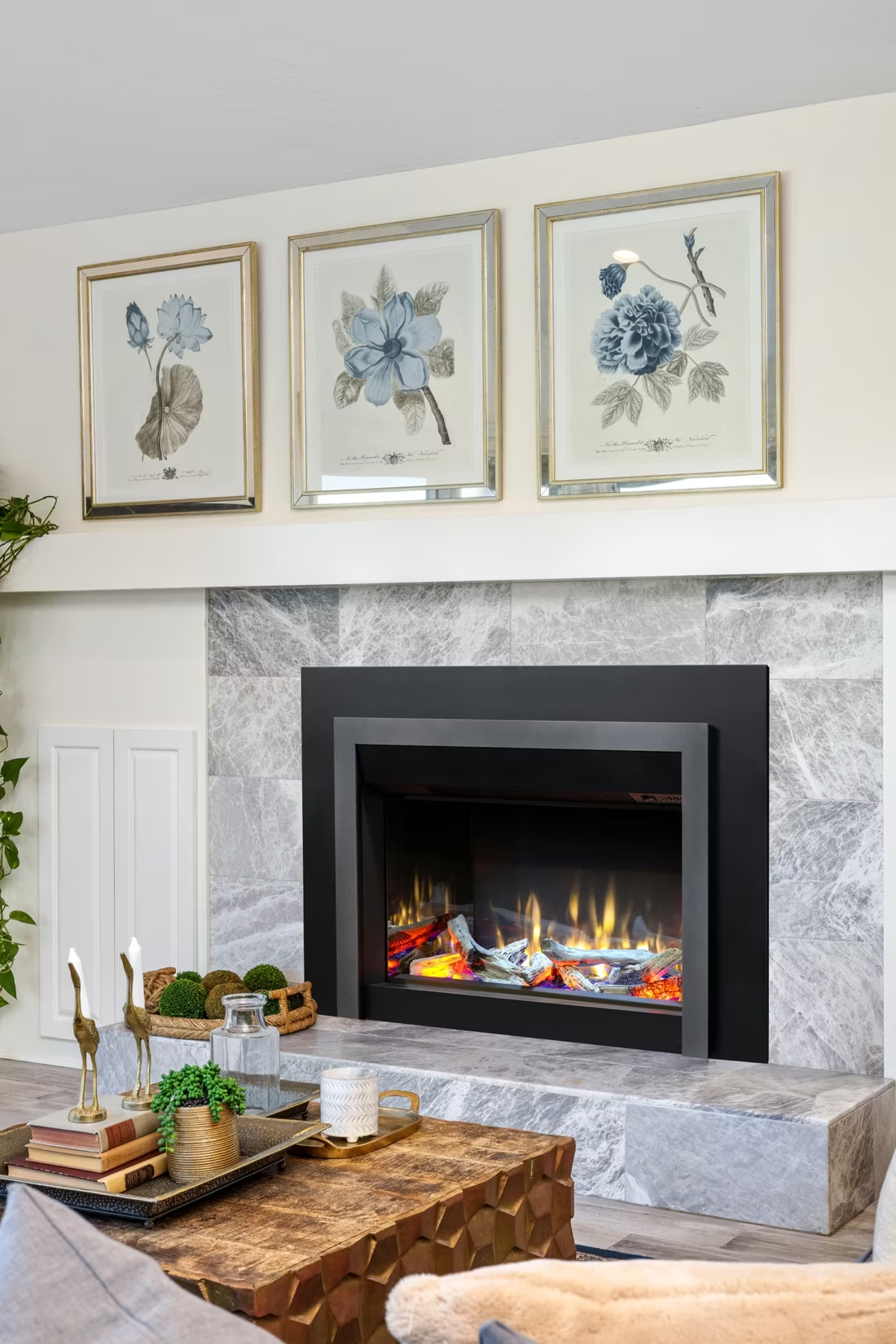
A huge share of Hamilton County's housing stock works against venting anyway. Cincinnati's 19th-century brick rowhouses in Over-the-Rhine, the Italianate homes around Mount Adams, and the postwar bungalows scattered through Norwood and Westwood frequently have capped, removed, or structurally compromised chimneys. Downtown high-rise condos and newer builds in the suburbs often have none at all. Electric inserts and wall units solve that instantly—no flue, no gas line, and in most cases no building permit beyond a standard electrical hookup—which is why they've become the default fireplace choice for condo associations and renovators alike across the county.
Three steps. No salesperson until you're ready.
Tell us about your project
Your zip code, your situation, and the fuel you're leaning toward—or let the answers point you to one.
See what's actually available
The brands dealers within 100 miles genuinely carry—real options, never a catalog mirage.
Get your dealer & Project Guide
A trusted local dealer, plus the free Project Guide & Parts List that names every component of the job.
Frequently Asked Questions
How much does an electric fireplace installation cost in Hamilton County?
Plug-in electric inserts and mantel packages that use a standard household outlet run as low as $300 to $800 installed, since there's no dedicated wiring or permit involved beyond setting the unit in an existing opening. Built-in wall units or larger linear electric fireplaces that need a dedicated 120V or 240V circuit run from an electrician typically land between $1,200 and $2,500, depending on the wall opening work and whether drywall or trim carpentry is involved. Compare that to the $4,500-plus you'd typically see for a vented gas insert in the same house, and it's clear why electric is the go-to for a quick, code-simple upgrade in an existing fireplace opening or bare wall in places like Hyde Park or Anderson Township.
Will an electric fireplace actually heat my room, or is it just for looks?
Most electric fireplaces sold in Hamilton County put out around 4,000 to 5,000 BTU on a 1,500-watt heating element—enough to noticeably warm a single room (say 300 to 400 square feet) on top of your home's existing heat, but not enough to replace a furnace given the county's moderate winter heating season. Think of it as zone heating: many homeowners run the flame visual year-round for ambiance and switch on the heater only in the room they're using, which also keeps the electric bill down. If you're trying to heat an entire uninsulated addition or a drafty sunroom, talk to a local dealer about unit placement and wattage before assuming one unit will do it.
Do I need a permit to install an electric fireplace in Hamilton County?
For a plug-in insert or freestanding electric stove that just needs a wall outlet, no permit is required—it's treated like any other appliance. If you're having a built-in unit hardwired on a dedicated circuit, that electrical work typically needs a permit through the Cincinnati Department of Buildings and Inspections if you're inside city limits, or the Hamilton County Building Department for unincorporated areas like Colerain or Green Township. Most licensed electricians handle the permit filing as part of the job. Either way, there's no chimney inspection, no venting code, and no gas-line sign-off to worry about—a big part of why electric is the simplest fireplace project in the county.
Can I install an electric fireplace in a condo or rental in downtown Cincinnati?
In most cases, yes—and it's often the only fireplace option available. Condo associations in downtown Cincinnati towers and converted OTR buildings routinely prohibit anything requiring venting or an exterior penetration, which rules out wood and most gas units. A plug-in electric insert or a freestanding electric stove sidesteps that entirely since it doesn't touch the building's exterior or shared systems. Renters have the same advantage—a freestanding unit can move with you, while a wall-mounted linear unit is more of a landlord-approved, semi-permanent upgrade. Check your lease or HOA bylaws for anything specific to supplemental heaters, but electric clears the vast majority of restrictions that block other fuels.
My historic Cincinnati home has a capped chimney—can I still put a fireplace in that opening?
Yes, and it's one of the more common projects in neighborhoods like Mount Adams, Clifton, and Over-the-Rhine where 19th-century masonry chimneys are often capped, unlined, or structurally unsafe to reopen for wood or gas use. An electric insert sized to the existing masonry opening slides in without touching the flue at all—it simply sits in the opening and plugs in or gets wired to a nearby outlet. You keep the original mantel and surround, get real supplemental heat and a realistic flame effect, and skip the cost of chimney relining or rebuilding that a wood or gas conversion would require.
Built-in, wall-mounted, or freestanding electric fireplace—which fits my space?
Built-in units frame into a wall cavity for a flush, custom look—common in new construction or full remodels in newer Hamilton County subdivisions. Wall-mounted linear units hang like a large flat panel and need only a nearby outlet or short electrical run, popular in condo living rooms and finished basements. Freestanding electric stoves and mantel packages sit on the floor or slide into an existing fireplace opening, which is the most common retrofit for older Cincinnati homes with a masonry surround already in place. A local dealer can walk your specific wall or opening and tell you which format actually fits without demo work.
What does it cost to run an electric fireplace with Duke Energy rates?
Most electric fireplaces draw about 1,500 watts on the heat setting, which works out to roughly $0.15 to $0.25 per hour of heated use at typical Duke Energy Ohio residential rates—a few dollars for an evening of use. Running just the flame effect without heat draws far less, often under 100 watts, so leaving the ambiance on while the room heats another way costs pennies. Compare that to a gas insert, where fuel cost per BTU is usually lower for continuous heating but comes with the added expense of the gas line and venting installation up front. For occasional, room-by-room use, electric's simplicity usually outweighs the modest per-hour cost difference.
Should I get gas or electric for my Hamilton County home?
Both are common choices here, and Duke Energy Ohio serves both natural gas and electric across most of the county, so fuel availability usually isn't the deciding factor. Gas fireplaces and inserts (typically $4,500 to $11,000 installed) deliver more consistent, higher-output heat and work during power outages with the right ignition system—a real plus if you want a fireplace that can double as backup heat. Electric fireplaces cost a fraction to install, need no venting or gas line, and go anywhere a wall or existing opening allows—which makes them the practical choice for condos, rentals, finished basements, and older homes with compromised chimneys. Many Hamilton County homeowners end up with gas in a primary living space and electric in a bedroom, home office, or secondary room where running a gas line doesn't make sense.
Why doesn't this page cover wood or pellet stoves for Hamilton County?
Wood and pellet stoves are genuinely uncommon across most of Hamilton County's housing stock. The county is overwhelmingly urban and suburban—dense rowhouses, condo towers, and postwar subdivisions in neighborhoods like Norwood, Westwood, and downtown Cincinnati rarely have the chimney access, clearances, or storage space that wood heat requires, and there's little of the rural wood-cutting culture you'd find in a forested county. A handful of homeowners on larger lots in the county's outer townships still run wood stoves for supplemental heat or ambiance, but for the vast majority of Hamilton County residents, gas and electric are the fireplace options that actually fit the building stock—which is why this page focuses on electric.
Can I put a TV above my fireplace?
Yes—with an asterisk. Fireplaces are hot and TVs don't like heat. Either put a mantel between them to deflect rising warmth, or choose a fireplace with heat-management technology that creates a cool zone on the wall above—the wall stays around 125 degrees, barely warm, while the room still gets full heat. If you like clean lines and don't want a mantel, heat management is the answer.
Do electric fireplaces actually produce heat?
Yes—most put out around 4,800–5,000 BTUs from a standard outlet, which comfortably warms a bedroom, office, or den as a comfort-zone heater. What they won't do is carry a whole house the way wood, gas, or pellet can. Think of electric as ambiance-first with honest supplemental heat: flames on with no heat in July, flames plus warmth in January.
How much should I budget for a fireplace?
For an average home—covering the fireplace, the vent pipe, and basic installation—a budget between $3,900 and $5,500 gives you a lot of options across wood, gas, and pellet. By the time you add finish work, gas line, and electrical, the average complete installation lands between $5,000 and $12,000 all-in. In a remodel or new build, a good rule is to put about 2.5% of the total project cost toward the fireplace.
Can I install a fireplace myself?
If you're putting a fire in your house on purpose, it's best to work with an expert. Unless you're genuinely experienced in framing, gas line, vent pipe, and the national code on clearances to combustibles, have a professional do it—and ideally the same company that sells you the fireplace, so warranty, service, and liability all live under one roof.
Stove and Fireplace Dealers in Hamilton County
Reading Rock's Fireside Hearth & Home
Vonderhaar Fireplace Stoves & Masonry
Find your electric fireplace in Hamilton County.
Tell us a bit about your home—condo, rowhouse, or suburban build—and we'll match you with the right electric fireplace or insert, plus a free Project Guide & Parts List and a trusted local dealer to install it.
Find Your Fireplace →