
Add Real Warmth to Any Room in Cincinnati—No Chimney Required.
From Over-the-Rhine rowhouses to Hyde Park brick colonials, electric fireplaces bring ambiance and supplemental heat to homes without a working flue. Find the right unit and get matched with a trusted local dealer.
Every Project Starts From One of These Five Situations
The easiest fireplace upgrade for Queen City homes.
Cincinnati sits along the Ohio River at about 741 feet elevation, in climate zone 4A, with winter lows averaging 24°F and a solidly cold winter heating season—cold enough to want supplemental heat in the shoulder seasons, but nowhere near the extremes of Duluth MN or Fargo ND. A lot of the city's housing stock, though, works against traditional wood or gas fireplace installs: dense 19th-century rowhouses in Over-the-Rhine, shared-wall duplexes in Northside and Price Hill, and older brick bungalows in Westwood and Oakley often lack an existing chimney, or have a flue that's been capped or condemned for decades.
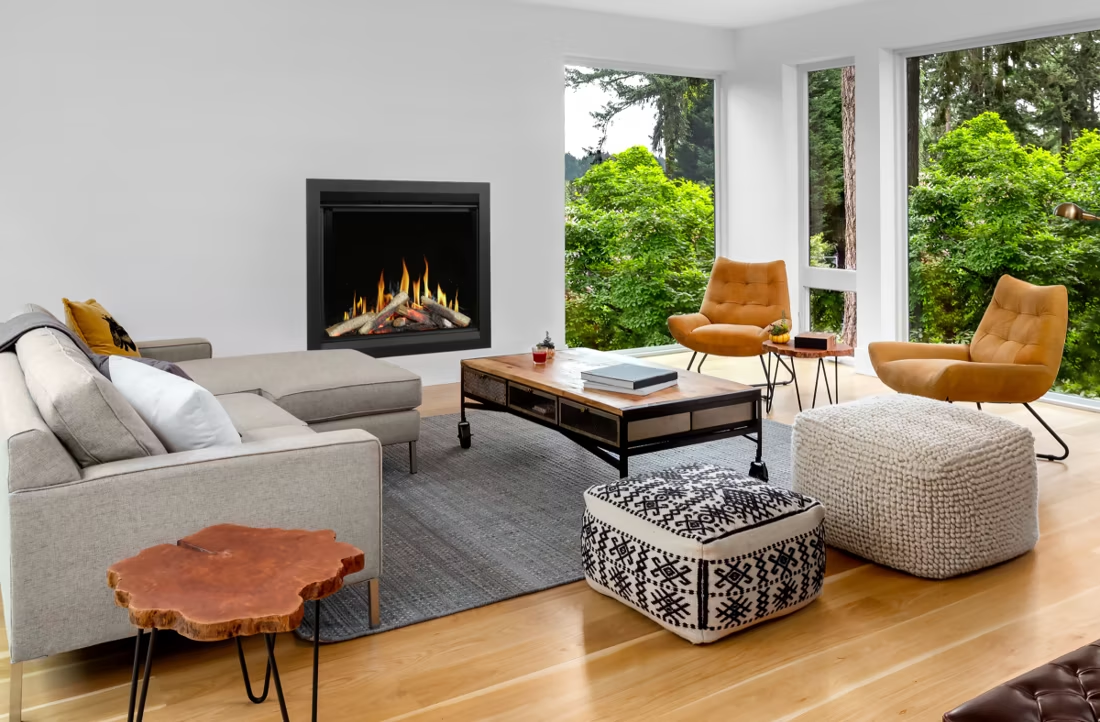
That's where electric fireplaces fit in. Duke Energy Ohio serves the metro at a residential rate around $0.1083 per kWh—one of the more affordable rates in the Midwest—which keeps zone heating with an electric unit cheap to run. There's no venting to size, no chimney to inspect, and in most cases no building permit at all: plug in a freestanding unit, or have a licensed electrician add a dedicated circuit for a built-in wall or linear model. For homes in Cincinnati's historic districts, where exterior venting changes can trigger review from the city's Historic Conservation Board, an electric unit sidesteps that process entirely because nothing penetrates the wall or roof.
Three steps. No salesperson until you're ready.
Tell us about your project
Your zip code, your situation, and the fuel you're leaning toward—or let the answers point you to one.
See what's actually available
The brands dealers within 100 miles genuinely carry—real options, never a catalog mirage.
Get your dealer & Project Guide
A trusted local dealer, plus the free Project Guide & Parts List that names every component of the job.
Frequently Asked Questions
How much does an electric fireplace installation cost in Cincinnati?
A plug-in electric insert or freestanding stove runs $200 to $1,000 installed, since most just need an existing 120V outlet. A built-in wall-mount or linear electric fireplace with a finished mantel or surround typically runs $1,500 to $4,000, and if the location needs a new dedicated 20-amp circuit, expect to add $150 to $400 for a licensed electrician to run it. Compare that to a gas insert conversion in an older Cincinnati fireplace, which usually starts closer to $4,000 once gas line work and venting are involved—electric is the lower-cost, lower-hassle option for most rooms.
Do I need a permit to install an electric fireplace in Cincinnati?
Usually not. A freestanding or plug-in electric fireplace that uses an existing outlet doesn't typically require a permit from the City of Cincinnati Department of Buildings and Inspections. If your installer needs to run a new dedicated circuit for a built-in wall unit, that electrical work does require a permit pulled by a licensed electrician—but it's a same-day inspection process, nothing like the building permit and chimney inspection required for a wood or gas installation.
Will an electric fireplace actually heat a room in Cincinnati's winters?
Most electric fireplaces use a standard 1,500-watt heater, which produces around 5,000 BTU—enough to comfortably warm a single room of 300 to 400 square feet, but not enough to replace central heat during a stretch of 24°F nights. Think of it as zone heating: run it in the room you're using and turn the furnace down a few degrees, rather than expecting it to carry a whole Cincinnati winter on its own. For whole-home heating in this climate, gas remains the standard choice.
What's the best type of electric fireplace for an older Cincinnati home?
If you have an existing masonry firebox with a capped or unlined flue—common in Clifton and Mount Adams Victorians—an electric insert that slides into that opening gives you the look of a working fireplace without touching the chimney. For rooms with no existing fireplace at all, a wall-mounted or linear electric unit with a simple mantel surround is the more popular route in newer Oakley and Hyde Park remodels. A local dealer can tell you within minutes which option fits your specific opening.
Will an electric fireplace cause problems in a historic district home?
Generally no, and that's one of the real advantages. Cincinnati's historic districts, including Over-the-Rhine and Mount Adams, review exterior changes like new chimneys or vent terminations through the Historic Conservation Board. Because an electric fireplace doesn't vent through the wall or roof, adding one indoors typically falls outside that review process entirely—a meaningful difference from adding a new gas vent pipe or chimney liner on a historic facade.
How much does it cost to run an electric fireplace in Cincinnati?
At Duke Energy Ohio's residential rate of roughly $0.1083 per kWh, a typical 1,500-watt unit costs about 16 cents an hour to run on high. Used five hours a night through a cold snap, that's roughly $24 a month—far less than most homeowners assume, and a fraction of the standby cost of keeping a gas fireplace's pilot light lit year-round.
Electric vs. gas fireplace—which is right for my Cincinnati home?
Gas is the standard choice in this region for real heat output, instant flame, and operation as a supplemental or even primary heat source during a cold snap—and natural gas service is widely available across Hamilton County. Electric wins on installation simplicity, upfront cost, and flexibility, since it can go almost anywhere with an outlet and needs no venting or gas line. For a family room addition or a condo without a chimney, electric is often the practical answer; for a primary living space where you want serious heat, gas is worth the extra installation cost.
Does an electric fireplace work during a power outage?
No—an electric fireplace is entirely dependent on grid power, so it will shut off the moment the electricity does. That's worth knowing if you're weighing it against a gas fireplace with battery-backup ignition, which can keep running through an outage. In Cincinnati, outages tend to be short and storm-related rather than prolonged, but if backup heat is a priority for your household, that's a real point in gas's favor.
Why don't more Cincinnati homes use wood-burning fireplaces?
Regional hardwoods like oak, hickory, maple, and cherry are plentiful in the area, and rural Hamilton County properties do sometimes run wood stoves. But inside the city itself, dense rowhouse and duplex construction, shared walls, and a lot of capped or missing chimneys make new wood-burning installs impractical for most homeowners—there's often nowhere to safely run a Class A chimney without major construction. That gap is exactly why electric fireplaces have become the go-to way to add fireplace ambiance in Cincinnati's older, tighter housing stock.
Can I put a TV above my fireplace?
Yes—with an asterisk. Fireplaces are hot and TVs don't like heat. Either put a mantel between them to deflect rising warmth, or choose a fireplace with heat-management technology that creates a cool zone on the wall above—the wall stays around 125 degrees, barely warm, while the room still gets full heat. If you like clean lines and don't want a mantel, heat management is the answer.
Do electric fireplaces actually produce heat?
Yes—most put out around 4,800–5,000 BTUs from a standard outlet, which comfortably warms a bedroom, office, or den as a comfort-zone heater. What they won't do is carry a whole house the way wood, gas, or pellet can. Think of electric as ambiance-first with honest supplemental heat: flames on with no heat in July, flames plus warmth in January.
Can I install a fireplace myself?
If you're putting a fire in your house on purpose, it's best to work with an expert. Unless you're genuinely experienced in framing, gas line, vent pipe, and the national code on clearances to combustibles, have a professional do it—and ideally the same company that sells you the fireplace, so warranty, service, and liability all live under one roof.
Can a fireplace actually lower my heating bill?
Yes—by creating a comfort zone. A furnace heats every square foot of the house just to warm the one room you're in; a gas fireplace on low burns roughly a sixth of the gas a typical furnace does. Set the furnace around 55–60 degrees as a baseline, then heat the rooms your family actually uses. Families who heat this way commonly save $20–$60 a month.
Preferred Dealer in Cincinnati
Marked Preferred because they run on WhyFire's software—so they can show you real pricing and book your appointment right here. No manufacturer pays for placement. How we verify dealers →
Electric Service in Cincinnati
An electric fireplace's heater draws about 1,500 watts—pennies per hour at local rates.
Duke Energy Ohio Inc
Find your electric fireplace in Cincinnati.
Tell us a bit about your home and we'll put together a free Project Guide & Parts List—the right electric fireplace or insert for your space, the wiring and mounting parts needed, and a recommended local dealer in Cincinnati to install it.
Find Your Fireplace →