
Warm up your Grove City home without a chimney.
No gas line, no cord wood, no venting to plan around—just plug in or wire to a dedicated circuit. Find the right electric fireplace for your home and connect with a trusted local dealer.
Every Project Starts From One of These Five Situations
Convenient heat without the venting hassle.
Grove City sits in Franklin County just southwest of Columbus, at 809 feet elevation with a climate zone of 5A and roughly 5,358 heating degree days a year. That's a real Ohio winter—average lows near 19°F—but nowhere near the punishing cold of a place like Duluth, MN, which racks up over 9,000 heating degree days most years. For Grove City homes, electric fireplaces tend to serve as supplemental heat and ambiance rather than a whole-house solution: a finished basement, a primary bedroom, a sunroom addition, or a condo where a masonry chimney was never part of the plan.
Most of Grove City is served by Ohio Power Co (AEP Ohio), with residential rates around 14.35 cents per kWh, while a portion of residents near the Columbus city line fall under the City of Columbus's own municipal electric service at a lower 11.32 cents per kWh. Either way, an electric fireplace sidesteps the firewood-cutting and ash-hauling that comes with the oak, hickory, maple, and cherry burned in older Franklin County homes, and it avoids the gas line work a Columbia Gas of Ohio hookup requires. For newer subdivisions built without chimneys—and for the many HOA-governed developments around Grove City that restrict exterior venting—electric is often the only realistic fireplace option, not just the easiest one.
Three steps. No salesperson until you're ready.
Tell us about your project
Your zip code, your situation, and the fuel you're leaning toward—or let the answers point you to one.
See what's actually available
The brands dealers within 100 miles genuinely carry—real options, never a catalog mirage.
Get your dealer & Project Guide
A trusted local dealer, plus the free Project Guide & Parts List that names every component of the job.
Frequently Asked Questions
How much does an electric fireplace installation cost in Grove City?
A plug-in electric insert or freestanding stove typically runs $300 to $1,200 installed, since it uses an existing standard outlet and needs no permit or electrician. A built-in wall unit or mantel package—the more common choice for a finished basement or living room focal wall—runs $1,500 to $4,000 once you factor in a dedicated 20-amp circuit, which most manufacturers recommend and a licensed electrician needs to pull. Either option comes in well under the $4,500-plus typical for a gas insert with venting work, since there's no flue, no gas line, and no masonry to open up.
Do I need a permit to install an electric fireplace in Grove City?
Plug-in units generally don't require a permit since they connect to an existing outlet like any other appliance. If your install calls for a new dedicated circuit—common for larger built-in units—the electrical work needs a permit through the City of Grove City Building Department (or Franklin County if you're outside city limits), and it should be pulled by a licensed electrician. Most local dealers can recommend an electrician familiar with these installs, or handle the coordination for you as part of a built-in project.
How much does it cost to run an electric fireplace in Grove City?
Most electric fireplaces draw around 1,500 watts on the heat setting. Run five hours a day, that's roughly 7.5 kWh—about $1.08 a day, or $32 a month, at Ohio Power Co's residential rate of 14.35 cents per kWh. If your home falls under the City of Columbus's municipal electric service at 11.32 cents per kWh, that drops to about $0.85 a day, or $25 a month. Ambiance-only mode (flame effect, no heat) uses a fraction of that, often under 100 watts.
Will an electric fireplace keep my home warm during a power outage?
No—and this is worth being honest about. Electric fireplaces require power to run the heater, blower, and flame effect, so they shut down the moment the grid does. If backup heat during winter outages is a priority for your Grove City home, a wood stove or a battery-backed gas unit is the better fit for that specific need. Electric fireplaces are best understood as supplemental comfort heat and ambiance for day-to-day use, not an emergency heat source.
Can I install an electric fireplace in a Grove City condo or HOA neighborhood?
In most cases, yes—and it's often the only fireplace option available. Many of Grove City's newer subdivisions and townhome communities have HOA covenants that restrict exterior venting, wood smoke, or masonry chimney additions. Since electric fireplaces need no venting and no gas line, they typically fall outside those restrictions entirely. It's still worth a quick check of your HOA's architectural guidelines before a built-in wall installation, since some communities have rules about altering interior walls that are shared with common structure.
What's the best type of electric fireplace for a finished basement?
For the lower ceiling heights typical of a Grove City basement finish, a built-in wall unit or a linear electric insert mounted flush into a framed wall tends to look best and heat the space more evenly than a bulky freestanding stove. Brands like Dimplex, Napoleon, and Touchstone all make basement-friendly built-in models with supplemental heaters rated for 400 to 1,000 square feet. A local dealer can confirm sizing based on your basement's square footage and insulation before you commit to a specific unit.
What's the difference between an electric fireplace, insert, and wall unit?
A freestanding electric fireplace or stove is a self-contained unit you plug in and place like furniture—no wall modification needed. An electric insert is built to slide into an existing masonry fireplace opening, useful if you're converting an old wood-burning fireplace to electric without any chimney work. A wall-mounted or built-in electric unit is recessed into a framed wall for a flush, modern look, and usually needs a dedicated circuit. For Grove City's mostly newer housing stock without existing masonry fireplaces, freestanding and built-in wall units are the two most common choices.
Electric vs. gas fireplace—which makes more sense in Grove City?
Natural gas service from Columbia Gas of Ohio is widely available throughout Grove City, so a gas fireplace is a real option for homeowners who want higher heat output and a more traditional flame. But gas installation involves running a gas line and venting, which pushes install costs to $4,500 or more. Electric skips both of those steps entirely, installs in an afternoon, and costs a fraction as much upfront—the tradeoff is lower heat output and a flame effect that reads as attractive but clearly electric rather than a live fire. For supplemental heat and ambiance in a family room or basement, electric is usually the more practical and cost-effective call.
Electric vs. wood-burning—why would I choose electric in a wood-heavy county?
Franklin County has plenty of oak, hickory, maple, and cherry available for wood burners, and older homes in the area sometimes still have a working masonry fireplace. But most of Grove City's housing was built without one, and adding a wood-burning fireplace or stove from scratch means a full chimney system, annual sweeps, and cutting or buying cordwood. Electric requires none of that—no ash, no creosote, no permit for cutting, no HOA conflict over smoke. For a homeowner who wants the look and comfort of a fireplace without taking on wood handling and chimney maintenance, electric is the lower-friction choice, even in a county where wood heat is common.
Can I put a TV above my fireplace?
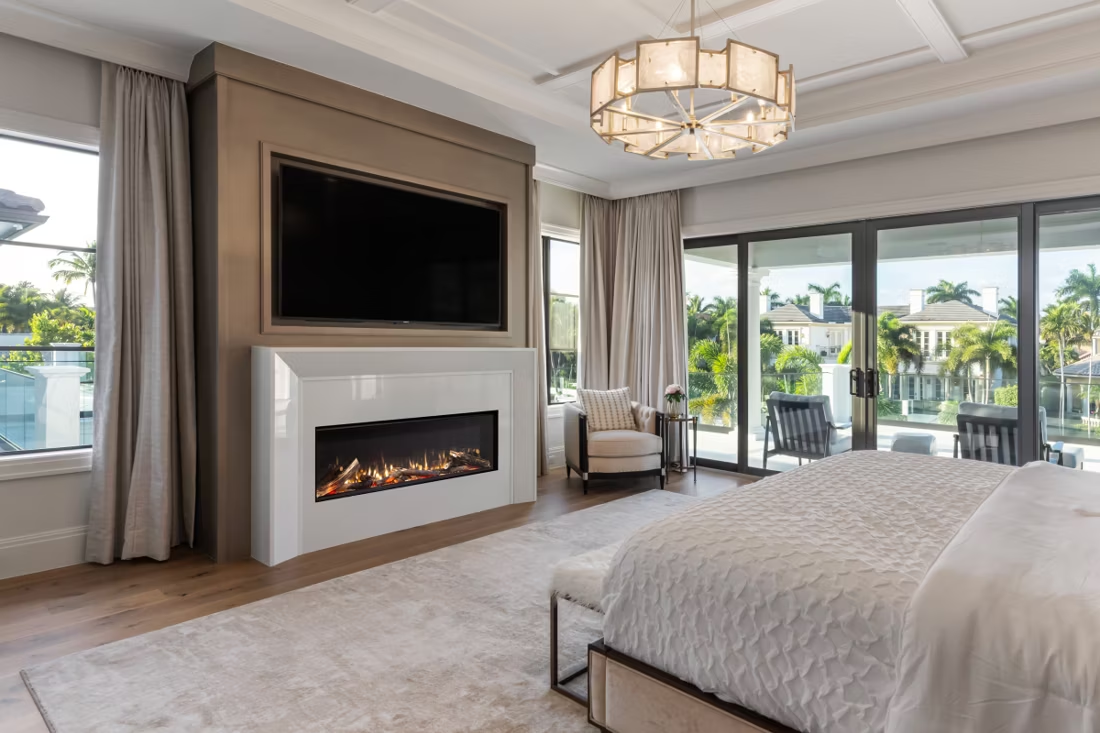
Yes—with an asterisk. Fireplaces are hot and TVs don't like heat. Either put a mantel between them to deflect rising warmth, or choose a fireplace with heat-management technology that creates a cool zone on the wall above—the wall stays around 125 degrees, barely warm, while the room still gets full heat. If you like clean lines and don't want a mantel, heat management is the answer.
What fireplace styles should I know before shopping?
Four cover most of the market: screen-front traditional (mesh front, open feel, fits craftsman homes), traditional door set (the classic look you grew up with), modern linear (wide, low, the statement piece for entertaining), and clean face contemporary (no trim—your tile or stone runs right to the fire's edge). Walk in knowing those four terms and you're ahead of most buyers.
Can I install a fireplace myself?
If you're putting a fire in your house on purpose, it's best to work with an expert. Unless you're genuinely experienced in framing, gas line, vent pipe, and the national code on clearances to combustibles, have a professional do it—and ideally the same company that sells you the fireplace, so warranty, service, and liability all live under one roof.
Can a fireplace actually lower my heating bill?
Yes—by creating a comfort zone. A furnace heats every square foot of the house just to warm the one room you're in; a gas fireplace on low burns roughly a sixth of the gas a typical furnace does. Set the furnace around 55–60 degrees as a baseline, then heat the rooms your family actually uses. Families who heat this way commonly save $20–$60 a month.
Preferred Dealer in Grove City
Electric Service in Grove City
An electric fireplace's heater draws about 1,500 watts—pennies per hour at local rates.
Ohio Power Co
City Of Columbus - (Oh)
Find your electric fireplace in Grove City.
Tell us about your Grove City home and we'll put together a free Project Guide & Parts List—the right electric fireplace or insert, the circuit or outlet requirements, and a trusted local dealer to install it.
Find Your Fireplace →