
Find a pellet stove built for Geauga County's real winters.
With 6,677 heating degree days—on par with Burlington, Vermont—and lake-effect snow rolling in off Erie most winters, Geauga County homes need heat that holds steady from November through April. Find the right pellet stove and connect with a trusted local dealer.
Every Project Starts From One of These Five Situations
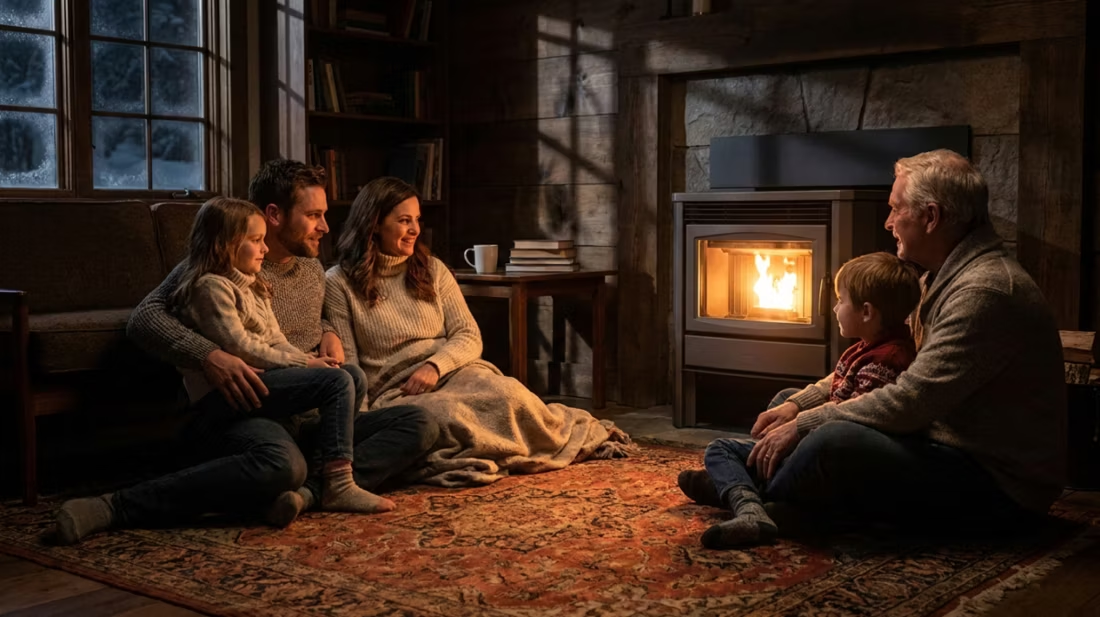
Consistent, thermostat-controlled heat without the wood pile.
Geauga County sits in USDA climate zone 5A with an average winter low around 17°F and roughly 6,677 heating degree days a year—a season length closer to Burlington, Vermont than to most of Ohio. Winters here run long: the county's sugarhouses tap maple trees in late February precisely because the freeze-thaw cycle lingers well into spring, and lake-effect snow off Lake Erie can bury Chardon and Middlefield in a single afternoon squall. Homes across the county's hardwood-forested townships—thick with oak, hickory, maple, and cherry—have relied on wood heat for generations, but pellet stoves have carved out a real niche for homeowners who want that radiant hearth feel without the splitting, stacking, and daily tending.
A pellet stove loads from a hopper, holds a consistent temperature on a thermostat, and burns far cleaner than cordwood—no smoke, minimal ash, and none of the air quality tradeoffs some wood-burning households weigh. Geauga County has no air quality non-attainment concerns to navigate, so pellet appliances run without curtailment restrictions of any kind. Regional pellet supply is solid too, with Indeck Energy Services, Lignetics, and Somerset Pellet Fuel all distributing into northeast Ohio, and bagged pellets available seasonally at farm and hardware stores in Chardon, Middlefield, and surrounding townships.
Three steps. No salesperson until you're ready.
Tell us about your project
Your zip code, your situation, and the fuel you're leaning toward—or let the answers point you to one.
See what's actually available
The brands dealers within 100 miles genuinely carry—real options, never a catalog mirage.
Get your dealer & Project Guide
A trusted local dealer, plus the free Project Guide & Parts List that names every component of the job.
Frequently Asked Questions
How much does a pellet stove installation cost in Geauga County?
A typical freestanding pellet stove installation in Geauga County runs roughly $3,500 to $6,500, depending on the unit, whether you need a new hearth pad, and the venting path. Pellet stoves vent through a wall with PL (pellet-listed) pipe rather than requiring a full masonry chimney, which usually keeps installation simpler and less costly than a comparable wood stove project. Pellet inserts that slide into an existing masonry fireplace opening tend to land toward the middle of that range once liner and venting work are included. You'll also need a standard 120-volt outlet near the unit to run the hopper auger and blower—most local dealers will flag any electrical work needed during the in-home consultation.
Will my pellet stove work during a power outage?
Not without backup power. Pellet stoves rely on an electric auger to feed fuel and a blower to distribute heat, so a Lake Erie snow squall or ice storm that knocks out power will shut the stove down along with everything else. This is the honest tradeoff against a wood stove, which burns without any electricity at all. Many Geauga County homeowners who choose pellet for daily convenience pair it with a small backup generator or a battery inverter sized to run the stove's control board and auger—a local dealer can tell you the wattage draw for a specific model so you can size backup power appropriately.
What size pellet stove do I need for my Geauga County home?
Sizing depends on square footage, ceiling height, and how drafty the home is—an important factor in a county with plenty of older farmhouses alongside newer construction. As a rough guide: smaller units (under 1,500 sq ft) suit a single large room or open-concept living area, while mid-size stoves (1,500–2,500 sq ft) handle most main-floor heating in a typical Geauga County home. Older, less-insulated farmhouses in townships like Newbury or Auburn often need to size up compared to a similarly-sized newer build. A local dealer will walk your space and factor in insulation and layout before recommending a specific model—sizing is one of the few things worth getting a professional opinion on rather than guessing from a chart.
Where can I buy pellet fuel in Geauga County?
Bagged pellets are distributed regionally by companies like Indeck Energy Services, Lignetics, and Somerset Pellet Fuel, and you'll typically find stock at farm supply and hardware retailers in Chardon and Middlefield, especially heading into fall. Prices across northeast Ohio generally run in the $250–$320 per ton range depending on pellet quality (softwood vs. hardwood blend) and whether you buy by the bag or by the pallet-ton. Buying early in the season—before the first cold snap sends everyone to the store at once—is the easiest way to avoid a supply crunch in January.
Do I need a permit to install a pellet stove in Geauga County?
Yes—a new pellet stove installation typically requires a building permit through the Geauga County Building Department in Chardon, covering the venting penetration and hearth clearance. Most local hearth dealers handle the permit application as part of the installation, so you generally don't need to file anything yourself. There's no permit required simply to operate a pellet stove once it's installed and inspected, and since Geauga County has no wood-smoke air quality restrictions, pellet appliances run without any seasonal curtailment concerns.
What's the best pellet stove brand for a Geauga County winter?
For a climate with 6,677 heating degree days and regular sub-20°F nights, look for a pellet stove with a large hopper capacity (40+ lbs) so you're not reloading every few hours during a hard freeze, and a reliable auger feed system rated for extended continuous burns. Brands like Harman, Lopi, and England's Stove Works are commonly stocked by dealers serving northeast Ohio and hold up well to daily winter use. Harman units in particular are known for running long stretches on a single hopper load, which matters when you're heating through a multi-day cold spell rather than just taking the edge off a chilly evening.
How much maintenance does a pellet stove need?
Pellet stoves need more routine attention than a gas fireplace but far less than a wood stove. Plan on emptying the ash pan every few days to weekly depending on use, wiping the glass as needed, and vacuuming the burn pot and heat exchanger tubes every couple of weeks during heavy winter burning. Most manufacturers recommend a full professional cleaning and inspection once a year, ideally before the season starts in early fall—this includes checking the auger motor, gaskets, and venting for buildup. Skipping the annual service is the most common reason pellet stoves lose efficiency or start feeding unevenly partway through the season.
Pellet stove vs. gas fireplace—which makes more sense for my Geauga County home?
Pellet stoves give you a real, visible flame, run on locally available fuel from suppliers like Somerset Pellet Fuel or Lignetics, and don't tie you to a gas line—a real consideration in some of the county's more rural townships where natural gas service is inconsistent and propane is common. Gas fireplaces offer instant on-off convenience and no fuel handling at all, but require either an existing gas line or a propane tank setup. If you already have gas service to the house and want zero-maintenance heat, gas is hard to beat. If you like the ritual and radiant feel of a real fire but don't want to deal with cordwood, a pellet stove is usually the better middle ground for Geauga County homeowners.
Is a pellet stove worth it if I already have a wood-burning fireplace?
It depends on what you're solving for. A pellet insert can slide into your existing masonry fireplace opening and turn a drafty, inefficient wood-burning firebox into a thermostat-controlled heat source with far less daily labor—no splitting, hauling, or ash cleanup on the scale of cordwood. What you give up is the ability to burn during a power outage, which matters if you're in a part of the county prone to extended lake-effect snow outages and want that fireplace as backup heat. Some Geauga County homeowners keep the wood-burning setup for exactly that reason and add a pellet stove elsewhere in the house for everyday convenience.
Why is a fireplace insert so efficient?
An insert does two things: it seals the chimney completely, so you stop losing air you already paid to heat, and it radiates warmth into the room through the firebox and glass. Most add a heat-exchange fan that pulls cool room air underneath, wraps it around the hot firebox, and pushes it back out warm. Your home is more efficient before you've even lit the first fire.
What's the difference between an insert and a zero-clearance fireplace?
An insert is a fireplace that slides into a pre-existing wood-burning fireplace—if you don't have one, there's nothing to insert it into. A zero-clearance fireplace is built into a framed wall, which makes it the answer for remodels and new construction. Simple test: existing masonry fireplace means insert; blank or framed wall means zero-clearance.
Does a fireplace add value to my home?
On average, a fireplace adds back to the home about the same amount you spent installing it. Add the monthly savings from heating the rooms you actually use instead of the whole house—often hundreds of dollars a year—and the value case is strong before you even count what a fire does for how your family uses the room.
How much should I budget for a fireplace?
For an average home—covering the fireplace, the vent pipe, and basic installation—a budget between $3,900 and $5,500 gives you a lot of options across wood, gas, and pellet. By the time you add finish work, gas line, and electrical, the average complete installation lands between $5,000 and $12,000 all-in. In a remodel or new build, a good rule is to put about 2.5% of the total project cost toward the fireplace.
Stove and Fireplace Dealers in Geauga County
Pellet Brands Stocked Around Geauga County
Manufacturers will point you to the nearest stocking dealer.
Find your pellet stove in Geauga County.
Tell us a bit about your home and we'll match you with the right pellet stove or insert, plus a free Project Guide & Parts List—the exact parts, vent kit, and a trusted local Geauga County dealer to install it.
Find Your Fireplace →