
Reliable Gas Heat for Euclid's Lake-Effect Winters.
Instant, even heat for the cold stretches that roll off Lake Erie. Find the right gas fireplace or insert, and connect with a trusted local dealer.
Every Project Starts From One of These Five Situations
Dependable warmth built into everyday winters.
Euclid sits directly on Lake Erie's southern shore in Cuyahoga County, at about 644 feet of elevation, where lake-effect snow bands and a long, gray heating season give the area a winter heating load similar in weight to Buffalo, NY, further up the same lakeshore. Winter lows average 24°F, and the shoulder-season chill from October through April is really where a gas fireplace earns its keep.
Natural gas infrastructure is well established across Euclid's older neighborhoods, many of them built in the early-to-mid 20th century with masonry fireplaces that were originally wood-burning and never converted. For homeowners on the electric grid instead—served locally by Cleveland Electric Illuminating Co. or the City of Cleveland's municipal power system, with residential rates running roughly 9.4 to 14.9 cents per kWh—a gas fireplace still typically beats electric resistance heat for real BTU output during a cold snap. Either way, gas delivers heat at the flip of a switch, with no firewood to source or ash to manage.
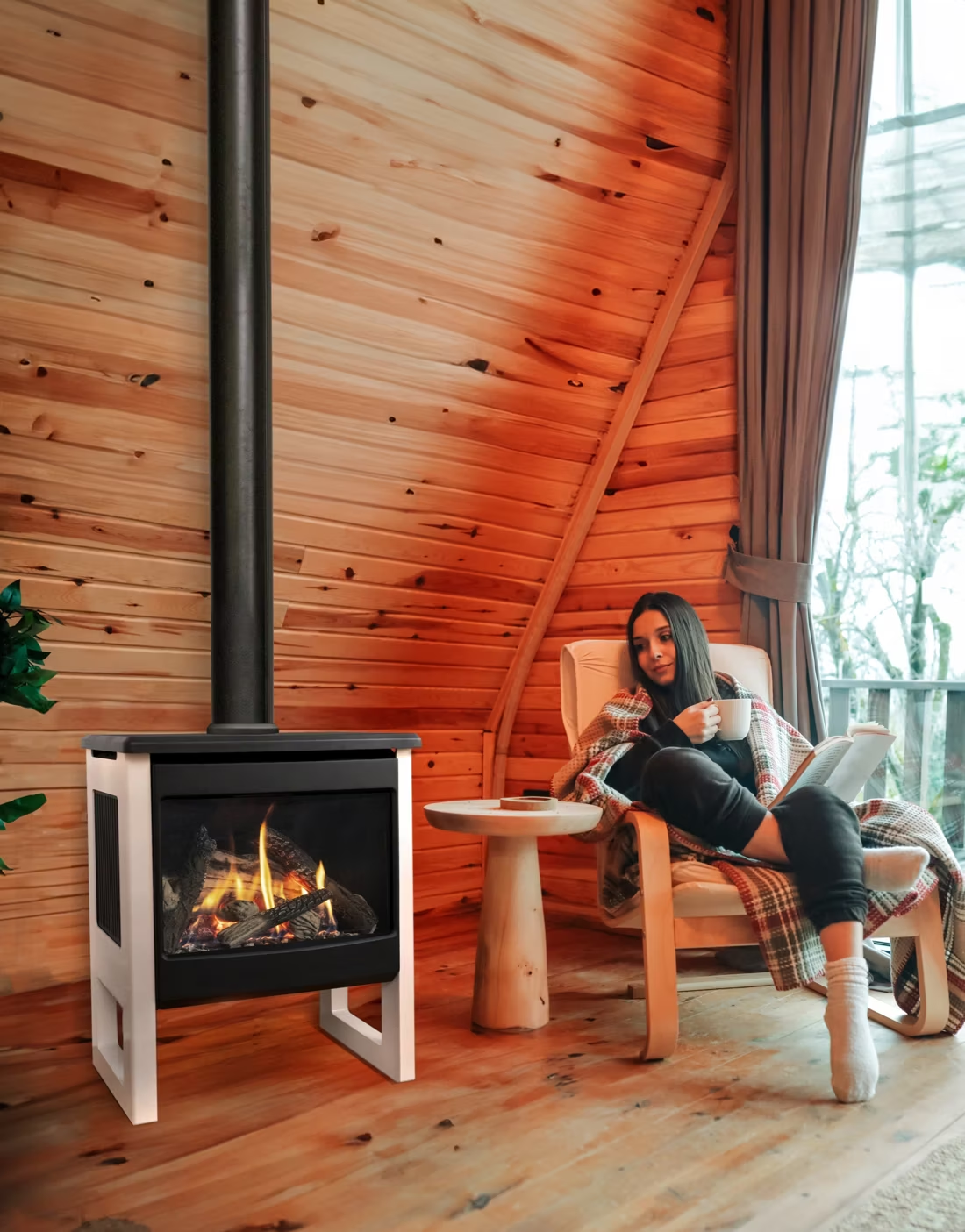
Three steps. No salesperson until you're ready.
Tell us about your project
Your zip code, your situation, and the fuel you're leaning toward—or let the answers point you to one.
See what's actually available
The brands dealers within 100 miles genuinely carry—real options, never a catalog mirage.
Get your dealer & Project Guide
A trusted local dealer, plus the free Project Guide & Parts List that names every component of the job.
Frequently Asked Questions
How much does a gas fireplace installation cost in Euclid?
Most gas fireplace and insert installations in the Euclid area run between roughly $4,000 and $10,000, depending on the unit, the venting path, and whether new gas line work is required. A direct-vent insert going into an existing masonry fireplace with a gas line already nearby tends to land on the lower end. New construction or a built-in fireplace requiring framing, a fresh gas run, and exterior venting through brick or siding sits higher. Because so many Euclid homes date to the 1920s–1950s, older gas lines and chimneys sometimes need updating to meet current code—your local installer will flag that during the in-home estimate.
Can I convert my existing wood fireplace to gas?
Yes, and it's a common project in Euclid's older housing stock, where many original masonry fireplaces were built for wood and rarely get used as a result. A gas insert typically slides into that existing firebox, running a stainless liner up the current chimney for venting. Because natural gas service already reaches most of these neighborhoods, the main added cost is usually the gas line extension to the fireplace itself rather than a whole new utility hookup—which keeps conversion costs on the more moderate end compared with all-new construction.
Do I need natural gas to install a gas fireplace, or can I use propane?
Natural gas is the standard fuel for gas fireplaces throughout Euclid and the rest of Cuyahoga County, and most homes already have gas service for the furnace, water heater, or range—extending a line to a fireplace is usually straightforward. Propane is an option for the rare property without natural gas access, but it's uncommon inside city limits given how built-out the gas grid already is here. Most fireplace models can be configured for either fuel; your installer sets the correct orifice and regulator for whichever you have.
Will my gas fireplace work during a power outage?
Most modern gas fireplaces will, which matters in a lakeshore city where winter storms off Lake Erie can knock out power for hours at a time. Units with IPI (intermittent pilot ignition) include a battery backup—usually AA batteries inside the unit—that keeps the fireplace lighting on demand even with the grid down. Valor fireplaces take a different approach: their pilot assembly generates its own electricity through the thermocouple, so there's no battery to remember or replace at all. Ask your local dealer about the ignition system on any model you're considering if outage backup matters to you.
What's the difference between a gas fireplace, gas insert, and gas stove?
A gas fireplace is a fully built-in unit framed into a wall—the right call for new construction or a remodel without an existing hearth. A gas insert slides into an existing masonry fireplace opening and uses the current chimney as its vent path, which fits a lot of Euclid's older homes with unused wood fireboxes. A gas stove is a freestanding cast-iron or steel unit that sits on the floor like a traditional wood stove but runs on gas—a good option for a room that never had a fireplace at all. For most Euclid homeowners working with an existing hearth, an insert is the simplest and most cost-effective upgrade.
Do I need a permit to install a gas fireplace in Euclid?
Yes. The City of Euclid Building Department requires a building permit for new gas fireplace installations, and any new or modified gas line needs to be run by a licensed gas-fitter and inspected. Most established hearth retailers coordinate this permitting and inspection process as part of the installation, so it's rarely something the homeowner has to manage directly. It's worth confirming with your installer that both the mechanical and gas permits are pulled before work starts, particularly on older homes where the existing gas line may need updating to current code.
What's the difference between vented and vent-free gas fireplaces?
Vented gas fireplaces—direct-vent or B-vent—pull combustion air from outside and exhaust the byproducts back outside through sealed venting. Vent-free (or "ventless") units burn gas directly into the room with no outside venting, which is more efficient on paper but releases some water vapor and combustion byproducts indoors. Ohio permits vent-free units, but they come with strict room-size and ventilation requirements, and Euclid's older, smaller homes don't always accommodate them comfortably. Direct-vent units are the more common and more broadly recommended choice locally—they're flexible on placement and don't require any tradeoff on indoor air quality, which matters in a city with no active air quality advisories to worry about but plenty of closed-up winter months.
How often should my gas fireplace be serviced?
An annual inspection is the standard recommendation for any gas-burning appliance, including direct-vent fireplaces and inserts. A qualified technician checks the burner, pilot assembly, venting, and gas connections, and cleans the glass and firebox interior. This is a much lighter service than wood chimney sweeping, but it matters just as much for safety—especially heading into Euclid's long heating season, when a fireplace might run daily from November through March. Local gas appliance technicians typically charge in the $150–$250 range for this annual visit.
Gas vs. electric fireplace—which is right for my Euclid home?
Gas fireplaces produce real, substantial heat—enough to meaningfully offset furnace use during a cold snap—and most models keep working through a power outage. Electric fireplaces are simpler to install (often just a standard outlet, no venting or gas line), cost less upfront, and work well for ambiance or supplemental warmth in a single room, but they can't match gas for whole-room heating output, and running one heavily adds up given local electric rates from Cleveland Electric Illuminating Co. or the City of Cleveland's municipal service, which range from roughly 9.4 to nearly 15 cents per kWh depending on provider. For a Euclid home that already has gas service, a gas fireplace is usually the better primary heat source; electric fits best as a low-commitment secondary unit in a bedroom or den.
Can I put a TV above my fireplace?
Yes—with an asterisk. Fireplaces are hot and TVs don't like heat. Either put a mantel between them to deflect rising warmth, or choose a fireplace with heat-management technology that creates a cool zone on the wall above—the wall stays around 125 degrees, barely warm, while the room still gets full heat. If you like clean lines and don't want a mantel, heat management is the answer.
Why is a fireplace insert so efficient?
An insert does two things: it seals the chimney completely, so you stop losing air you already paid to heat, and it radiates warmth into the room through the firebox and glass. Most add a heat-exchange fan that pulls cool room air underneath, wraps it around the hot firebox, and pushes it back out warm. Your home is more efficient before you've even lit the first fire.
Does a fireplace add value to my home?
On average, a fireplace adds back to the home about the same amount you spent installing it. Add the monthly savings from heating the rooms you actually use instead of the whole house—often hundreds of dollars a year—and the value case is strong before you even count what a fire does for how your family uses the room.
Can I install a fireplace myself?
If you're putting a fire in your house on purpose, it's best to work with an expert. Unless you're genuinely experienced in framing, gas line, vent pipe, and the national code on clearances to combustibles, have a professional do it—and ideally the same company that sells you the fireplace, so warranty, service, and liability all live under one roof.
Nearby Dealers
Hearth shops serving Euclid and the surrounding area.
Find your gas fireplace in Euclid.
Tell us a bit about your home and we'll match you with a trusted local dealer and send over a free Project Guide & Parts List—the exact parts, vent kit, and installer recommended for your Euclid gas fireplace project.
Find Your Fireplace →