
Instant heat for Erie County's lake-effect winters.
Clean, on-demand gas heat for homes from Sandusky and Huron to Vermilion, Berlin Heights, and Kelleys Island. Find the right unit for your home and connect with a trusted local dealer.
Every Project Starts From One of These Five Situations
Clean, on-demand heat for Erie County's shoreline winters.
Erie County sits along the southern shore of Lake Erie, from the Sandusky Bay waterfront through Huron and Vermilion to the farmland around Berlin Heights and Milan, with Kelleys Island out in the lake itself. At climate zone 5A and roughly 5,653 heating degree days, winters here run colder and longer than the average low-22°F number suggests—the lake pumps extra moisture into the air, and that damp cold off the water cuts deeper than the thermometer implies. It's a milder HDD total than lake-effect powerhouses like Buffalo, NY, but the same lake-driven pattern shows up in the wind off the water and the gray stretches from December through March.
Natural gas service through Columbia Gas of Ohio reaches most of Sandusky, Huron, and Vermilion, which makes direct-vent gas fireplaces and inserts a straightforward, no-fuss upgrade for mainland homes—including the older waterfront and historic-district houses around Sandusky Bay that already have an existing masonry fireplace to convert. Out in the rural stretches near Berlin Heights and Milan, and especially on Kelleys Island, where there's no pipeline running under the lake, propane is the standard fuel and tanks are filled by delivery truck or, for the island, by ferry. Either way, gas gives Erie County homeowners heat at the flip of a switch, zone heating that takes pressure off a central furnace during the coldest stretches, and—with the right ignition system—a fireplace that still works when a winter storm knocks out power along the shoreline.
Three steps. No salesperson until you're ready.
Tell us about your project
Your zip code, your situation, and the fuel you're leaning toward—or let the answers point you to one.
See what's actually available
The brands dealers within 100 miles genuinely carry—real options, never a catalog mirage.
Get your dealer & Project Guide
A trusted local dealer, plus the free Project Guide & Parts List that names every component of the job.
Frequently Asked Questions
How much does a gas fireplace installation cost in Erie County?
A typical gas fireplace installation in Erie County runs roughly $4,500 to $10,500, depending on the unit, the venting path, and whether new gas line work is required. A direct-vent insert going into an existing masonry fireplace with gas already run to the house sits toward the lower end—common in older Sandusky and Vermilion homes near the water. A new built-in fireplace in a remodel, or any propane-tank installation on Kelleys Island or in the rural areas near Berlin Heights, tends to run higher once tank placement, gas line runs, and venting are factored in. A local retailer will give you a firm number after an in-home look at your setup.
Can I convert my existing wood fireplace to gas?
Yes, and it's a common project in Erie County's older lakefront and historic-district homes, many of which still have a working masonry fireplace built for burning oak, hickory, or maple. A gas insert typically slides into that existing firebox and uses the current chimney as the vent path with a stainless liner, which keeps the exterior look of the fireplace while swapping in clean, instant heat. Costs generally land between $4,500 and $9,000 depending on the insert and whether the home is on Columbia Gas service or propane. Homes already plumbed for natural gas are usually the more affordable conversion.
Do I need natural gas, or can I use propane?
Either works, and which one you use largely depends on where in Erie County you live. Columbia Gas of Ohio serves most of Sandusky, Huron, and Vermilion, so if your home already has gas appliances, adding a fireplace is a simple tie-in. Out toward Berlin Heights and Milan, and on Kelleys Island where no pipeline crosses the lake, propane is the standard fuel, delivered by truck to a tank on the property—or, for the island, brought over by ferry. Most gas fireplace models can be configured for either fuel; your installer sets the correct orifice and regulator for whichever you have.
Will my gas fireplace work during a power outage?
Most modern gas fireplaces will, which matters in Erie County when a Lake Erie winter storm knocks out power along the shoreline. Units with intermittent pilot ignition (IPI) include a battery backup that kicks in automatically when the power drops, letting the fireplace light on demand off AA batteries until service returns—just remember to keep fresh batteries on hand. Valor fireplaces go a step further: their pilot generates its own electricity through a thermocouple, so there are no batteries to maintain at all. For homes on Kelleys Island or along the water where outages can stretch longer than inland areas, ask your local retailer about the ignition system before you buy.
What's the difference between a gas fireplace, gas insert, and gas stove?
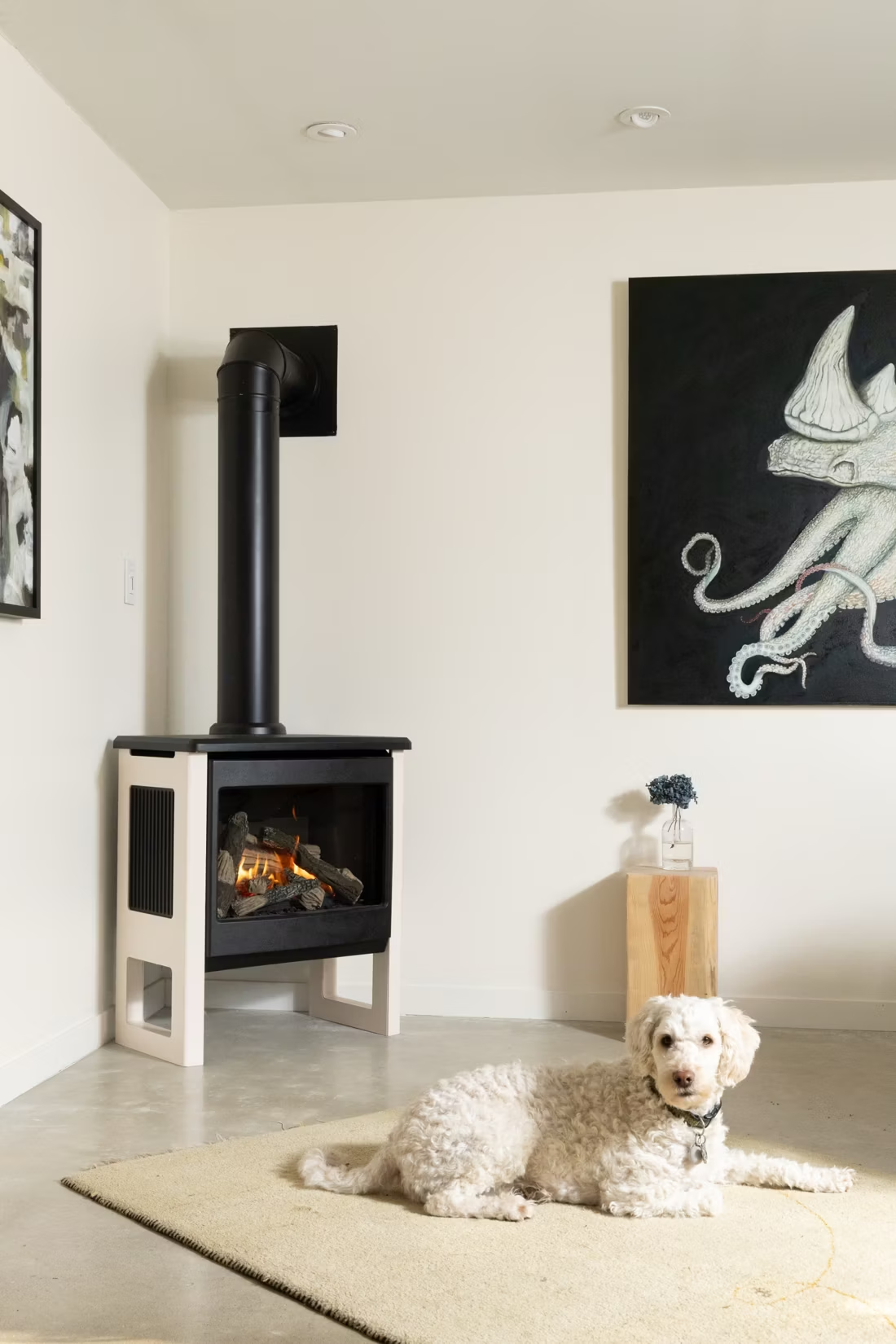
A gas fireplace is a fully built-in unit, framed into a wall—the right choice for new construction or a full remodel in a newer Sandusky or Huron subdivision. A gas insert fits into an existing masonry fireplace and uses the chimney as its vent, which is the common route for older homes around Sandusky Bay and Vermilion that already have a hearth. A gas stove is a freestanding unit that sits on the floor like a wood stove but runs on gas, a good fit for a room without an existing fireplace. Most Erie County homeowners upgrading an existing fireplace end up with an insert; new spaces are usually better suited to a built-in or a freestanding stove.
Do I need a permit to install a gas fireplace in Erie County?
Yes—a building permit and a gas line permit are required for new gas fireplace installations, issued through the local building department covering your address, whether that's the City of Sandusky, another Erie County municipality, or the county building department for unincorporated areas. The gas line work itself must be done by a licensed gas-fitter, which is one reason working with an established hearth retailer is worth it: they coordinate the gas line, venting, and inspection sign-off as one job instead of leaving you to manage separate trades.
What's the difference between vented and vent-free gas fireplaces?
Vented gas fireplaces—direct-vent or B-vent—draw combustion air from outside and exhaust the byproducts back outside through a sealed flue. Vent-free units burn directly into the room without external venting; they're efficient on paper but release water vapor and small amounts of combustion byproducts into the living space, so they come with strict room-sizing and oxygen-depletion-sensor requirements. Vent-free models are legal in Ohio, but for Erie County homes—especially tighter, well-sealed newer construction near Huron and Vermilion—a direct-vent unit is the more common and more universally recommended choice. Ask a local retailer to walk you through both if you're weighing it.
How often should my gas fireplace be serviced?
Plan on an annual inspection for any gas appliance, including direct-vent fireplaces and inserts. A technician checks the burner, pilot assembly, venting, and gas connections, and cleans the glass and interior—a shorter, simpler visit than a wood chimney sweep, but just as important for safety. Erie County gas service providers typically charge $150 to $250 for this annual check, and it's worth scheduling before the coldest stretch of winter sets in along the lake.
Gas vs. wood—which is right for my home?
Wood offers real fire, lower fuel costs if you're already burning local oak, hickory, maple, or cherry, and heat that keeps working without electricity—a plus during a Lake Erie winter storm. Gas offers instant on-off convenience, no ash or wood handling, and a cleaner look, which is why it's become the default in newer Sandusky and Huron homes and in primary living spaces across the county. Erie County has no air quality restrictions on wood burning, so the choice comes down to lifestyle rather than regulation. Plenty of local homes run both: gas for daily use in the main room, a wood stove or insert elsewhere as backup heat and ambiance.
Can I put a TV above my fireplace?
Yes—with an asterisk. Fireplaces are hot and TVs don't like heat. Either put a mantel between them to deflect rising warmth, or choose a fireplace with heat-management technology that creates a cool zone on the wall above—the wall stays around 125 degrees, barely warm, while the room still gets full heat. If you like clean lines and don't want a mantel, heat management is the answer.
Why is a fireplace insert so efficient?
An insert does two things: it seals the chimney completely, so you stop losing air you already paid to heat, and it radiates warmth into the room through the firebox and glass. Most add a heat-exchange fan that pulls cool room air underneath, wraps it around the hot firebox, and pushes it back out warm. Your home is more efficient before you've even lit the first fire.
Can a fireplace actually lower my heating bill?
Yes—by creating a comfort zone. A furnace heats every square foot of the house just to warm the one room you're in; a gas fireplace on low burns roughly a sixth of the gas a typical furnace does. Set the furnace around 55–60 degrees as a baseline, then heat the rooms your family actually uses. Families who heat this way commonly save $20–$60 a month.
What is an in-home preview and do I need one?
It's a visit where a hearth professional measures your space, confirms the model you picked actually works in your home, and walks the specs—framing, gas line, venting, finish work—before anything is ordered. Some details you just can't know until you see the house. Never make a down payment without one; it's the single most-skipped step that burns buyers.
Stove and Fireplace Dealers in Erie County
Find your gas fireplace in Erie County.
Tell us about your home and we'll match you with a trusted local dealer and send over a free Project Guide & Parts List—the exact parts, including the vent kit, for your Erie County gas fireplace project.
Find Your Fireplace →