
Find the right electric fireplace for your Erie County home.
No gas line, no chimney, no venting—just plug it in. From Sandusky to Vermilion and the Lake Erie shoreline communities in between, get matched with a local dealer who can size the right unit for your space.
Every Project Starts From One of These Five Situations
Zone heat and instant ambiance, no construction required.
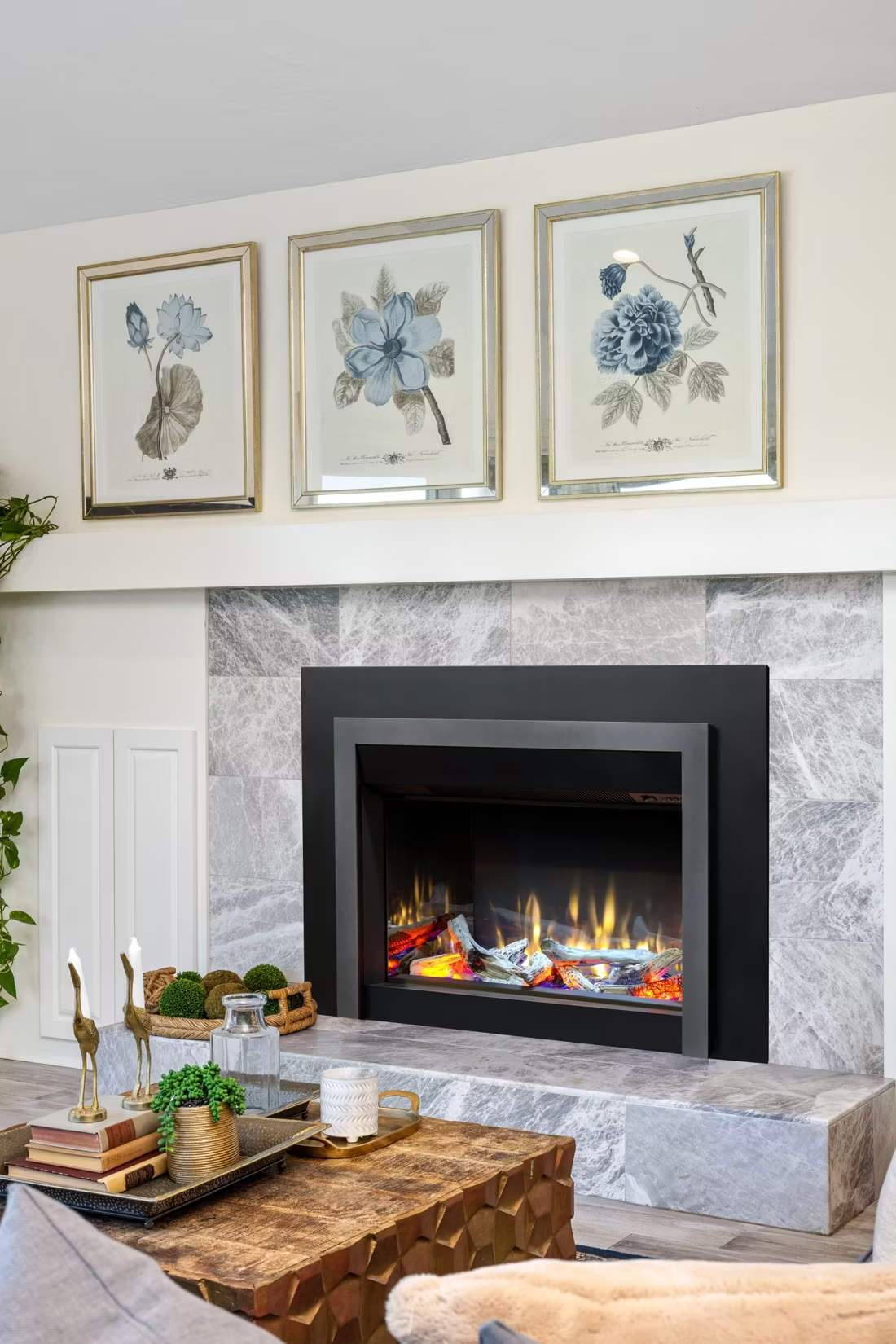
Erie County sits in climate zone 5A along the Lake Erie shoreline, with roughly 5,653 heating degree days and average winter lows around 22°F—a real Northern Ohio winter, but not the extreme cold of the Upper Midwest. That combination means electric fireplaces work well here as genuine supplemental heat in a bedroom, sunroom, or finished basement, not just as decoration. A lot of homes in Sandusky, Huron, and along the older lakefront neighborhoods have masonry fireplaces that were built decades ago and rarely get used—electric inserts are a common way to bring them back into daily life without touching the chimney or running gas line.
Because electric units don't require venting, gas hookups, or wood storage, they're often the fastest fireplace project in the county to permit and install—most electric insert jobs in Erie County are straightforward enough that they don't require the same building permit review that a new wood or gas appliance would trigger, though any new circuit work still needs to meet electrical code. That makes electric a practical fit for renters, condo owners near the Cedar Point corridor, and homeowners who want heat and ambiance in a specific room without a full renovation.
Three steps. No salesperson until you're ready.
Tell us about your project
Your zip code, your situation, and the fuel you're leaning toward—or let the answers point you to one.
See what's actually available
The brands dealers within 100 miles genuinely carry—real options, never a catalog mirage.
Get your dealer & Project Guide
A trusted local dealer, plus the free Project Guide & Parts List that names every component of the job.
Frequently Asked Questions
How much does an electric fireplace installation cost in Erie County?
Most electric fireplace and insert installations in Erie County run between $400 and $1,200. A plug-in insert dropped into an existing masonry fireplace opening—common in older Sandusky and Huron homes—sits at the lower end, since there's no wiring work involved. A built-in electric fireplace that requires a dedicated 120V or 240V circuit, especially in a finished basement or new-construction wall, runs toward the higher end once an electrician is involved. Local dealers can tell you which category your project falls into during an in-home consultation.
Will an electric fireplace actually heat my room, or is it just for looks?
Most electric inserts and fireplaces sold today include a real heater—typically a 1,500-watt element that can supply supplemental heat to a room in the 300 to 400 square foot range, which covers a lot of Erie County's bedrooms, sunrooms, and finished basement spaces. With average winter lows around 22°F here, that's enough to take the edge off on a cold night without running the furnace harder, though it won't replace whole-home heat in a Lake Erie winter. Every unit lets you run the flame effect with the heater off, which is the setting most homeowners use for the bulk of the year.
Can I convert my existing wood-burning fireplace to electric?
Yes, and it's one of the more common projects for older housing stock in Erie County, particularly around Sandusky and Milan where many homes still have original masonry fireplaces that see little use. An electric insert slides into the existing firebox opening—no chimney work, no venting, no gas line. Most plug into a standard household outlet, though larger units may need a dedicated circuit. The chimney itself can stay capped and unused, which also removes any concern about drafts or masonry maintenance.
Do I need a permit for an electric fireplace in Erie County?
In most cases, a plug-in electric insert or freestanding unit doesn't trigger a building permit review, since there's no venting, gas line, or structural change involved. If your project requires a new dedicated electrical circuit, that work should be done by a licensed electrician and may require an electrical permit through your local jurisdiction—Sandusky, Huron, Vermilion, and unincorporated Erie County each handle permitting through their own building department. A local dealer installing a built-in unit will typically know exactly what's required for your specific address.
What's the difference between an electric fireplace, insert, and mantel unit?
An electric insert is built to slide into an existing fireplace opening, using the masonry firebox you already have. A built-in electric fireplace is designed to be framed into a wall during a remodel or new construction, similar to how a gas fireplace would be installed. A mantel or freestanding electric fireplace comes with its own cabinet and plugs in anywhere there's an outlet—no fireplace opening needed at all, which makes it the easiest option for apartments, condos, and renters throughout Erie County who want the look without any construction.
How does an electric fireplace compare to wood or gas for an Erie County home?
Wood offers real heat output and works during power outages, which matters when winter storms roll off Lake Erie and knock out power—something electric units can't do since they need electricity to run at all. Gas gives instant, higher-output heat and can be sized to actually heat a room the way a furnace zone would. Electric wins on installation simplicity and cost—no venting, no gas line, no chimney sweep—and it's the only option that works cleanly in a condo or rental where wood and gas aren't practical. Plenty of Erie County homes run gas or wood as primary heat in the main living area and use electric in a bedroom, den, or basement where running gas line or venting doesn't make sense.
Are electric fireplaces expensive to run?
Running the heater on a typical 1,500-watt electric fireplace costs roughly 15 to 25 cents per hour depending on your electric rate, which for most Erie County utility customers works out to a few dollars for an evening of use. Running just the flame effect without heat costs only a few cents per hour, since the LED lighting draws very little power. Compared to running a furnace to heat a whole home, using an electric fireplace to zone-heat one room in the evening is often the cheaper option for cutting the overall heating bill.
Can I install an electric fireplace myself?
A plug-in insert or freestanding mantel unit is genuinely DIY-friendly—if it fits the opening and plugs into an existing outlet, most Erie County homeowners can install one without a contractor. Built-in units that require a new circuit, wall framing, or a dedicated 240V line should go through a licensed electrician, both for safety and because that work typically needs to meet electrical code even without a full building permit. A local dealer can tell you within a few minutes on the phone which category your specific unit and location fall into.
What size electric fireplace do I need for my room?
For a bedroom or den in the 200 to 300 square foot range, a standard 26- to 40-inch insert or built-in unit is usually enough, especially paired with the room's existing furnace heat. Larger open-concept living spaces, which show up in some of the newer construction near Perkins Township and Berlin Heights, often do better with a wider linear unit or two smaller units in different zones rather than one oversized fireplace trying to cover the whole room. Because electric units don't need venting sized for BTU output the way gas or wood does, sizing is really about matching the unit's heater wattage to your square footage—a local dealer will walk through this with you based on your actual floor plan.
Does an electric fireplace need a vent or chimney?
No—that's its superpower. An electric fireplace needs a wall and an outlet, period. No vent pipe, no gas line, no clearances to design around, which is why it works in bedrooms, offices, apartments, and walls where venting a gas or wood unit would be impractical or impossible. Installation is typically the simplest and least expensive of any fireplace type.
Can I put a TV above my fireplace?
Yes—with an asterisk. Fireplaces are hot and TVs don't like heat. Either put a mantel between them to deflect rising warmth, or choose a fireplace with heat-management technology that creates a cool zone on the wall above—the wall stays around 125 degrees, barely warm, while the room still gets full heat. If you like clean lines and don't want a mantel, heat management is the answer.
Can I install a fireplace myself?
If you're putting a fire in your house on purpose, it's best to work with an expert. Unless you're genuinely experienced in framing, gas line, vent pipe, and the national code on clearances to combustibles, have a professional do it—and ideally the same company that sells you the fireplace, so warranty, service, and liability all live under one roof.
Can a fireplace actually lower my heating bill?
Yes—by creating a comfort zone. A furnace heats every square foot of the house just to warm the one room you're in; a gas fireplace on low burns roughly a sixth of the gas a typical furnace does. Set the furnace around 55–60 degrees as a baseline, then heat the rooms your family actually uses. Families who heat this way commonly save $20–$60 a month.
Stove and Fireplace Dealers in Erie County
Get your Erie County electric fireplace Project Guide & Parts List.
Tell us about your room and your existing fireplace or wall space, and we'll match you with a trusted local Erie County dealer and send a free Project Guide & Parts List—the exact unit, circuit needs, and install plan for your home.
Find Your Fireplace →