
Steady, low-maintenance heat for Champaign County winters.
From Urbana to Mechanicsburg to St. Paris, pellet stoves give west-central Ohio farmhouses hopper-fed, thermostat-controlled heat—no cordwood to split or stack. Find the right unit and connect with a trusted local dealer.
Every Project Starts From One of These Five Situations
Automated warmth for a working farm county.
Champaign County sits in the rolling farmland of west-central Ohio, with Urbana as the county seat and small communities—Mechanicsburg, St. Paris, North Lewisburg, Woodstock—spread across corn and soybean country along the Mad River. Winters here run cold and long: Climate Zone 5A, average winter lows near 19°F, and roughly 5,838 heating degree days a year, a heating load in the neighborhood of what a city like Buffalo, NY carries, minus the lake-effect snow totals. Woodlots throughout the county are thick with oak, hickory, maple, and cherry, and plenty of homes here still burn cordwood—but a growing number of Champaign County households are switching to pellet stoves for the parts of the season when convenience matters more than the ritual of splitting and stacking.
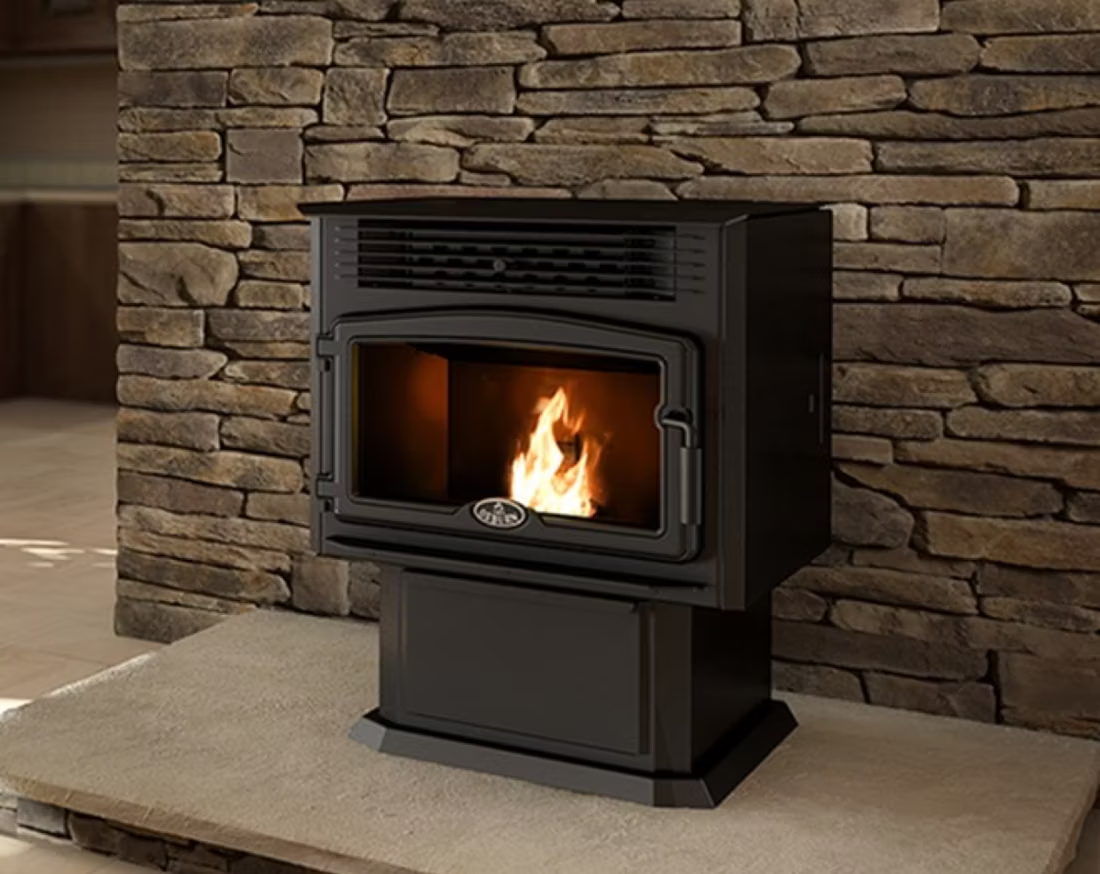
Pellet stoves solve a specific problem for busy farm and small-town households: they run on a thermostat, feed themselves from a hopper, and don't require a woodpile, a chainsaw, or a weekend spent stacking cords. Regional suppliers like Indeck Energy Services, Lignetics, and Somerset Pellet Fuel keep bagged pellets in stock across west-central Ohio, so fuel access isn't the issue it can be in more remote parts of the country. Champaign County has no air-quality non-attainment status and no winter burn restrictions, which means pellet stoves here are chosen for efficiency and convenience rather than to get around smoke rules—a straightforward, EPA-certified way to add zone heat to a living room, a finished basement, or a drafty older farmhouse.
Three steps. No salesperson until you're ready.
Tell us about your project
Your zip code, your situation, and the fuel you're leaning toward—or let the answers point you to one.
See what's actually available
The brands dealers within 100 miles genuinely carry—real options, never a catalog mirage.
Get your dealer & Project Guide
A trusted local dealer, plus the free Project Guide & Parts List that names every component of the job.
Frequently Asked Questions
How much does a pellet stove installation cost in Champaign County?
Most pellet stove and insert installations in Champaign County run in the $3,000 to $6,500 range, depending on whether the unit vents through an existing masonry chimney, out a side wall with a PL-vent kit, or requires new framing in a room that's never had a hearth appliance. A pellet insert going into an existing fireplace opening—common in older Urbana and Mechanicsburg homes—tends to land on the lower end, since much of the venting path is already there. A freestanding stove in a new location, with a fresh through-wall vent run, costs more once labor and vent components are added. Local dealers will give you a firm number after seeing your chimney or wall configuration in person.
What size pellet stove do I need for my home?
Sizing depends on square footage, ceiling height, and how tight the building envelope is. As a general guide for Champaign County's older farmhouse stock—plenty of which was built before modern insulation standards—a small pellet stove (rated for 1,000 to 1,300 sq ft) handles a single living room or addition, while a mid-size unit (1,300 to 2,200 sq ft) is the more common choice for heating a full first floor. Homes with open floor plans and updated insulation can often get by with a smaller stove than a similarly-sized older farmhouse with plaster walls and single-pane windows. A local dealer will walk the space and size it properly—oversizing wastes fuel and undersizing leaves you running the hopper on high through a January cold snap.
Where can I buy wood pellets in Champaign County?
Regional suppliers including Indeck Energy Services, Lignetics, and Somerset Pellet Fuel distribute bagged hardwood and softwood pellets throughout west-central Ohio, and most local hearth dealers stock at least one of these brands or can order pallets (roughly 50 forty-pound bags) ahead of the heating season. Premium hardwood pellets typically run somewhat more per ton than softwood blends, but produce less ash—worth factoring in if you're the one cleaning the ash pan weekly. Buying a season's supply in late summer, before demand spikes with the first cold snap, is the standard local strategy for avoiding shortages.
What's the difference between a pellet stove and a pellet insert?
A pellet stove is a freestanding, self-contained unit that sits on a hearth pad and vents through a wall or existing chimney—it can go almost anywhere with the right clearances. A pellet insert is built to slide into an existing masonry fireplace opening, sealing off the old open hearth and venting up through the chimney with a liner. For Champaign County's older housing stock, where a lot of homes still have a functioning but inefficient wood fireplace, an insert is often the simpler retrofit. Homes without an existing fireplace, or new additions, are usually better suited to a freestanding stove.
Do I need a permit to install a pellet stove in Champaign County?
Yes—a building permit is typically required for a new hearth appliance installation, whether it's a freestanding stove or an insert, through the local building department covering your township or the City of Urbana. Most established local dealers handle the permit application and inspection scheduling as part of the installation, so you're not left coordinating that yourself. Because pellet stoves are EPA-certified appliances with sealed combustion, permitting is generally straightforward compared to open masonry fireplace work—but skipping the permit on a DIY install can cause problems at resale or with insurance if there's ever a fire.
What's the best pellet stove for Champaign County's climate?
With winter lows averaging 19°F and roughly 5,838 heating degree days a year, Champaign County homeowners generally want a mid-to-large hopper capacity so the stove can run through a cold night without a 2 a.m. refill. Models from Harman, Lopi, and Englander are common choices among Ohio dealers and offer hopper capacities in the 40- to 60-pound range, good for 24 to 40 hours of runtime on a low-to-medium setting. If the stove is your primary heat source rather than supplemental, ask your dealer about models with a battery backup option for the auger and blower motors—useful during the ice storms that occasionally knock out power in this part of Ohio.
How often does a pellet stove need to be cleaned and serviced?
Pellet stoves need more frequent attention than a wood stove but less than you'd think—the ash pan should be emptied roughly once a week during regular use, and the burn pot scraped clean every few days to keep combustion efficient. Beyond that, plan on a full professional cleaning and inspection once a year, ideally before the season starts in early fall, covering the exhaust venting, gaskets, and auger mechanism. Champaign County dealers and service techs who sell pellet equipment typically offer this as an annual service call, and it's worth keeping up—a stove that's not burning cleanly will use more pellets and produce more ash than one that's properly maintained.
Will my pellet stove work during a power outage?
Not without a backup power source. Pellet stoves rely on electricity to run the auger that feeds fuel, the igniter, and the combustion blower, so a standard unit shuts down the moment the power goes out—a real consideration in Champaign County, where ice storms and summer derechos occasionally take down rural power lines for a day or more. Some pellet stove models offer an optional battery backup that can keep the auger and blower running for several hours on a single charge, and a small home generator will run a pellet stove indefinitely. If reliable heat during outages is a priority for your household, that's worth discussing with your dealer before you buy—a wood stove is the more storm-proof option if outages are a frequent concern on your property.
Pellet stove vs. wood stove—which is right for my Champaign County home?
Wood stoves run on cordwood—plentiful in this part of Ohio given the oak, hickory, maple, and cherry in local farm woodlots—and work with no electricity at all, which matters if outages are common on your property. They also demand more labor: splitting, stacking, hauling, and tending the fire by hand. Pellet stoves trade that labor for convenience—load the hopper, set the thermostat, and the stove regulates itself—but they need electricity to run and rely on a steady pellet supply from dealers carrying brands like Indeck Energy Services, Lignetics, or Somerset Pellet Fuel. For Champaign County households without a woodlot to draw from, or without the time to process cordwood, pellet is often the more practical fit. For rural properties where power reliability is a real concern, many households keep a wood stove as backup even after adding pellet heat to a main living space.
How often does a pellet stove need cleaning?
A clean pellet stove is a happy pellet stove. Plan on cleaning the burn pot about once a week when you're burning regularly—ash and clinkers gum up the air holes just like a pellet barbecue. Most pellet stove problems trace back to skipped cleaning that nobody explained up front. Some designs make it easy with a trapdoor burn pot: pull a lever and the gunk drops into the ash pan.
Are pellet stoves loud?
They make some noise—there are two fans running plus an auger motor that turns as it feeds pellets. But there's a real range: premium models are engineered quiet, and the best offer a whisper-quiet mode you can comfortably watch TV next to. If noise matters in your room, ask to hear a stove running before you buy—it's a five-minute test that saves years of annoyance.
Can I install a fireplace myself?
If you're putting a fire in your house on purpose, it's best to work with an expert. Unless you're genuinely experienced in framing, gas line, vent pipe, and the national code on clearances to combustibles, have a professional do it—and ideally the same company that sells you the fireplace, so warranty, service, and liability all live under one roof.
Can a fireplace actually lower my heating bill?
Yes—by creating a comfort zone. A furnace heats every square foot of the house just to warm the one room you're in; a gas fireplace on low burns roughly a sixth of the gas a typical furnace does. Set the furnace around 55–60 degrees as a baseline, then heat the rooms your family actually uses. Families who heat this way commonly save $20–$60 a month.
Stove and Fireplace Dealers in Champaign County
Pellet Brands Stocked Around Champaign County
Manufacturers will point you to the nearest stocking dealer.
Find your pellet stove in Champaign County.
Tell us a bit about your home and we'll match you with a trusted local Champaign County dealer and send over a free Project Guide & Parts List—a plan for your pellet stove or insert project with the exact parts, including the vent kit, and our recommended local installer.
Find Your Fireplace →