
Real Heat for Northeast Ohio Winters, Without the Wood Pile.
Canton sees a winter heating season about as long and demanding as Buffalo, NY, with lows near 20°F—gas delivers instant, reliable warmth for Stark County homes. Find the right unit and connect with a trusted local dealer.
Every Project Starts From One of These Five Situations
Northeast Ohio runs on natural gas heat.
Canton sits in climate zone 5A, with winters that average lows around 20°F and a heating season about as long and demanding as Buffalo, NY sees most winters. Stark County's housing stock is overwhelmingly connected to natural gas service through Dominion Energy Ohio, and that infrastructure shapes how homeowners here heat supplemental spaces: with a flip of a switch rather than a wood pile.
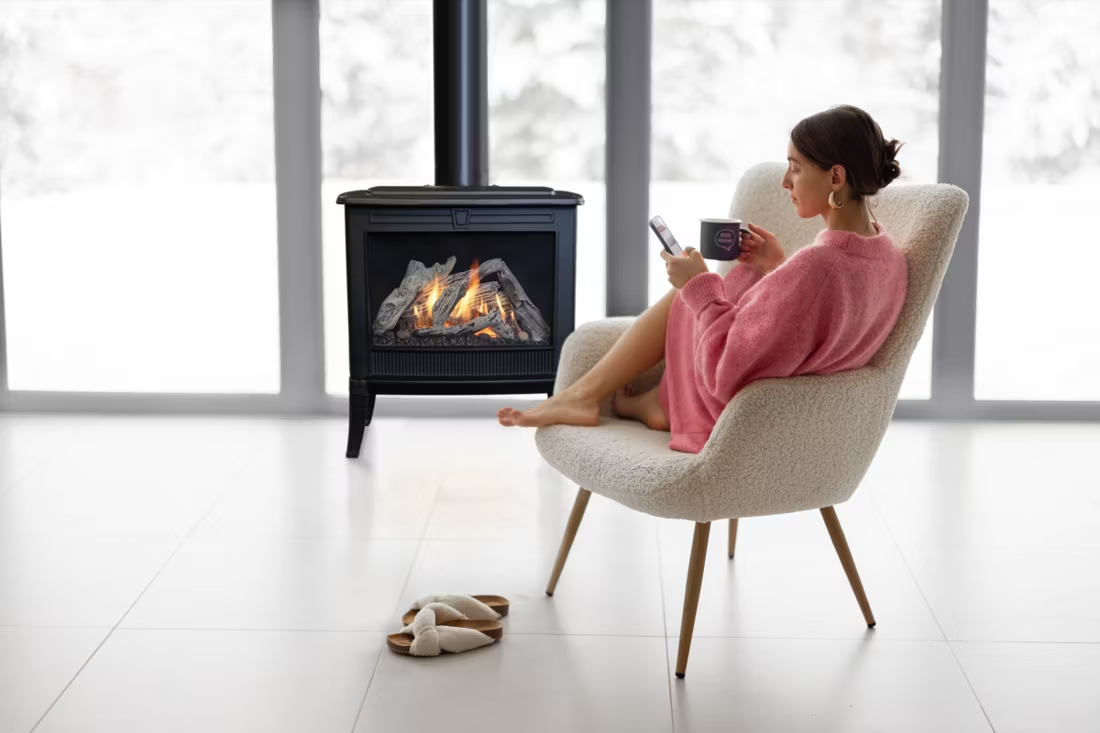
Wood-burning fireplaces and pellet stoves are genuinely uncommon in Canton's mostly urban and suburban neighborhoods—most homes were built without a chimney designed for regular wood use, and the area lacks the kind of public timber-cutting infrastructure you'd find farther out in Ohio's Appalachian foothills. Gas fills that gap well: a direct-vent gas fireplace or insert delivers real, immediate heat for a family room, finished basement, or den, with no flue to maintain and no firewood to source. For Canton and greater Stark County, gas is the default hearth fuel, and it's what most local dealers install day in and day out.
Three steps. No salesperson until you're ready.
Tell us about your project
Your zip code, your situation, and the fuel you're leaning toward—or let the answers point you to one.
See what's actually available
The brands dealers within 100 miles genuinely carry—real options, never a catalog mirage.
Get your dealer & Project Guide
A trusted local dealer, plus the free Project Guide & Parts List that names every component of the job.
Frequently Asked Questions
How much does a gas fireplace installation cost in Canton?
A typical gas fireplace installation in Canton runs roughly $4,000 to $10,000, depending on whether you're installing a direct-vent insert into an existing masonry fireplace or a new built-in unit that requires framing and a fresh gas line run off your Dominion Energy Ohio service. Inserts going into a fireplace that already has gas nearby land on the lower end; new construction or additions that need significant gas line extension and venting work push toward the higher end. Local Stark County hearth dealers will give you a firm number after walking your home.
Can I convert my existing wood fireplace to gas?
Yes, and it's one of the more common projects in older Canton neighborhoods near downtown and around Ridgewood, where homes often have a masonry fireplace that rarely gets used for wood. A gas insert slides into the existing firebox and runs a stainless liner up your existing chimney, so you keep the look of the fireplace while getting real heat output. Expect roughly $4,000 to $8,500 for the conversion, with the final number depending on the insert model and whether a gas line already runs near the fireplace.
Do I need natural gas, or can I use propane?
Most of Canton and the surrounding incorporated areas are served by Dominion Energy Ohio, so if your home already has gas appliances—furnace, water heater, range—adding a gas fireplace is usually a straightforward tap into existing service. In more rural parts of Stark County, some homes rely on propane instead, delivered by tank from a regional supplier. Nearly every gas fireplace on the market can be configured for either fuel; your installer sets the correct orifice and regulator for whichever you have.
Will my gas fireplace work during a power outage?
Most direct-vent gas fireplaces sold in Canton use intermittent pilot ignition (IPI) with a battery backup, so they'll light and run during an outage even when your furnace blower is down—a real consideration here, since Ohio Power Co. territory sees its share of ice storms and downed lines most winters. Valor fireplaces take a different approach: the pilot's thermocouple generates its own electricity, so there's no battery to remember at all. Ask your local dealer which ignition system a given model uses before you buy.
What's the difference between a gas fireplace, gas insert, and gas stove?
A gas fireplace is a fully built-in unit framed into a wall—the right call for new construction or a remodel in newer developments around Jackson Township or North Canton. A gas insert drops into an existing masonry firebox, which fits the older housing stock closer to downtown Canton and Canton South. A gas stove is a freestanding unit, often chosen for a basement rec room or an addition with no existing fireplace at all. Most Canton homeowners are either converting an existing fireplace with an insert or adding heat to a finished basement with a stove.
Do I need a permit to install a gas fireplace in Canton?
Yes. New gas fireplace installations require both a building permit through the City of Canton Building Department (or the relevant township office if you're outside city limits) and a gas permit, since the work involves tapping into a pressurized line. Licensed hearth dealers coordinate this as part of the install, including the inspection, so in practice you're confirming the permit was pulled rather than filing paperwork yourself.
What's the difference between vented and vent-free gas fireplaces?
Vented, or direct-vent, gas fireplaces pull combustion air from outside and exhaust gases back outside through sealed venting—the standard, code-compliant choice everywhere, including Ohio. Vent-free units burn directly into the room and are legal in Ohio with proper room sizing and oxygen-depletion sensors, but they add moisture and combustion byproducts to indoor air. For Canton's older, tightly built brick homes especially, direct-vent units are what most Stark County dealers recommend and install almost exclusively—no compromise on indoor air quality.
How often should my gas fireplace be serviced?
An annual inspection is recommended for any gas fireplace or insert—a technician checks the burner, pilot assembly, venting, and gas connections, and cleans the glass. In the Canton area this typically runs $150 to $225 through a hearth service company or HVAC contractor. It's a much lighter lift than chimney sweeping for a wood-burning unit, but skipping it for years can lead to soot buildup on the glass or ignition problems down the road.
Gas vs. wood—which is right for my home?
In most of the country this is a real toss-up, but in Canton it's a lighter decision: wood-burning fireplaces and stoves are genuinely uncommon here. Stark County doesn't have the public forest-cutting infrastructure or rural acreage that supports wood heat the way parts of southeastern Ohio do, and most Canton homes were built around gas service from the start. A handful of homeowners on larger rural lots still burn oak, hickory, or cherry for ambiance, but for the vast majority of Canton households, gas is the practical hearth fuel—instant heat, nothing to split or store, and a unit that pairs cleanly with the Ohio Power Co. electric service already running the furnace blower.
Why is my open fireplace making my house colder?
Open fireplaces suck—literally. As the fire burns, it consumes air your furnace already paid to heat and pulls it out through the chimney, so the house is actually colder after the fire goes out than before you lit it. An insert fixes this: it seals the chimney, puts fixed glass across the front, and turns that hole in your house into a real heat source.
What's the difference between an insert and a zero-clearance fireplace?
An insert is a fireplace that slides into a pre-existing wood-burning fireplace—if you don't have one, there's nothing to insert it into. A zero-clearance fireplace is built into a framed wall, which makes it the answer for remodels and new construction. Simple test: existing masonry fireplace means insert; blank or framed wall means zero-clearance.
Can I install a fireplace myself?
If you're putting a fire in your house on purpose, it's best to work with an expert. Unless you're genuinely experienced in framing, gas line, vent pipe, and the national code on clearances to combustibles, have a professional do it—and ideally the same company that sells you the fireplace, so warranty, service, and liability all live under one roof.
How much should I budget for a fireplace?
For an average home—covering the fireplace, the vent pipe, and basic installation—a budget between $3,900 and $5,500 gives you a lot of options across wood, gas, and pellet. By the time you add finish work, gas line, and electrical, the average complete installation lands between $5,000 and $12,000 all-in. In a remodel or new build, a good rule is to put about 2.5% of the total project cost toward the fireplace.
Nearby Dealers
Hearth shops serving Canton and the surrounding area. Every listing shows whether it is a WhyFire partner, a dealer we have verified as authorized for the brands we recommend, or a local business carrying hearth products. No manufacturer pays for placement. How we verify dealers →
Custom Fireplace Shop
StarFire Distributors
Country View Hardware
Find your gas fireplace in Canton.
Tell us about your home and project, and we'll match you with a trusted local Stark County dealer and send over your free Project Guide & Parts List—the exact parts, vent kit included, for your Canton gas fireplace project.
Find Your Fireplace →