
Real Warmth, No Chimney Required, in Canton.
Zone heat and ambiance for Canton's cold months without venting, gas lines, or a woodpile. Find the right electric unit and connect with a trusted local dealer.
Every Project Starts From One of These Five Situations
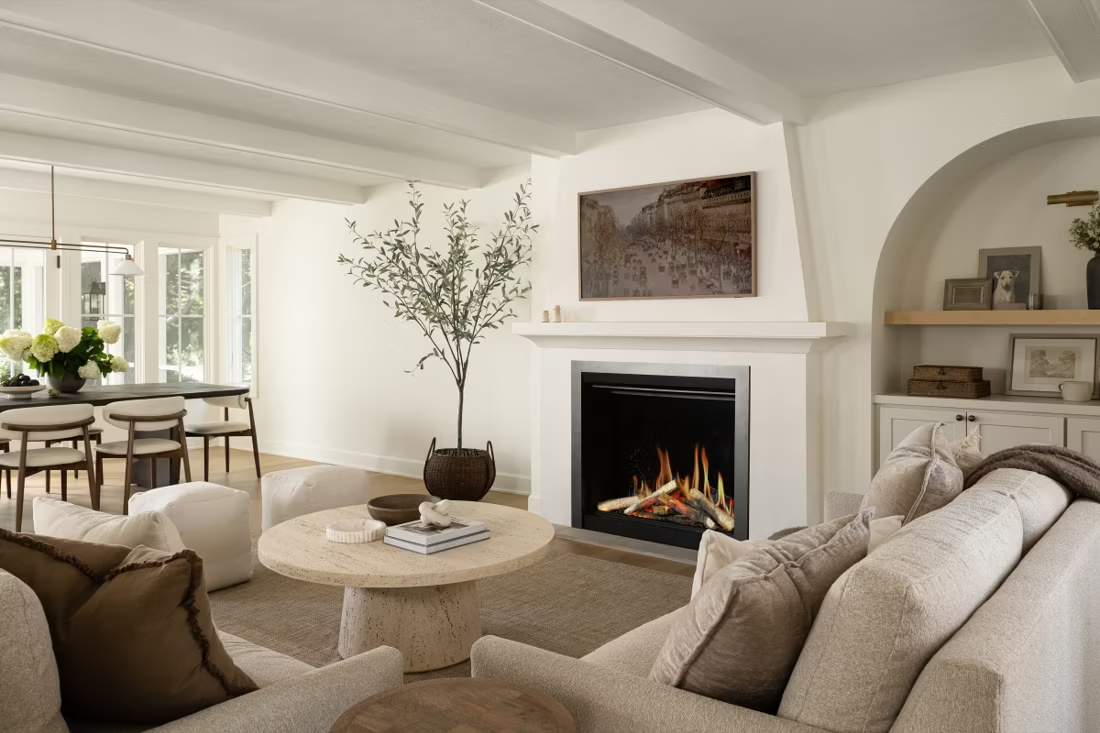
Electric fireplaces fit Canton homes without a chimney or gas line.
Canton sits in climate zone 5A with a long, cold heating season and winter lows averaging around 20°F—a heating season on par with Buffalo, NY across the Great Lakes. Most homes here, from the older brick two-stories near downtown to the ranch and split-level houses spread across Plain and Jackson Townships, already have a central furnace doing the heavy lifting. What they often lack is a way to add real, focused warmth to one room—a finished basement, a sunroom addition, a bedroom over the garage—without opening a wall for gas line or venting.
That's where electric fireplaces earn their keep in Stark County. There's no flue, no combustion byproduct, and no cutting a hole through an exterior wall, which makes them the simplest retrofit option for condos, rentals, and additions built without a masonry chimney. Running one costs real money but not much—at Ohio Power Co's residential rate of about $0.1435 per kWh, a typical 1,500-watt unit on high runs around 21 cents an hour, cheap zone heat for a room you're actually using while the furnace stays set lower elsewhere in the house.
Three steps. No salesperson until you're ready.
Tell us about your project
Your zip code, your situation, and the fuel you're leaning toward—or let the answers point you to one.
See what's actually available
The brands dealers within 100 miles genuinely carry—real options, never a catalog mirage.
Get your dealer & Project Guide
A trusted local dealer, plus the free Project Guide & Parts List that names every component of the job.
Frequently Asked Questions
How much does it cost to install an electric fireplace in Canton?
Plug-in electric inserts and mantel packages typically run $300 to $1,200 installed in Canton, since most just need a standard outlet and a spot to sit—no permit, no electrician required for a simple swap. Built-in wall units and larger linear fireplaces run higher, usually $1,500 to $4,000, because they often call for a dedicated 20-amp circuit, some drywall or trim carpentry, and sometimes a recessed wall opening. Homes in older Canton neighborhoods with older panels sometimes need a circuit upgrade first, which a local electrician or hearth dealer can flag during an estimate.
Do I need a permit for an electric fireplace in Canton?
A plug-in unit that draws from an existing outlet generally doesn't require a permit. But if you're adding a dedicated circuit or hardwiring a built-in unit, that's electrical work that falls under the City of Canton Building Department inside city limits, or the Stark County Building Department for homes in North Canton, Plain Township, or other unincorporated areas. Most hearth dealers and electricians pull this permit as part of the installation, so it's worth asking upfront whether your quote includes it.
How much does it actually cost to run an electric fireplace in Canton?
At Ohio Power Co's residential rate of roughly $0.1435 per kWh, a standard 1,500-watt electric fireplace running on its heater setting costs about 21 cents an hour, or a little under $1.75 for an eight-hour evening. Run it on flame-only mode with the heater off and the draw drops to just a few watts—essentially the cost of a light bulb. That's a fraction of what it costs to run a whole-house furnace to heat a single room, which is the main reason electric units get installed as zone heat in Stark County basements and additions rather than as a home's primary heat source.
Is an electric fireplace a good option for a finished basement in Canton?
Yes—it's one of the most common installs local dealers see. A lot of Stark County's housing stock is 1950s-to-1970s ranch and Cape Cod construction with basements that get finished into rec rooms or bedrooms later, long after the original heating layout was set. Running gas line or masonry venting down there is expensive and often impractical. An electric insert or built-in wall unit solves that: no venting needed, no clearance-to-combustible headaches, and it adds real supplemental warmth to a space that's often the coldest room in the house come January.
What's the difference between an electric insert, a built-in wall unit, and a mantel package?
An electric insert is sized to slide into an existing fireplace opening—a good fit if you have an old masonry fireplace you want to stop using for wood and convert to electric. A built-in wall unit is designed for new construction or a remodel, recessed into a framed wall opening for a flush, linear look. A mantel package pairs a freestanding or wall-mounted electric firebox with a surrounding mantel shelf, which works in any room with no construction at all—just an outlet. For Canton's older homes with existing masonry fireplaces sitting unused, an insert is often the simplest upgrade; for additions and finished basements without an existing opening, a built-in or mantel unit makes more sense.
Should I get an electric fireplace or a gas fireplace in Canton?
Gas is the more common choice for primary living-room installations in Canton, since natural gas service is widely available and a gas fireplace can put out real, sustained heat with the flip of a switch. Electric makes more sense where running gas line isn't practical or worth the cost—basements, additions, condos, bedrooms, or rentals—and where the priority is ambiance plus modest supplemental heat rather than heating an entire room through a cold snap. Some Stark County homeowners end up with both: gas in the main living space, electric in a secondary room.
Can an electric fireplace actually heat a room in Canton's winters?
A properly sized unit can meaningfully take the edge off a single room, but it's supplemental heat, not a furnace replacement—worth knowing given Canton's long, cold winter season and lows that regularly sit near 20°F. Most electric fireplaces top out around 5,000 to 5,200 BTU (roughly 1,500 watts), enough to comfortably warm a well-insulated room in the 300 to 400 square foot range. For anything larger or drafty, plan on the fireplace working alongside your existing furnace rather than instead of it.
Will my electric fireplace still work if the power goes out?
No—electric fireplaces need household power to run, so they go dark along with everything else during an outage. That's a real consideration in Stark County, where ice storms occasionally knock out power for a day or more. Because wood-burning and pellet appliances see very little demand in Canton's housing stock, most homeowners here who want outage-proof backup heat look at a generator hookup or a vented propane heater rather than a wood insert. If backup heat during outages is a priority, mention that to your dealer—it changes the recommendation.
What size electric fireplace do I need for my Canton home?
Sizing comes down to the room, not the whole house. A 26- to 30-inch insert or mantel unit suits a bedroom or small den, a 36- to 50-inch linear wall unit fits a living room or open-concept basement rec room, and anything wider is mostly a design choice at that point since heat output plateaus around 5,000 BTU regardless of the unit's width. A local dealer can walk your specific room and tell you whether you're better served by heat output, visual width, or both—that in-home look is usually free and worth doing before you buy.
Do electric fireplaces actually produce heat?
Yes—most put out around 4,800–5,000 BTUs from a standard outlet, which comfortably warms a bedroom, office, or den as a comfort-zone heater. What they won't do is carry a whole house the way wood, gas, or pellet can. Think of electric as ambiance-first with honest supplemental heat: flames on with no heat in July, flames plus warmth in January.
Can I put a TV above my fireplace?
Yes—with an asterisk. Fireplaces are hot and TVs don't like heat. Either put a mantel between them to deflect rising warmth, or choose a fireplace with heat-management technology that creates a cool zone on the wall above—the wall stays around 125 degrees, barely warm, while the room still gets full heat. If you like clean lines and don't want a mantel, heat management is the answer.
How much should I budget for a fireplace?
For an average home—covering the fireplace, the vent pipe, and basic installation—a budget between $3,900 and $5,500 gives you a lot of options across wood, gas, and pellet. By the time you add finish work, gas line, and electrical, the average complete installation lands between $5,000 and $12,000 all-in. In a remodel or new build, a good rule is to put about 2.5% of the total project cost toward the fireplace.
Does a fireplace add value to my home?
On average, a fireplace adds back to the home about the same amount you spent installing it. Add the monthly savings from heating the rooms you actually use instead of the whole house—often hundreds of dollars a year—and the value case is strong before you even count what a fire does for how your family uses the room.
Nearby Dealers
Hearth shops serving Canton and the surrounding area. Every listing shows whether it is a WhyFire partner, a dealer we have verified as authorized for the brands we recommend, or a local business carrying hearth products. No manufacturer pays for placement. How we verify dealers →
Custom Fireplace Shop
StarFire Distributors
Country View Hardware
Electric Service in Canton
An electric fireplace's heater draws about 1,500 watts—pennies per hour at local rates.
Ohio Power Co
Find your electric fireplace in Canton.
Tell us about your room and we'll send you a free Project Guide & Parts List—sized for your space, with the right unit and a trusted local Canton dealer who can install it correctly.
Find Your Fireplace →