
Keep Your Family Warm and Safe—No Matter What
Most homes here run on natural gas, so a wood stove is a deliberate choice, not a default. If you want one—for backup heat, a woodlot, or a real fire—we'll connect you with a local dealer who actually stocks this stuff.
Every Project Starts From One of These Five Situations
Canal Fulton runs on natural gas—wood is the exception.
Canal Fulton sits in Stark County along the old Ohio & Erie Canal, with winters cold enough to matter—average lows around 20°F and a heating season about as demanding as Buffalo, NY. That's cold enough that wood heat would make sense in a lot of towns. But it isn't the default here: natural gas service is widely available across the village, and most homes were built with gas furnaces rather than the masonry fireplaces that make wood conversions easy elsewhere.
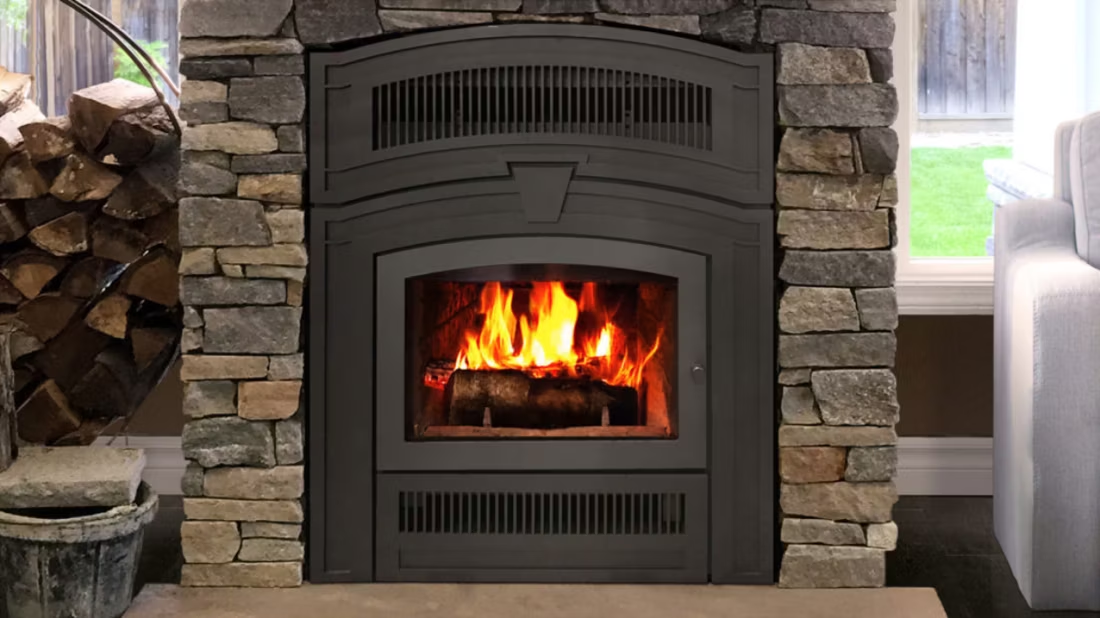
That's why we flag wood as a niche fit for Canal Fulton rather than a mainstream one. The homeowners who do install a wood stove here tend to have a specific reason: a rural lot on the edge of the village with standing oak, hickory, maple, or cherry to burn, a shop or outbuilding that isn't on the gas line, or a desire for heat that still works when Ohio Edison's lines go down in an ice storm. There's no local burn-ban or air quality restriction working against you—Stark County has no listed air quality concerns—so if you want a stove, nothing local is stopping you. You'll just want a dealer who actually handles wood installs regularly, since it's not the bread-and-butter business it is in colder, more rural parts of the state.
Three steps. No salesperson until you're ready.
Tell us about your project
Your zip code, your situation, and the fuel you're leaning toward—or let the answers point you to one.
See what's actually available
The brands dealers within 100 miles genuinely carry—real options, never a catalog mirage.
Get your dealer & Project Guide
A trusted local dealer, plus the free Project Guide & Parts List that names every component of the job.
Frequently Asked Questions
How much does a wood stove installation cost in Canal Fulton?
Because most Canal Fulton homes were built around gas furnaces rather than masonry fireplaces, a wood stove install here usually means a full Class A chimney system from scratch, not a simple insert into an existing hearth. That typically pushes cost toward $6,000–$10,000 once you include the stove, hearth pad, and through-roof venting. If you're one of the fewer homes with an existing masonry fireplace and chimney already in place, you may be closer to $4,000–$7,000 for an insert or stove that reuses that flue. A local dealer will give you a firm number after seeing your chimney situation in person—it's the single biggest cost variable here.
Is a wood stove even practical for a smaller village home like mine?
Yes, but sizing matters more in a smaller Canal Fulton home than it would in a larger rural farmhouse. A small-to-medium freestanding stove (rated for 1,000–1,500 sq ft) is plenty for most village lots, and oversizing is the more common mistake—a stove that's too big for a well-insulated 1,500 sq ft home will smolder, run cool, and build creosote instead of throwing clean heat. If you're installing mainly for backup heat during outages rather than daily use, a local dealer can size you smaller than you'd think and still cover the main living space comfortably.
Where do I find an installer who actually knows wood stoves around here?
Since gas fireplaces and furnaces dominate the Canal Fulton and greater Stark County market, not every hearth shop in the area installs wood stoves regularly. Look for NFI (National Fireplace Institute) or CSIA (Chimney Safety Institute of America) certification specifically—it tells you the installer trains on wood-burning venting and clearances, not just gas lines. Dealers serving the Akron-Canton corridor tend to have more wood experience than shops that only stock gas units, so it's worth asking directly how many wood installs they do in a typical year before you commit.
Should I get a wood stove or a wood-burning insert?
Because most homes in the village were built with gas heat rather than a masonry fireplace, the honest answer for a lot of Canal Fulton homeowners is a freestanding wood stove—it doesn't need an existing chimney and can go almost anywhere with proper clearances. If your home is one of the older ones with a real masonry fireplace already built in, an insert is usually the better call, since it reuses that chimney and turns a decorative, heat-losing fireplace into an actual heat source. A local dealer can tell you which situation you're in within a five-minute look at your chimney.
Do I need a permit to install a wood stove in Canal Fulton?
Yes—new wood stove installations require a building permit, typically through the Village of Canal Fulton or Stark County Building Department depending on your address. Most established hearth dealers handle this paperwork as part of the install rather than leaving it to you. The good news is there's no air quality non-attainment issue or seasonal burn curtailment in this part of Stark County, so once the stove is installed and permitted, you can burn it whenever you want without checking a daily advisory.
What's a good wood stove choice for a Canal Fulton winter?
With average lows around 20°F and dense local hardwoods like oak and hickory available for fuel, a mid-size non-catalytic stove from a brand like Lopi or Pacific Energy will comfortably heat a main living area through the coldest stretches, and those hardwoods burn hot and long compared to softer species. If you want maximum overnight burn time for backup heat during an outage, a catalytic model from Blaze King or Woodstock Soapstone will hold a fire well past 12 hours on a load of oak or hickory—useful if you're installing primarily as insurance against a winter power outage rather than for daily use.
How often does a wood stove need to be inspected?
The CSIA recommends an annual inspection for any wood-burning appliance, and that holds even if you're only running the stove occasionally in Canal Fulton—for backup heat or ambiance rather than daily use. A once-a-year sweep before the season starts (typically September or October) catches creosote buildup and confirms the chimney and cap are still sound. Because wood-burning is less common locally, ask your installer or dealer for a referral to a CSIA-certified sweep who services Stark County regularly rather than guessing from a search engine.
Where can I get firewood in Canal Fulton?
Stark County hardwoods—oak, hickory, maple, and cherry—are common in local firewood, typically sold by tree services, landscapers, and seasonal firewood dealers rather than through public-land cutting permits, which aren't really a factor in this part of Ohio. Seasoned hardwood generally runs $200–$275 per cord delivered in the area. Oak and hickory in particular burn hot and long, which matters if you're leaning on the stove for occasional backup heat rather than daily fires—buy a season ahead when possible, since well-seasoned wood (6+ months dry) burns cleaner and produces far less creosote than green wood.
Does a wood stove make sense next to my gas furnace, or should I just stick with gas?
For most Canal Fulton homes, gas remains the practical everyday choice—it's instant, clean, and the village's natural gas infrastructure is reliable. Where a wood stove earns its cost is as backup: if Ohio Edison's lines go down in an ice storm, a gas furnace with an electric blower and electronic ignition typically stops working too, while a wood stove keeps running on nothing but the hardwood in your yard. If you already have access to oak, hickory, maple, or cherry, and losing heat during a multi-day outage is a real concern, a wood stove alongside your existing gas system is a reasonable hedge rather than a replacement for it.
Why won't my new wood stove get going like my old one?
New wood stoves are 70%+ efficient, so far less heat goes up the flue—which also means less draft to get a fire established. The rule: build a genuinely hot fire for about 45 minutes before you choke it down. Skip that and you get smoke in the room, creosote in the chimney, and a fire that never takes off. Most performance complaints trace straight back to this.
Why is a fireplace insert so efficient?
An insert does two things: it seals the chimney completely, so you stop losing air you already paid to heat, and it radiates warmth into the room through the firebox and glass. Most add a heat-exchange fan that pulls cool room air underneath, wraps it around the hot firebox, and pushes it back out warm. Your home is more efficient before you've even lit the first fire.
Can a fireplace actually lower my heating bill?
Yes—by creating a comfort zone. A furnace heats every square foot of the house just to warm the one room you're in; a gas fireplace on low burns roughly a sixth of the gas a typical furnace does. Set the furnace around 55–60 degrees as a baseline, then heat the rooms your family actually uses. Families who heat this way commonly save $20–$60 a month.
Can I install a fireplace myself?
If you're putting a fire in your house on purpose, it's best to work with an expert. Unless you're genuinely experienced in framing, gas line, vent pipe, and the national code on clearances to combustibles, have a professional do it—and ideally the same company that sells you the fireplace, so warranty, service, and liability all live under one roof.
Nearby Dealers
Hearth shops serving Canal Fulton and the surrounding area. Every listing shows whether it is a WhyFire partner, a dealer we have verified as authorized for the brands we recommend, or a local business carrying hearth products. No manufacturer pays for placement. How we verify dealers →
Custom Fireplace Shop
StarFire Distributors
The Place
Astro Fireplace Shop
Find your wood stove in Canal Fulton.
Tell us about your home and why you want wood heat—backup power, a workshop, or a real fire—and we'll send a free Project Guide & Parts List with the right stove, venting, and a trusted local dealer who actually installs wood-burning appliances in Stark County.
Find Your Fireplace →