
Add real warmth without a chimney in Ashtabula County.
No flue, no gas line, no wood to split—just plug-in or hardwired warmth for the long lake-effect winters between Conneaut and Geneva. Find the right unit and connect with a trusted local dealer.
Every Project Starts From One of These Five Situations
Zone heat that fits any room, no flue required.
Ashtabula County sits in the Lake Erie snowbelt, and it earns that reputation—6,372 heating degree days a year, winter lows averaging 19°F, and lake-effect bands that can dump a foot of snow overnight on Geneva-on-the-Lake or the farmhouses out past Jefferson. In a climate zone 5A county this cold, electric fireplaces aren't marketed as a home's primary heat source, and I won't pretend otherwise here. What they do well is add fast, controllable zone heat and real ambiance to rooms a furnace duct barely reaches—a finished basement in an older Ashtabula farmhouse, a lake-view sunroom in Geneva, a converted attic bedroom in a Jefferson Victorian.
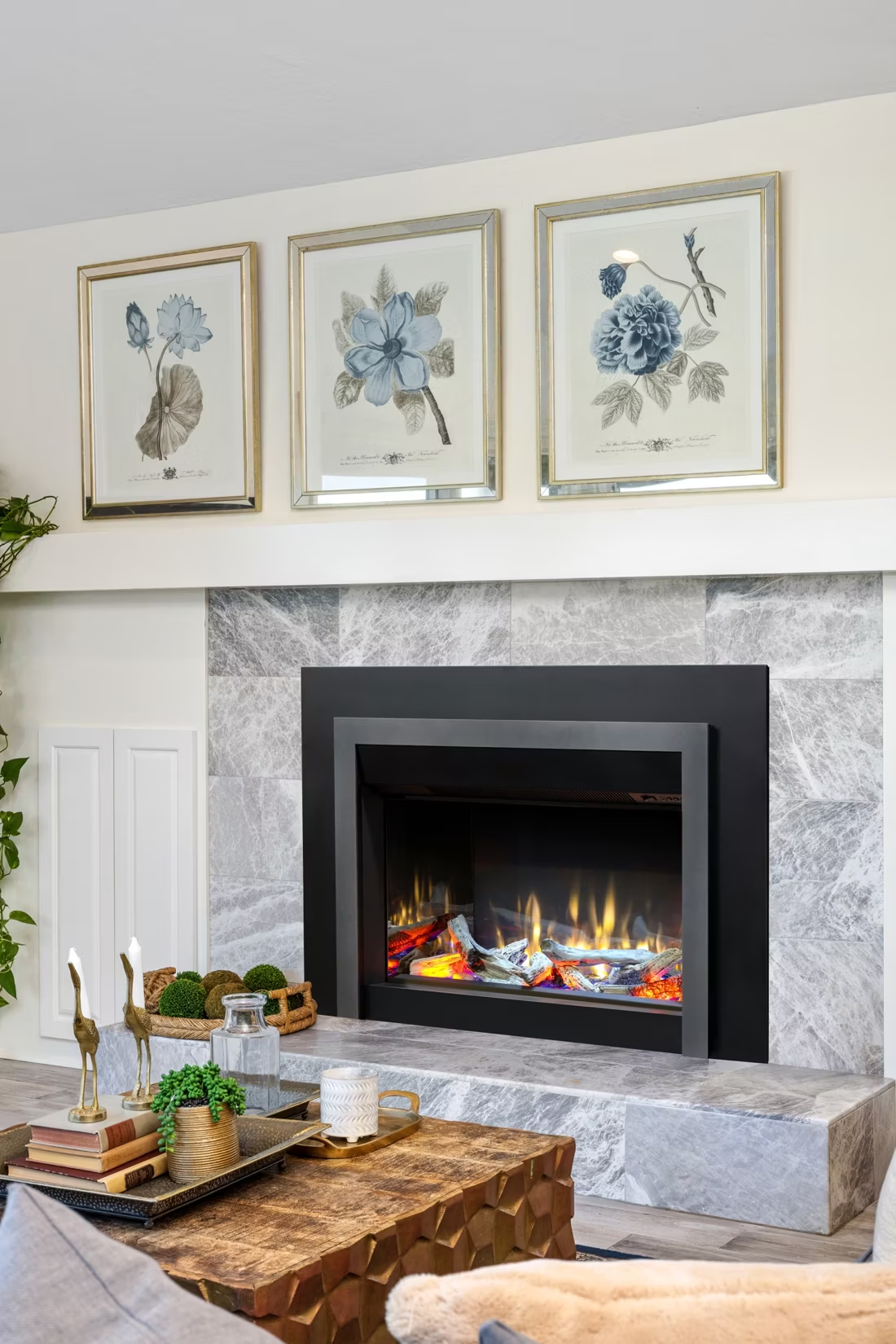
Because there's no combustion, no chimney, and no venting to run, electric units go into places that would be difficult or impossible for a wood or gas installation—condo units along the lakefront, rental cottages, finished basements without a masonry flue. Most plug into a standard 120-volt outlet; larger built-in models may call for a dedicated 240-volt circuit, which is a quick job for a licensed electrician rather than a full mechanical permit process. For county homeowners who already burn oak, hickory, or cherry in a wood stove for real heat, electric is usually the second unit—the one that keeps a bedroom or sunroom comfortable without hauling wood up from the basement every night.
Three steps. No salesperson until you're ready.
Tell us about your project
Your zip code, your situation, and the fuel you're leaning toward—or let the answers point you to one.
See what's actually available
The brands dealers within 100 miles genuinely carry—real options, never a catalog mirage.
Get your dealer & Project Guide
A trusted local dealer, plus the free Project Guide & Parts List that names every component of the job.
Frequently Asked Questions
How much does an electric fireplace installation cost in Ashtabula County?
A basic plug-in electric insert or freestanding unit typically runs $300 to $900 installed in Ashtabula County, since there's no venting or gas line to run—most of that cost is the unit itself plus trim work if it's going into an existing fireplace opening. A built-in wall unit or a linear electric fireplace requiring a dedicated 240-volt circuit and some framing or drywall work typically lands between $900 and $2,000, depending on whether an electrician needs to run new wiring from the panel. Units for lake cottages in Geneva-on-the-Lake or Conneaut sometimes run slightly higher if the home's electrical panel needs upgrading to support a new circuit.
Can an electric fireplace actually heat a room in Ashtabula County's climate?
It can heat a single room adequately, but it won't replace your furnace during a real Ashtabula County winter. Most electric fireplaces top out around 5,000 to 5,200 BTU on the heat setting—enough to noticeably warm a bedroom, sunroom, or finished basement room, but not enough to carry a whole house through a stretch of 19°F nights with lake-effect wind off the water. Think of it as supplemental zone heat for a specific room, paired with your existing furnace, rather than a standalone heating plan for the season.
What's the difference between a plug-in electric insert and a built-in electric fireplace?
A plug-in electric insert drops into an existing fireplace opening or a simple surround and runs off a standard household outlet—no electrician needed in most cases, and it can be unplugged and moved if you sell the house or move to a new place, which is common with lake cottage owners in the county. A built-in electric fireplace is framed into a wall like a piece of millimeter-thick television, often wired to a dedicated 240-volt circuit for more consistent heat output and a cleaner, flush look. For a rental property or a lake cottage used seasonally, the plug-in insert is usually the more practical call. For a primary living space you're renovating for the long haul, a built-in unit gives a more finished result.
Do I need a permit or an electrician to install an electric fireplace in Ashtabula County?
A basic plug-in unit generally doesn't require a permit—it's no different electrically than plugging in a space heater. If you're installing a built-in electric fireplace that needs a new dedicated circuit, that electrical work should go through a licensed electrician, and larger structural changes (cutting into a wall, adding framing) may need a permit through the Ashtabula County building department depending on the scope. There's no combustion involved, so none of the chimney, venting, or gas-line permitting that applies to wood or gas installations applies here—it's a much simpler process.
Electric vs. wood—which is right for my Ashtabula County home?
Wood is the primary or serious supplemental heat choice for a lot of county homes—Ashtabula County has plenty of oak, hickory, maple, and cherry available locally, and a wood stove keeps running through a power outage, which matters when lake-effect storms take down lines between Conneaut and Jefferson. Electric can't do that; if the power's out, an electric fireplace is out too. Where electric wins is convenience and placement—no ash, no creosote, no annual chimney sweep, and it goes into rooms a wood stove simply can't (a condo, a room with no flue access, a rental unit). Many households in the county end up with both: wood or a wood insert for real heat and backup power resilience, electric for a bedroom, sunroom, or basement that just needs ambiance and a quick warm-up.
Electric vs. pellet—which makes more sense here?
Pellet stoves, fed by regional suppliers like Lignetics, Somerset Pellet Fuel, or Indeck Energy Services, put out real heat—enough to be a primary or near-primary source for a well-insulated Ashtabula County home—but they still need electricity to run the auger and blower, so they go dark in an outage just like an electric fireplace does. If your goal is genuine heating capacity, pellet beats electric by a wide margin. If your goal is ambiance and simple supplemental warmth in a specific room with the lowest possible install cost and complexity, electric is the easier, cheaper path. They're solving different problems even though both plug into your home's power supply.
What will an electric fireplace cost to run on my electric bill?
Most electric fireplaces draw around 1,500 watts on the heat setting, which works out to roughly 15 cents an hour at typical Ohio residential electric rates—call it a dollar or two for an evening's use. Run through most of a winter evening a few nights a week, that adds a modest but noticeable amount to a monthly bill from Ohio Edison or your local electric cooperative, nothing close to what a whole-house furnace costs to run through a 6,372-heating-degree-day winter. It's a reasonable trade for the convenience of instant, thermostatic room heat with zero maintenance.
Will my electric fireplace work during a power outage?
No—this is the one honest limitation to plan around in a county that sees real lake-effect outages. An electric fireplace, like any electric appliance, goes dark the moment the power does. If backup heat during storm-related outages matters to you—and it often does out toward Andover and the rural east side of the county—a wood stove or a battery-backed gas unit is the better choice for that specific job. Plenty of homeowners here still choose electric for the rooms where daily convenience matters most, and keep a wood stove or fireplace elsewhere in the house for outages.
Where does an electric fireplace make the most sense in an Ashtabula County home?
The best fits are rooms without existing chimney access or gas service: finished basements in older farmhouses, three-season sunrooms overlooking Lake Erie in Geneva-on-the-Lake, converted attic or bonus rooms, and rental or seasonal cottages where a landlord doesn't want the liability or maintenance of a wood or gas appliance. It's also a common upgrade for condos and townhomes along the lakefront where a masonry chimney was never part of the building. A local dealer can walk your specific room and tell you whether a plug-in insert is enough or whether a hardwired built-in makes more sense for the space.
Can I put a TV above my fireplace?
Yes—with an asterisk. Fireplaces are hot and TVs don't like heat. Either put a mantel between them to deflect rising warmth, or choose a fireplace with heat-management technology that creates a cool zone on the wall above—the wall stays around 125 degrees, barely warm, while the room still gets full heat. If you like clean lines and don't want a mantel, heat management is the answer.
What fireplace styles should I know before shopping?
Four cover most of the market: screen-front traditional (mesh front, open feel, fits craftsman homes), traditional door set (the classic look you grew up with), modern linear (wide, low, the statement piece for entertaining), and clean face contemporary (no trim—your tile or stone runs right to the fire's edge). Walk in knowing those four terms and you're ahead of most buyers.
Does a fireplace add value to my home?
On average, a fireplace adds back to the home about the same amount you spent installing it. Add the monthly savings from heating the rooms you actually use instead of the whole house—often hundreds of dollars a year—and the value case is strong before you even count what a fire does for how your family uses the room.
How much should I budget for a fireplace?
For an average home—covering the fireplace, the vent pipe, and basic installation—a budget between $3,900 and $5,500 gives you a lot of options across wood, gas, and pellet. By the time you add finish work, gas line, and electrical, the average complete installation lands between $5,000 and $12,000 all-in. In a remodel or new build, a good rule is to put about 2.5% of the total project cost toward the fireplace.
Stove and Fireplace Dealers in Ashtabula County
Find your electric fireplace in Ashtabula County.
Tell us a bit about your home and room, and we'll match you with a trusted local dealer and send over a free Project Guide & Parts List—the right unit, the electrical requirements, and a plan built for your Ashtabula County space.
Find Your Fireplace →