
Wood, Gas, Pellet, or Electric—Find What Fits Your Ashtabula County Home.
Hearth resources for every lakeshore and inland community in Ashtabula County—from Ashtabula and Conneaut on Lake Erie to Jefferson, Andover, and Orwell inland. Find the right fuel and connect with a trusted local hearth retailer.
Every Project Starts From One of These Five Situations
Lake-effect winters, hardwood heat: heating Ashtabula County, Ohio.
Ashtabula County sits along the eastern shore of Lake Erie in Ohio's snowbelt, where lake-effect systems dump heavy snow on Geneva, Conneaut, and the lakeshore townships nearly every winter. At climate zone 5A, with winter lows around 19°F, the county's heating season runs comparable to Buffalo, New York, just across the lake—long, cold, and snow-heavy from November through March. The county's hardwood stands of oak, hickory, maple, and cherry have long fueled wood stoves and fireplaces in both the lakeshore towns and the inland farm townships near Jefferson and Orwell.
What you'll find on this hub: hearth retailers, service technicians, and fuel suppliers serving every community in the county—from the city of Ashtabula and Conneaut on the lakeshore to Geneva, Jefferson, Andover, and Orwell inland. Pick your fuel below to drill into the specifics—local dealers, installation costs, recommended units, and resources matched to your project. Whether you're heating a lakefront cottage in Geneva-on-the-Lake or a farmhouse near the Pennsylvania line, this is the starting point.
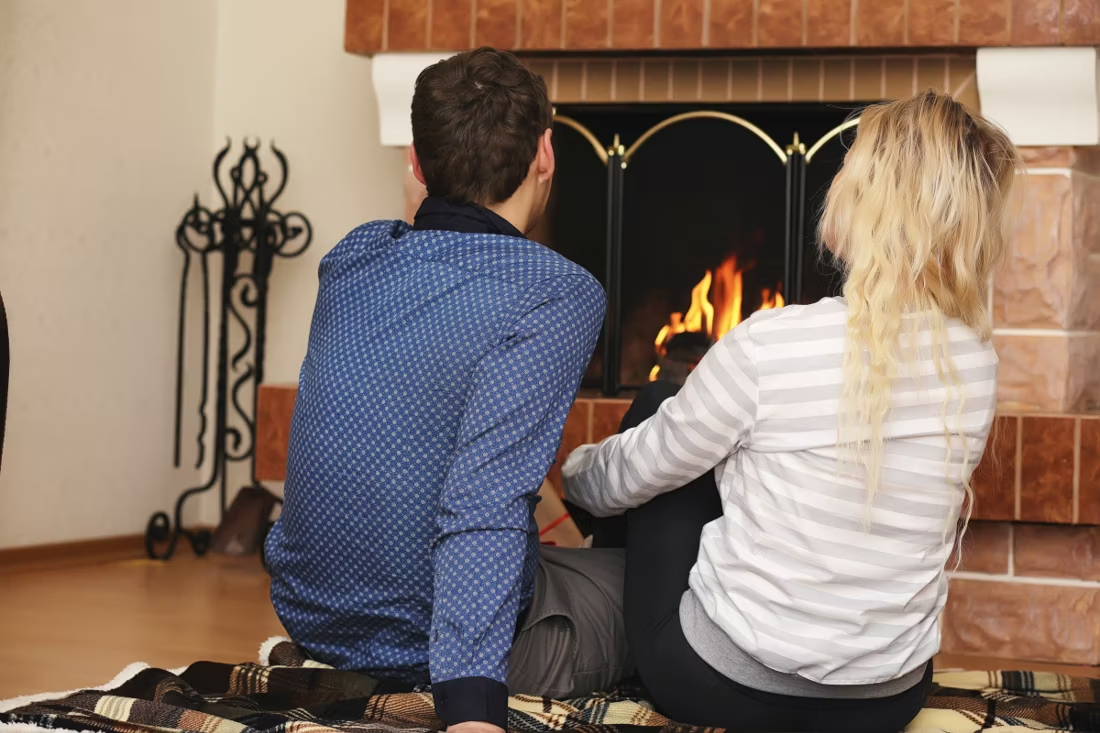
Four fuels. One honest answer for Ashtabula County.
Three steps. No salesperson until you're ready.
Tell us about your project
Your zip code, your situation, and the fuel you're leaning toward—or let the answers point you to one.
See what's actually available
The brands dealers within 100 miles genuinely carry—real options, never a catalog mirage.
Get your dealer & Project Guide
A trusted local dealer, plus the free Project Guide & Parts List that names every component of the job.
Frequently Asked Questions
Which fuel works best in Ashtabula County?
It depends on your home and priorities. Wood is a strong traditional choice here—the county's oak, hickory, maple, and cherry hardwoods burn hot and long, and unlike some Ohio counties, Ashtabula has no wood-burning curtailment days or air-quality advisories to work around, so a certified wood stove or insert can run whenever you need it. Gas is the convenience choice for homes with natural gas service in Ashtabula, Conneaut, and Geneva, or propane for homes further inland—no wood-hauling, no ash, instant heat on a 19°F morning. Pellet stoves are a solid middle ground, especially with regional pellet supply from Indeck Energy Services, Lignetics, and Somerset Pellet Fuel keeping fuel available and reasonably priced. Electric fireplaces are best treated as supplemental heat—with a heating season as long and cold as Buffalo's, a plug-in unit alone won't carry a lakeshore winter, but it's a fine choice for a bedroom, sunroom, or backup ambiance. Most Ashtabula County homes end up mixing fuels—wood or pellet for primary heat, gas or electric for secondary rooms.
Do I need a permit to install a fireplace in Ashtabula County?
Yes, in most cases. New wood stoves, wood inserts, gas fireplaces, gas inserts, gas stoves, and pellet stoves typically require a building permit through your local building department—whether that's the county or your city or village jurisdiction depends on where in Ashtabula County you live. Wood-burning appliances need to meet current EPA 2020 NSPS emissions standards, and gas installations require a separate gas line permit along with a licensed gas-fitter for the actual hookup. Electric fireplaces generally skip the permit process unless you're doing a built-in installation with new wiring or a dedicated circuit. Most local hearth retailers pull the permit as part of the installation, so you rarely have to handle that paperwork yourself.
Are there air quality restrictions on wood burning in Ashtabula County?
Not really—and that's actually a point in Ashtabula County's favor. Unlike counties that deal with winter temperature inversions or wood-smoke non-attainment status, Ashtabula County has no listed air quality restrictions or curtailment days tied to residential wood burning. A certified wood stove or fireplace insert can run through the coldest lake-effect stretches without worrying about a 'no-burn' advisory. It's still worth installing an EPA 2020 NSPS-certified appliance—you'll pull more heat out of the same cord of oak or hickory, and cleaner combustion means less chimney buildup over a long snowbelt heating season.
Can one local hearth retailer handle all four fuel types?
Many hearth retailers along the Route 20 and Interstate 90 corridor carry three or four fuel types, since demand runs strong for both wood and gas across the lakeshore and inland townships. A dealer that stocks wood, gas, pellet, and electric can put working displays of each in front of you and walk through the real trade-offs for your specific house—helpful if you're not sure whether a pellet stove or a wood insert makes more sense for your Conneaut cottage or Jefferson farmhouse. The county + fuel pages above list exactly which fuels each local dealer carries, so you can narrow the list before you make a call.
How does service work in rural areas of Ashtabula County?
Most service technicians are based in or near the city of Ashtabula and travel out to Conneaut, Geneva, Jefferson, Andover, and the inland townships for chimney sweeps, gas inspections, and pellet stove cleanings. Expect a modest travel fee for the more rural calls—typically in the $50–$100 range depending on distance. Lake-effect snow squalls can shut down roads with little warning between November and March, so scheduling annual service in September or October, before the snowbelt kicks in, is far easier than booking a mid-winter emergency appointment. In outlying townships, keeping a backup heat source—a wood stove alongside a gas furnace, for example—is common practice for exactly this reason.
What's the typical cost range for fireplace installation across all fuel types in Ashtabula County?
Ranges vary by fuel. Wood stove or insert installation typically runs $4,000–$8,500, more if new chimney or hearth work is involved. Gas fireplace, insert, or stove installation runs roughly $4,000–$10,000 depending on whether a new gas line has to be run. Pellet stove or insert installation typically falls between $4,000–$7,000. Electric fireplace costs are the lowest and most predictable—$200–$3,000 for the unit itself, plus $400–$1,200 in labor for anything beyond a simple plug-in install, which covers most wall-mount and insert units. See the county + fuel pages above for cost detail tied to the specific fuel you're considering.
Wood, gas, pellet, or electric—how do I choose?
Match the fuel to your life, not the other way around. Wood: lowest fuel cost and total power-outage independence, but you're hauling and stacking. Gas: press a button, set a thermostat, no maintenance to speak of. Pellet: wood economics with automatic feeding, in exchange for weekly cleaning and a need for electricity. Electric: plugs in anywhere with honest supplemental heat. Nobody regrets the fuel that fits how they actually live.
Does a fireplace add value to my home?
On average, a fireplace adds back to the home about the same amount you spent installing it. Add the monthly savings from heating the rooms you actually use instead of the whole house—often hundreds of dollars a year—and the value case is strong before you even count what a fire does for how your family uses the room.
Can I install a fireplace myself?
If you're putting a fire in your house on purpose, it's best to work with an expert. Unless you're genuinely experienced in framing, gas line, vent pipe, and the national code on clearances to combustibles, have a professional do it—and ideally the same company that sells you the fireplace, so warranty, service, and liability all live under one roof.
How much should I budget for a fireplace?
For an average home—covering the fireplace, the vent pipe, and basic installation—a budget between $3,900 and $5,500 gives you a lot of options across wood, gas, and pellet. By the time you add finish work, gas line, and electrical, the average complete installation lands between $5,000 and $12,000 all-in. In a remodel or new build, a good rule is to put about 2.5% of the total project cost toward the fireplace.
Stove and Fireplace Dealers in Ashtabula County
Listings include WhyFire partner dealers, dealers we have verified as authorized for the brands we recommend, and established local businesses that carry hearth products. Every listing shows which one it is. The ones marked Preferred run on WhyFire's software, so they can show you real pricing and book your appointment right here. No manufacturer pays for placement. How we verify dealers →
Hayford Chimney Service
Nichols Fireplace & Stove Center
Get your Ashtabula County fireplace project matched with a local pro.
Tell us about your Ashtabula County home and heating goals, and we'll match you with a trusted local dealer and send a free Project Guide & Parts List—the exact parts, including the vent kit, and the recommended local dealer for your project.
Find Your Fireplace →