
Keep Your Family Warm and Safe—No Matter What
Amherst winters are genuinely cold—a heating season as long and tough as Buffalo, NY's, with average lows near 20°F—but natural gas, not wood, carries most homes through the season. For the households that still want a wood stove, we'll help you figure out if it's the right call and match you with a local dealer who'll tell you the truth.
Every Project Starts From One of These Five Situations
A cold Lake Erie climate, built on natural gas.
Amherst sits in Lorain County a few miles inland from Lake Erie, at a modest 648 feet of elevation, in climate zone 5A. Its heating load is real—a long, cold heating season that puts it in roughly the same cold-climate territory as Buffalo, NY, and lake-effect systems can drop temperatures fast in January and February. Physically, wood heat would work fine here. But Amherst grew up as a gas-served suburb of the Cleveland-Lorain corridor, and that infrastructure, not firewood, became the default. Unlike mountain or forest towns where cheap Forest Service cutting permits make wood an obvious primary fuel, Amherst has no nearby public timberland program, which is part of why wood shows up in our data as a secondary category here rather than a standard one.
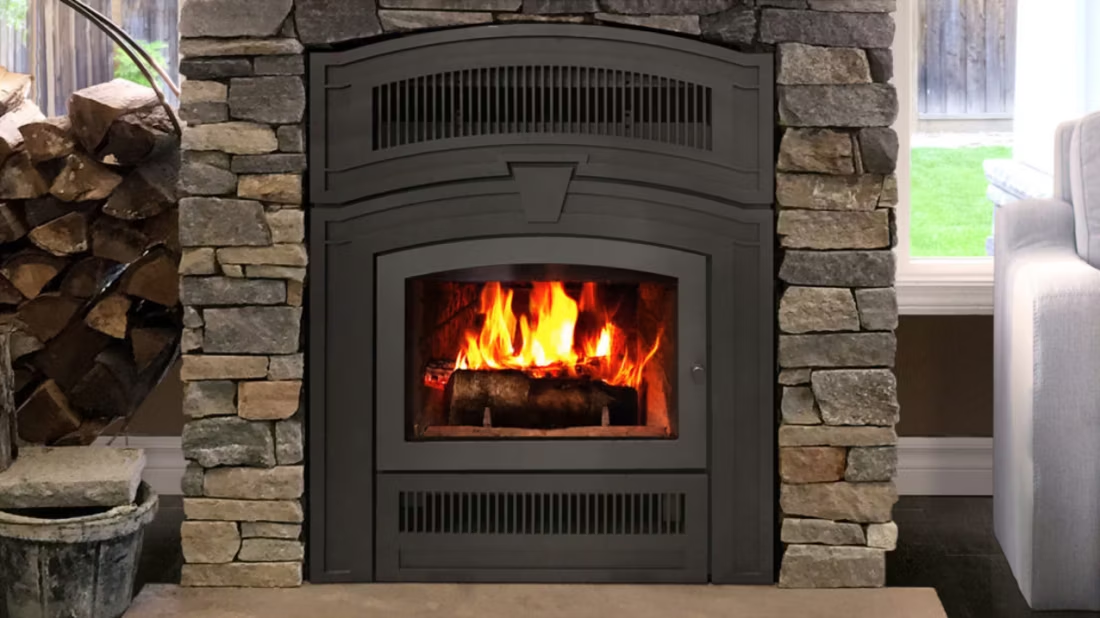
That doesn't mean nobody burns wood in Amherst. Owners of older homes near the historic downtown often have an existing masonry fireplace worth converting into a real heat source with an insert. Others want a wood stove specifically as backup heat for the ice storms that occasionally knock out Ohio Edison or City of Amherst municipal power along the lake. And plenty of people just want the ambiance and self-sufficiency of a real fire, fed by seasoned oak, hickory, maple, or cherry sourced from Lorain County tree services and small orchard operations rather than a forest permit. For those households, a properly sized, code-compliant stove or insert is still a smart addition—it's just not the assumption we start from here.
Three steps. No salesperson until you're ready.
Tell us about your project
Your zip code, your situation, and the fuel you're leaning toward—or let the answers point you to one.
See what's actually available
The brands dealers within 100 miles genuinely carry—real options, never a catalog mirage.
Get your dealer & Project Guide
A trusted local dealer, plus the free Project Guide & Parts List that names every component of the job.
Frequently Asked Questions
Is a wood stove actually a good fit for a home in Amherst?
It can be, but it's worth being clear-eyed about it: Amherst is a natural-gas town, and most homes here already have a gas furnace doing the primary heating work. A wood stove or insert makes the most sense as supplemental heat, storm backup, or for the ambiance of an existing masonry fireplace—not as a replacement for your furnace. If you're weighing it mainly for emergency heat during winter power outages, or you love the idea of a real fire in an older Amherst home with a fireplace already built in, it's a solid project. If you're hoping it will meaningfully cut a gas bill in a newer, tightly built home, the payoff is smaller than in more wood-dependent parts of the country.
How much does a wood stove or insert cost to install in Amherst?
Because wood isn't a primary heating category here the way gas furnaces are, there isn't one standard local number the way there might be in a wood-dependent town. In practice, local hearth dealers we work with typically quote $3,500 to $8,000 for a freestanding stove with new Class A chimney and hearth pad, and less—often $3,000 to $6,000—for an insert that uses an existing masonry chimney with a stainless liner. Homes without any existing chimney or hearth will land at the higher end once framing and roof penetration are factored in. A local dealer can give you a firm number after seeing your specific fireplace or install location.
What firewood is realistically available around Amherst?
Oak, hickory, maple, and cherry are the common species in Lorain County woodlots and the small orchard operations scattered around the area—cherry in particular shows up because of local fruit-growing history. There's no nearby national forest or BLM land with a cutting-permit program the way there is out west, so most Amherst wood burners buy seasoned cordwood from local tree services, firewood suppliers, or landscapers clearing lots, rather than cutting their own on public land. Expect to pay by the face cord or full cord and to season anything you buy green for at least six to twelve months before burning it.
Do I need a permit to install a wood stove in Amherst?
Yes—a new wood-burning appliance install requires a building permit, either through the City of Amherst or Lorain County depending on your address, and the stove itself needs to meet current EPA 2020 NSPS emissions standards. The good news is Amherst has no air-quality non-attainment designation and no winter burn curtailment periods on record, so unlike some western cities, you won't run into 'no burn' days once the stove is installed. Most local hearth dealers handle the permit paperwork as part of the installation.
Will a wood stove actually help during a power outage?
Yes, and this is one of the strongest reasons Amherst homeowners give for installing one. Both Ohio Edison and City of Amherst municipal electric service can go down during winter ice events off Lake Erie, and a standard gas furnace won't run without electricity to power its blower and controls—even homes with gas service can lose heat entirely in an outage. A wood stove needs no electricity at all to produce heat, which is why it's often chosen specifically as an emergency backup rather than a primary system in a gas-first town like this one.
What kind of wood stove makes sense for occasional or backup use?
For a household that isn't burning wood as its main heat source, a simpler non-catalytic stove or insert from a brand like Pacific Energy or Lopi is usually a better match than a long-burn catalytic model from a brand like Blaze King. Catalytic stoves are built to hold a slow, steady overnight burn and reward daily use—they're the right tool in a home that burns wood constantly through a long cold season. A non-catalytic unit is more forgiving of intermittent use, lights and heats up faster, and doesn't ask you to maintain a catalytic combustor you're not using often enough to justify.
How often should I have the chimney swept if I don't burn very often?
Even with light or occasional use, the CSIA still recommends an annual inspection, and in some ways infrequent, cooler fires make it more important, not less—low, smoldering burns from occasional use tend to produce more creosote buildup than the hot, steady fires of a daily-use household. Plan on a sweep and inspection once a year before the season's first fire, even if you only burned a handful of times the winter before.
Can I put a wood insert into the fireplace my house already has?
In many of Amherst's older homes near downtown, yes—an existing masonry fireplace is exactly what an insert is designed for. A liner runs up your current chimney and the insert seals into the firebox opening, turning what's often a net heat-loser (open masonry fireplaces pull heated room air up the flue) into an actual heat source. This is usually the lowest-friction wood project in town, since you're not adding a chimney from scratch, just upgrading what's already there.
Should I go with wood or gas for my Amherst home?
For most Amherst homes, gas should be your primary heat plan—the infrastructure is already built out across the city, installation and service networks are established, and it's the fuel this area is genuinely set up around. Wood makes the most sense layered on top of that: as a backup source for outages, as a way to make better use of an existing fireplace, or simply because you want the experience of a real fire. Very few households here are choosing wood as their sole heat source, and that's a reasonable reflection of how the city is built, not a reason to skip a wood stove if what you actually want is supplemental or emergency heat.
Why is my open fireplace making my house colder?
Open fireplaces suck—literally. As the fire burns, it consumes air your furnace already paid to heat and pulls it out through the chimney, so the house is actually colder after the fire goes out than before you lit it. An insert fixes this: it seals the chimney, puts fixed glass across the front, and turns that hole in your house into a real heat source.
What's the difference between an insert and a zero-clearance fireplace?
An insert is a fireplace that slides into a pre-existing wood-burning fireplace—if you don't have one, there's nothing to insert it into. A zero-clearance fireplace is built into a framed wall, which makes it the answer for remodels and new construction. Simple test: existing masonry fireplace means insert; blank or framed wall means zero-clearance.
Does a fireplace add value to my home?
On average, a fireplace adds back to the home about the same amount you spent installing it. Add the monthly savings from heating the rooms you actually use instead of the whole house—often hundreds of dollars a year—and the value case is strong before you even count what a fire does for how your family uses the room.
How much should I budget for a fireplace?
For an average home—covering the fireplace, the vent pipe, and basic installation—a budget between $3,900 and $5,500 gives you a lot of options across wood, gas, and pellet. By the time you add finish work, gas line, and electrical, the average complete installation lands between $5,000 and $12,000 all-in. In a remodel or new build, a good rule is to put about 2.5% of the total project cost toward the fireplace.
Nearby Dealers
Hearth shops serving Amherst and the surrounding area. Every listing shows whether it is a WhyFire partner, a dealer we have verified as authorized for the brands we recommend, or a local business carrying hearth products. No manufacturer pays for placement. How we verify dealers →
Gilbert Heating & Air
All Construction Services
Find your wood stove fit in Amherst.
Tell us about your home and how you'd actually use a wood stove—backup heat, an existing fireplace, or just the fire itself—and we'll send you a free Project Guide & Parts List with the right unit, vent kit, and a trusted local Amherst-area dealer who'll give it to you straight.
Find Your Fireplace →