
Zone heat that plugs in, above the treeline.
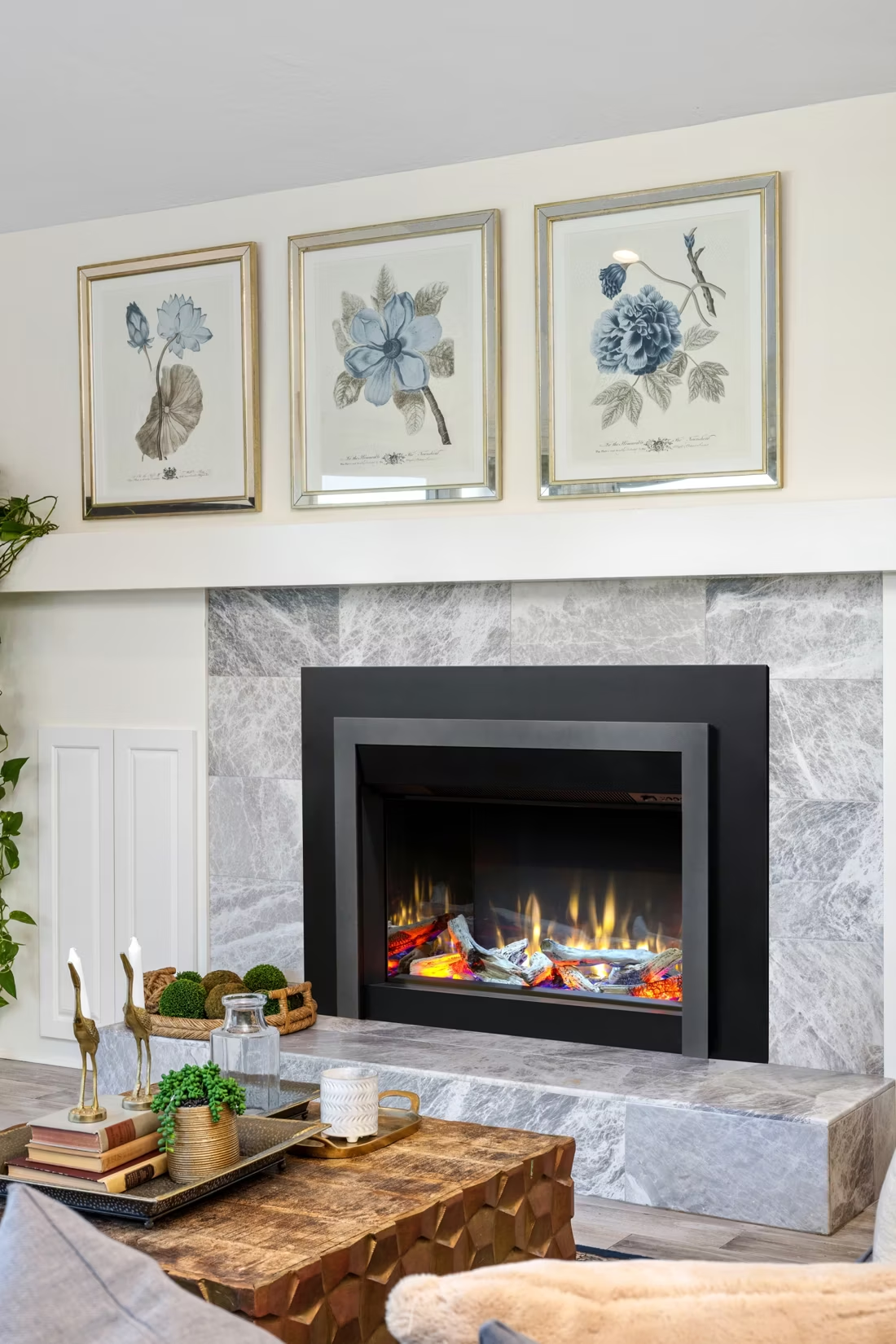
Rankin Inlet sits above the treeline on the Kivalliq coast, where winter lows average -34.4°C and every kilowatt comes from Qulliq Energy Corporation's diesel plant. An electric fireplace needs no chimney, no firewood, and no fuel delivery, just a wall outlet or a dedicated circuit. Because the nearest hearth dealers are hundreds of kilometres away, we'll help you reach one and plan around freight and delivery timelines.
Every Project Starts From One of These Five Situations
The one fuel that's already wired into every home.
Rankin Inlet is above the treeline, so there's no local firewood to split and no public fuelwood program to issue a permit for one. Pellets aren't sold in town either, and anything shipped in from the south arrives at a price well above what Winnipeg or Thunder Bay households pay once freight is added. That rules wood and pellet fireplaces out for nearly everyone, and without mains natural gas, a propane conversion is the only gas path, and a narrow one at that. Electric is the fuel that's already sitting in the wall of every house in town.
What electric heat means here takes some explaining, though. Most Rankin Inlet homes are heated primarily with fuel oil brought in by sealift, and the territory's power, including the outlets an electric fireplace plugs into, comes from Qulliq Energy Corporation's diesel generating plant. At $0.7494 a kilowatt-hour, running a large electric heater as a primary heat source gets expensive fast, even with the Nunavut Electricity Subsidy Program covering part of the first 700 to 1,000 kWh a month for non-government households. Most owners here treat an electric fireplace as a zone heater and a visual anchor for the main living room, not as a replacement for the oil furnace.
Three steps. No salesperson until you're ready.
Tell us about your project
Your postal code, your situation, and the fuel you're leaning toward—or let the answers point you to one.
See what's actually available
The brands dealers within 100 miles genuinely carry—real options, never a catalog mirage.
Get your dealer & Project Guide
A trusted local dealer, plus the free Project Guide & Parts List that names every component of the job.
Frequently Asked Questions
How much does an electric fireplace cost to install in Rankin Inlet?
In southern Canada a straightforward electric fireplace or insert install typically runs $500 to $1,600 CAD. Rankin Inlet has no hearth dealer in town, so plan on that range climbing once air cargo or sealift freight for the unit itself is added, along with any electrician's travel if one isn't already based locally. We'll help you reach the nearest dealers serving the Kivalliq Region and ask about current freight costs before you commit to a model.
Will an electric fireplace actually keep a Rankin Inlet home warm through winter?
Not on its own. With winter lows averaging -34.4°C, the home's primary heat here is almost always fuel oil delivered by sealift, and that's what carries the load through the dark months. An electric fireplace is better understood as a zone heater, good for taking the chill off a living room or warming a space the oil furnace doesn't reach well, rather than a whole-home solution. Running one as a main heat source at Qulliq Energy Corporation's $0.7494 per kWh rate adds up quickly.
Why not a wood or pellet stove instead?
Rankin Inlet sits above the treeline, so there's no local firewood to cut and no public fuelwood program, cutting permit, or season, because there's no forest to issue one for. Pellets aren't stocked locally either; anything shipped up costs more than southern Canadian prices once freight is factored in. Both fuels are rare here for practical reasons, not fashion, which is part of why electric and fuel oil carry most of the heating load in town.
Do I need a permit for an electric fireplace in Rankin Inlet?
A simple plug-in unit on a standard outlet usually doesn't need a permit. A built-in unit wired to a dedicated circuit, which is common for larger living-room installs, needs sign-off from the municipal or territorial building inspector and should be wired by a licensed electrician familiar with CSA requirements. Your dealer or electrician can tell you which category your chosen model falls into before you order it.
What size or style of electric fireplace works best for a home in Rankin Inlet?
A built-in or wall-mounted unit in the 1,500 to 5,000 BTU range covers most Rankin Inlet living rooms as supplemental zone heat, and because there's no venting requirement, it can go on almost any interior wall with power behind it. Given how much the territory's power costs, a lot of households favour models with a separate flame-only setting so the visual feature can run without the heater element on, which cuts the electricity draw substantially on nights when the oil furnace is already handling the heat.
How does Qulliq Energy Corporation's electricity rate affect running costs?
At $0.7494 per kWh, a 1,500-watt heater element run for eight hours a day costs roughly $9 a day in electricity, well above what the same unit would cost in most southern provinces. The Nunavut Electricity Subsidy Program offsets part of the first 700 to 1,000 kWh a month for non-government households, which helps with baseline household use, but most owners here still choose to run the heater element sparingly and lean on the flame-only mode for ambiance.
How does a fireplace unit actually get to Rankin Inlet?
Everything arrives by air cargo year-round or by sealift during the short open-water season, roughly July through October. Air freight is faster but costs more per kilogram; sealift is cheaper but means ordering months ahead to catch the one annual barge. A dealer who regularly ships to the Kivalliq Region can tell you which option makes sense for your timeline and model.
How much maintenance does an electric fireplace need?
Very little. There's no chimney to sweep and no fuel to store, just periodic dusting of the unit and an occasional check that the electrical connections are tight, something a licensed electrician can confirm during a routine home visit. That low-maintenance profile is one more reason electric fits a community where a hearth technician isn't sitting a few blocks away.
What happens to an electric fireplace if the power goes out?
It stops working, same as the rest of the home's electric systems, since Qulliq Energy Corporation's diesel plant is the only source of power in town. Most Rankin Inlet homes rely on fuel oil heat as the resilient backup during an outage rather than wood, since there's no local firewood supply to fall back on. It's worth keeping that in mind when deciding how much of your heating plan to put on an electric fireplace versus the oil furnace.
Nearest Dealers
Hearth shops are few and far apart up north, so these are the closest ones to Rankin Inlet, with how far each one is. Call ahead to ask about delivery and installation in your community. Every listing shows whether it is a WhyFire partner, a dealer we have verified as authorized for the brands we recommend, or a local business carrying hearth products. No manufacturer pays for placement. How we verify dealers →
McMunn & Yates
McMunn & Yates
Electric Service in Rankin Inlet
An electric fireplace's heater draws about 1,500 watts—pennies per hour at local rates.
Qulliq Energy Corporation
Get your free Project Guide & Parts List for a Rankin Inlet electric fireplace.
Tell us about your home and we'll help you reach the nearest trusted dealers serving the Kivalliq Region, with a free Project Guide & Parts List sized for your space and a heads-up on freight and delivery timelines before you order.
Find Your Fireplace →