
A fireplace that plugs into the power you already have.
With no treeline and no mains gas anywhere in the Kivalliq Region, electric is the hearth option that doesn't depend on a sealift schedule or a fuel barge. We'll help you reach the nearest trusted dealer and plan a project that accounts for delivery to Rankin Inlet, Arviat, Baker Lake, or wherever you call home.
Every Project Starts From One of These Five Situations
Built for communities above the treeline.
The Kivalliq Region stretches along the western coast of Hudson Bay and inland to Baker Lake, home to roughly 10,160 people across Rankin Inlet, Arviat, Baker Lake, Coral Harbour, Naujaat, Whale Cove, and Chesterfield Inlet. There is no treeline up here, which means no local firewood to cut and no public fuelwood program of any kind—every stick of cordwood would have to be shipped in. With winter lows averaging -34.4°C and a heating season that runs most of the year, homes instead rely on fuel oil brought in by annual sealift for primary heat, and on electricity generated by a diesel plant in each community. Wood, pellet, and gas appliances are all rare, case-by-case choices here; electric is the fuel that actually fits how these communities are built and supplied.
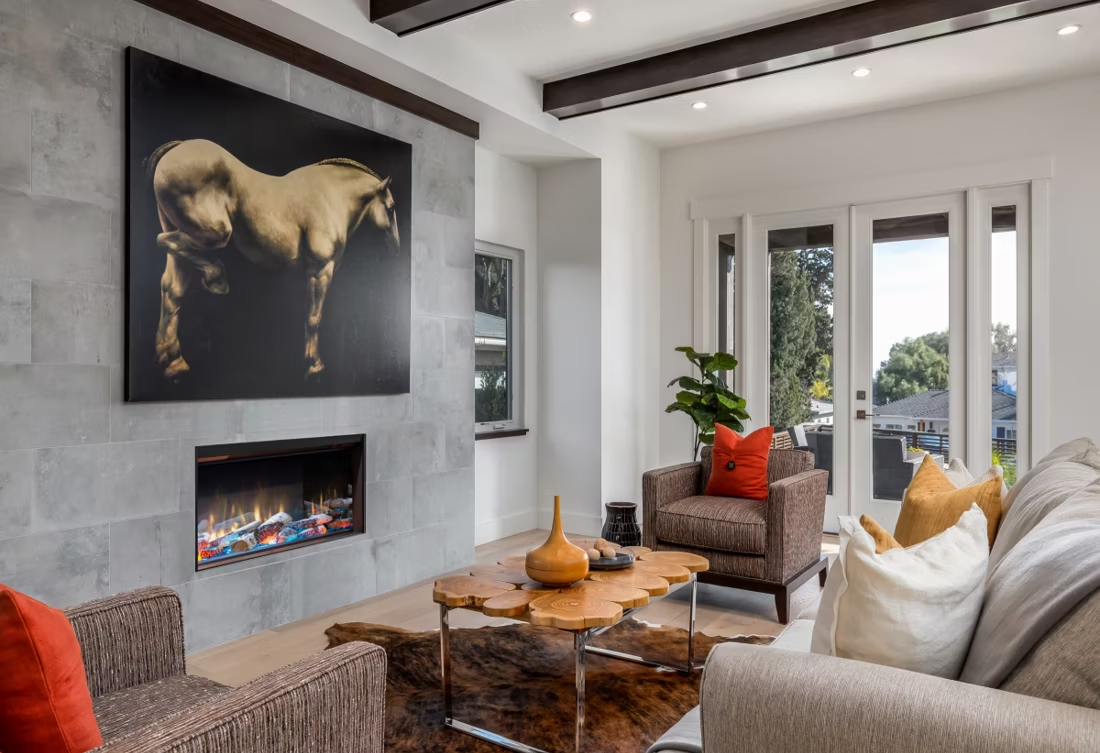
An electric fireplace needs no chimney, no gas line, and no fuel tank—it draws on the wiring already running to your house, which is a real advantage in a region where every other fuel has to clear a sealift or air cargo manifest first. The Nunavut Electricity Subsidy Program covers part of the first 700 to 1,000 kWh a month for non-government homes, and a fireplace run for supplemental evening heat typically fits inside that tier without pushing most households into a noticeably higher bill. Because there are no hearth retailers based in the Kivalliq Region itself, we help homeowners reach the nearest trusted dealer, usually shipping from southern Canada, and we recommend calling ahead about sealift or air cargo timing before you commit to a delivery date.
Three steps. No salesperson until you're ready.
Tell us about your project
Your postal code, your situation, and the fuel you're leaning toward—or let the answers point you to one.
See what's actually available
The brands dealers within 100 miles genuinely carry—real options, never a catalog mirage.
Get your dealer & Project Guide
A trusted local dealer, plus the free Project Guide & Parts List that names every component of the job.
Frequently Asked Questions
How much does an electric fireplace cost to install in the Kivalliq Region?
Baseline costs for the appliance and basic electrical work run $500 to $1,600 CAD, the same range you'd see anywhere in southern Canada, since there's no chimney or gas line involved. What's different up here is getting the unit to you: freight by air cargo or the next sealift to Rankin Inlet, Arviat, Baker Lake, Coral Harbour, Naujaat, Whale Cove, or Chesterfield Inlet adds to that number, and freight pushes the all-in cost above the quoted range. A dealer should quote shipping separately once they know your community and the season's sealift schedule.
Will an electric fireplace actually heat my home?
Treat it as supplemental warmth and ambiance for one room, not a replacement for your home's main heat source. Most Kivalliq homes heat with fuel oil delivered once a year by sealift, sized to carry the house through lows averaging -34.4°C. A 1,500-watt electric insert or stove adds real, immediate heat to a living room or bedroom and runs with no flue at all, but it isn't built to carry a whole house through a winter this long on its own.
Do I need a permit for an electric fireplace?
Check with your municipal or territorial building inspector before the work starts, but electric installs tend to be the simplest hearth project to clear—there's no chimney, flue, or gas line to inspect, and CSA B365, the code that governs solid-fuel appliance installs, doesn't apply to a plug-in or hardwired electric unit. If your model calls for a dedicated circuit, a licensed electrician should still handle that part of the job.
Why isn't wood heat an option here?
The Kivalliq Region sits above the treeline, so there's no local timber to cut and no public fuelwood program of any kind—cordwood would have to be shipped in from the south, which makes wood a rare, expensive choice rather than a practical one. It's the same reason most households here depend on fuel oil and electricity instead of a wood stove.
What about a gas fireplace instead?
There's no mains natural gas anywhere in the Kivalliq Region, and propane has to arrive the same way everything else does, by sealift or air cargo, which pushes an installed gas fireplace well past the $6,000-$15,000 CAD range you'd see in a southern Canadian city once freight and fuel supply are added in. Gas is a rare, case-by-case fit here; electric is the simpler, more realistic option for most homes in Rankin Inlet, Arviat, and the surrounding communities.
Can I get a pellet stove instead?
Pellets aren't sold locally anywhere in the Kivalliq Region, and shipping bags north by sealift or air cargo puts the delivered price well above what homes pay in southern Canada. That makes a pellet stove a rare option here. Electric sidesteps the fuel-supply question entirely, since it runs on the power already wired into your house.
How does the Nunavut Electricity Subsidy Program affect running an electric fireplace?
Every community in the Kivalliq Region runs on diesel-generated power, and the Nunavut Electricity Subsidy Program covers part of the first 700 to 1,000 kWh a month for non-government homes. A typical electric fireplace, used a few hours an evening for supplemental heat, adds a modest draw that most households can absorb inside that subsidized tier without a noticeable jump in their bill, though it's worth checking against your own usage if you're already close to the threshold.
There's no hearth shop in my community—how does this even work?
That's accurate; the Kivalliq Region doesn't have fireplace retailers based in-territory, so we help you reach the nearest trusted dealer, typically based in southern Canada, who regularly ships hearth products north. Call ahead about your community's delivery options, air cargo for a faster turnaround or the next sealift for a lower-cost but once-a-year window, and ask the dealer to include installation guidance with the shipment, since you'll likely be coordinating with a local electrician rather than a visiting installer.
Will I need a WETT inspection for an electric fireplace?
No—WETT inspections apply to wood-burning appliances for insurance purposes and have nothing to do with an electric install. That's one more reason electric tends to be the simplest hearth option in the Kivalliq Region: no solid-fuel inspection, no CSA B365 compliance review, just standard electrical work signed off by your municipal or territorial building inspector.
Nearest Dealers
Hearth shops are few and far apart up north, so these are the closest ones to Kivalliq Region, with how far each one is. Call ahead to ask about delivery and installation in your community. Every listing shows whether it is a WhyFire partner, a dealer we have verified as authorized for the brands we recommend, or a local business carrying hearth products. No manufacturer pays for placement. How we verify dealers →
McMunn & Yates
McMunn & Yates
Electric Service in Kivalliq Region
An electric fireplace's heater draws about 1,500 watts—pennies per hour at local rates.
Qulliq Energy Corporation
Get your free Project Guide & Parts List for an electric fireplace in the Kivalliq Region.
Tell us about your home in Rankin Inlet, Arviat, Baker Lake, or wherever you are in the Kivalliq Region, and we'll help you find the nearest trusted dealer and send a free Project Guide & Parts List—the exact parts for your electric fireplace project, with delivery notes for shipping north.
Find Your Fireplace →