
Warmth you control, in one of the coldest counties in America.
Williston and the rest of Williams County see average winter lows around 1°F and a heating season that runs nearly nine months of the year—territory that puts the county in the same league as International Falls, Minnesota. Electric fireplaces here earn their place as clean, no-venting accent heat. Find the right unit and connect with a trusted local dealer.
Every Project Starts From One of These Five Situations
Electric fireplaces bring warmth where the furnace can't reach.
Williams County sits in the heart of the Bakken oil patch, and its climate is genuinely extreme—Zone 7, a brutally long heating season that stretches nearly nine months of the year, and average winter lows near 1°F that regularly dip well below zero with wind chill. That's colder than nearly every major U.S. city outside of Alaska and puts Williston in the same climate conversation as International Falls, Minnesota. It's not a place where wood heat took hold historically—the oak, cottonwood, and ash you'll find along the Missouri River and Lake Sakakawea drainages are riverbank trees, not a firewood industry, and cheap, locally produced natural gas has long made wood-burning impractical as a primary heat source. That's why wood and pellet heat show up as essentially not-applicable across the county.
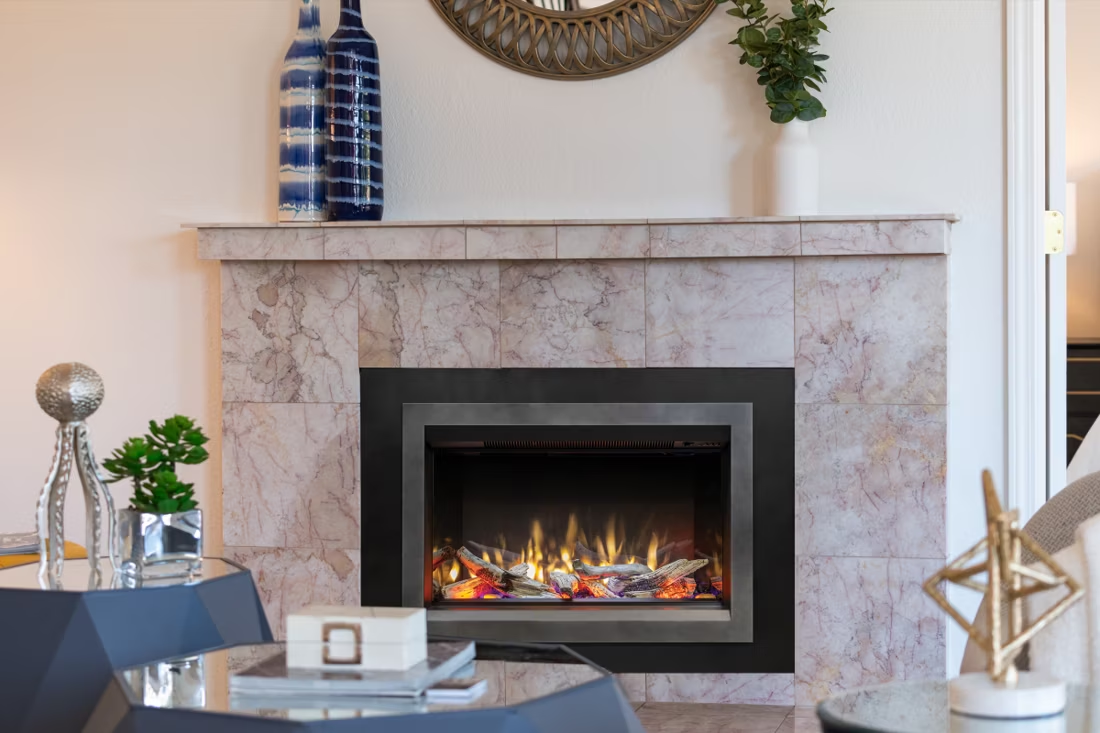
Electric heat has instead settled into a specific, honest role: supplemental warmth and design, not whole-house survival heat. Montana-Dakota Utilities (MDU) serves the electric grid across Williston and the surrounding county, and most homes rely on natural gas furnaces—drawn from the same Bakken fields driving the local economy—for primary heat. Against that backdrop, electric fireplaces and inserts have become a popular add-on in the newer subdivisions built during the oil boom: no chimney, no gas line, no combustion byproducts, and no air quality restrictions to navigate since Williams County reports none of the wood-smoke or inversion concerns that limit burning elsewhere. A local dealer can help you place one where it actually earns its keep—a basement family room, a primary suite, or a living room that the furnace never quite warms evenly.
Three steps. No salesperson until you're ready.
Tell us about your project
Your zip code, your situation, and the fuel you're leaning toward—or let the answers point you to one.
See what's actually available
The brands dealers within 100 miles genuinely carry—real options, never a catalog mirage.
Get your dealer & Project Guide
A trusted local dealer, plus the free Project Guide & Parts List that names every component of the job.
Frequently Asked Questions
How much does an electric fireplace installation cost in Williams County?
Electric fireplaces are the least expensive hearth product to install because there's no chimney, no gas line, and no combustion venting involved. A basic plug-in insert or wall-mount unit can run as little as $300 to $800 installed. Built-in models that require a dedicated 240V circuit, recessed framing, or a custom mantel surround typically land between $1,200 and $2,500, with electrician labor making up most of that difference. Homes in newer Williston-area subdivisions with accessible wiring tend to come in on the lower end; older farmhouses in outlying parts of the county sometimes need panel or circuit upgrades that add cost.
Can an electric fireplace actually heat my home through a Williams County winter?
No—and any honest local dealer will tell you the same. With a heating season that stretches nearly nine months of the year and winter lows that regularly sit near or below zero, electric resistance heat simply can't keep pace as a primary heat source; the wattage required would be both impractical and expensive to run continuously. Electric fireplaces here work best as zone heat for a single room—a basement, a home office, a primary bedroom—while your natural gas furnace, which is standard across the county given the region's own gas production, carries the real heating load. Think of it as warmth and ambiance layered on top of a system built for the cold, not a replacement for one.
Do I need a permit to install an electric fireplace in Williams County?
Most plug-in electric fireplaces and inserts don't require a building permit since there's no venting, combustion, or structural chimney work involved—the same code triggers that apply to wood or gas installs simply don't apply here. If your installation requires a new dedicated 240V circuit or panel work, an electrical permit through your local building department may be needed depending on the scope of the work. A licensed electrician handling the circuit work will typically flag this for you; it's worth confirming with the county or, if you're inside city limits, the City of Williston before work begins.
Will my electric fireplace still work if the power goes out?
No—and this matters more in Williams County than in milder climates, because winter storms here can knock out rural electric service for hours at a time during the exact conditions when you'd want backup heat most. An electric fireplace is entirely dependent on grid power from MDU, just like most modern gas furnace ignition systems. If reliable heat during outages is a real concern for your household, pair an electric fireplace's ambiance with a battery-backup gas appliance or a generator plan for your furnace—don't count on the electric unit itself to get you through a blizzard-related outage.
Electric fireplace vs. gas fireplace—which makes more sense in Williams County?
Given that natural gas is abundant and standard throughout the Bakken region, gas fireplaces genuinely compete here in a way they don't everywhere—they produce real heat output, some models run on battery-backup ignition during outages, and gas is often already piped to the house. Electric fireplaces win on installation simplicity: no gas line, no venting, and they're the practical choice for rental units, oil-camp-era housing, apartments, or rooms where running gas line isn't worth the cost. Many Williams County homeowners end up with both—gas in a main living space for real supplemental heat, electric in a bedroom or basement purely for ambiance and easy zone warmth.
What's the best type of electric fireplace for a Williams County home?
For most homes here, a built-in electric insert or wall-mount unit rated around 1,500 watts (roughly 4,600–5,100 BTU) is the standard choice—enough to noticeably warm a bedroom, office, or den without straining a circuit. In open-concept living rooms common in newer Williston-area builds, some homeowners opt for a larger linear unit primarily for its visual impact rather than heat output, since the furnace is already covering that square footage. A local dealer can help match wattage and placement to the specific room, especially in basements or additions where the furnace's ductwork doesn't reach evenly.
Why doesn't wood heat show up much in Williams County?
Williams County sits on the North Dakota plains, not in forested terrain—the oak, cottonwood, and ash found locally grow along the Missouri River and Lake Sakakawea corridor as landscape and riparian trees, not as a managed timber or firewood resource. There's no meaningful cutting-permit culture or firewood supply chain here the way there is in forested Western states, and the county's own natural gas production has made gas heat cheap and dominant for generations. A handful of rural households still burn wood recreationally or for backup, but it's not a mainstream heating choice—which is part of why electric and gas dominate the hearth market across the county.
Where do electric fireplaces get installed most in Williams County homes?
The most common spots are basements (common in Williston-area homes and often the coldest, least-ducted part of the house), primary bedrooms, and home offices—spaces where running new gas line or masonry work isn't practical but a little extra warmth and ambiance is welcome. In newer subdivisions built during the Bakken boom years, builder-grade electric units also show up as a focal point in open-concept living rooms, more for the visual than the BTUs, since the gas furnace already covers that square footage. Rental properties and multi-family units across the county favor electric almost exclusively because there's no venting or gas-line liability to manage.
How do I find a good electric fireplace dealer in Williams County?
Because electric fireplaces don't require the same certified venting and gas-fitting credentials as wood or gas units, the key is finding a dealer who understands proper circuit sizing, placement relative to combustible materials, and how to match wattage to the room—not just someone selling a box off a shelf. A dealer familiar with the housing stock built during the Bakken boom, and comfortable coordinating with a licensed electrician when a dedicated circuit is needed, will save you a callback later. That's exactly the kind of local match we make—a trusted installer who knows what actually works in a Williams County home, not a big-box guess.
Can I put a TV above my fireplace?
Yes—with an asterisk. Fireplaces are hot and TVs don't like heat. Either put a mantel between them to deflect rising warmth, or choose a fireplace with heat-management technology that creates a cool zone on the wall above—the wall stays around 125 degrees, barely warm, while the room still gets full heat. If you like clean lines and don't want a mantel, heat management is the answer.
What fireplace styles should I know before shopping?
Four cover most of the market: screen-front traditional (mesh front, open feel, fits craftsman homes), traditional door set (the classic look you grew up with), modern linear (wide, low, the statement piece for entertaining), and clean face contemporary (no trim—your tile or stone runs right to the fire's edge). Walk in knowing those four terms and you're ahead of most buyers.
Can I install a fireplace myself?
If you're putting a fire in your house on purpose, it's best to work with an expert. Unless you're genuinely experienced in framing, gas line, vent pipe, and the national code on clearances to combustibles, have a professional do it—and ideally the same company that sells you the fireplace, so warranty, service, and liability all live under one roof.
Can a fireplace actually lower my heating bill?
Yes—by creating a comfort zone. A furnace heats every square foot of the house just to warm the one room you're in; a gas fireplace on low burns roughly a sixth of the gas a typical furnace does. Set the furnace around 55–60 degrees as a baseline, then heat the rooms your family actually uses. Families who heat this way commonly save $20–$60 a month.
Stove and Fireplace Dealers in Williams County
Listings include WhyFire partner dealers, dealers we have verified as authorized for the brands we recommend, and established local businesses that carry hearth products. Every listing shows which one it is. The ones marked Preferred run on WhyFire's software, so they can show you real pricing and book your appointment right here. No manufacturer pays for placement. How we verify dealers →
Find your electric fireplace in Williams County.
Tell us a bit about your home and we'll put together a free Project Guide & Parts List—the right electric fireplace or insert for your space, the exact parts needed, and a trusted local Williams County dealer to install it.
Find Your Fireplace →