
Find the right fireplace for Williams County's harsh winters.
With 8,906 heating degree days and average winter lows near 1°F, Williams County needs heat that works—every day, all winter. Fireplace resources for Williston, Tioga, Ray, Grenora, and every community on the plains in between.
Every Project Starts From One of These Five Situations
Extreme cold heating on the open plains of Williams County, North Dakota.
Williams County sits on the Missouri Plateau in the heart of the Bakken oil patch, and its winters are among the harshest of any county Find My Fireplace serves—Climate Zone 7, 8,906 heating degree days a year, and average winter lows around 1°F, colder on paper than Fargo just a few hundred miles east. There's almost no natural forest cover out here; the oak, cottonwood, and ash that do grow are confined to narrow river-bottom stands along the Missouri and Little Muddy Rivers near Williston and Trenton, not enough to support the kind of firewood economy you'd find in wooded river valleys or the timber country of northern Minnesota. That's why wood stoves and pellet stoves are genuinely uncommon here despite the brutal cold—the fuel supply chain just isn't local. Natural gas, by contrast, is everywhere: decades of Bakken drilling built out extensive gas infrastructure through Williston, Tioga, and Ray, and MDU Resources serves both gas and electric across most of the county. The wide-open, wind-scoured terrain also means there's no winter inversion problem—air quality concerns here are essentially nonexistent, unlike basin or mountain-valley communities where wood smoke pools during cold snaps.
What you'll find on this hub: gas and electric hearth retailers, service technicians, and fuel suppliers covering Williston (the county seat) out to Tioga, Ray, Grenora, Alamo, Wildrose, Zahl, Trenton, Epping, and Wheelock. Because wood and pellet appliances see very little demand this far out on the plains, this hub leans on the two fuels that actually dominate Williams County homes—gas and electric—while still noting where a rural household occasionally keeps a wood stove as cold-weather backup. Pick your fuel below to see local dealers, typical installed costs, and recommended units for your project.
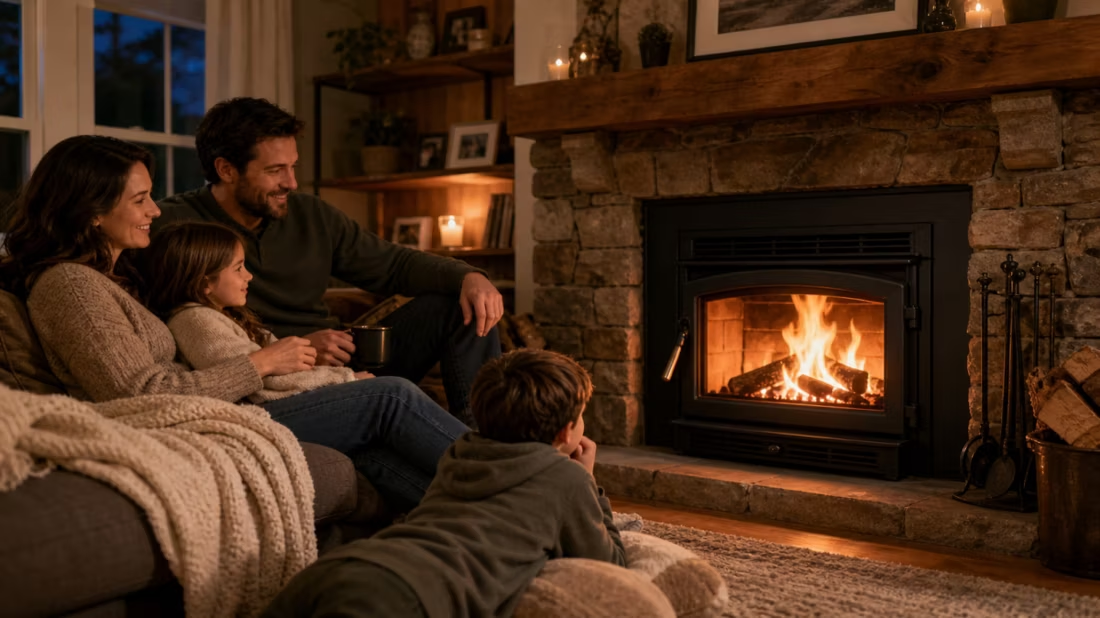
Four fuels. One honest answer for Williams County.
Three steps. No salesperson until you're ready.
Tell us about your project
Your zip code, your situation, and the fuel you're leaning toward—or let the answers point you to one.
See what's actually available
The brands dealers within 100 miles genuinely carry—real options, never a catalog mirage.
Get your dealer & Project Guide
A trusted local dealer, plus the free Project Guide & Parts List that names every component of the job.
Frequently Asked Questions
Which fuel works best for a fireplace in Williams County?
In this stretch of the Bakken, gas is the default choice. Decades of oil-field development built out extensive natural gas infrastructure through Williston, Tioga, and Ray, and MDU Resources' gas service makes fireplace and insert installs straightforward to permit and run. Propane fills the gap on rural properties outside the gas main, especially around Grenora and Wildrose. Electric fireplaces are the common second fuel—supplemental heat for bedrooms, dens, or new-build additions where running flue isn't practical. Wood-burning units are genuinely rare here, and pellet stoves rarer still: Williams County sits on open plains with almost no natural forest cover, and the oak, cottonwood, and ash that do exist are limited to thin river-bottom stands along the Missouri and Little Muddy Rivers—nothing like the wooded valleys that support a wood-fuel economy in, say, Fargo or the Minnesota timber belt. Pellet product from Lignetics and Indeck Energy Services does reach the county, but mostly through farm-supply stores, not dedicated hearth retailers.
Do I need a permit to install a fireplace in Williams County?
Yes, for the fuels most common here. Gas fireplace, insert, and stove installations require a building permit plus a separate gas line permit, and the actual gas connection has to be done by a licensed gas fitter—most local retailers coordinate this as part of the install. Electric fireplaces generally don't require a permit for plug-and-play units, but built-in electric fireplaces that involve hardwiring or a new circuit do need an electrical permit and inspection. Within Williston, permits run through the city's Building Inspections Department; in unincorporated parts of the county—around Ray, Tioga, or Grenora—permits go through Williams County's building and zoning office. Wood stove installs, while uncommon, still require a permit and current EPA-certified equipment if someone chooses that route.
Are there air quality restrictions on wood burning in Williams County?
No—Williams County has no recorded air quality concerns tied to wood burning, and there's a straightforward reason: this is flat, wind-scoured plains country, not a basin or mountain valley where cold air and smoke can pool. Places like the Klamath Basin or mountain-ringed towns deal with winter temperature inversions that trap wood smoke near the ground; Williams County's open terrain and steady wind mean that just doesn't happen here. Combined with how few wood stoves are actually installed in the county to begin with, there's no burn-advisory program or curtailment system in place, and none is anticipated.
Is a wood stove ever a good idea in Williams County?
For most homes, no—the fuel economics don't work when there's no significant local timber supply, and gas or electric handles the county's extreme cold (winter lows averaging 1°F, 8,906 heating degree days) more reliably. That said, a small number of rural households, particularly working farms and ranches along the Missouri and Little Muddy River bottoms where cottonwood and ash are actually available to cut, keep a wood stove installed as backup heat for ice storms and the power outages that occasionally hit isolated oil-patch properties. If you're considering it purely as an emergency-heat backup rather than a primary system, that's a reasonable use case—just know you're in the minority, and dealer support for wood appliances is thinner here than for gas or electric.
What's the typical cost range for gas and electric fireplace installation in Williams County?
Gas fireplace, insert, or stove installations typically run $4,500–$11,000, with the wide range driven mostly by how much new gas line work is needed—conversions using existing gas service land on the lower end, while new construction with a long run from the meter pushes toward the top. Electric fireplaces are far less expensive: $200–$3,000 for the unit itself, plus $400–$1,200 in labor for anything beyond a simple plug-in install, which covers most wall-mount, insert, and built-in jobs. Wood stove installs, when someone does go that route, run comparable to national averages—roughly $4,500–$9,000—but expect fewer local installers quoting that work compared with gas or electric.
How does fireplace service work across such a spread-out, oil-patch county?
Most gas techs and electricians serving Williams County are based in Williston and travel out to Tioga, Ray, Grenora, and the smaller unincorporated communities for service calls—routes that can take 30–45 minutes each way, longer when oil-field truck traffic backs up county roads. Expect a modest travel fee for calls outside Williston proper. Because gas and electric are the dominant fuels here, annual service mostly means gas-line and igniter inspections rather than chimney sweeping. Scheduling ahead of the coldest months (September–October) is easier than trying to book an emergency call once temperatures drop toward that 1°F winter average.
Can a fireplace actually lower my heating bill?
Yes—by creating a comfort zone. A furnace heats every square foot of the house just to warm the one room you're in; a gas fireplace on low burns roughly a sixth of the gas a typical furnace does. Set the furnace around 55–60 degrees as a baseline, then heat the rooms your family actually uses. Families who heat this way commonly save $20–$60 a month.
How much should I budget for a fireplace?
For an average home—covering the fireplace, the vent pipe, and basic installation—a budget between $3,900 and $5,500 gives you a lot of options across wood, gas, and pellet. By the time you add finish work, gas line, and electrical, the average complete installation lands between $5,000 and $12,000 all-in. In a remodel or new build, a good rule is to put about 2.5% of the total project cost toward the fireplace.
What is an in-home preview and do I need one?
It's a visit where a hearth professional measures your space, confirms the model you picked actually works in your home, and walks the specs—framing, gas line, venting, finish work—before anything is ordered. Some details you just can't know until you see the house. Never make a down payment without one; it's the single most-skipped step that burns buyers.
Should the dealer who sells my fireplace also install it?
Ideally, yes. A fireplace project involves vent pipe, gas line, electrical, and often tile or stone. Hire three or four separate trades and you own the liability and the game of telephone between them. One company selling and installing means one accountable party, start to finish—ask about factory training, on-time completion records, and what happens if an inspection fails.
Stove and Fireplace Dealers in Williams County
Listings include WhyFire partner dealers, dealers we have verified as authorized for the brands we recommend, and established local businesses that carry hearth products. Every listing shows which one it is. The ones marked Preferred run on WhyFire's software, so they can show you real pricing and book your appointment right here. No manufacturer pays for placement. How we verify dealers →
Find your fireplace in Williams County.
Tell us about your home in Williston, Tioga, Ray, or anywhere else in the county, and we'll match you with a trusted local dealer and send a free Project Guide & Parts List—the exact parts, including the vent kit, for a gas or electric fireplace project built for Williams County's cold.
Find Your Fireplace →