
Gas Heat Built for Zone 7 Winters.
With a long, severe winter heating season and average winter lows near -2°F, West Fargo homes need heat that starts instantly and keeps running. Find the right gas fireplace or insert and get matched with a trusted local dealer.
Every Project Starts From One of These Five Situations
Reliable heat for the coldest corner of the country.
West Fargo sits in Cass County along the flat, wind-exposed Red River Valley, and it's rated Climate Zone 7—the harshest heating classification used in the continental U.S. building code. With one of the longest, most demanding winter heating seasons in the Lower 48, the city's heating demand is in the same league as International Falls, Minnesota, one of the coldest official reporting stations in the country. Average winter lows of -2°F, combined with open-prairie wind, mean furnaces run nearly continuously from November through March.
Unlike the wooded mountain West, this stretch of the prairie has no nearby national forest land, no cutting permits, and no long-standing wood-heat culture—which is why wood and pellet appliances are essentially absent here while gas and electric carry the load. In a fast-growing suburb like West Fargo, where whole subdivisions have gone up in the last two decades, a direct-vent gas fireplace or insert is the practical, code-friendly way to add zone heat to a room, back up a furnace during a prairie ice storm, or simply get real flame without dealing with wood at all. Three electric utilities—Northern States Power (Xcel Energy), Otter Tail Power, and Cass County Electric Cooperative—serve overlapping parts of the city as it's grown, with residential rates ranging from about 11 to 17 cents per kWh depending on provider and location.
Three steps. No salesperson until you're ready.
Tell us about your project
Your zip code, your situation, and the fuel you're leaning toward—or let the answers point you to one.
See what's actually available
The brands dealers within 100 miles genuinely carry—real options, never a catalog mirage.
Get your dealer & Project Guide
A trusted local dealer, plus the free Project Guide & Parts List that names every component of the job.
Frequently Asked Questions
How much does a gas fireplace installation cost in West Fargo?
Most direct-vent gas fireplace and insert projects in West Fargo run roughly $4,000 to $10,000, with the spread driven mainly by whether a gas line already reaches the room, how far the vent run has to travel through an exterior wall or roof, and whether you're installing into an existing fireplace opening or building new. A gas insert going into an existing masonry firebox with gas already nearby tends to land on the lower end. New construction or a fireplace added to a room without existing gas or venting infrastructure pushes toward the higher end. A local dealer will give you a firm number after seeing the space in person.
Why is gas so much more common than wood in West Fargo?
There's no national forest or public timberland anywhere near Cass County, so there's no cutting-permit tradition and no easy supply of cheap firewood the way there is in mountain or forested regions. West Fargo is also a relatively young, fast-growing suburb built mostly in subdivisions over the past twenty-some years, where gas lines are already run to most homes for furnaces and water heaters. Between the lack of local wood supply and the ease of tapping existing gas infrastructure, gas fireplaces and inserts have become the default hearth choice here, while wood stoves stay rare.
Do I need natural gas service, or is propane an option in West Fargo?
Most homes within West Fargo's developed core already have natural gas service for the furnace, water heater, and range, which makes adding a fireplace straightforward—your installer taps the existing line. In newer developments on the city's edges or on acreages just outside city limits where gas mains haven't been extended yet, propane is the standard fallback, using either a buried or above-ground tank from a local propane supplier. Nearly every gas fireplace and insert on the market can be configured for either fuel, so the fuel type doesn't limit which unit you can choose.
Will my gas fireplace still work if the power goes out?
For most models, yes. Gas fireplaces with intermittent pilot ignition (IPI) run on a small battery backup—typically AA batteries—that lets the unit light on demand even with the power out. That matters in West Fargo, where ice storms and blizzards blowing across the open prairie can knock out power for hours at a time in the dead of winter. Valor fireplaces take a different approach: the pilot's thermocouple generates its own electricity, so there's no battery to remember or replace, ever. Either way, ask your dealer specifically about the ignition system before you buy—a fireplace that only runs on standard electronic ignition (no battery backup) won't help you during an outage.
What's the difference between a gas fireplace, gas insert, and gas stove?
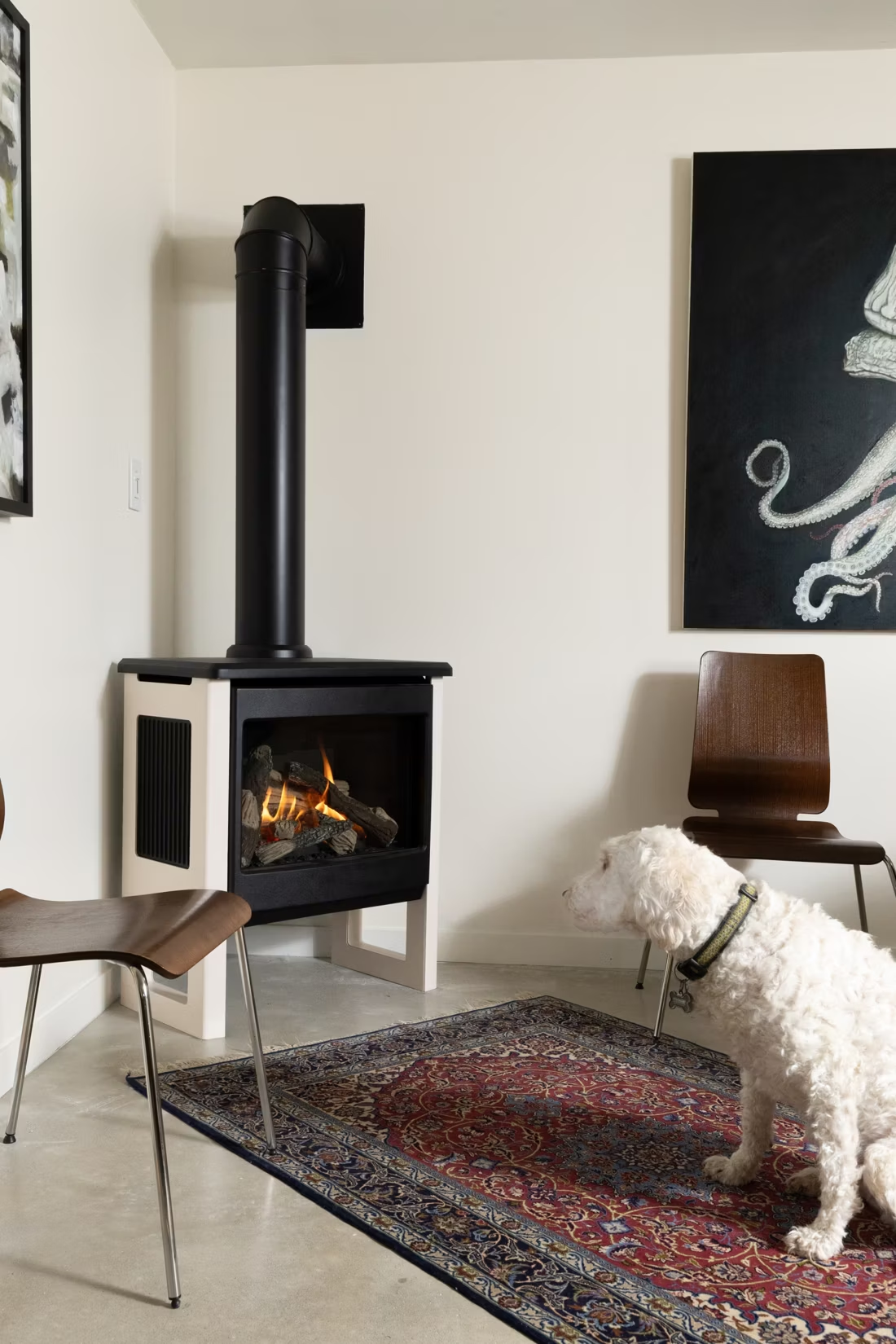
A gas fireplace is a fully built-in unit framed into a wall—the right choice for new construction, which describes a lot of West Fargo's recent housing growth. A gas insert is sized to slide into an existing masonry or factory-built fireplace opening, converting it to sealed, high-efficiency gas heat using the existing chimney chase as the vent path. A gas stove is a freestanding, cabinet-style unit that sits on the floor and vents out a wall or through the roof, useful in rooms with no existing fireplace and no interest in framing one in. Local dealers can walk through which fits your specific room.
Do I need a permit to install a gas fireplace in West Fargo?
Yes—new gas fireplace installations typically require both a mechanical/building permit and sign-off on the gas line work, handled through the City of West Fargo's building inspections department. The gas connection itself has to be run or modified by a licensed gas-fitter, which is one reason it pays to use an established local hearth dealer rather than a handyman: they coordinate the gas line, venting, and inspection in one process instead of leaving you to manage separate trades.
Should I get a vented or vent-free gas fireplace?
Vented (direct-vent) gas fireplaces pull combustion air from outside and exhaust the byproducts back outside through a sealed pipe—they're the cleanest option and the one most local dealers install by default. Vent-free units burn directly into the room without external venting; they're legal in North Dakota but come with strict room-size and ventilation requirements, and they add moisture and combustion byproducts to indoor air that's already dry and tightly sealed against the cold for most of the year. Given how many months West Fargo homes stay buttoned up against the weather, most homeowners and dealers here lean toward direct-vent units for the better indoor air quality.
How often does a gas fireplace need to be serviced?
Plan on an annual inspection, ideally before the heating season really kicks in around late fall. A technician checks the burner, pilot assembly, venting, and gas connections, and cleans the glass and interior—a much smaller job than a wood chimney sweep, but it matters, since West Fargo units often run daily for six-plus months of the year. Expect to pay somewhere in the $150–$250 range for a standard annual service call from a local hearth or HVAC company.
Gas vs. electric fireplace—which makes more sense for a West Fargo home?
Gas delivers real heat output—enough to meaningfully offset the furnace during a stretch of -2°F nights—plus the option to keep running through a power outage if it has battery-backup ignition. Electric fireplaces plug into a standard outlet, install in an afternoon with no venting or gas line at all, and cost far less upfront, but they're realistically a supplemental or ambiance choice rather than a serious heat source in a Zone 7 climate, and they go dark the moment the power does. With three different electric utilities serving parts of West Fargo at rates between roughly 11 and 17 cents per kWh, running an electric unit as a primary heat source also gets expensive fast. For a room that needs to genuinely hold heat through a Red River Valley winter, gas is usually the better call; for a secondary room or a rental unit where low upfront cost matters more, electric can make sense.
Can I put a TV above my fireplace?
Yes—with an asterisk. Fireplaces are hot and TVs don't like heat. Either put a mantel between them to deflect rising warmth, or choose a fireplace with heat-management technology that creates a cool zone on the wall above—the wall stays around 125 degrees, barely warm, while the room still gets full heat. If you like clean lines and don't want a mantel, heat management is the answer.
Is my gas fireplace wasting gas?
If it was installed more than 15 years ago, probably. Older gas fireplaces keep a standing pilot light burning all the time, and that little flame can cost a couple hundred dollars a year. Newer models use pilot-on-demand ignition—the pilot lights only when you use the fireplace and goes out when you turn it off.
What is an in-home preview and do I need one?
It's a visit where a hearth professional measures your space, confirms the model you picked actually works in your home, and walks the specs—framing, gas line, venting, finish work—before anything is ordered. Some details you just can't know until you see the house. Never make a down payment without one; it's the single most-skipped step that burns buyers.
Does a fireplace add value to my home?
On average, a fireplace adds back to the home about the same amount you spent installing it. Add the monthly savings from heating the rooms you actually use instead of the whole house—often hundreds of dollars a year—and the value case is strong before you even count what a fire does for how your family uses the room.
Nearby Dealers
Hearth shops serving West Fargo and the surrounding area. Every listing shows whether it is a WhyFire partner, a dealer we have verified as authorized for the brands we recommend, or a local business carrying hearth products. No manufacturer pays for placement. How we verify dealers →
Structural Materials
Hebron Brick Supply
Find your gas fireplace in West Fargo.
Tell us about your home and your project, and we'll match you with a trusted local dealer and send over a free Project Guide & Parts List—the exact parts, including the vent kit, and who to call to get it installed correctly before the next cold snap.
Find Your Fireplace →