
Find your fireplace in Cass County.
With a Climate Zone 7 winter and average lows near -2°F, Cass County homes lean on hearth systems. Find the right unit and connect with a trusted local dealer serving Fargo, West Fargo, Horace, and every town in between.
Every Project Starts From One of These Five Situations
Extreme-cold heating on the Red River Valley prairie.
Cass County sits on the flat, glacial lakebed floor of the Red River Valley, with almost no elevation change and almost no natural windbreak. Climate Zone 7 and a winter heating load nearly as demanding as International Falls, Minnesota put the county in the same company as International Falls, Minnesota, for sustained cold—sub-zero nights and wind chills well below -20°F are routine from December through February. Native hardwoods here—oak, cottonwood, ash—grow mostly in narrow river-bottom corridors along the Red and Sheyenne, not across the open farmland that covers most of the county, so firewood supply has never been the backbone of local heating the way it is in forested regions. An active emerald ash borer quarantine on moving ash firewood out of the area adds another practical reason wood-burning appliances stay uncommon here.
What you'll find on this hub: hearth retailers, service technicians, and fuel suppliers serving Fargo, West Fargo, Horace, Casselton, Kindred, Mapleton, Arthur, and the rest of Cass County. Gas fireplaces dominate—Xcel Energy's natural gas network reaches most of the metro and surrounding towns, and gas holds steady heat output at -20°F when other systems struggle. Electric units fill in bedrooms, basements, and rentals. Wood and pellet appliances exist here but they're the exception, not the rule—pick your fuel below for local dealers, install costs, and unit recommendations.
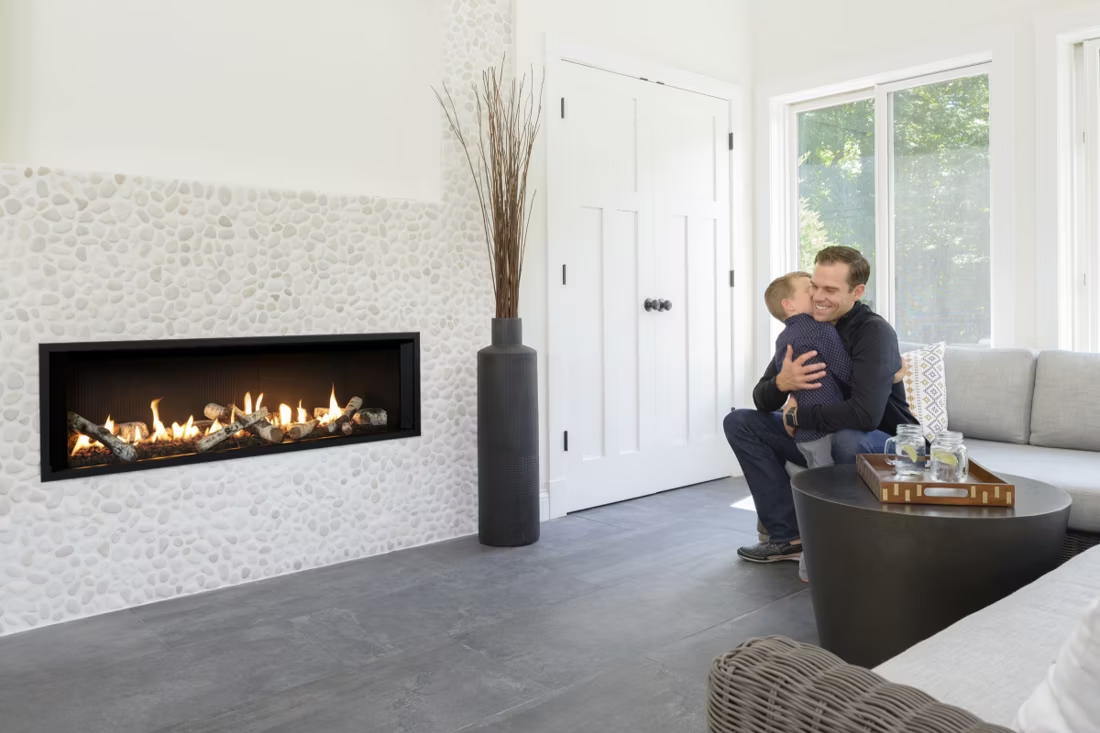
Four fuels. One honest answer for Cass County.
Three steps. No salesperson until you're ready.
Tell us about your project
Your zip code, your situation, and the fuel you're leaning toward—or let the answers point you to one.
See what's actually available
The brands dealers within 100 miles genuinely carry—real options, never a catalog mirage.
Get your dealer & Project Guide
A trusted local dealer, plus the free Project Guide & Parts List that names every component of the job.
Frequently Asked Questions
Which fuel works best in Cass County?
Gas is the practical default for most Cass County homes. With Xcel Energy natural gas service reaching Fargo, West Fargo, and much of the surrounding area, gas fireplaces and inserts deliver steady, thermostat-controlled heat through the -20°F cold snaps the Red River Valley sees most winters. Electric fireplaces work well as supplemental heat in bedrooms, finished basements, and rental units where venting isn't practical. Wood-burning appliances are uncommon in the county—the open prairie farmland surrounding Fargo has little natural woodlot supply, and an active emerald ash borer quarantine restricts moving firewood, including the ash that grows along the Red River bottoms. Pellet stoves are similarly rare; extreme cold snaps can cause auger and hopper feed issues that gas systems simply don't have. A small number of homeowners still run wood or pellet units for ambiance or as backup heat, but they're a minority choice here.
Do I need a permit to install a fireplace in Cass County?
Yes, for gas installations. Gas fireplaces, inserts, and stoves require a mechanical permit plus a gas line permit through the local building department—the City of Fargo Inspections Division for city addresses, or Cass County Planning for unincorporated townships. Licensed gas-fitters handle the actual gas connection work. Electric fireplaces generally don't need a permit for plug-in units, but built-in electric fireplaces that require new circuits or hardwiring need an electrical permit. Most local hearth retailers pull these permits as part of the installation quote, so it's rarely something you handle yourself.
Are there air quality restrictions on wood or gas burning in Cass County?
No formal wood-smoke air quality program exists in Cass County—the county doesn't have the winter inversion issues you'd see in a basin region. That said, Fargo's building code has quietly steered new construction toward gas and electric for decades, partly because sealed, high-efficiency gas venting performs more predictably in extreme cold than a masonry chimney does at -20°F. Open burning within Fargo and West Fargo city limits is restricted by municipal ordinance, which is one more reason wood appliances stay rare inside the metro even though they're technically permitted with the right equipment.
Can one local hearth retailer handle both gas and electric?
Most Fargo-area hearth retailers carry both. Dealers serving the metro typically stock a working showroom of gas fireplaces, gas inserts, and electric units side by side, since those are the two fuels that actually move in Cass County. If a dealer also lists wood or pellet stoves, expect a much smaller selection—usually a display unit or two rather than a full lineup—reflecting how uncommon those fuels are locally. If you're comparing gas versus electric for a specific room, a multi-fuel dealer can walk you through real heat output numbers for a Zone 7 winter rather than manufacturer marketing claims.
How does service work in rural areas of Cass County?
Technicians serving Cass County are based mainly in Fargo and West Fargo and travel out to Casselton, Kindred, Mapleton, Arthur, and the smaller townships as part of scheduled routes. Expect a modest travel fee for calls outside the immediate metro, and expect fall booking to fill up fast—with one of the longest, coldest heating seasons in the country, most homeowners want their gas system inspected before the first hard freeze in October or November, not after a pilot light fails at -15°F in January.
What's the typical cost range for gas and electric fireplace installation in Cass County?
Gas fireplace, insert, or stove: roughly $4,000–$10,000 depending on whether new gas line runs and venting are needed; simple insert conversions into an existing gas line land on the lower end. Electric fireplace: $200–$2,500 for the unit itself, plus $300–$1,000 in labor for anything beyond a plug-and-play wall unit—built-ins with new circuits run higher. Because wood and pellet installs are rare here, pricing data for those fuels is thin; ask a local dealer directly if you're considering one. See the county + fuel pages above for retailer-specific pricing.
Can a fireplace actually lower my heating bill?
Yes—by creating a comfort zone. A furnace heats every square foot of the house just to warm the one room you're in; a gas fireplace on low burns roughly a sixth of the gas a typical furnace does. Set the furnace around 55–60 degrees as a baseline, then heat the rooms your family actually uses. Families who heat this way commonly save $20–$60 a month.
Can I install a fireplace myself?
If you're putting a fire in your house on purpose, it's best to work with an expert. Unless you're genuinely experienced in framing, gas line, vent pipe, and the national code on clearances to combustibles, have a professional do it—and ideally the same company that sells you the fireplace, so warranty, service, and liability all live under one roof.
Does a fireplace add value to my home?
On average, a fireplace adds back to the home about the same amount you spent installing it. Add the monthly savings from heating the rooms you actually use instead of the whole house—often hundreds of dollars a year—and the value case is strong before you even count what a fire does for how your family uses the room.
Wood, gas, pellet, or electric—how do I choose?
Match the fuel to your life, not the other way around. Wood: lowest fuel cost and total power-outage independence, but you're hauling and stacking. Gas: press a button, set a thermostat, no maintenance to speak of. Pellet: wood economics with automatic feeding, in exchange for weekly cleaning and a need for electricity. Electric: plugs in anywhere with honest supplemental heat. Nobody regrets the fuel that fits how they actually live.
Stove and Fireplace Dealers in Cass County
Listings include WhyFire partner dealers, dealers we have verified as authorized for the brands we recommend, and established local businesses that carry hearth products. Every listing shows which one it is. The ones marked Preferred run on WhyFire's software, so they can show you real pricing and book your appointment right here. No manufacturer pays for placement. How we verify dealers →
Structural Materials
Hebron Brick Supply
Find your fireplace in Cass County.
Pick gas or electric below and I'll match you with a trusted local dealer and send a free Project Guide & Parts List—the exact parts, including the vent kit, sized for your home and Cass County's winters.
Find Your Fireplace →