
Steady pellet heat for Steele County's zone-7 winters.
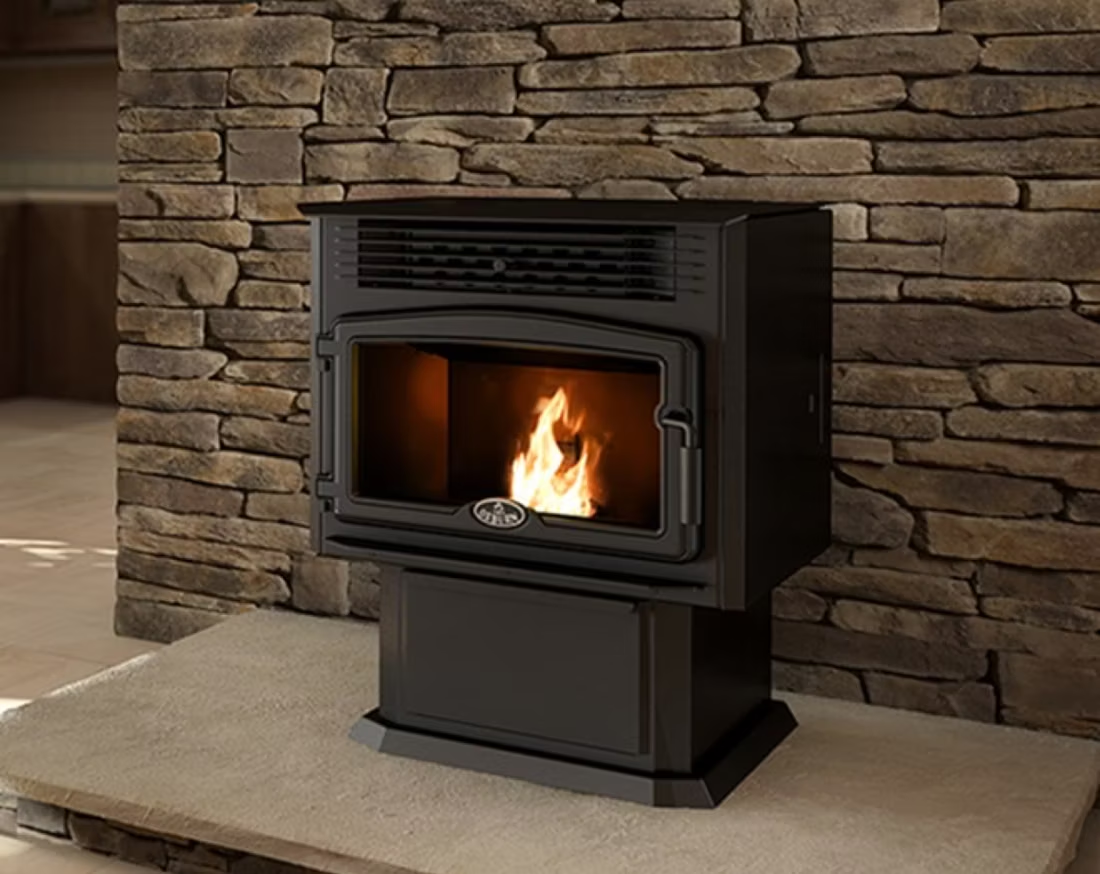
For the farmhouses and rural homes scattered around Finley and Hope, pellet heat offers thermostat-controlled warmth without the labor of a woodpile. Find the right stove and connect with a trusted local dealer.
Every Project Starts From One of These Five Situations
Consistent, thermostat-controlled warmth without cutting cordwood.
Steele County is home to roughly 705 people spread across open prairie and grain farms around Finley and Hope, and it sits in IECC climate zone 7—the same brutal-winter classification as International Falls, Minnesota. Wind runs unobstructed across the flat farmland here, and with oak, cottonwood, and ash the most common wood species along the shelterbelts and river bottoms, plenty of homes still burn cordwood. But on a farm where daylight hours in January and February go to livestock and equipment, not to splitting and stacking wood, a pellet stove that runs off a hopper and a thermostat solves a real problem.
Steele County has no air quality non-attainment concerns and no winter burn restrictions, so there's nothing stopping a homeowner from running a pellet stove or insert as much as the winter demands—a real advantage compared to counties dealing with inversion advisories. Regional pellet supply runs through brands like Lignetics and Indeck Energy Services, both of which distribute hardwood and softwood pellets into this part of eastern North Dakota. The tradeoff is electricity: pellet stoves need power to run the auger, igniter, and combustion blower, which matters on a prairie where a February blizzard can knock out the rural electric grid for hours at a time.
Three steps. No salesperson until you're ready.
Tell us about your project
Your zip code, your situation, and the fuel you're leaning toward—or let the answers point you to one.
See what's actually available
The brands dealers within 100 miles genuinely carry—real options, never a catalog mirage.
Get your dealer & Project Guide
A trusted local dealer, plus the free Project Guide & Parts List that names every component of the job.
Frequently Asked Questions
How much does a pellet stove installation cost in Steele County?
A typical pellet stove installation runs in the $3,000 to $6,000 range, depending on the unit and whether you're installing fresh into a farmhouse living room or replacing an old wood stove with an existing hearth pad already in place. Because Steele County's population is small and spread thin, most installers are based out of Fargo, Grand Forks, or Devils Lake and will factor a modest travel charge into a rural quote. Get a firm number from an in-home consultation rather than a phone estimate—pellet vent runs and clearance requirements vary by house.
Is a pellet stove a good fit for a zone-7 climate like Steele County's?
Yes, with one caveat. Pellet stoves handle zone-7 cold well—a hopper full of pellets can run 24 to 48 hours unattended, and the heat output is steady rather than the peak-and-fade cycle of an open wood fire. The caveat is electricity. Pellet stoves need power for the auger and blower, and on the open prairie around Finley and Hope, blizzard-driven outages happen. Homeowners who go pellet here often pair it with a small battery backup or generator, or keep a wood stove as a no-power fallback—several local homes run both.
What size pellet stove do I need for my home?
Sizing depends on square footage, ceiling height, and how exposed your home is to prairie wind—an older uninsulated farmhouse around Steele County will need more heat output per square foot than a newer, tightly built home. As a rough guide, small pellet stoves (up to 1,000 sq ft) suit a single large room or cabin, medium units (1,000–2,000 sq ft) handle most farmhouse main floors, and larger units can cover an open-plan whole home if insulation is decent. A local dealer will size your space based on an in-home look rather than square footage alone.
Where can I buy pellet fuel near Steele County?
Lignetics and Indeck Energy Services both distribute pellets into this part of eastern North Dakota, and farm supply stores and hardware retailers in nearby regional hubs typically stock bagged pellets by the ton, often in the $250–$350 range depending on the season and how early you order. Because Steele County's population is small, there isn't a dedicated pellet retailer inside the county—most homeowners buy in bulk before winter and store a season's supply in a shed or garage to avoid running short during a stretch of sub-zero weather.
Do I need a permit to install a pellet stove in Steele County?
Yes—a building permit is required for a new pellet stove installation, issued through the Steele County zoning office for homes outside city limits, or through the local city office if you're inside Finley or Hope. Steele County has no air quality non-attainment designation and no seasonal burn curtailment periods, so once the unit is installed and inspected, there are no restrictions on how much you run it. Most local installers handle the permitting paperwork as part of the install.
What's the best pellet stove for Steele County's cold, windy winters?
Look for a unit with a well-insulated hopper and a auger motor rated for cold-weather reliability—some budget models struggle when installed in an unheated mudroom or three-season porch, which is a real setup in older farmhouses here. A larger hopper capacity is worth paying for, since it means fewer refills during a multi-day cold snap. Ask any local dealer carrying Lignetics-compatible or Indeck-compatible pellet stoves which models their customers in similarly exposed rural areas have had the best luck with through actual zone-7 winters, not showroom conditions.
How often does a pellet stove need to be cleaned and serviced?
Plan on cleaning the burn pot and ash pan weekly during heavy winter use, a full glass and venting cleaning monthly, and a complete professional service and inspection once a year—typically before the season starts in the fall. Pellet stoves produce far less ash and creosote than wood stoves, but the auger, igniter, and blower are mechanical parts that benefit from an annual once-over, especially for a stove that's running most of the day through a Steele County winter.
What happens to my pellet stove during a power outage?
Without power, a pellet stove's auger, igniter, and blower all stop, which means the fire goes out. On the open prairie around Steele County, winter storms can take down rural electric service for hours or occasionally longer, so a pellet-only heating plan carries real outage risk. Homeowners here typically handle this one of two ways: a small generator sized to carry the stove's modest electrical draw, or a battery backup unit designed for pellet stoves. Some households keep a wood stove or fireplace as backup heat specifically for this reason.
Pellet stove vs. wood stove—which makes more sense for my Steele County home?
Wood stoves burn local oak, cottonwood, and ash, work with zero electricity—a real advantage during a prairie blizzard outage—and offer lower fuel costs if you're cutting your own. But they demand real labor: splitting, stacking, hauling, and tending a fire, which competes with farm chores during the busiest stretches of winter. Pellet stoves trade that labor for convenience—load the hopper, set the thermostat, walk away—using pellets from suppliers like Lignetics or Indeck Energy Services, but they depend on electricity to run. Many Steele County households land on both: pellet for daily convenience, wood as the storm-proof backup.
What's the difference between an insert and a zero-clearance fireplace?
An insert is a fireplace that slides into a pre-existing wood-burning fireplace—if you don't have one, there's nothing to insert it into. A zero-clearance fireplace is built into a framed wall, which makes it the answer for remodels and new construction. Simple test: existing masonry fireplace means insert; blank or framed wall means zero-clearance.
Are pellet stoves loud?
They make some noise—there are two fans running plus an auger motor that turns as it feeds pellets. But there's a real range: premium models are engineered quiet, and the best offer a whisper-quiet mode you can comfortably watch TV next to. If noise matters in your room, ask to hear a stove running before you buy—it's a five-minute test that saves years of annoyance.
How much should I budget for a fireplace?
For an average home—covering the fireplace, the vent pipe, and basic installation—a budget between $3,900 and $5,500 gives you a lot of options across wood, gas, and pellet. By the time you add finish work, gas line, and electrical, the average complete installation lands between $5,000 and $12,000 all-in. In a remodel or new build, a good rule is to put about 2.5% of the total project cost toward the fireplace.
What is an in-home preview and do I need one?
It's a visit where a hearth professional measures your space, confirms the model you picked actually works in your home, and walks the specs—framing, gas line, venting, finish work—before anything is ordered. Some details you just can't know until you see the house. Never make a down payment without one; it's the single most-skipped step that burns buyers.
Pellet Brands Stocked Around Steele County
Manufacturers will point you to the nearest stocking dealer.
Find your pellet stove in Steele County.
Tell us a bit about your home and we'll match you with the right pellet stove or insert, plus a free Project Guide & Parts List with the exact parts—including the vent kit—and a trusted local dealer to install it.
Find Your Fireplace →