
Gas heat that keeps up with Stark County's brutal winters.
With a heating season as tough as International Falls and average winter lows near 3°F, Stark County homes need heat that doesn't quit. From Dickinson's natural gas lines to propane out on the ranches near South Heart and Taylor, we'll match you with a local dealer who knows what actually works here.
Every Project Starts From One of These Five Situations
Natural gas country, built for extreme cold.
Stark County sits on the high plains of southwestern North Dakota, part of the Bakken oil and gas patch, at roughly 2,400 feet elevation with almost no natural tree cover beyond shelterbelts and river-bottom stands of oak, cottonwood, and ash along the Heart River. Winters here are long and severe—climate zone 6A, average lows around 3°F, and a heating season as demanding as International Falls, Minnesota, and well beyond Minneapolis. This isn't a place where a fireplace is decorative. It's part of how a house survives January.
Wood heat never took hold the way it did in forested parts of the country, and pellet fuel has stayed a niche option too—there simply isn't the local wood supply base or retail pellet infrastructure to support either as a primary heat source, even though the cold would justify it. What did take hold is gas. Montana-Dakota Utilities runs natural gas lines through Dickinson and the towns immediately around it, and the same oil-and-gas infrastructure that put Stark County on the map has made gas heat the default choice for supplemental and primary hearth heating. Outside the MDU service area—out toward Gladstone, Taylor, and the ranch country beyond city limits—propane fills the gap. Either way, a gas fireplace or insert gives you instant, controllable heat with none of the wood-supply problems this part of the state actually has.
Three steps. No salesperson until you're ready.
Tell us about your project
Your zip code, your situation, and the fuel you're leaning toward—or let the answers point you to one.
See what's actually available
The brands dealers within 100 miles genuinely carry—real options, never a catalog mirage.
Get your dealer & Project Guide
A trusted local dealer, plus the free Project Guide & Parts List that names every component of the job.
Frequently Asked Questions
How much does a gas fireplace installation cost in Stark County?
Most gas fireplace and insert installations in Stark County run somewhere between $3,500 and $9,500, with the range driven by the unit itself, whether a gas line already reaches the install location, and the venting path. A direct-vent insert going into an existing masonry opening with gas already run to the room sits toward the low end. New construction or a remodel that requires framing, fresh direct-vent piping, and a new gas line—common in newer Dickinson subdivisions—runs higher. Rural properties on propane that need a new tank set can add a few thousand more. A local dealer will give you a firm number after seeing your home.
Can I convert my existing wood fireplace to a gas insert in Stark County?
If your home has an existing masonry fireplace—more common in Dickinson's older neighborhoods than out in newer construction—a gas insert conversion is usually straightforward, running a stainless liner through the existing chimney. Because wood heat was never the dominant hearth fuel out here the way it is in forested parts of the country, most Stark County homes were built gas-ready from the start rather than converted later. For the ones that do have an old wood-burning fireplace sitting unused, converting to gas is one of the more common upgrade projects local dealers handle, and it typically runs in the same $4,500-$9,000 range as a standard insert install.
Do I need natural gas, or should I plan on propane?
It depends on where in Stark County you're located. Montana-Dakota Utilities provides natural gas service in Dickinson and the immediate surrounding area, so if your home already has a gas furnace, range, or water heater there, adding a fireplace is a simple tie-in. Outside that service footprint—South Heart, Taylor, Richardton, Gladstone, and the farms and ranches between them—propane is the standard fuel, usually supplied by a regional co-op with either a leased or owned tank. Nearly every gas fireplace model on the market can be set up for either fuel; your installer just configures the correct orifice and regulator.
Will my gas fireplace still work if the power goes out?
Most modern gas fireplaces with intermittent pilot ignition (IPI) run on a battery backup that kicks in the moment power drops, so the unit lights and operates normally off AA batteries until service is restored. Given how often winter storms and rural line outages hit Stark County, that's not a minor feature. A handful of manufacturers, including Valor, go a step further—their pilot assembly generates its own electricity through the thermocouple, so there's no battery to check or replace, ever. For a ranch outside Taylor or South Heart where a downed line during a blizzard can mean hours without power, that distinction matters. Ask your local dealer which ignition system is in the unit you're considering.
What's the difference between a gas fireplace, gas insert, and gas stove?
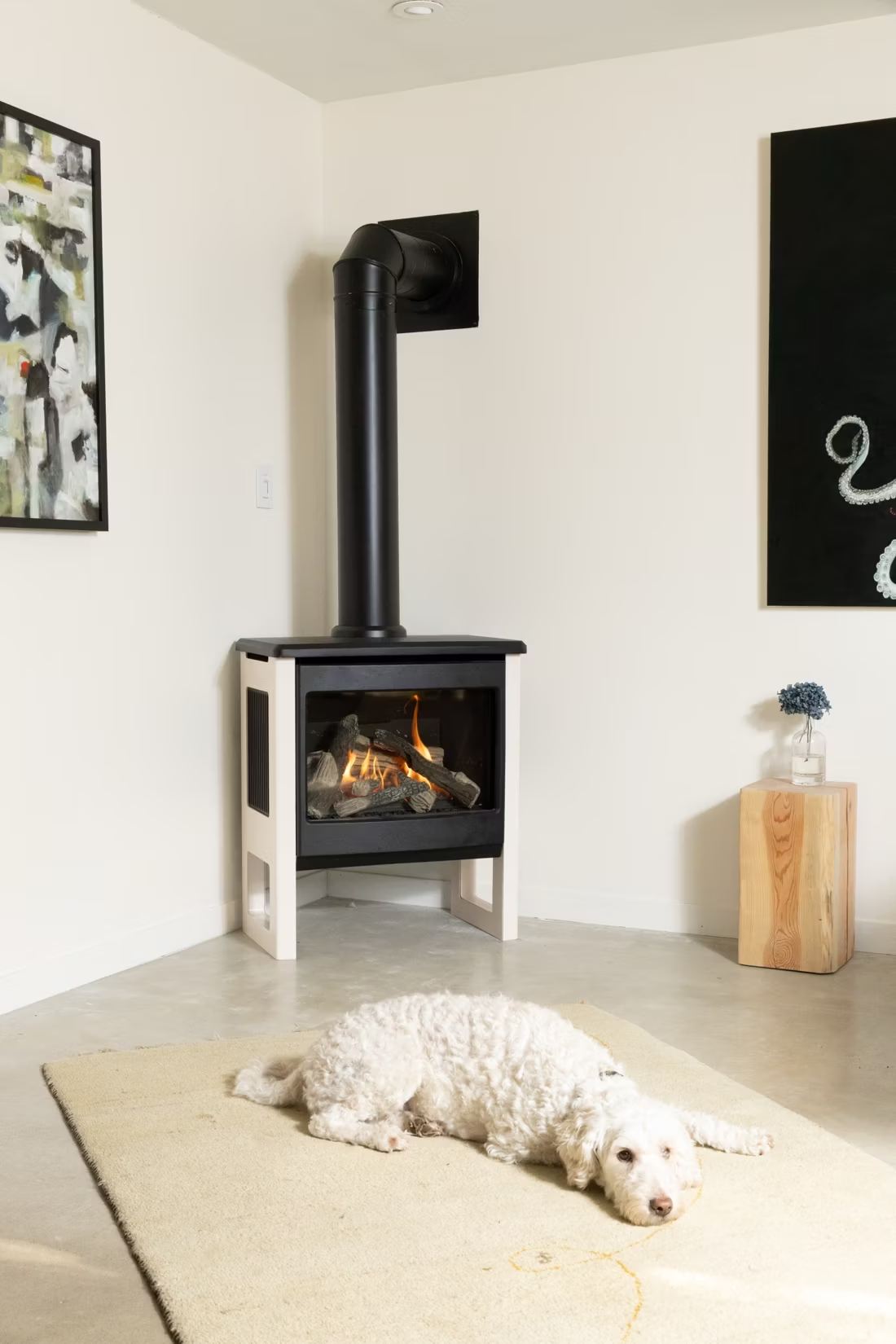
A gas fireplace is a fully built-in unit framed into a wall—the standard choice for new construction, which describes a lot of Dickinson's growth over the past decade. A gas insert drops into an existing masonry fireplace opening and uses the existing chimney as a vent path with a liner, the right call if your home already has an old wood-burning hearth. A gas stove is freestanding, sitting on the floor on its own hearth pad, which works well in a room without any existing fireplace opening. Because Stark County has relatively few older homes with legacy wood fireplaces, built-in units and freestanding stoves see more use here than conversions.
Do I need a permit to install a gas fireplace in Stark County?
Yes. Inside Dickinson, a gas fireplace installation requires a building permit through the city's building department along with a separate gas permit for the line work, which has to be done by a licensed gas-fitter. For addresses outside city limits, permitting runs through Stark County's building and zoning office instead. Most established local dealers coordinate the building permit, the gas line, and the final inspection as one package, so you're not left managing multiple trades and two different permitting offices on your own.
Should I get a vented or vent-free gas fireplace in a climate this cold?
Vented gas fireplaces—direct-vent or B-vent—pull combustion air from outside and exhaust it back outside through sealed piping. They put out more usable heat and are the more common choice in a zone 6A climate like Stark County's, where you actually want the fireplace contributing meaningfully to the heating load, not just providing ambiance. Vent-free units burn without any outside venting and release some combustion byproducts into the room; they're legal in North Dakota but come with strict room-sizing and oxygen-sensor requirements. For a county averaging 3°F overnight lows for months at a stretch, most local dealers steer homeowners toward vented direct-vent models for the heat output alone.
How often does a gas fireplace need to be serviced in Stark County?
Plan on an annual inspection, ideally before the heating season really sets in during October or November. A technician checks the burner, pilot assembly, venting, and gas connections, and cleans the glass and firebox—typically a $150 to $250 visit. With Stark County's fireplaces running hard for eight-plus months a year given how long and cold winters are here, components see more cycling than they would in a milder climate, so skipping a season isn't a great idea. Local gas appliance service providers handle this alongside furnace tune-ups, so it's easy to bundle.
Gas vs. electric fireplace—which makes more sense for my Stark County home?
Gas delivers real, substantial heat output—enough to meaningfully offset a furnace's workload during a stretch of single-digit nights—and, with battery backup or a self-generating pilot, it can run through a power outage. Electric fireplaces and inserts are simpler to install (often just a standard outlet, no gas line or venting), cost less upfront, and work well as supplemental warmth in a bedroom or finished basement, but they contribute little real heat and go dark the instant the power does, which matters when a winter storm knocks out a rural line for hours. In a county with winters as long and cold as Stark's, gas tends to be the better primary or near-primary choice, with electric units filling in as a low-cost accent in secondary rooms.
Why is a fireplace insert so efficient?
An insert does two things: it seals the chimney completely, so you stop losing air you already paid to heat, and it radiates warmth into the room through the firebox and glass. Most add a heat-exchange fan that pulls cool room air underneath, wraps it around the hot firebox, and pushes it back out warm. Your home is more efficient before you've even lit the first fire.
Is my gas fireplace wasting gas?
If it was installed more than 15 years ago, probably. Older gas fireplaces keep a standing pilot light burning all the time, and that little flame can cost a couple hundred dollars a year. Newer models use pilot-on-demand ignition—the pilot lights only when you use the fireplace and goes out when you turn it off.
Can I install a fireplace myself?
If you're putting a fire in your house on purpose, it's best to work with an expert. Unless you're genuinely experienced in framing, gas line, vent pipe, and the national code on clearances to combustibles, have a professional do it—and ideally the same company that sells you the fireplace, so warranty, service, and liability all live under one roof.
How much should I budget for a fireplace?
For an average home—covering the fireplace, the vent pipe, and basic installation—a budget between $3,900 and $5,500 gives you a lot of options across wood, gas, and pellet. By the time you add finish work, gas line, and electrical, the average complete installation lands between $5,000 and $12,000 all-in. In a remodel or new build, a good rule is to put about 2.5% of the total project cost toward the fireplace.
Stove and Fireplace Dealers in Stark County
Listings include WhyFire partner dealers, dealers we have verified as authorized for the brands we recommend, and established local businesses that carry hearth products. Every listing shows which one it is. The ones marked Preferred run on WhyFire's software, so they can show you real pricing and book your appointment right here. No manufacturer pays for placement. How we verify dealers →
Keller Hearth'n Home Products
Find your gas fireplace in Stark County.
Tell us about your home and whether you're on natural gas or propane, and we'll match you with a trusted local dealer and send over a free Project Guide & Parts List—the exact parts, vent kit included, for your Stark County gas fireplace project.
Find Your Fireplace →