
Instant heat and ambiance for Stark County's coldest nights.
Zone heat without a flue or gas line—for finished basements, additions, and living rooms across Dickinson and the rest of Stark County. Find the right unit and get matched with a trusted local dealer.
Every Project Starts From One of These Five Situations
Simple heat where wood and pellet don't fit the landscape.
Stark County sits on the open prairie of southwest North Dakota, with Dickinson as its county seat and largest city among roughly 27,500 residents. At climate zone 6A, with an average winter low around 3°F and winters long and demanding enough to rival Fargo, ND, or Bismarck a few hours north, this is genuinely serious winter country. But the landscape that produces those winters is short on the timber to heat through them. Oak, cottonwood, and ash grow mostly in scattered river-bottom stands along the Heart River, not in the kind of forestland that supports a real firewood economy, which is why wood stoves are largely absent from the county's hearth market. Pellet stoves are similarly rare here—regional suppliers like Lignetics and Indeck Energy Services move product through the area, but almost entirely for industrial and agricultural use, not retail hearth appliances.
That leaves gas, largely propane and piped natural gas in and around Dickinson, carrying most of the county's primary heating load, with electric fireplaces filling a specific and useful niche: ambiance and supplemental zone heat in rooms where running a flue or gas line isn't practical or worth the cost. A plug-in electric unit needs nothing more than a standard outlet; a built-in model wired through Montana-Dakota Utilities' grid needs a dedicated circuit and a licensed electrician. Either way, it's the fastest, lowest-disruption fireplace option available to Stark County homeowners, and it works equally well in a Dickinson townhome, a farmhouse addition near Taylor, or a finished basement in South Heart.
Three steps. No salesperson until you're ready.
Tell us about your project
Your zip code, your situation, and the fuel you're leaning toward—or let the answers point you to one.
See what's actually available
The brands dealers within 100 miles genuinely carry—real options, never a catalog mirage.
Get your dealer & Project Guide
A trusted local dealer, plus the free Project Guide & Parts List that names every component of the job.
Frequently Asked Questions
How much does an electric fireplace installation cost in Stark County?
Plug-in electric fireplaces and freestanding stoves typically run $300 to $1,200 installed, since there's no venting or gas line to run—the unit simply needs a standard 120V outlet. Built-in or wall-recessed models that require a dedicated 240V circuit and a licensed electrician run higher, often $1,200 to $2,500 depending on wall framing, wiring distance to the panel, and finish work like a surround or mantel. Compared to gas fireplace installs in Stark County, which often involve a propane tank or gas line run, electric is consistently the lower-cost, faster path—most installs are done in a single day.
Do I need a permit to install an electric fireplace in Stark County?
A simple plug-in unit generally doesn't require a permit—it's treated like any other appliance you plug into an outlet. If you're adding a built-in unit that needs a new dedicated circuit or panel work, that electrical work typically does require a permit, handled through the City of Dickinson Building Inspections Department inside city limits or the Stark County Planning & Zoning Office for rural addresses. A licensed electrician pulling the permit as part of the install is standard practice and keeps the work code-compliant.
Will my electric fireplace work during a power outage?
No—and this matters more in Stark County than in milder climates. Electric fireplaces run on grid power, so when a prairie blizzard takes down lines, the unit goes dark along with everything else. With winters as long and demanding as Fargo's or Bismarck's, and storms that can knock out power for hours or longer, an electric fireplace should be treated as ambiance and zone heat for normal conditions, not emergency backup. Homes that need heat during outages typically pair an electric fireplace in the main living space with a propane heater, generator, or wood-burning backup elsewhere in the house—something local dealers can help plan for.
Electric vs. gas fireplace—which is right for my Stark County home?
Gas is the stronger choice for real heat output and whole-room warmth during Stark County's long heating season—a direct-vent propane or natural gas unit in Dickinson can genuinely offset furnace use and, with a battery-backup ignition system, keep running through a power outage. Electric wins on installation simplicity and placement flexibility: no venting, no gas line, and it can go almost anywhere in the house, including interior walls and upper floors where running gas line isn't practical. Many Stark County homeowners use gas for their primary living space and electric in a secondary room, guest suite, or basement where the appliance is about atmosphere and light supplemental warmth rather than carrying the heating load.
What's the difference between an electric fireplace, insert, and stove?
An electric fireplace is typically a built-in unit recessed into a wall or framed enclosure, often paired with a mantel—common in Dickinson remodels and new construction. An electric insert is sized to slide into an existing masonry or gas fireplace opening, letting you convert an unused wood-burning fireplace to electric without any structural changes. An electric stove is a freestanding cabinet-style unit that sits on the floor and can go almost anywhere with an outlet, popular in additions, garages converted to living space, and rural homes near Richardton or Belfield where a permanent chimney was never built.
How much heat can I actually expect from an electric fireplace?
Most electric fireplaces top out around 4,600 to 5,000 BTU (roughly 1,500 watts), which is enough to noticeably warm a single room—300 to 400 square feet under good conditions—but not enough to serve as a home's primary heat source through a Stark County winter. Think of it as zone heating: it can let you turn down the thermostat in the room you're using and rely on your furnace less during shoulder-season months, but it won't replace your furnace or a properly sized propane system on the coldest nights.
Where can I get an electric fireplace installed near me in Stark County?
Because Stark County doesn't support a large dedicated hearth retail market the way wood-heavy regions do, electric fireplace installs are usually handled by electrical contractors and general remodelers based in and around Dickinson, some of whom also carry gas hearth lines. Working with a trusted installer matters here—an unlicensed install on a built-in unit's dedicated circuit is the kind of shortcut that causes tripped breakers or worse down the road. We match Stark County homeowners with a local, trusted dealer who covers Dickinson, Richardton, Taylor, South Heart, and Belfield.
Can I put an electric fireplace anywhere in my house?
Almost—that's the main advantage over gas or wood. Since there's no combustion, no flue, and no clearance-to-combustibles rules to satisfy, electric units can go on interior walls, in condos, in basements, or in additions where running a gas line or chimney would be impractical or expensive. The only real constraint is electrical: plug-in units need an accessible outlet, and built-in units need a circuit that can handle the load, which is where a licensed electrician's input during planning saves a rework later.
Since wood and pellet stoves are rare here, what heats most Stark County homes?
Furnaces running on propane or natural gas carry the bulk of the heating load across Stark County, a reflection of both the region's limited timber supply and its established propane and natural gas infrastructure around Dickinson. Gas fireplaces and inserts are the standard supplemental hearth choice for warmth with real heat output, while electric fireplaces fill the ambiance and light-zone-heat role in rooms where a flue isn't practical. Wood and pellet stoves show up occasionally—a cabin near the Heart River, a hobbyist with a woodlot—but they're the exception, not the rule, in this county.
Can I put a TV above my fireplace?
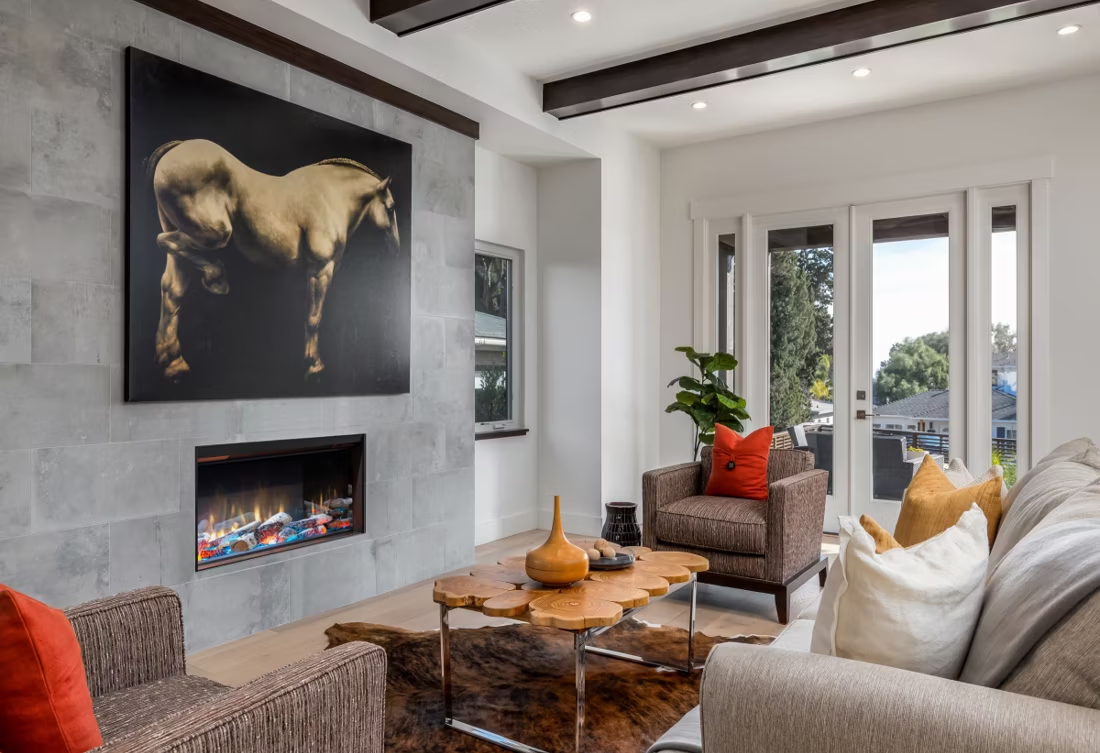
Yes—with an asterisk. Fireplaces are hot and TVs don't like heat. Either put a mantel between them to deflect rising warmth, or choose a fireplace with heat-management technology that creates a cool zone on the wall above—the wall stays around 125 degrees, barely warm, while the room still gets full heat. If you like clean lines and don't want a mantel, heat management is the answer.
How much does an electric fireplace cost to run?
With the heater on, a typical unit draws about 1,500 watts—at average electric rates that's roughly 20 cents an hour. Run the flame effect alone and it costs pennies; the flames are LED-driven and use about as much power as a light bulb. There's no pilot light, no fuel delivery, and essentially no maintenance.
How much should I budget for a fireplace?
For an average home—covering the fireplace, the vent pipe, and basic installation—a budget between $3,900 and $5,500 gives you a lot of options across wood, gas, and pellet. By the time you add finish work, gas line, and electrical, the average complete installation lands between $5,000 and $12,000 all-in. In a remodel or new build, a good rule is to put about 2.5% of the total project cost toward the fireplace.
Can I install a fireplace myself?
If you're putting a fire in your house on purpose, it's best to work with an expert. Unless you're genuinely experienced in framing, gas line, vent pipe, and the national code on clearances to combustibles, have a professional do it—and ideally the same company that sells you the fireplace, so warranty, service, and liability all live under one roof.
Stove and Fireplace Dealers in Stark County
Listings include WhyFire partner dealers, dealers we have verified as authorized for the brands we recommend, and established local businesses that carry hearth products. Every listing shows which one it is. The ones marked Preferred run on WhyFire's software, so they can show you real pricing and book your appointment right here. No manufacturer pays for placement. How we verify dealers →
Keller Hearth'n Home Products
Find your electric fireplace in Stark County.
Tell us a bit about your home and we'll put together a free Project Guide & Parts List—the right electric fireplace or insert for your space, the exact parts list, and a trusted local dealer in Stark County to install it.
Find Your Fireplace →