
Steady heat for North Dakota's emptiest county.
From Amidon to Marmarth, pellet heat brings thermostat-like control to Slope County's badlands winters. Find the right stove for your place and connect with a trusted local dealer who actually services this stretch of the state.
Every Project Starts From One of These Five Situations
Consistent warmth without the woodpile chores.
Slope County is North Dakota's least populated county—roughly 124 residents spread across badlands terrain cut by the Little Missouri River, with Amidon, the smallest county seat in the country, anchoring one end and Marmarth the other. Climate zone 6A means long, punishing winters here: sustained cold, relentless plains wind, and heating seasons that stretch well past what most of the country deals with. Homes are spread out—ranch houses, farmsteads, a handful of in-town properties—and there's no dense retail corridor nearby, which shapes how residents heat their homes and where they buy fuel.
Oak, cottonwood, and ash grow along the river bottoms and have supplied wood heat here for generations, but pellet stoves have found a real foothold as a lower-maintenance alternative—no splitting, no stacking, and a burn rate you set and mostly forget. There are no air quality restrictions or curtailment periods in Slope County, so pellet appliances run without the burn-ban complications some Western states impose. Fuel comes from regional producers like Lignetics and Indeck Energy Services, typically bought by the pallet from a dealer in Dickinson or Bowman rather than delivered bag by bag, since there's no local retail pellet supply chain to speak of. The tradeoff worth understanding up front: pellet stoves run on electricity for the auger and blower, and in a county this rural, served by the local rural electric cooperative, a blizzard-driven outage can mean the stove goes cold right when you need it most.
Three steps. No salesperson until you're ready.
Tell us about your project
Your zip code, your situation, and the fuel you're leaning toward—or let the answers point you to one.
See what's actually available
The brands dealers within 100 miles genuinely carry—real options, never a catalog mirage.
Get your dealer & Project Guide
A trusted local dealer, plus the free Project Guide & Parts List that names every component of the job.
Frequently Asked Questions
How much does a pellet stove installation cost in Slope County?
There isn't a dense network of local installers based in Slope County itself—most dealers who service this area operate out of Dickinson or Bowman and will factor a trip charge into the quote for the drive out to your property. Beyond that travel cost, pricing depends mainly on the venting run (many older farmhouses need a fresh hole cut through an exterior wall for direct-vent pipe), the hopper size you choose, and whether the electrical circuit for the stove's auger and blower needs upgrading. A dealer can give you a firm number after seeing your home, but expect the venting and electrical work to be a bigger driver of cost here than the stove itself.
Does wood heat or pellet heat make more sense for a Slope County home?
Both have a real place here. Cordwood—oak, cottonwood, and ash cut along the Little Missouri bottoms—has heated ranch houses in this county for generations, and it works even when the power's out, which matters on the plains. Pellet stoves trade that off-grid resilience for convenience: load the hopper, set it, and the stove maintains a steady output without splitting or stacking anything. For a homeowner who wants predictable heat without the labor of a woodlot, or who's supplementing an existing furnace, pellet is usually the easier daily experience. For a place that loses power for days during a bad blizzard, a wood stove or a pellet unit paired with a generator is the safer bet.
What size pellet stove do I need for a Slope County home?
Open plains exposure matters as much as square footage out here—a farmhouse catching full wind off the badlands loses heat faster than the same square footage would in a sheltered subdivision. As a starting point, smaller units (up to roughly 1,000 sq ft) suit a single large room or a compact ranch home, while medium units (1,000-2,000 sq ft) cover most main living areas in a typical farmhouse. For larger or older, less-insulated homes common in this part of the county, sizing up and choosing a larger hopper capacity is usually worth it—fewer refills during a multi-day cold stretch. A local dealer can size this properly during an in-home visit rather than guessing off square footage alone.
Will my pellet stove still work if the power goes out?
Not on its own. Pellet stoves rely on electricity to run the auger that feeds fuel and the blower that distributes heat, so a power outage stops the stove regardless of how much fuel is in the hopper. In a county this rural, served by the local rural electric cooperative and exposed to long stretches of open plains, winter storms can knock out power for extended periods. Homeowners who want pellet convenience but need a heat source that survives an outage often pair the stove with a small backup generator sized to run the auger and blower, or keep a wood stove or fireplace as backup. Ask your dealer about battery-backup options on newer models as well—they buy you limited runtime, not indefinite operation.
Do I need a permit to install a pellet stove in Slope County?
Slope County's population and infrastructure mean there isn't a dedicated building inspection office handling this kind of work the way a larger county would. In practice, most rural installations here are coordinated directly between the property owner and the installing dealer, who will make sure the venting clearances and hearth pad meet manufacturer specifications and NFPA 211 standards regardless of formal permitting. If your property sits within an incorporated town like Amidon or Marmarth, it's worth a quick call to confirm whether any local requirement applies before work starts.
What's the best pellet stove for Slope County's winters?
Given the sustained cold and open-plains wind chill typical of zone 6A winters here, a larger hopper capacity is worth prioritizing over a compact footprint—fewer refills during multi-day cold snaps, and less risk of running dry overnight when temperatures are at their lowest. Fuel availability locally centers on Lignetics and Indeck Energy Services pellets, both regionally distributed brands a dealer can source by the pallet. Beyond hopper size, look for a stove with a reliable auger feed system rated for continuous run—talk to a local dealer about your square footage and how exposed your home is to prevailing wind before settling on a model.
How often does a pellet stove need to be serviced?
Plan on an annual cleaning and inspection before the heating season starts—the burn pot, auger, and exhaust vent all accumulate ash and clinkers over a winter of regular use, and a clogged auger or dirty igniter is the most common reason a pellet stove stops working mid-winter. Given how far a Slope County property may be from the nearest service technician in Dickinson or Bowman, it's worth scheduling that fall service call early rather than waiting until you notice a problem in January.
Where do Slope County residents buy pellet fuel?
There's no local retail pellet supply chain within the county itself, so most homeowners buy by the pallet—roughly fifty 40-pound bags—from a dealer in Dickinson or Bowman and store the pallet in a machine shed or garage rather than relying on smaller repeat purchases. Lignetics and Indeck Energy Services are the two regional brands most commonly stocked by dealers serving this part of southwestern North Dakota. Buying a full winter's supply in one trip is the norm here, both for cost efficiency and because it's simply a long drive to restock mid-season.
Pellet vs. propane or electric heat—which makes sense here?
With no natural gas infrastructure in Slope County, propane and electric baseboard are the common default heating sources, and pellet stoves usually enter the picture as a way to cut the propane bill or add zone heat to a specific room without running the whole furnace. Propane offers automatic, thermostat-controlled heat with no fuel loading, but tank refills and propane price swings can get expensive over a long badlands winter. Pellet stoves need more hands-on attention—loading the hopper, periodic ash cleanout—but often run cheaper per BTU and give you a visible fire. Many homeowners here run both: propane furnace for whole-house baseline heat, pellet stove for the main living space and lower bills during the coldest stretch.
How often does a pellet stove need cleaning?
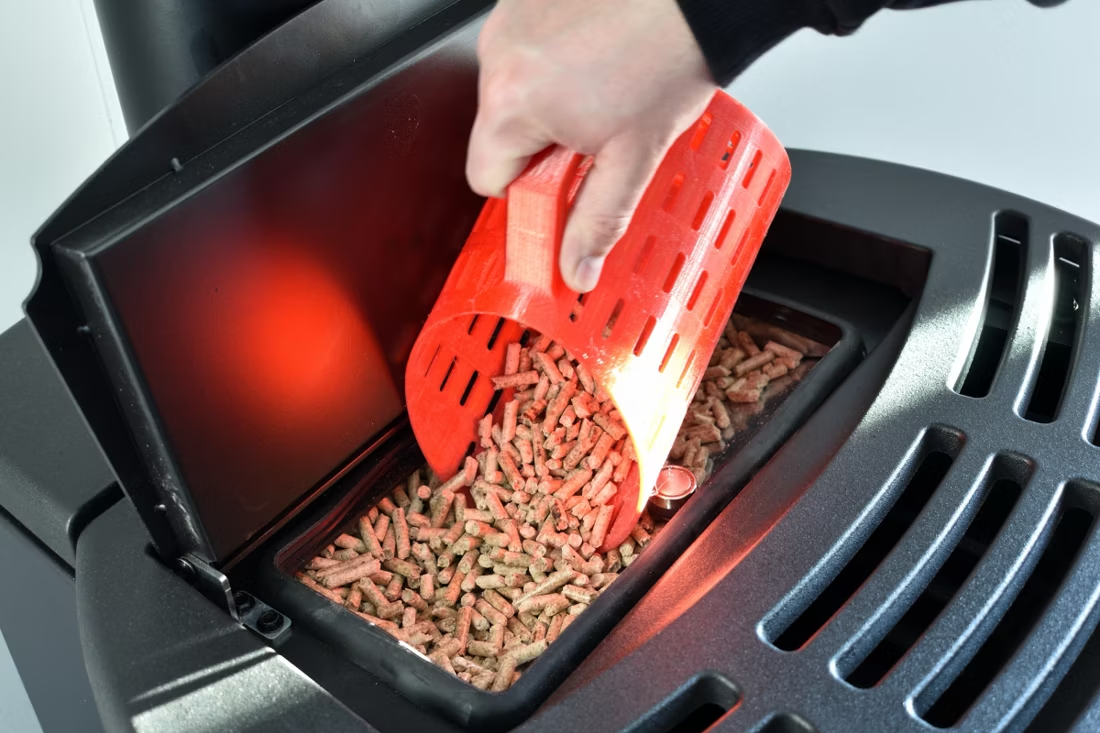
A clean pellet stove is a happy pellet stove. Plan on cleaning the burn pot about once a week when you're burning regularly—ash and clinkers gum up the air holes just like a pellet barbecue. Most pellet stove problems trace back to skipped cleaning that nobody explained up front. Some designs make it easy with a trapdoor burn pot: pull a lever and the gunk drops into the ash pan.
Why is a fireplace insert so efficient?
An insert does two things: it seals the chimney completely, so you stop losing air you already paid to heat, and it radiates warmth into the room through the firebox and glass. Most add a heat-exchange fan that pulls cool room air underneath, wraps it around the hot firebox, and pushes it back out warm. Your home is more efficient before you've even lit the first fire.
Can I install a fireplace myself?
If you're putting a fire in your house on purpose, it's best to work with an expert. Unless you're genuinely experienced in framing, gas line, vent pipe, and the national code on clearances to combustibles, have a professional do it—and ideally the same company that sells you the fireplace, so warranty, service, and liability all live under one roof.
What is an in-home preview and do I need one?
It's a visit where a hearth professional measures your space, confirms the model you picked actually works in your home, and walks the specs—framing, gas line, venting, finish work—before anything is ordered. Some details you just can't know until you see the house. Never make a down payment without one; it's the single most-skipped step that burns buyers.
Pellet Brands Stocked Around Slope County
Manufacturers will point you to the nearest stocking dealer.
Find your pellet stove in Slope County.
Tell us about your home and we'll match you with a trusted local dealer and put together a free Project Guide & Parts List—the stove, hopper size, and vent kit sized for a Slope County winter.
Find Your Fireplace →