
Pellet stoves are the exception, not the rule, in Mountrail County.
Between Lake Sakakawea and the Bakken oil patch, winters here run brutal and propane runs the show. If you still want a pellet stove for a shop, cabin, or supplemental heat, we'll connect you with a dealer who can tell you honestly whether it fits—and get it done right if it does.
Every Project Starts From One of These Five Situations
Mountrail County winters ask more than a pellet hopper can give.
Mountrail County sits in climate zone 7, one of the coldest heating zones in the Lower 48, with an average winter low of just 4°F and 8,679 heating degree days a year—colder and longer than International Falls, Minnesota in most seasons. The county stretches across rolling prairie and Bakken oil-patch farmland around Lake Sakakawea and the Missouri River, through New Town, Stanley, and Parshall on the Fort Berthold Reservation. There's little standing timber here beyond river-bottom oak, cottonwood, and ash—not enough to support a firewood culture, which is why wood heat is essentially absent from the county's housing stock too.
Natural gas and propane carry the heating load here, and for good reason: they don't rely on electricity to run an auger and combustion blower the way a pellet stove does. When a January ground blizzard takes down power lines across the open prairie—sometimes for a day or more—a propane furnace with a battery-backed thermostat keeps working, while a pellet stove without a dedicated inverter or generator hookup goes cold. That single fact explains most of why pellet appliances are rare in Mountrail County. That said, they're not unheard of—a handful of homeowners run pellet stoves in detached shops, hunting cabins near the lake, or as zone heat in a finished basement, usually sourcing pellets from regional suppliers like Lignetics or Indeck Energy Services through a dealer based out of Minot.
Three steps. No salesperson until you're ready.
Tell us about your project
Your zip code, your situation, and the fuel you're leaning toward—or let the answers point you to one.
See what's actually available
The brands dealers within 100 miles genuinely carry—real options, never a catalog mirage.
Get your dealer & Project Guide
A trusted local dealer, plus the free Project Guide & Parts List that names every component of the job.
Frequently Asked Questions
Are pellet stoves actually a good option in Mountrail County?
For most Mountrail County homes, no—not as a primary heat source. With 8,679 heating degree days and average winter lows around 4°F, whole-home heating here needs more sustained BTU output than most pellet stoves are designed to deliver, and the county's near-total reliance on propane and natural gas reflects that. Where pellet stoves do make sense is as supplemental or zone heat: a detached garage or shop near New Town, a lake cabin at Sakakawea, or a finished basement where you want visible flame and don't need it to carry the whole heating load during a February cold snap.
Why isn't pellet heat more common in Mountrail County?
Two things work against it. First, this is climate zone 7—brutally cold and long-winter country where propane furnaces and natural gas systems are sized to handle sustained sub-zero stretches, and pellet stoves generally aren't built to match that output as a sole heat source. Second, pellet stoves need electricity to run the auger and blower, and rural Mountrail County sees real power outages during ground blizzards and ice storms on the open prairie. A propane furnace on a battery-backed control board keeps running through a lot of that; an un-backed-up pellet stove doesn't. Between the two, propane won out as the default decades ago and pellet appliances never built a real foothold.
How much does a pellet stove installation cost in Mountrail County?
There isn't a deep local install market here to draw a Mountrail-specific number from, since so few homes run pellet as primary heat. Nationally, a pellet stove installation—unit, venting, and hearth pad—typically runs $3,000 to $6,000, with inserts into an existing masonry fireplace at the lower end and freestanding units requiring new venting toward the higher end. Because there isn't a hearth retailer stocking pellet units in every small town in the county, expect your installer to be based out of Minot, with a travel charge added for jobs in New Town, Stanley, or Parshall.
Where can I buy pellet fuel near Mountrail County?
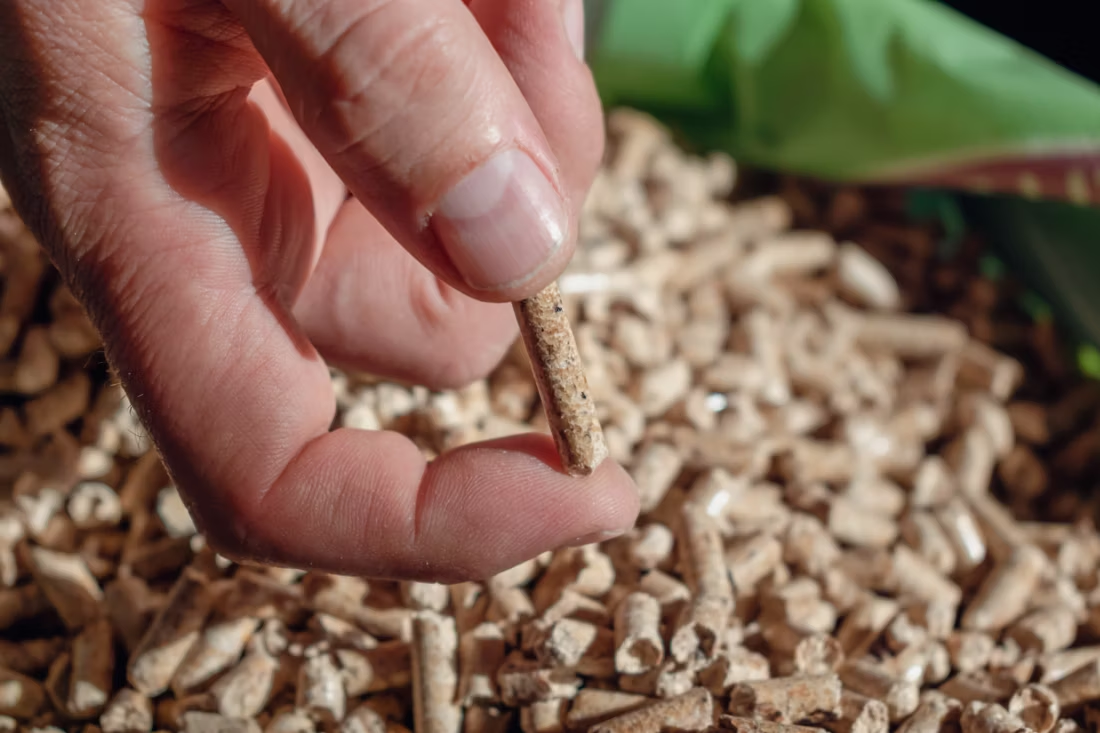
Pellet fuel isn't stocked on every corner here the way propane is. Regional brands like Lignetics and Indeck Energy Services supply pellets to dealers across North Dakota, and a Minot-based hearth retailer is your most realistic source for both the stove and an ongoing pellet supply—some will set up seasonal delivery or a standing order so you're not making a specialty run every few weeks during burn season.
Will a pellet stove work as backup heat during a Mountrail County power outage?
Only with the right setup, and even then it's not the first thing I'd recommend. A pellet stove's auger and combustion blower need continuous power, so a battery backup or small inverter generator is non-negotiable if you're counting on it during an outage. In a county where winter power outages from ground blizzards can stretch into a second day, most homeowners are better served by a propane furnace with a battery-backed control board, or a whole-home generator, as their primary storm backup—with a pellet stove treated as a bonus heat source rather than the plan.
Can I install a pellet stove in a shop, garage, or lake cabin near Sakakawea?
Yes, and this is where pellet stoves genuinely make sense in Mountrail County. A detached shop, an outbuilding on a farm, or a seasonal cabin near Lake Sakakawea doesn't need whole-home heating capacity—it needs a clean, controllable heat source for the hours you're actually using the space. A mid-size pellet stove handles that well, and you avoid running gas or propane lines to a building you might only use part of the year.
What size pellet stove do I need in this climate?
Size it for the specific space you're heating, not the whole house. In zone 7 conditions, a pellet stove rated for 1,000 to 1,500 square feet will comfortably handle a shop, cabin, or finished basement, but don't expect it to carry a full farmhouse through a stretch of single-digit lows the way a propane furnace does. If you're set on pellet as your only heat in a small, well-insulated cabin, talk to a dealer about hopper capacity too—you'll be feeding it more often at 4°F outside than you would in a milder zone.
Do I need a permit to install a pellet stove in Mountrail County?
Most likely yes, though the county doesn't publish a pellet-specific code separate from general building permits. New solid-fuel appliance installations typically require a building permit through the Mountrail County building office in Stanley, covering the unit, venting, and any structural work. Any installer you work with should pull the permit as part of the job—if a quote doesn't mention it, ask.
Pellet vs. propane—which makes more sense for a Mountrail County home?
For whole-home heat, propane wins here, and it's not close. It doesn't depend on grid power to operate, it's sized to handle 8,679 heating degree days without strain, and it's already the default fuel across the county's farms and small towns. Pellet makes more sense as a secondary, zone-specific choice—a shop, a cabin, a basement—where you want the ambiance and control of a stove without asking it to replace your furnace on the coldest night of the year.
What's the difference between an insert and a zero-clearance fireplace?
An insert is a fireplace that slides into a pre-existing wood-burning fireplace—if you don't have one, there's nothing to insert it into. A zero-clearance fireplace is built into a framed wall, which makes it the answer for remodels and new construction. Simple test: existing masonry fireplace means insert; blank or framed wall means zero-clearance.
How often does a pellet stove need cleaning?
A clean pellet stove is a happy pellet stove. Plan on cleaning the burn pot about once a week when you're burning regularly—ash and clinkers gum up the air holes just like a pellet barbecue. Most pellet stove problems trace back to skipped cleaning that nobody explained up front. Some designs make it easy with a trapdoor burn pot: pull a lever and the gunk drops into the ash pan.
Does a fireplace add value to my home?
On average, a fireplace adds back to the home about the same amount you spent installing it. Add the monthly savings from heating the rooms you actually use instead of the whole house—often hundreds of dollars a year—and the value case is strong before you even count what a fire does for how your family uses the room.
What is an in-home preview and do I need one?
It's a visit where a hearth professional measures your space, confirms the model you picked actually works in your home, and walks the specs—framing, gas line, venting, finish work—before anything is ordered. Some details you just can't know until you see the house. Never make a down payment without one; it's the single most-skipped step that burns buyers.
Pellet Brands Stocked Around Mountrail County
Manufacturers will point you to the nearest stocking dealer.
Talk through your pellet stove options in Mountrail County.
Tell us about the shop, cabin, or room you're trying to heat and we'll give you a straight answer on whether pellet fits—plus a free Project Guide & Parts List with the exact parts, vent kit, and a trusted local dealer who can source Lignetics or Indeck pellets and install it right.
Find Your Fireplace →