
Gas heat that keeps up with Morton County's coldest nights.
With a long, demanding winter heating season and lows that average just 3°F, Morton County homes need heat that doesn't quit—from Mandan along the Missouri River to New Salem, Glen Ullin, Flasher, and Almont. Find the right gas unit and get matched with a trusted local dealer.
Every Project Starts From One of These Five Situations
Built for prairie cold, not mild winters.
Morton County stretches from the bluffs above the Missouri River at Mandan out across open prairie toward New Salem, Glen Ullin, Flasher, and Almont. This is climate zone 6A with a long, demanding heating season—a workload closer to Fargo's brutal winters than to anywhere with a mild shoulder season—and average winter lows sitting right around 3°F. Wind across the open ground makes that cold feel worse than the number suggests, and heating season here typically runs from late September into May.
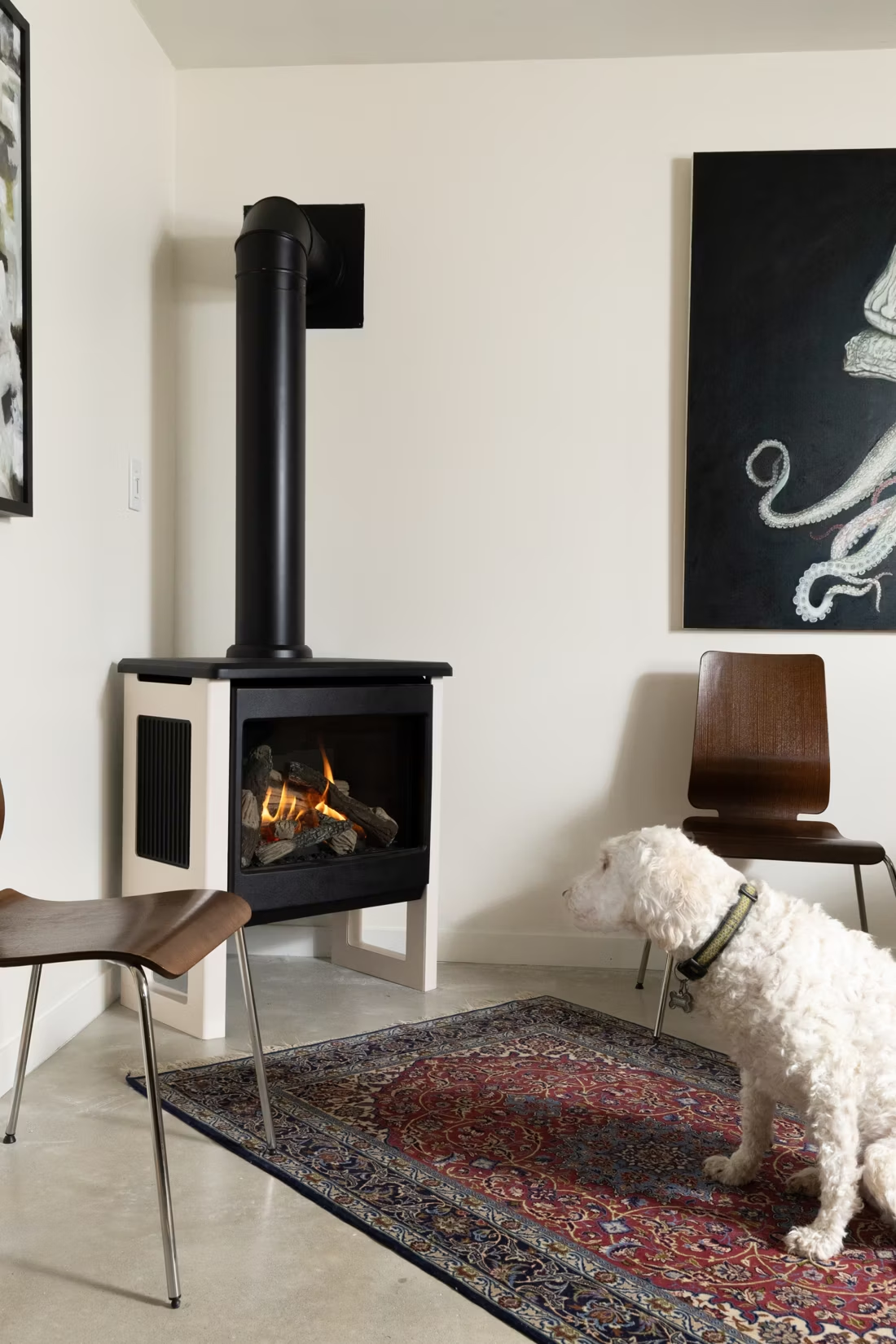
Natural gas service reaches Mandan and the county's other incorporated towns through Montana-Dakota Utilities (MDU), while propane is the standard fuel across unincorporated Morton County—around Almont, Flasher, Glen Ullin's outskirts, and the farms and ranches between them. Unlike parts of western North Dakota with Badlands timber access, Morton County has little public land for firewood cutting, so wood heat is uncommon here even with winters this severe. That makes a properly sized gas fireplace, insert, or stove the practical choice for most homes—instant heat with no wood to split, stack, or haul, and (with the right ignition system) heat that keeps working when a winter storm knocks out power to a rural line.
Three steps. No salesperson until you're ready.
Tell us about your project
Your zip code, your situation, and the fuel you're leaning toward—or let the answers point you to one.
See what's actually available
The brands dealers within 100 miles genuinely carry—real options, never a catalog mirage.
Get your dealer & Project Guide
A trusted local dealer, plus the free Project Guide & Parts List that names every component of the job.
Frequently Asked Questions
How much does a gas fireplace installation cost in Morton County?
Cost depends heavily on three things: the unit itself, whether you're running new gas line to reach it, and the venting path through your wall or roof. A direct-vent insert going into an existing masonry fireplace with gas already nearby is the simplest and least expensive job. A new fireplace in a room addition or a rural home converting from propane tank service to a dedicated fireplace line costs more once you factor in the gas-fitter's time. Because Morton County spans everything from in-town Mandan lots to farmsteads well outside city limits, freight and travel time can move the number too. A local dealer will walk your home and give you a firm number rather than a guess.
Can I convert my existing wood fireplace to gas?
Yes, and it's a common project in Mandan's older neighborhoods where homes were built with a wood-burning masonry fireplace decades ago. A gas insert slides into that existing firebox, uses a stainless liner run up your current chimney for venting, and gives you real heat output at the flip of a switch instead of a fireplace that mostly sat unused. Given how little wood heat is actually practiced in Morton County—there's simply not the public timber access here that western North Dakota has—this conversion is often the more sensible long-term move than maintaining a chimney for occasional wood burns.
Do I need natural gas to install a gas fireplace, or can I use propane?
Either works, and which one you have usually depends on where in the county you live. Inside Mandan and the other incorporated towns, Montana-Dakota Utilities runs natural gas service, and if your home already has a gas furnace or water heater, adding a fireplace to that line is straightforward. Outside city limits—the farms and acreages around New Salem, Flasher, Glen Ullin, and Almont—propane from a tank is the norm. Most gas fireplace models can be configured for either fuel; your installer sets the correct orifice and regulator for whichever you have.
Will my gas fireplace work during a power outage?
Most modern gas fireplaces will, which matters in Morton County when a January ground blizzard takes down a rural power line for hours. Units with IPI (intermittent pilot ignition) run on a small battery backup that kicks in the moment power drops, so the fireplace still lights on demand. Valor fireplaces go a step further—their pilot's thermocouple generates its own electricity, so there's no battery to remember to replace. Given how far apart some Morton County homes sit from the nearest lineman, that kind of self-sufficiency is worth asking your local dealer about.
What's the difference between a gas fireplace, gas insert, and gas stove?
A gas fireplace is a fully built-in unit framed into a wall—the standard choice for new construction or a remodel with no existing chimney. A gas insert is sized to slide into an existing masonry firebox, which suits many of Mandan's older homes. A gas stove is a freestanding cast-iron or steel unit that sits on the floor and vents through a wall or ceiling, a good fit for a smaller Morton County farmhouse or a room without any existing fireplace opening. Your local dealer can walk through which of the three actually fits your framing and floor plan.
Do I need a permit to install a gas fireplace in Morton County?
Yes. Inside Mandan, permits for both the appliance installation and the gas line run through the City of Mandan's building department; in unincorporated Morton County, that goes through Morton County Planning & Zoning. The gas line work itself needs a licensed gas-fitter regardless of jurisdiction, which is one reason to hire a hearth dealer who coordinates the gas line, venting, and inspection together instead of leaving you to line up separate trades in a county this spread out.
What's the difference between vented and vent-free gas fireplaces?
Vented (direct-vent) gas fireplaces pull combustion air from outside and exhaust it back outside through a sealed pipe. Vent-free units burn without any outside venting at all, releasing some water vapor and combustion byproducts into the room. In a climate as cold as Morton County's—where homes are sealed tight against a long, demanding winter heating season—that indoor moisture and lack of fresh-air exchange is a real consideration, not a minor one. Direct-vent units are also less prone to issues with vent-pipe frost buildup in single-digit weather when properly installed. For that reason, direct-vent is the far more common and generally recommended choice across the county, though your local dealer can walk through both if you're weighing the trade-offs.
How often should my gas fireplace be serviced?
An annual inspection before the heating season ramps up is the standard recommendation—checking the burner, pilot assembly, venting, and gas connections, and cleaning the glass. It's a lighter lift than sweeping a wood chimney, but with a unit running most days from late September through May in Morton County, it's not something to skip. Local gas appliance service providers typically handle this as a routine fall visit.
Gas vs. wood or pellet—which makes sense in Morton County?
For most Morton County homes, the honest answer is gas or propane by a wide margin. Wood species like cottonwood, ash, and oak do grow along the Missouri River bottoms, but Morton County lacks the public forestland and cutting-permit access that drives wood heat in places like western North Dakota's Badlands, so wood-burning is genuinely uncommon here despite the severe winters. Pellet stoves face a similar gap—there's little local infrastructure for it, even with brands like Lignetics available regionally. Gas and propane, backed by MDU service in town and tank delivery in the county's rural stretches, are simply the fuels this area is built around.
Is my gas fireplace wasting gas?
If it was installed more than 15 years ago, probably. Older gas fireplaces keep a standing pilot light burning all the time, and that little flame can cost a couple hundred dollars a year. Newer models use pilot-on-demand ignition—the pilot lights only when you use the fireplace and goes out when you turn it off.
Why is my open fireplace making my house colder?
Open fireplaces suck—literally. As the fire burns, it consumes air your furnace already paid to heat and pulls it out through the chimney, so the house is actually colder after the fire goes out than before you lit it. An insert fixes this: it seals the chimney, puts fixed glass across the front, and turns that hole in your house into a real heat source.
What is an in-home preview and do I need one?
It's a visit where a hearth professional measures your space, confirms the model you picked actually works in your home, and walks the specs—framing, gas line, venting, finish work—before anything is ordered. Some details you just can't know until you see the house. Never make a down payment without one; it's the single most-skipped step that burns buyers.
How much should I budget for a fireplace?
For an average home—covering the fireplace, the vent pipe, and basic installation—a budget between $3,900 and $5,500 gives you a lot of options across wood, gas, and pellet. By the time you add finish work, gas line, and electrical, the average complete installation lands between $5,000 and $12,000 all-in. In a remodel or new build, a good rule is to put about 2.5% of the total project cost toward the fireplace.
Stove and Fireplace Dealers in Morton County
Listings include WhyFire partner dealers, dealers we have verified as authorized for the brands we recommend, and established local businesses that carry hearth products. Every listing shows which one it is. The ones marked Preferred run on WhyFire's software, so they can show you real pricing and book your appointment right here. No manufacturer pays for placement. How we verify dealers →
Keller Hearth 'n Home Products
Coldspring Bismarck Selection Center
Find your gas fireplace in Morton County.
Tell us a bit about your home and we'll match you with a trusted local dealer and send over a free Project Guide & Parts List—a clear plan for your gas fireplace project in Morton County, right down to the vent kit.
Find Your Fireplace →