
Real flame-look warmth for Morton County's brutal winters.
From Mandan to New Salem to Glen Ullin, electric fireplaces add zone heat and ambiance to homes built for North Dakota's long, hard winters—no chimney, no venting, no wood to split. Find the right unit and connect with a trusted local dealer.
Every Project Starts From One of These Five Situations
Instant warmth, built for prairie winters.
Morton County sits along the Missouri and Heart River valleys in south-central North Dakota, where winter lows average 3°F and the county logs a long, frigid heating season on par with International Falls, Minnesota. Most Mandan-area homes lean on a natural gas furnace from Montana-Dakota Utilities (MDU) for primary heat, which leaves electric fireplaces to do the job they're actually good at here: instant, controllable zone heat and real flame-look ambiance in a living room, finished basement, or primary bedroom without adding another combustion appliance to the house.
Wood heat, despite the oak, cottonwood, and ash growing along the river bottoms, isn't really part of how Morton County homes get warm—there's no significant public forest land or cutting-permit infrastructure in the county, and open prairie exposure makes outdoor wood storage and chimney upkeep a harder sell than it is in timbered parts of the state. Pellet stoves see the same limited uptake. That leaves gas and electric as the two standard fuel choices countywide, and electric fireplaces fill the supplemental-heat and ambiance role cleanly: plug-in or hardwired, no venting, no ash, no combustion byproducts to worry about in a sealed-up, well-insulated 6A climate-zone house.
Three steps. No salesperson until you're ready.
Tell us about your project
Your zip code, your situation, and the fuel you're leaning toward—or let the answers point you to one.
See what's actually available
The brands dealers within 100 miles genuinely carry—real options, never a catalog mirage.
Get your dealer & Project Guide
A trusted local dealer, plus the free Project Guide & Parts List that names every component of the job.
Frequently Asked Questions
How much does it cost to install an electric fireplace in Morton County?
Cost depends almost entirely on the unit type. A plug-in freestanding electric stove or a wall-mount unit on a standard household outlet can be installed for the price of the unit itself, sometimes in under an hour. A built-in linear electric fireplace or an insert that fits into an existing masonry fireplace opening usually needs a dedicated 120V or 240V circuit run by a licensed electrician, plus framing or surround work if it's going into a new wall—that pushes the total higher, but still well below a comparable gas or wood project since there's no chimney, no gas line, and no exterior venting to build. A local dealer can walk your specific wall or fireplace opening and give you a firm number.
Can an electric fireplace heat my whole Morton County home during a cold snap?
No, and I'd rather tell you that up front than have you find out the hard way in January. Electric fireplaces are resistance heaters sized for a single room—typically 1,000 to 1,500 watts, enough to take the edge off a living room or bedroom. At Morton County's average winter low of 3°F, with a heating season as long and cold as International Falls, Minnesota sees, a whole house needs a real heating system, and most homes here already have one running on natural gas through MDU. Think of the electric fireplace as zone heat for the room you're actually sitting in, not a furnace replacement.
Do I need a permit for an electric fireplace install in Morton County or the City of Mandan?
A simple plug-in unit on an existing outlet typically doesn't require any permit. If your installer is running a new dedicated circuit for a built-in or larger linear unit, that electrical work generally does need a permit and inspection through your local building department, whether that's the City of Mandan or Morton County for homes outside city limits. It's a much lighter lift than the building and gas-line permits required for a wood or gas fireplace project—most electricians handle the paperwork as part of the job.
What's the difference between an electric fireplace insert, wall-mount, and freestanding stove?
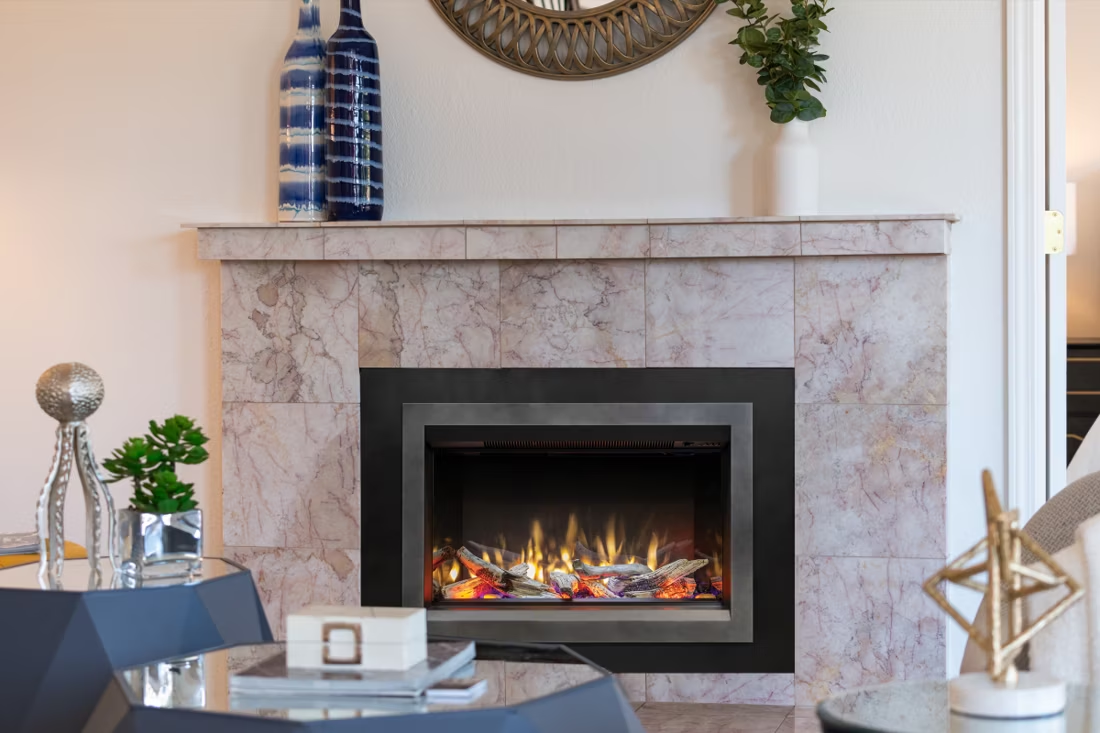
An electric insert is built to slide into an existing fireplace opening—a good option for Morton County homes with an old masonry firebox that's rarely used for wood anymore. A wall-mount unit hangs flat against a wall like a large TV, popular for newer builds and finished basements around Mandan. A freestanding electric stove sits on the floor and can go almost anywhere with an outlet, including rentals where you don't want to alter the wall. All three run on standard household current and none require venting.
Why don't more Morton County homes burn wood, even though oak, cottonwood, and ash grow along the river?
The trees are there, but the infrastructure and habit aren't. Morton County has no significant national forest or public cutting-permit land the way heavily wooded regions do, so there's no established local system for sourcing firewood the way you'd see in a mountain or forest county. Combine that with open prairie wind exposure and homes designed around gas furnaces from Montana-Dakota Utilities, and wood heat just never became the default here. Gas and electric are the standard choices countywide, and electric fireplaces cover the ambiance and supplemental-heat role that wood might play elsewhere.
How much does it cost to run an electric fireplace in Morton County?
At typical MDU residential electric rates, a standard 1,500-watt unit running on high costs somewhere in the range of 15 to 20 cents an hour—noticeably cheaper per hour of use than most people expect, and with none of the standby losses that come with a pilot light. Most owners run theirs on a lower heat setting or flame-only mode for ambiance, which drops that cost further. It's a fraction of what running a gas fireplace or supplemental space heater costs over a Morton County winter.
Electric vs. gas—which is right for my Morton County home?
Gas fireplaces put out real heat output and can genuinely offset furnace use during a cold stretch, and MDU service makes natural gas an easy add for most homes in and around Mandan. But gas installs require venting or a gas line, more building permit involvement, and annual servicing. Electric fireplaces install faster, cost less up front, need no venting, and work anywhere there's an outlet—including basements, bedrooms, and rentals—but they're ambiance and zone heat only, not a meaningful dent in your gas furnace's job during a January cold snap. Many Morton County homeowners end up with both: gas or a furnace for real heat, electric for the room where they actually want the fire look without the maintenance.
Can I install an electric fireplace insert into an existing wood-burning fireplace shell?
Yes, and it's one of the more common retrofits local dealers see, especially in older river-bottom homes with a masonry fireplace that hasn't burned a real fire in years. An electric insert slides into the existing opening, plugs into a nearby outlet or a new dedicated circuit, and gives you flame-look heat without touching the chimney, the flue, or worrying about creosote and inspections. It's a straightforward way to bring a dormant fireplace back into daily use.
Is an electric fireplace safe for basements and rental properties in Morton County?
Yes—this is one of the clearest advantages of electric over gas or wood. There's no combustion, no flue gas, no carbon monoxide risk, and no open flame, which makes electric units a common choice for finished basements in newer Mandan-area builds and for rental properties around the county where a landlord wants the look of a fireplace without the liability of a chimney or gas line. Most units also run cool to the touch on the glass, which matters in homes with kids or pets.
Can I put a TV above my fireplace?
Yes—with an asterisk. Fireplaces are hot and TVs don't like heat. Either put a mantel between them to deflect rising warmth, or choose a fireplace with heat-management technology that creates a cool zone on the wall above—the wall stays around 125 degrees, barely warm, while the room still gets full heat. If you like clean lines and don't want a mantel, heat management is the answer.
Do electric fireplaces actually produce heat?
Yes—most put out around 4,800–5,000 BTUs from a standard outlet, which comfortably warms a bedroom, office, or den as a comfort-zone heater. What they won't do is carry a whole house the way wood, gas, or pellet can. Think of electric as ambiance-first with honest supplemental heat: flames on with no heat in July, flames plus warmth in January.
What is an in-home preview and do I need one?
It's a visit where a hearth professional measures your space, confirms the model you picked actually works in your home, and walks the specs—framing, gas line, venting, finish work—before anything is ordered. Some details you just can't know until you see the house. Never make a down payment without one; it's the single most-skipped step that burns buyers.
Can I install a fireplace myself?
If you're putting a fire in your house on purpose, it's best to work with an expert. Unless you're genuinely experienced in framing, gas line, vent pipe, and the national code on clearances to combustibles, have a professional do it—and ideally the same company that sells you the fireplace, so warranty, service, and liability all live under one roof.
Stove and Fireplace Dealers in Morton County
Listings include WhyFire partner dealers, dealers we have verified as authorized for the brands we recommend, and established local businesses that carry hearth products. Every listing shows which one it is. The ones marked Preferred run on WhyFire's software, so they can show you real pricing and book your appointment right here. No manufacturer pays for placement. How we verify dealers →
Keller Hearth 'n Home Products
Coldspring Bismarck Selection Center
Find your electric fireplace in Morton County.
Tell us about your home and we'll match you with the right electric fireplace or insert—plus a free Project Guide & Parts List and a trusted local dealer recommendation.
Find Your Fireplace →