
Find a pellet stove built for Hettinger County winters.
Clean, hopper-fed heat for ranch homes and farmsteads from Mott to New England—sized for zone 6A cold and matched with a dealer who actually covers this stretch of southwestern North Dakota.
Every Project Starts From One of These Five Situations
Convenient heat for the county's toughest winters.
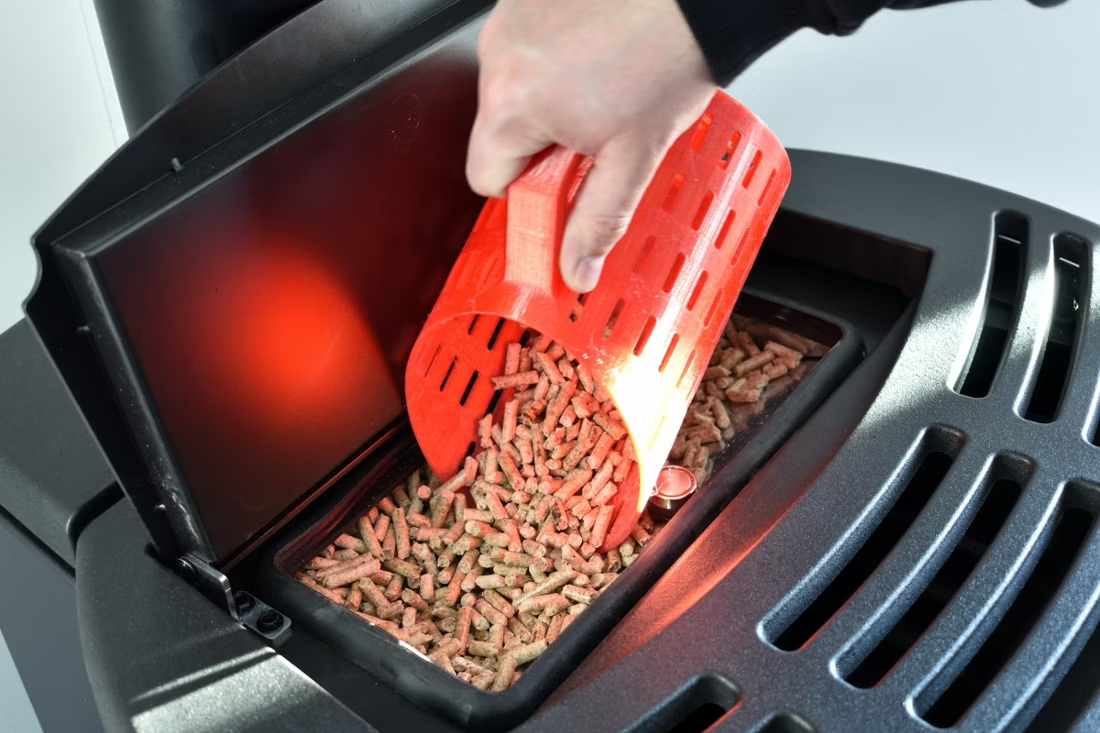
Hettinger County sits in climate zone 6A, which means long stretches of hard cold, biting prairie wind, and winters that test any heating system. With a population of roughly 1,575 spread across open ranchland between Mott and New England, most homes here are farmhouses and acreages rather than dense subdivisions—places where a wood stove might mean cutting your own oak, cottonwood, or ash from a shelterbelt or riverbottom grove, and where a pellet stove offers something different: load-the-hopper convenience without the daily wood handling, on a schedule that fits alongside cattle chores and winter road conditions.
There's no non-attainment designation or winter burn curtailment listed for this county, so pellet stove owners here aren't dealing with the kind of smoke-day restrictions you'd see in a valley airshed out West—you can run the stove as needed through the coldest stretches without checking an air quality advisory first. Regional suppliers like Lignetics and Indeck Energy Services keep bagged and bulk pellets moving through this part of the state, which matters in a county this rural: when a blizzard closes county roads for a day or two, having pellets stocked ahead of time is the difference between a warm house and a cold one.
Three steps. No salesperson until you're ready.
Tell us about your project
Your zip code, your situation, and the fuel you're leaning toward—or let the answers point you to one.
See what's actually available
The brands dealers within 100 miles genuinely carry—real options, never a catalog mirage.
Get your dealer & Project Guide
A trusted local dealer, plus the free Project Guide & Parts List that names every component of the job.
Frequently Asked Questions
How much does a pellet stove installation cost in Hettinger County?
A typical pellet stove installation in Hettinger County runs roughly $3,500 to $7,000, depending on the unit, whether it's a freestanding stove or an insert going into an existing fireplace, and how much wall-penetration venting work is needed. Because the county's population is small and spread out—around 1,575 people across a wide stretch of southwestern North Dakota—most installers are based out of larger regional hubs like Dickinson and travel in for the job, so expect a modest trip charge folded into rural quotes for homes well outside Mott or New England. Ask any local retailer for a firm, in-home estimate before committing.
What size pellet stove do I need for a ranch home or farmhouse?
Sizing depends on square footage, ceiling height, and how drafty the house is—older farmhouses with single-pane windows and uninsulated additions need more heating capacity than a newer, tightly built home of the same size. As a general guide for zone 6A cold: small pellet stoves (under 1,000 sq ft) suit a single room or a small ranch house; medium units (1,000–2,000 sq ft) cover most main living areas; and larger units with bigger hopper capacity are worth the upgrade if you want the stove to carry the house through a multi-day cold stretch without refilling constantly. A local dealer can size your specific home during a walkthrough.
What's the difference between a pellet stove and a wood stove here?
A wood stove burns cordwood you cut or buy—in Hettinger County that's typically oak, cottonwood, or ash pulled from shelterbelts and riverbottom stands rather than a national forest permit, since the county is almost entirely private ranchland. A pellet stove burns compressed wood pellets from a hopper, which means no splitting, stacking, or seasoning wood for a year before you can burn it—you just keep bags or bulk totes on hand from suppliers like Lignetics or Indeck Energy Services. Pellet stoves also burn more evenly and produce far less ash, but they need electricity to run the auger and combustion blower, which is the one trade-off worth weighing carefully in a county where winter storms can knock out power.
Will my pellet stove work if the power goes out?
Not on its own. Pellet stoves rely on an electric auger to feed fuel and a blower to move heat and exhaust, so a power outage stops the stove even with a full hopper. That matters in Hettinger County, where a hard blizzard can take down rural electric lines for a day or more out on the ranch roads between Mott and New England. Many homeowners here pair a pellet stove with a small battery backup unit or a portable generator sized to run the stove's electronics, and some keep a wood stove or fireplace as true off-grid backup. Ask your local dealer about battery-backup options when you're comparing units.
Do I need a permit to install a pellet stove in Hettinger County?
Yes—a building permit is generally required for a new pellet stove installation, handled through the county's building and zoning office in Mott for homes outside city limits, or through the applicable city office for properties within Mott or New England. Most local installers fold the permitting into the installation quote, so you typically aren't filing paperwork yourself. Unlike some Western counties dealing with winter inversion smoke, Hettinger County has no listed air quality non-attainment status or curtailment periods, so there's no seasonal burn restriction to plan around once the stove is installed.
What's the best pellet stove for this kind of cold?
For a county running climate zone 6A with regular sub-zero wind chill, look for a stove with a larger hopper capacity so it can run overnight without a refill, and confirm the BTU output matches your square footage on the coldest nights, not just an average day. Pair that with a reliable local pellet supply—Lignetics and Indeck Energy Services both distribute through this part of North Dakota, so ask your dealer which brands they stock consistently rather than special-order. A local retailer can walk through hopper size, feed-rate settings, and BTU output against your specific home's insulation and square footage.
How often does a pellet stove need to be serviced?
Plan on an annual inspection and cleaning, ideally before the heating season starts. That includes clearing the burn pot and ash traps, checking the auger and igniter, cleaning the exhaust vent, and wiping down the glass. Homes running the stove as a primary heat source through a full Hettinger County winter may need a mid-season ash-pot cleaning as well, since heavier daily use builds up ash faster. Skipping this maintenance is the most common reason a pellet stove starts jamming or underperforming by February.
Where do I get pellets delivered in a county this rural?
Lignetics and Indeck Energy Services both supply pellet fuel through this region of southwestern North Dakota, typically distributed through farm and ranch supply stores or bulk delivery rather than door-to-door retail routes you'd see in a denser market. Given how spread out Hettinger County is, most homeowners buy in bulk—a full pallet of bagged pellets or a bulk tote—early in the fall rather than restocking bag by bag through winter, since a blizzard can make a supply run impossible for a day or two. Ask your dealer about setting up an early-season order before the first hard freeze.
Pellet stove vs. wood stove—which fits a ranch property better?
Wood stoves work without electricity, which matters if you're far from town and want true storm-proof backup heat, and cordwood from local oak, cottonwood, or ash costs little if you're already cutting from your own shelterbelt or riverbottom acreage. Pellet stoves trade that off-grid independence for daily convenience—no splitting or stacking, more consistent heat output, and less ash to deal with during calving season or harvest when time is tight. For homes with a reliable backup power plan, pellet is often the easier day-to-day choice; for homes prioritizing storm-proof heat above all else, wood stays the safer bet. Many Hettinger County households end up with one of each.
What's the difference between an insert and a zero-clearance fireplace?
An insert is a fireplace that slides into a pre-existing wood-burning fireplace—if you don't have one, there's nothing to insert it into. A zero-clearance fireplace is built into a framed wall, which makes it the answer for remodels and new construction. Simple test: existing masonry fireplace means insert; blank or framed wall means zero-clearance.
How often does a pellet stove need cleaning?
A clean pellet stove is a happy pellet stove. Plan on cleaning the burn pot about once a week when you're burning regularly—ash and clinkers gum up the air holes just like a pellet barbecue. Most pellet stove problems trace back to skipped cleaning that nobody explained up front. Some designs make it easy with a trapdoor burn pot: pull a lever and the gunk drops into the ash pan.
Can a fireplace actually lower my heating bill?
Yes—by creating a comfort zone. A furnace heats every square foot of the house just to warm the one room you're in; a gas fireplace on low burns roughly a sixth of the gas a typical furnace does. Set the furnace around 55–60 degrees as a baseline, then heat the rooms your family actually uses. Families who heat this way commonly save $20–$60 a month.
What is an in-home preview and do I need one?
It's a visit where a hearth professional measures your space, confirms the model you picked actually works in your home, and walks the specs—framing, gas line, venting, finish work—before anything is ordered. Some details you just can't know until you see the house. Never make a down payment without one; it's the single most-skipped step that burns buyers.
Pellet Brands Stocked Around Hettinger County
Manufacturers will point you to the nearest stocking dealer.
Find your pellet stove in Hettinger County.
Tell us about your home and we'll match you with a trusted local dealer and send over a free Project Guide & Parts List—the exact parts, including the vent kit, for your pellet stove project in Hettinger County.
Find Your Fireplace →