
Pellet stoves are rare in Grant County. Here's what actually heats homes here.
With just over 1,100 residents spread across open Northern Plains farmland, Grant County has no local pellet dealer network—but if you're set on one for a shop, cabin, or backup heat, we'll connect you with someone who can make it work.
Every Project Starts From One of These Five Situations
Grant County isn't pellet country—and that's worth saying plainly.
Grant County sits in the high plains of south-central North Dakota, a landscape of wheat and cattle country with a population under 1,200 spread across the county. Climate zone 6A means winters here rival Fargo or Bismarck for cold—long stretches below zero, ground blizzards, and grid stress that comes with a hard Northern Plains winter. Tree cover is limited to shelterbelts and riverbottom stands of oak, cottonwood, and ash rather than the dense forest that supports a wood-and-pellet fuel economy elsewhere in the country. That geography shapes what's actually practical to heat with.
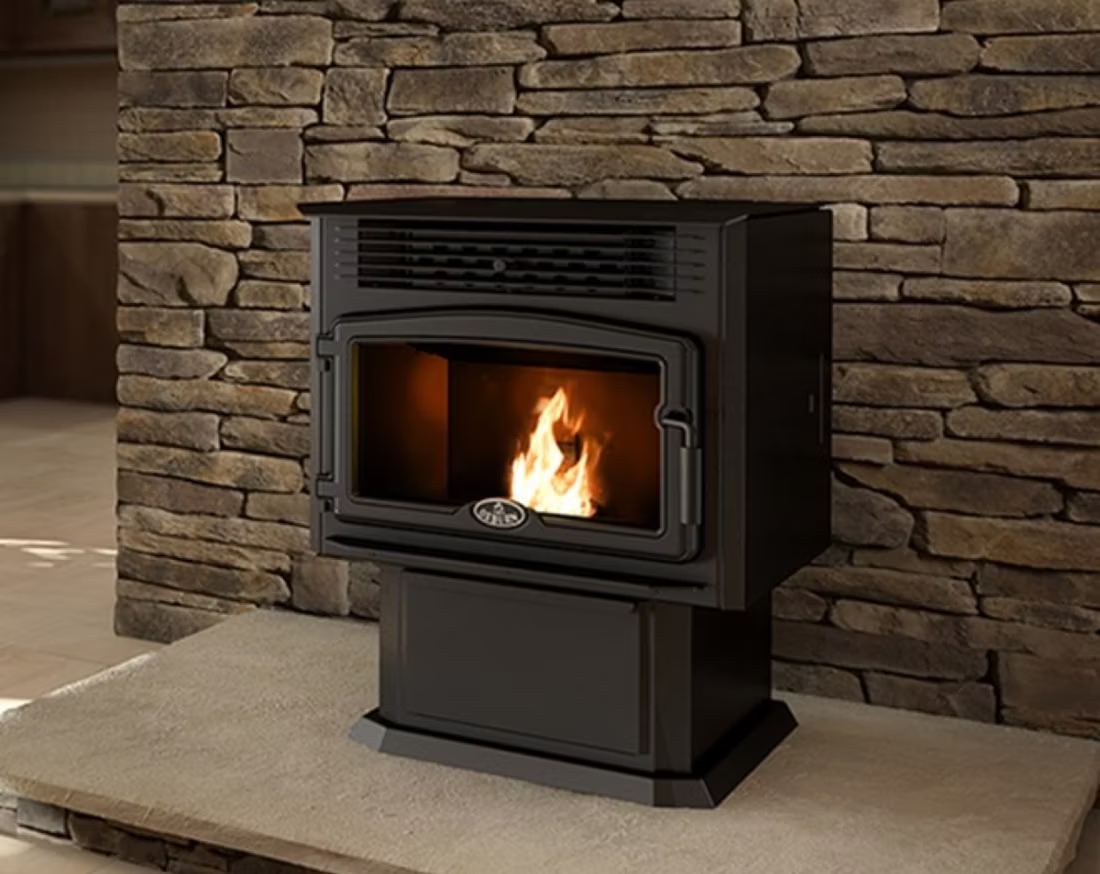
Because Grant County has no dedicated hearth retailer and no local pellet mill, bagged fuel has to come in via regional brands like Lignetics and Indeck Energy Services, typically stocked seasonally by farm and feed suppliers or trucked from Bismarck. Most homes here heat with propane—delivered and stored on-site, which is the standard for rural Northern Plains properties—supplemented by electric baseboard or forced-air furnaces. Pellet stoves still show up occasionally, usually in a farm shop, detached garage, or as supplemental heat for a family room, but they're the exception rather than the rule, and it's worth going in with clear eyes about supply and reliability before committing to one.
Three steps. No salesperson until you're ready.
Tell us about your project
Your zip code, your situation, and the fuel you're leaning toward—or let the answers point you to one.
See what's actually available
The brands dealers within 100 miles genuinely carry—real options, never a catalog mirage.
Get your dealer & Project Guide
A trusted local dealer, plus the free Project Guide & Parts List that names every component of the job.
Frequently Asked Questions
Are pellet stoves actually available or supported in Grant County?
They're available, but not common. With a county population under 1,200 and no dedicated hearth retailer based here, most homeowners who want a pellet stove end up working with a dealer out of Bismarck or a neighboring trade area, or ordering fuel through regional suppliers like Lignetics or Indeck Energy Services that farm and feed stores carry seasonally. It's a workable setup, but it requires more planning than it would in a market with a local pellet retailer on Main Street.
Why aren't pellet stoves more popular here compared to propane?
Grant County's heating economy runs on propane, not wood fiber. There's no local pellet mill, the county isn't forested enough to support a wood-pellet supply chain, and propane delivery infrastructure already reaches nearly every farmstead and in-town home. A pellet stove also depends on electricity to run its auger and combustion blower—a real vulnerability during the ground blizzards and grid outages that hit the Northern Plains most winters. Propane furnaces and stoves don't share that dependency, which is a big part of why they dominate here.
Where do I actually buy pellets if I install a stove in Grant County?
Plan on stocking up rather than buying as you go. Regional brands like Lignetics and Indeck Energy Services are the fuels most likely to show up at farm and feed suppliers in the wider Bismarck trade area, often in ton-plus quantities rather than single bags. Because there's no pellet retailer within the county itself, most owners buy several tons at once in fall and store them in a dry outbuilding or garage rather than making repeat trips for a bag or two at a time.
What do most homes in Grant County use for heat instead of pellets?
Propane is the primary heat source for the large majority of homes and farmsteads in Grant County, typically fed to a furnace or boiler from an on-site tank refilled by a regional delivery service. Electric heat—baseboard or forced-air—is the other common option, particularly in town. Natural gas service is limited to specific pockets rather than county-wide. Wood heat is even less common than pellet given the shelterbelt-only tree cover, so for most homeowners here, propane and electric are the default rather than the exception.
If I still want a pellet stove for a shop or cabin, is that realistic?
Yes, and it's a genuinely reasonable use case—pellet stoves are a good fit for a detached farm shop, hunting cabin, or as supplemental heat in a family room where you want dry, consistent warmth without running a full propane line. The main things to plan for: a dedicated electrical circuit for the auger and blower, a fuel storage plan since you'll likely be buying by the ton rather than the bag, and a realistic expectation that servicing may involve a technician traveling from outside the county.
What happens to a pellet stove during a power outage?
It stops working. Pellet stoves rely on an electric auger to feed fuel and a blower to distribute heat and exhaust combustion gases—without power, they simply shut down, unlike a wood stove or a properly vented propane appliance. On the Northern Plains, where winter storms regularly knock out rural power for hours or days, that's a meaningful limitation. Owners who install pellet stoves out here for backup heat purposes usually pair them with a generator large enough to run the stove's electronics, or they treat the pellet stove as supplemental rather than emergency heat and keep propane as the true backup.
What drives installation cost for a pellet stove in Grant County?
The main cost drivers are the same ones that matter anywhere, but travel and logistics add a bit more weight here given the distance to the nearest dealer. Expect costs to reflect the stove itself, a dedicated 120V electrical circuit if one isn't already in place, proper through-wall or through-roof pellet venting, and any hearth pad or clearance work required by code. Because installers are likely traveling in from outside the county, factor in a possible service-call or mileage charge on top of the base installation quote.
Do I need a permit to install a pellet stove in Grant County?
Solid-fuel and pellet-fired appliances generally require a building permit through the county for new installations, covering venting placement, clearances, and electrical work tied to the unit. Because Grant County doesn't have the volume of hearth installations that a larger county does, it's worth confirming permit requirements directly with the county building office before scheduling install day, rather than assuming your installer's home county rules apply.
Pellet stove vs. propane vs. electric—what actually makes sense here?
For whole-home heat in Grant County, propane is the practical default—it's the fuel the local delivery infrastructure is built around, and it keeps working without relying on the grid the way a pellet stove's auger does. Electric heat is reliable and simple where propane delivery isn't set up, though it runs more expensive to operate through a full 6A-zone winter. A pellet stove earns its place as supplemental heat—a shop, a cabin, a family room—where the ambiance and dry radiant heat are worth the extra planning around fuel storage and backup power. It's rarely the right choice as a home's only heat source out here.
What's the difference between an insert and a zero-clearance fireplace?
An insert is a fireplace that slides into a pre-existing wood-burning fireplace—if you don't have one, there's nothing to insert it into. A zero-clearance fireplace is built into a framed wall, which makes it the answer for remodels and new construction. Simple test: existing masonry fireplace means insert; blank or framed wall means zero-clearance.
Are pellet stoves loud?
They make some noise—there are two fans running plus an auger motor that turns as it feeds pellets. But there's a real range: premium models are engineered quiet, and the best offer a whisper-quiet mode you can comfortably watch TV next to. If noise matters in your room, ask to hear a stove running before you buy—it's a five-minute test that saves years of annoyance.
Does a fireplace add value to my home?
On average, a fireplace adds back to the home about the same amount you spent installing it. Add the monthly savings from heating the rooms you actually use instead of the whole house—often hundreds of dollars a year—and the value case is strong before you even count what a fire does for how your family uses the room.
How much should I budget for a fireplace?
For an average home—covering the fireplace, the vent pipe, and basic installation—a budget between $3,900 and $5,500 gives you a lot of options across wood, gas, and pellet. By the time you add finish work, gas line, and electrical, the average complete installation lands between $5,000 and $12,000 all-in. In a remodel or new build, a good rule is to put about 2.5% of the total project cost toward the fireplace.
Pellet Brands Stocked Around Grant County
Manufacturers will point you to the nearest stocking dealer.
Get matched with a dealer who can make pellet heat work in Grant County.
Tell us about your shop, cabin, or supplemental heating project and we'll connect you with a trusted local dealer, plus a free Project Guide & Parts List covering the exact venting, electrical, and fuel-storage plan for your pellet stove.
Find Your Fireplace →