
Instant heat built for the coldest corner of the Northern Plains.
Grand Forks AFB sees some of the harshest winters in the continental U.S. Find the right gas fireplace, insert, or stove, and get matched with a trusted local dealer who can size and install it correctly.
Every Project Starts From One of These Five Situations
Gas heat that doesn't quit when the wind chill drops below zero.
Grand Forks AFB is a small, tight-knit installation community of roughly 2,100 residents in Grand Forks County, sitting in USDA climate zone 7—one of the coldest zones in the continental United States. With a winter heating load among the highest in the country and average winter lows around -3°F, this stretch of the Red River Valley sees winters that rival Fargo, about 80 miles south, and International Falls, Minnesota, further east. Wind chill routinely drops well below -20°F during Arctic outbreaks, and the heating season here often runs from September through May.
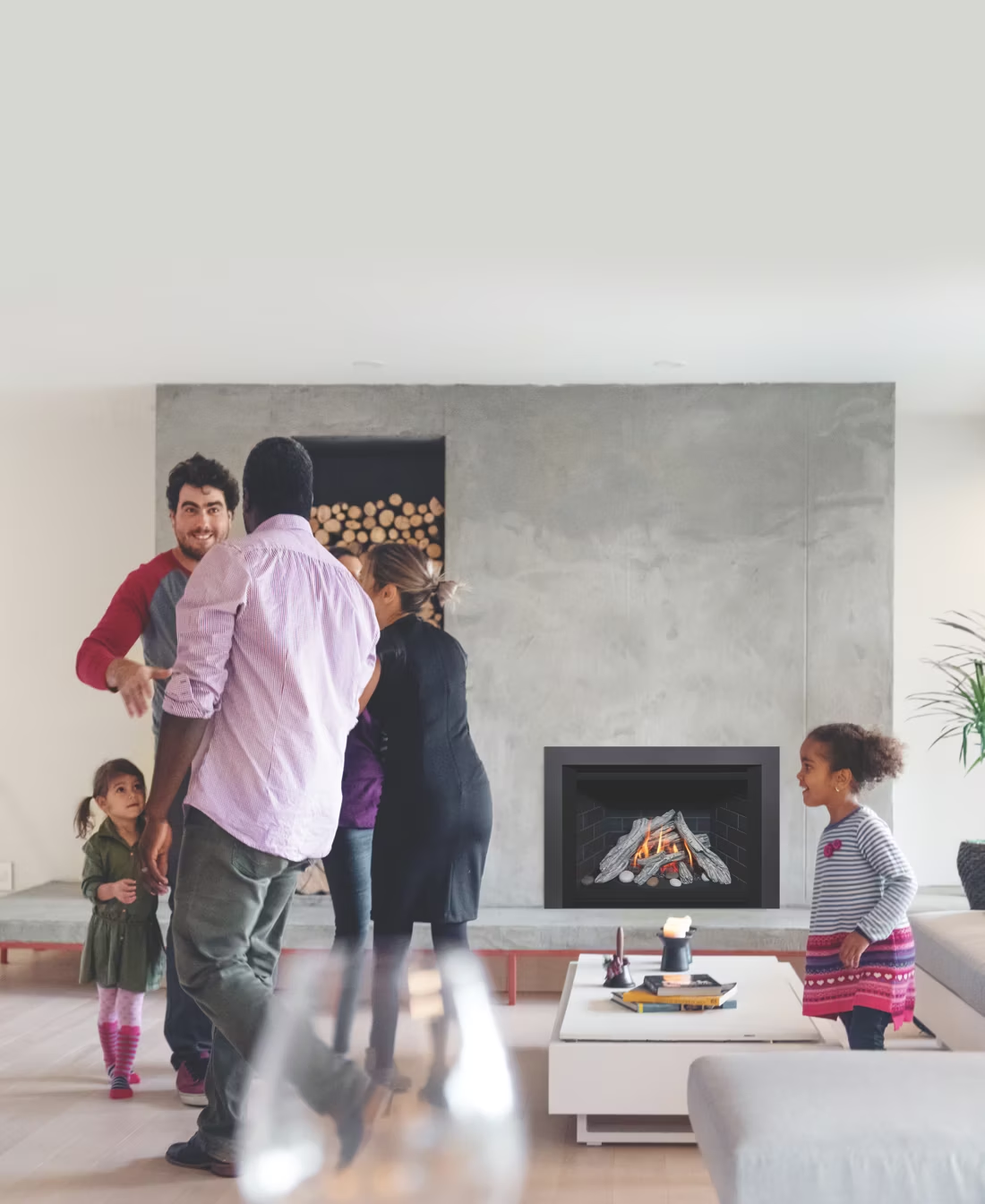
Because most residents here live in base family housing or nearby off-base rentals, wood-burning appliances are uncommon—base housing policies generally rule out solid-fuel stoves, and the flat farmland surrounding Grand Forks County offers none of the public timberland access that supports wood heat in other parts of the country. Gas fits this climate naturally instead: it's the standard supplemental and zone-heating choice for area homes, running alongside electric service from Northern States Power (Xcel Energy), Otter Tail Power, or Nodak Electric Cooperative depending on where you live. A properly sized, direct-vent gas fireplace or insert delivers real heat during cold snaps and power blips without asking a wood stove to do a job this landscape isn't built to support.
Three steps. No salesperson until you're ready.
Tell us about your project
Your zip code, your situation, and the fuel you're leaning toward—or let the answers point you to one.
See what's actually available
The brands dealers within 100 miles genuinely carry—real options, never a catalog mirage.
Get your dealer & Project Guide
A trusted local dealer, plus the free Project Guide & Parts List that names every component of the job.
Frequently Asked Questions
How much does a gas fireplace installation cost near Grand Forks AFB?
Most gas fireplace and insert installations in the Grand Forks area run $4,000 to $9,500, depending on whether you're installing a direct-vent unit into an existing opening, running new gas line to a room that doesn't have one, or starting from scratch in new construction. Given how long the heating season runs here—often six to seven months a year—most homeowners choose a direct-vent, sealed-combustion unit over a vent-free model, since sealed units hold up better to sustained daily use through a long Red River Valley winter. A local dealer will give you a firm number after seeing your gas line access and venting path.
Can I install a wood-burning fireplace instead of gas?
Very few homes in the Grand Forks AFB area heat with wood, and for good reason. Base family housing policies generally prohibit solid-fuel stoves, and off base, the flat agricultural land of Grand Forks County doesn't offer the public forest access that makes wood heat practical elsewhere in the country. If an off-base home already has an older wood-burning fireplace, a direct-vent gas insert is usually the better upgrade—it uses the existing opening, burns cleaner, and skips sourcing and stacking cordwood through a nine-month winter.
Is natural gas or propane more common here?
It depends on where you live. On base, heating fuel and infrastructure are managed through the installation's civil engineering group as part of family housing. Off base, natural gas service reaches many homes in and around Grand Forks, but rural properties in Nodak Electric Cooperative's territory—much of outlying Grand Forks County—more commonly rely on propane tanks for fireplace and furnace fuel. Most gas fireplace models can run on either; your local dealer will set the correct orifice and regulator for whichever you have.
Will a gas fireplace keep working if the power goes out?
Most direct-vent gas fireplaces with intermittent pilot ignition (IPI) include a battery backup that keeps the unit lighting on demand even when the grid is down—worth having here, since ice storms and blizzards on the Northern Plains regularly knock out power for Xcel Energy, Otter Tail Power, and Nodak Electric Cooperative customers for hours at a stretch. Valor fireplaces take it a step further: they generate their own electricity from the pilot's thermocouple, so there's no battery to remember or replace. For a climate where a power outage during a -20°F night is a real possibility, that detail matters.
What's the difference between a gas fireplace, insert, and stove?
A gas fireplace is a fully built-in unit, framed into a wall—the right call for new construction or a room without an existing hearth. A gas insert drops into an existing masonry or wood fireplace opening, which works well for older off-base homes in Grand Forks that already have a fireplace they want to convert. A gas stove is a freestanding cabinet-style unit that doesn't need an existing fireplace opening at all—a good option for a room addition or a manufactured home. A local dealer can walk through your layout and tell you which fits.
Do I need a permit to install a gas fireplace?
It depends on your housing status. If you live in on-base family housing, any fireplace installation or modification goes through the Base Civil Engineer / Family Housing office rather than a city or county permit desk—check with housing management before any work begins. If you live off base in Grand Forks County, a building permit and licensed gas-fitter sign-off are required for new gas line work and fireplace installation. Most hearth dealers serving this area are familiar with both processes and will tell you upfront which one applies to your address.
Should I choose a vented or vent-free gas fireplace?
For a climate this cold, direct-vent, sealed-combustion units are the strong recommendation. Vent-free fireplaces release combustion byproducts—including water vapor—directly into the room, and in a tightly sealed, well-insulated home built for zone 7 winters, that added humidity and lower air exchange can become a real problem over a long heating season. Direct-vent units draw combustion air from outside and exhaust it back outside, so indoor air quality isn't affected no matter how many months a year you're running the unit.
How often does a gas fireplace need servicing?
Plan on an annual inspection, ideally in late summer before the heating season starts in earnest. A technician will check the burner, pilot assembly, venting, and gas connections, and clean the glass and interior components. Given how many months a year a gas fireplace runs here—often September through May—parts like the igniter and gaskets see more wear than they would in a milder climate, so staying current on service protects both safety and efficiency.
Gas vs. electric fireplace—which makes more sense here?
Gas delivers real, sustained heat output—enough to meaningfully offset a furnace during a cold snap—while electric fireplaces are largely supplemental ambiance, typically topping out around 5,000 BTU from a resistance heater. With residential electric rates in the area running roughly 11 to 17 cents per kWh depending on whether you're served by Northern States Power, Otter Tail Power, or Nodak Electric Cooperative, leaning on an electric unit as a primary heat source through a nine-month heating season gets expensive fast. Electric fireplaces make the most sense where venting isn't possible at all, like a basement rec room. Anywhere you want real heat, gas is the better fit in this climate.
Why is my open fireplace making my house colder?
Open fireplaces suck—literally. As the fire burns, it consumes air your furnace already paid to heat and pulls it out through the chimney, so the house is actually colder after the fire goes out than before you lit it. An insert fixes this: it seals the chimney, puts fixed glass across the front, and turns that hole in your house into a real heat source.
Why is a fireplace insert so efficient?
An insert does two things: it seals the chimney completely, so you stop losing air you already paid to heat, and it radiates warmth into the room through the firebox and glass. Most add a heat-exchange fan that pulls cool room air underneath, wraps it around the hot firebox, and pushes it back out warm. Your home is more efficient before you've even lit the first fire.
How much should I budget for a fireplace?
For an average home—covering the fireplace, the vent pipe, and basic installation—a budget between $3,900 and $5,500 gives you a lot of options across wood, gas, and pellet. By the time you add finish work, gas line, and electrical, the average complete installation lands between $5,000 and $12,000 all-in. In a remodel or new build, a good rule is to put about 2.5% of the total project cost toward the fireplace.
Can a fireplace actually lower my heating bill?
Yes—by creating a comfort zone. A furnace heats every square foot of the house just to warm the one room you're in; a gas fireplace on low burns roughly a sixth of the gas a typical furnace does. Set the furnace around 55–60 degrees as a baseline, then heat the rooms your family actually uses. Families who heat this way commonly save $20–$60 a month.
Nearby Dealers
Hearth shops serving Grand Forks AFB and the surrounding area. Every listing shows whether it is a WhyFire partner, a dealer we have verified as authorized for the brands we recommend, or a local business carrying hearth products. No manufacturer pays for placement. How we verify dealers →
Sunrooms Plus Inc.
Country Fireplaces Nd
Structural Materials
Hebron Brick Supply
Find your gas fireplace at Grand Forks AFB.
Tell us about your home—on base or off—and we'll match you with a trusted local dealer and send over a free Project Guide & Parts List: the exact parts, vent kit, and install plan for your gas fireplace project near Grand Forks AFB.
Find Your Fireplace →