
Real flame look, zero venting, built for Burleigh County's long winters.
With a long, demanding winter heating season and winter lows that average 4°F, Burleigh County homes need heat that's practical to add anywhere—a basement, an addition, an apartment. Find the right electric unit and connect with a trusted local dealer.
Every Project Starts From One of These Five Situations
Zone heat and ambiance without a chimney to maintain.
Burleigh County sits in climate zone 6A along the Missouri River, with Bismarck as the county seat and smaller communities like Lincoln, Wilton, Menoken, and Baldwin spread across the surrounding prairie. With a long, harsh winter season—nearly identical to Fargo's—and a winter low average of just 4°F, this is genuinely severe-cold territory. Most homes here rely on a gas or electric forced-air furnace for whole-house heat, which is exactly where electric fireplaces earn their place: as supplemental warmth and ambiance in rooms the furnace doesn't reach efficiently, like finished basements, three-season additions, or a bonus room over the garage.
Montana-Dakota Utilities (MDU), headquartered right in Bismarck, supplies electric service across most of the county, and that reliable grid is exactly what makes electric fireplaces low-hassle here—no gas line, no masonry chimney, no combustion byproducts to vent outside. A plug-in unit can go into a rental or apartment in an afternoon; a hardwired built-in insert or wall unit takes an electrician for a dedicated circuit but still skips the permitting headaches that come with wood or gas venting. Local dealers who work across Burleigh County can size the right unit for your space and tell you honestly whether a given room needs more than an electric unit can provide on the coldest nights.
Three steps. No salesperson until you're ready.
Tell us about your project
Your zip code, your situation, and the fuel you're leaning toward—or let the answers point you to one.
See what's actually available
The brands dealers within 100 miles genuinely carry—real options, never a catalog mirage.
Get your dealer & Project Guide
A trusted local dealer, plus the free Project Guide & Parts List that names every component of the job.
Frequently Asked Questions
How much does an electric fireplace installation cost in Burleigh County?
Cost depends heavily on the type of unit. A freestanding plug-in electric stove typically runs $200 to $600 and needs nothing more than a standard 120V outlet. A wall-mount or media-console unit runs $500 to $1,500 installed. A built-in insert or full-surround electric fireplace that requires a dedicated circuit—common in newer Bismarck-area construction or full remodels—runs $1,000 to $3,000 once a licensed electrician handles the wiring. Because there's no chimney, no gas line, and no venting to run, electric installations are consistently the least expensive fireplace option in Burleigh County across the board.
Will an electric fireplace actually heat my house in Burleigh County's winters?
Not on its own, and it's worth being upfront about that. Most electric fireplace inserts put out around 4,600 to 9,000 BTUs—enough to comfortably heat a single room of roughly 300 to 400 square feet, but not a whole home when winter lows average 4°F and the heating season runs long and demanding for much of the year. In Burleigh County, electric units work best as zone heat: warming a finished basement, a sunroom, or a home office so you can turn down the furnace in that area, not as a replacement for your primary gas or electric furnace.
What happens to my electric fireplace during a power outage?
It won't run—electric fireplaces have no battery backup or standalone ignition, so a grid outage means no heat and no flame effect. MDU's local grid is generally reliable, but Burleigh County does see winter storms and ice events that knock out power for hours at a time. If backup heat during outages matters to you, especially in rural parts of the county outside Bismarck, pair your electric fireplace plan with a generator or consider a wood or gas unit for at least one room in the house.
Electric vs. gas fireplace—which is right for my Burleigh County home?
Gas fireplaces put out real heat—often 20,000 to 40,000 BTUs—and many models with battery-backed ignition keep working during a power outage, which matters in a county where winter storms happen. But gas installation requires venting or a gas line and typically costs several thousand dollars more. Electric fireplaces install almost anywhere without venting or gas work, cost far less upfront, and are simpler to add to a basement remodel or an apartment—but they depend entirely on the grid and won't meaningfully heat a large room on the coldest nights. Many Burleigh County homeowners use gas in the main living area and electric in a secondary space like a basement or bedroom.
Do I need a permit to install an electric fireplace in Burleigh County?
Plug-in freestanding units generally don't require a permit since they simply connect to an existing outlet. A hardwired built-in unit that needs a new dedicated circuit is electrical work and should be done by a licensed electrician, who will typically pull the appropriate electrical permit as part of the job. If the fireplace is part of a larger remodel or new construction project in Bismarck or elsewhere in the county, check with your local building department before work begins—but for most standalone electric fireplace installs, the process is far simpler than wood or gas.
Insert vs. built-in vs. freestanding electric stove—what's the difference?
A freestanding electric stove sits on the floor like a traditional wood stove and just needs an outlet nearby—the easiest option for renters or anyone who wants zero modification to the room. An electric insert is built into an existing masonry fireplace opening or a custom mantel surround, giving you a built-in look without any venting work. A full built-in wall unit is recessed into the wall itself, usually during a remodel, and typically needs a dedicated 240V circuit for higher heat output. For Burleigh County homes with an existing but unused wood fireplace, an insert is often the simplest upgrade; for new construction or additions, a built-in wall unit gives the cleanest finished look.
What does it cost to run an electric fireplace in Burleigh County?
Most electric fireplace heaters draw around 1,500 watts on the heat setting. At typical MDU residential electric rates, that works out to roughly 15 to 20 cents per hour of heater use—a few dollars for an evening of use in a bedroom or basement. Running the flame effect alone, without the heater engaged, costs only pennies per hour since it draws minimal power. That makes electric fireplaces cheap to operate for ambiance, with the heating cost scaling up only when you actually need the extra warmth.
What should I look for in an electric fireplace built for a county this cold?
Look for a unit with a true heater rated near 5,000 BTUs or more if you want meaningful supplemental heat rather than just flame effect, along with a thermostat so it cycles instead of running constantly. In Burleigh County's older homes with drafty additions or finished basements that run cooler than the rest of the house, a higher-output insert or wall unit with a dedicated circuit will outperform a small plug-in stove. Local dealers can walk through your specific room's insulation and square footage before recommending a model.
Why don't more Burleigh County homes use wood or pellet heat?
Burleigh County is prairie and farmland along the Missouri River, not forested like the mountain West—there's no national forest land nearby and no large-scale cutting permit system, so firewood has to be purchased and hauled in, usually oak, cottonwood, or ash sourced from river-bottom timber. That infrastructure gap, combined with the county's severe cold and reliance on gas and electric furnaces for primary heat, means wood and pellet stoves are genuinely uncommon here compared to forested regions. Gas and electric fireplaces fit the local reality far better, which is why they dominate the market in Bismarck and the surrounding towns.
Can I put a TV above my fireplace?
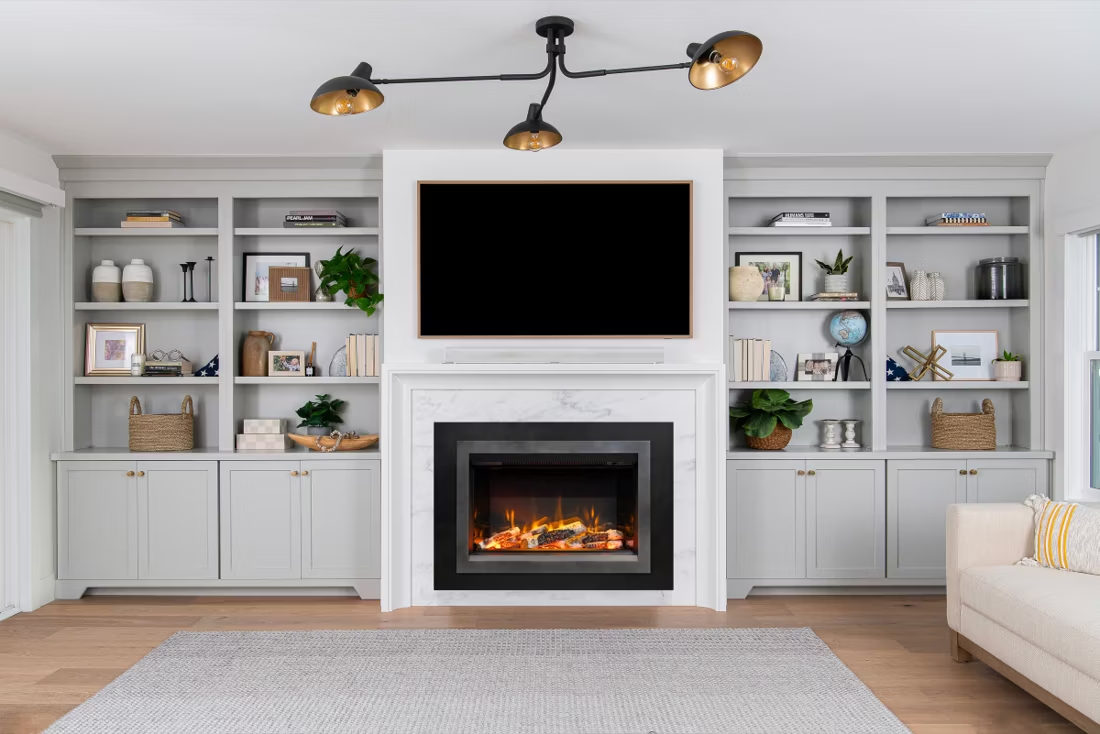
Yes—with an asterisk. Fireplaces are hot and TVs don't like heat. Either put a mantel between them to deflect rising warmth, or choose a fireplace with heat-management technology that creates a cool zone on the wall above—the wall stays around 125 degrees, barely warm, while the room still gets full heat. If you like clean lines and don't want a mantel, heat management is the answer.
Does an electric fireplace need a vent or chimney?
No—that's its superpower. An electric fireplace needs a wall and an outlet, period. No vent pipe, no gas line, no clearances to design around, which is why it works in bedrooms, offices, apartments, and walls where venting a gas or wood unit would be impractical or impossible. Installation is typically the simplest and least expensive of any fireplace type.
How much should I budget for a fireplace?
For an average home—covering the fireplace, the vent pipe, and basic installation—a budget between $3,900 and $5,500 gives you a lot of options across wood, gas, and pellet. By the time you add finish work, gas line, and electrical, the average complete installation lands between $5,000 and $12,000 all-in. In a remodel or new build, a good rule is to put about 2.5% of the total project cost toward the fireplace.
Does a fireplace add value to my home?
On average, a fireplace adds back to the home about the same amount you spent installing it. Add the monthly savings from heating the rooms you actually use instead of the whole house—often hundreds of dollars a year—and the value case is strong before you even count what a fire does for how your family uses the room.
Stove and Fireplace Dealers in Burleigh County
Listings include WhyFire partner dealers, dealers we have verified as authorized for the brands we recommend, and established local businesses that carry hearth products. Every listing shows which one it is. The ones marked Preferred run on WhyFire's software, so they can show you real pricing and book your appointment right here. No manufacturer pays for placement. How we verify dealers →
Keller Hearth 'n Home Products
Coldspring Bismarck Selection Center
Find your electric fireplace in Burleigh County.
Tell us about your space and we'll put together a free Project Guide & Parts List—the right electric unit, the exact parts you'll need, and a trusted local Burleigh County dealer to install it.
Find Your Fireplace →