
Electric warmth that plugs in and works, right here in Bismarck.
No chimney, no gas line, no firewood—just ambiance and zone heat for a Burleigh County winter. Find the right unit and connect with a trusted local dealer.
Every Project Starts From One of These Five Situations
Electric heat where running gas or wood isn't practical.
Bismarck sits on the open prairie at 1,745 feet, with a winter heating load in the same league as Fargo, ND or Duluth, MN, and average winter lows around 4°F. That kind of cold is handled here by forced-air furnaces, most of them running on natural gas, not by any single supplemental appliance. Wood-burning setups are genuinely uncommon in Bismarck; there's little local firewood infrastructure or nearby public timberland for cutting permits, and a lot of the city's newer housing stock—condos, townhomes, basement finishes—was never built with a masonry chimney at all.
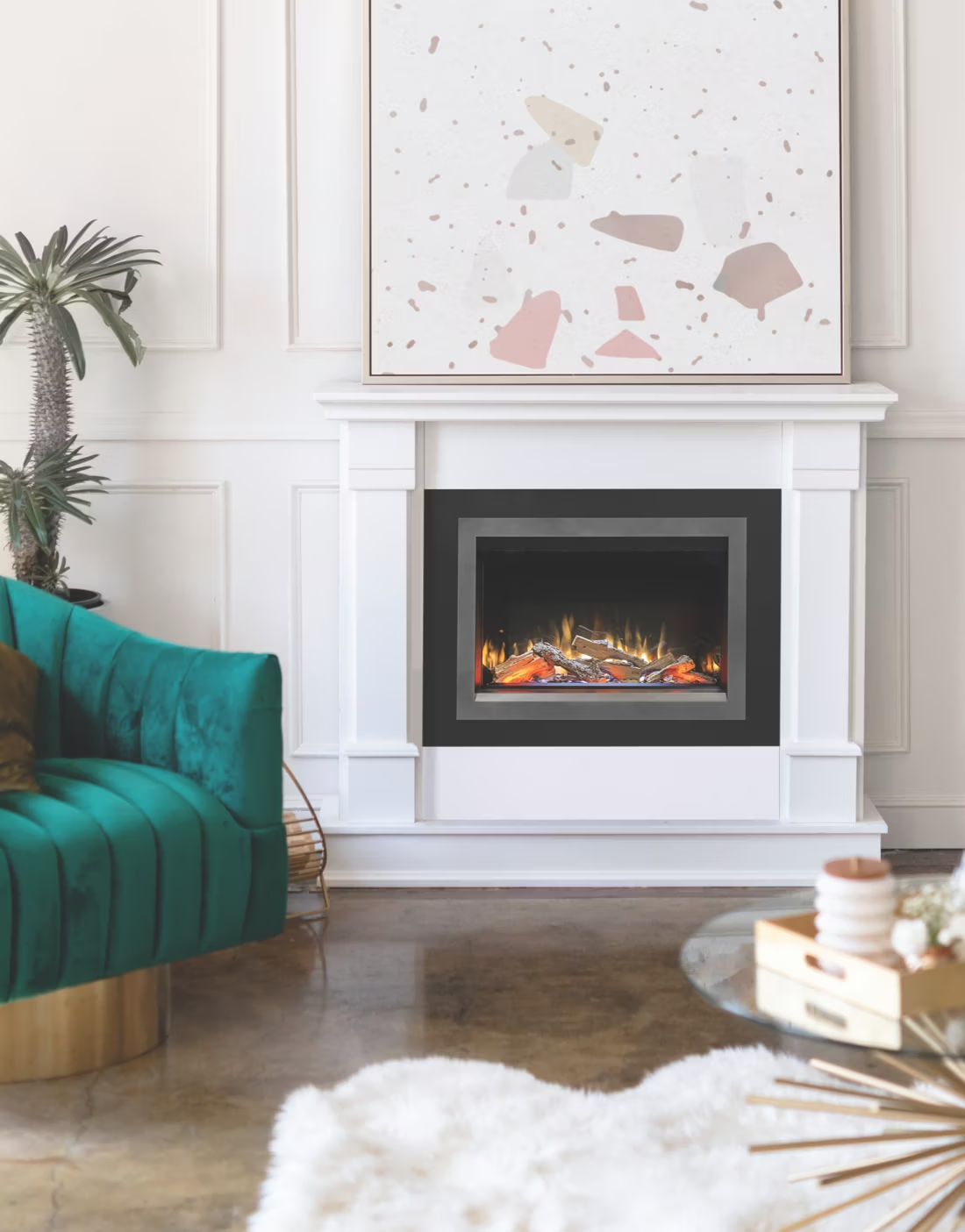
That's the gap electric fireplaces fill. They install into a finished basement, a bedroom, an apartment, or a home addition where a gas line or a chimney chase simply isn't in the cards, and they run on power supplied locally by Montana-Dakota Utilities, Otter Tail Power, or Capital Electric Cooperative depending on which part of Burleigh County you're in. With residential rates running roughly 11.4 to 12.3 cents per kWh, a well-chosen unit adds real zone heat and the look of a fire for pennies an hour of supplemental use—without touching your furnace or your gas bill.
Three steps. No salesperson until you're ready.
Tell us about your project
Your zip code, your situation, and the fuel you're leaning toward—or let the answers point you to one.
See what's actually available
The brands dealers within 100 miles genuinely carry—real options, never a catalog mirage.
Get your dealer & Project Guide
A trusted local dealer, plus the free Project Guide & Parts List that names every component of the job.
Frequently Asked Questions
How much does an electric fireplace installation cost in Bismarck?
Plug-in electric inserts and freestanding stoves start around $300–$800 installed, since they run off a standard household outlet and need no permit or electrician. Built-in linear units and mantel-style fireplaces that require a dedicated 20-amp circuit typically run $1,200–$3,500 once you factor in an electrician to run the new circuit and any carpentry to frame the surround. Whole-wall or multi-sided units at the high end can push past $4,000 with custom cabinetry. Local dealers will quote a firm number after seeing your wall, your electrical panel, and your framing.
Will an electric fireplace actually heat my Bismarck home?
It will heat a room, not your house. Most units are rated for supplemental zone heat covering 400–1,000 square feet, which is meaningful in a bedroom, den, or finished basement but nowhere near enough to offset Bismarck's long, deeply cold winters on its own. Your furnace—gas in most Bismarck homes—remains the primary heat source. Think of the electric fireplace as a way to warm the room you're actually sitting in without running the whole-house system harder, plus the ambiance of visible flame effects on a January evening.
Do I need a permit to install an electric fireplace in Bismarck?
If the unit is a plug-in model, no permit is required—it's treated like any other appliance. If your unit needs a dedicated circuit or new wiring, a licensed electrician will typically pull an electrical permit through the City of Bismarck Building Inspections Division (or Burleigh County for homes outside city limits) as part of the job. Because there's no gas line, no venting, and no combustion to inspect, electric installs are the simplest permitting path of any hearth fuel in this market.
How much does it cost to run an electric fireplace in Bismarck?
Most units draw around 1,500 watts on the heater setting, which at Montana-Dakota Utilities or Otter Tail Power rates (roughly 11.4–12.3 cents per kWh) costs about 17–19 cents per hour to run on high heat. Running the flame effect alone, with the heater off—common for ambiance during shoulder-season months—draws only 30–100 watts, a fraction of a cent per hour. Capital Electric Cooperative members see similar numbers. It's inexpensive enough that most owners run these units far more than they'd run an equivalent space heater without thinking twice about the bill.
Electric vs. gas fireplace—which fits a Bismarck home better?
Gas fireplaces, common throughout Bismarck wherever natural gas service reaches, put out real furnace-supplementing heat (20,000–40,000 BTU) and can run during a power outage if paired with a battery-backup ignition system—a genuine advantage in a prairie blizzard. Electric fireplaces can't run without power and top out around 5,000 BTU of actual heat, but they install almost anywhere, need no gas line or venting, and cost a fraction to install. For a basement rec room, a bedroom, or a rental unit, electric usually wins on simplicity. For a main living area where you want the fireplace to meaningfully offset the furnace, gas is the stronger choice.
Why don't more Bismarck homes have wood-burning fireplaces instead?
Wood heat is genuinely uncommon here. Bismarck doesn't sit near national forest land with cutting permits the way mountain or Pacific Northwest cities do, so firewood—when people do burn oak, cottonwood, or ash—is bought by the cord from local sellers rather than self-cut. Combined with a lot of newer construction that skips masonry chimneys entirely, wood-burning units are the exception rather than the rule. Electric fireplaces cover the same want—the look and feel of a fire—without needing a chimney, firewood storage, or ash cleanup.
Where do electric fireplaces make the most sense in a Bismarck home?
The best fits are spaces where a gas line or chimney isn't realistic: finished basements, condos and apartments (many landlords won't allow venting modifications), primary bedrooms, home offices, and additions built after the original furnace was sized. They're also popular in Bismarck's newer subdivisions where builders increasingly skip fireplace rough-ins altogether, leaving electric as the only retrofit option that doesn't involve tearing into a wall for gas or vent piping.
Will my electric fireplace work if the power goes out?
No—electric fireplaces need power to run both the heater and the flame effect, so they go dark in an outage just like the rest of your house. Given how prairie wind and ice storms can knock out power in Burleigh County for hours at a stretch, an electric unit shouldn't be your only backup heat plan. If outage resilience matters to you, pair it with a battery-backup gas unit elsewhere in the home, or at minimum keep a separate emergency heat source on hand.
What style of electric fireplace should I get for my Bismarck home?
Inserts fit into an existing opening or a wall recess and work well for basement remodels. Wall-mount and linear units create a modern focal point in a bedroom or living room without any framing beyond mounting hardware. Freestanding electric stoves mimic a wood stove's look and are a good fit for renters or anyone who wants zero installation. Sizing and placement—including where your electrician can reasonably get a circuit—is exactly the kind of question a local dealer will walk through with you before you buy anything.
Do electric fireplaces actually produce heat?
Yes—most put out around 4,800–5,000 BTUs from a standard outlet, which comfortably warms a bedroom, office, or den as a comfort-zone heater. What they won't do is carry a whole house the way wood, gas, or pellet can. Think of electric as ambiance-first with honest supplemental heat: flames on with no heat in July, flames plus warmth in January.
Can I put a TV above my fireplace?
Yes—with an asterisk. Fireplaces are hot and TVs don't like heat. Either put a mantel between them to deflect rising warmth, or choose a fireplace with heat-management technology that creates a cool zone on the wall above—the wall stays around 125 degrees, barely warm, while the room still gets full heat. If you like clean lines and don't want a mantel, heat management is the answer.
Can a fireplace actually lower my heating bill?
Yes—by creating a comfort zone. A furnace heats every square foot of the house just to warm the one room you're in; a gas fireplace on low burns roughly a sixth of the gas a typical furnace does. Set the furnace around 55–60 degrees as a baseline, then heat the rooms your family actually uses. Families who heat this way commonly save $20–$60 a month.
What is an in-home preview and do I need one?
It's a visit where a hearth professional measures your space, confirms the model you picked actually works in your home, and walks the specs—framing, gas line, venting, finish work—before anything is ordered. Some details you just can't know until you see the house. Never make a down payment without one; it's the single most-skipped step that burns buyers.
Nearby Dealers
Hearth shops serving Bismarck and the surrounding area. Every listing shows whether it is a WhyFire partner, a dealer we have verified as authorized for the brands we recommend, or a local business carrying hearth products. No manufacturer pays for placement. How we verify dealers →
Keller Hearth 'n Home Products
Coldspring Bismarck Selection Center
Electric Service in Bismarck
An electric fireplace's heater draws about 1,500 watts—pennies per hour at local rates.
Montana-Dakota Utilities Co
Otter Tail Power Co
Capital Electric Coop, Inc
Find your electric fireplace in Bismarck.
Tell us a bit about your home and we'll match you with a trusted local dealer and send over a free Project Guide & Parts List—the exact unit, circuit requirements, and installation plan for your Bismarck home.
Find Your Fireplace →