
Steady heat for Benson County's toughest winters.
From Minnewaukan to Maddock, Leeds, and the Spirit Lake Nation communities near Devils Lake, Benson County winters demand heat you can set and trust. Find the right pellet stove or insert, and connect with a trusted local dealer who can actually install it.
Every Project Starts From One of These Five Situations
Consistent warmth without the woodpile.
Benson County sits in north-central North Dakota, wrapping the western shore of Devils Lake and reaching out to farm towns like Maddock, Leeds, York, and Esmond, plus the Spirit Lake Nation communities around Fort Totten. It's Zone 7 country—among the coldest, windiest climate designations in the Lower 48, where prairie wind chill can turn a cold snap dangerous fast and sustained stretches well below zero are a normal part of the season, not an anomaly.
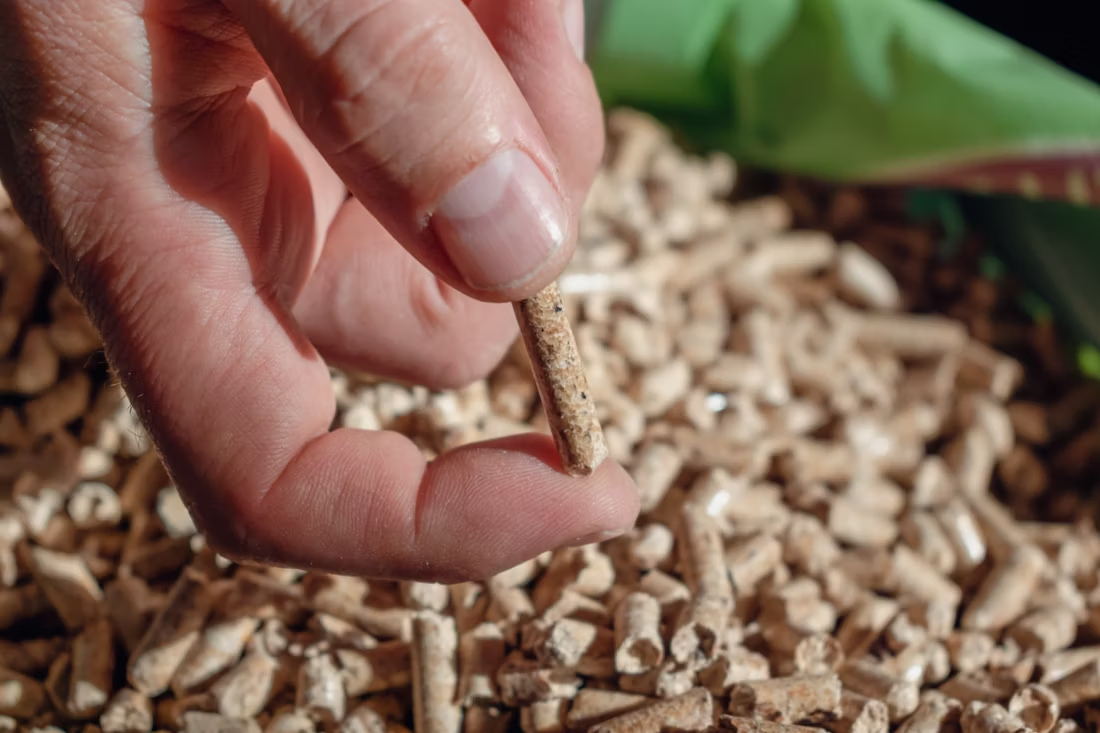
That's exactly the environment where a pellet stove earns its keep. Load the hopper, set the thermostat, and let it run—none of the splitting, stacking, or overnight tending that cordwood from the county's oak, cottonwood, and ash stands requires. With no air quality restrictions on burning in Benson County, pellet appliances run unrestricted, and regional supply through brands like Lignetics and Indeck Energy Services keeps fuel reliably available even when winter roads make extra trips to town harder. Many rural Benson County homes run a pellet stove as zone heat in the main living space, backing up a propane or oil furnace elsewhere in the house.
Three steps. No salesperson until you're ready.
Tell us about your project
Your zip code, your situation, and the fuel you're leaning toward—or let the answers point you to one.
See what's actually available
The brands dealers within 100 miles genuinely carry—real options, never a catalog mirage.
Get your dealer & Project Guide
A trusted local dealer, plus the free Project Guide & Parts List that names every component of the job.
Frequently Asked Questions
How much does a pellet stove installation cost in Benson County?
A freestanding pellet stove with venting typically runs in the $3,000 to $6,000 range installed, while a pellet insert going into an existing masonry fireplace usually falls between $2,500 and $5,000, depending on the unit and hearth pad requirements. Because Benson County is sparsely populated—dealers are more likely based in Devils Lake or another regional hub than in Minnewaukan or Maddock directly—expect a modest travel charge added to installs for farms and homes well outside town. A local dealer will give you a firm number after seeing your home and venting path.
What size pellet stove do I need for a Benson County home?
Zone 7 winters push harder on heating equipment than almost anywhere else in the country, so sizing needs to account for sustained sub-zero stretches, not just average lows. A stove rated for 1,000 to 1,500 square feet works for a single zone or a well-insulated smaller home; larger or older farmhouses around Minnewaukan and York often need a unit in the 1,500 to 2,000+ square foot range plus a bigger hopper to reduce how often it needs refilling during multi-day cold snaps. A local dealer can size your specific home and venting run for free.
Where can I find pellet stove installers near me in Benson County?
Look for NFI-certified installers—the credential that indicates formal training on venting, clearances, and appliance-specific installation. Given Benson County's small population, the nearest certified dealer may be based in Devils Lake rather than in Minnewaukan, Maddock, or Leeds itself, so plan for some travel time to be built into your quote. Avoid a general handyman install on a pellet appliance—improper venting or hopper wiring is the most common cause of service calls down the road, and a certified dealer will also handle warranty registration correctly.
What's the difference between a pellet stove and a pellet insert?
A pellet stove is a freestanding unit that sits on a hearth pad and vents through an exterior wall or existing chimney—it can go in almost any room with the right clearances. A pellet insert is built to slide into an existing masonry fireplace opening, turning a rarely-used wood fireplace into an efficient, thermostat-controlled heat source using the chimney you already have. For Benson County homes with an existing fireplace, an insert is usually the simpler retrofit; homes without one are better suited to a freestanding stove.
Do I need a permit to install a pellet stove in Benson County?
It depends on where you are in the county. Many rural North Dakota counties, including much of unincorporated Benson County, don't require a building permit for a stove installation outside city limits, while incorporated towns like Minnewaukan, Maddock, and Leeds may have their own permitting through the town office. Your dealer will know the requirement for your specific address, and most handle any needed paperwork as part of the install so you don't have to chase it down yourself.
What's the best pellet stove for Benson County's climate?
Look for a stove with a larger hopper capacity so it can run through a full overnight cold snap without needing a refill, since Zone 7 lows can stretch on for days at a time. Because pellet stoves rely on electricity to run the auger, igniter, and blower, a battery backup or standalone generator is worth budgeting for—rural Benson County sees its share of blizzard-related power outages, and a pellet stove without backup power goes cold along with everything else. Regional supply through Lignetics and Indeck Energy Services means fuel is generally easy to source even in a hard winter; ask your local dealer which brand's pellets run cleanest in the model you're considering.
How often does a pellet stove need cleaning and service?
Ash pans should be emptied every few days to weekly during heavy winter use, and the burn pot scraped clean roughly weekly to keep combustion efficient. Beyond that, plan on one full professional inspection and cleaning per year—typically late summer or early fall before the county's long heating season starts—covering the exhaust venting, auger, and blower motor. Skipping the annual service is the most common reason pellet stoves lose efficiency or start error-coding mid-winter, which is the worst time to be without heat in Benson County.
Where can I buy pellet fuel in Benson County?
Lignetics and Indeck Energy Services both supply the regional pellet market and are commonly stocked or orderable through farm supply and hardware stores serving Benson County towns. Pellets typically run in the neighborhood of $250 to $300 per ton depending on brand and how far it has to travel to reach you—buying a season's supply early, before winter demand and road conditions complicate deliveries, is common practice among rural Benson County households.
Pellet stove vs. wood stove—which is right for my home?
Wood stoves run without electricity, which matters in Benson County when a blizzard knocks out power for days—and local oak, cottonwood, and ash along the Devils Lake basin make for reasonably accessible firewood if you're set up to cut and split it. Pellet stoves trade that off for convenience: load the hopper, set the thermostat, and get consistent heat without splitting or stacking, but they go dark in a power outage unless you've got battery or generator backup. Many Benson County homeowners land on wood for backup or supplemental heat and pellet for the primary living space where day-to-day convenience matters more. A local dealer can walk through both options for your specific home.
Why is my open fireplace making my house colder?
Open fireplaces suck—literally. As the fire burns, it consumes air your furnace already paid to heat and pulls it out through the chimney, so the house is actually colder after the fire goes out than before you lit it. An insert fixes this: it seals the chimney, puts fixed glass across the front, and turns that hole in your house into a real heat source.
Why is a fireplace insert so efficient?
An insert does two things: it seals the chimney completely, so you stop losing air you already paid to heat, and it radiates warmth into the room through the firebox and glass. Most add a heat-exchange fan that pulls cool room air underneath, wraps it around the hot firebox, and pushes it back out warm. Your home is more efficient before you've even lit the first fire.
How much should I budget for a fireplace?
For an average home—covering the fireplace, the vent pipe, and basic installation—a budget between $3,900 and $5,500 gives you a lot of options across wood, gas, and pellet. By the time you add finish work, gas line, and electrical, the average complete installation lands between $5,000 and $12,000 all-in. In a remodel or new build, a good rule is to put about 2.5% of the total project cost toward the fireplace.
Can I install a fireplace myself?
If you're putting a fire in your house on purpose, it's best to work with an expert. Unless you're genuinely experienced in framing, gas line, vent pipe, and the national code on clearances to combustibles, have a professional do it—and ideally the same company that sells you the fireplace, so warranty, service, and liability all live under one roof.
Pellet Brands Stocked Around Benson County
Manufacturers will point you to the nearest stocking dealer.
Find your pellet stove in Benson County.
Tell us about your home and we'll match you with a trusted local dealer and send over your free Project Guide & Parts List—sized for your space, with the exact parts including the vent kit, ready for a Benson County winter.
Find Your Fireplace →