
A Backup Heat Option for Wilson's Occasional Ice Storms.
Pellet stoves aren't mainstream in Wilson's mild Coastal Plain climate, but for backup warmth or a real-flame accent, we'll connect you with a dealer who actually knows the category.
Every Project Starts From One of These Five Situations
A niche fit for a mild climate.
Wilson sits at just 108 feet elevation in North Carolina's eastern Coastal Plain, where winters are short and mild. The average winter low is 33°F and the area logs about 3,062 heating degree days a year—a fraction of what cold-climate cities like Duluth, MN or Burlington, VT rack up each winter. Most Wilson homes rely on heat pumps and central HVAC through Duke Energy Progress or City of Wilson electric service, and that mild demand curve is exactly why pellet stoves haven't taken hold here the way they have in the upper Midwest or interior West.
That doesn't mean pellet stoves are absent from Wilson entirely. A small number of homeowners install one as backup warmth for the ice storms that periodically move through eastern North Carolina and knock out power for a day or two, or simply for the look of a real flame without the bark, splinters, and stacking that come with cordwood. Regional pellet producers including Lignetics, Hamer Pellet Fuel, and Greenway Renewable Energy supply the Carolinas, so fuel sourcing isn't a problem if you go this route—the harder part is finding a local dealer who stocks and services pellet appliances regularly rather than treating them as an afterthought next to gas logs and wood inserts.
Three steps. No salesperson until you're ready.
Tell us about your project
Your zip code, your situation, and the fuel you're leaning toward—or let the answers point you to one.
See what's actually available
The brands dealers within 100 miles genuinely carry—real options, never a catalog mirage.
Get your dealer & Project Guide
A trusted local dealer, plus the free Project Guide & Parts List that names every component of the job.
Frequently Asked Questions
How much does a pellet stove installation cost in Wilson?
Because pellet appliances are a niche category in this part of North Carolina, there isn't a deep well of local pricing data the way there is for gas fireplace conversions. Nationally, a freestanding pellet stove installation—unit, wall-thimble venting, and the electrical circuit the auger and blower need—typically runs $3,000 to $6,000. Given Wilson's mild climate and lower demand, most installs here land toward the lower half of that range since homeowners are usually adding supplemental or backup heat rather than a whole-home system. Expect to special-order the unit through your dealer rather than buy off a showroom floor.
Why aren't pellet stoves more common in Wilson?
It comes down to climate math. With only about 3,062 heating degree days a year and winter lows averaging 33°F, Wilson simply doesn't have the sustained cold that makes a dedicated solid-fuel heating appliance pay for itself. Heat pumps served by Duke Energy Progress and City of Wilson electric utilities handle the job efficiently for most of the heating season, and residential electric rates here (around 15.5¢/kWh) keep that option cost-competitive. Pellet stoves are far more common in places with long, hard winters where a 40-pound bag of pellets genuinely offsets a big chunk of the heating bill.
Will a pellet stove keep my house warm if the power goes out?
This is the most important thing to understand before buying one for backup heat: pellet stoves need electricity to run the auger that feeds fuel and the blower that distributes heat. Unlike a wood stove, they will not operate during a power outage unless you pair the unit with a battery backup system or a generator. If your main reason for considering a pellet stove is resilience during the ice storms that occasionally hit eastern North Carolina, ask your local dealer about battery backup options—or consider whether a gas unit with a standing pilot might better serve that specific need.
Where can I buy pellet fuel in Wilson?
Pellet fuel isn't stocked on every corner in Wilson the way it is in colder regions, but regional producers including Lignetics, Hamer Pellet Fuel, and Greenway Renewable Energy supply the Carolinas and can typically be sourced through farm supply retailers or ordered through your hearth dealer. Because turnover is slower here than in high-demand markets, it's worth buying a season's supply—usually 1 to 3 tons for occasional or backup use—rather than assuming you can restock mid-winter on short notice.
What's the difference between a pellet stove and a wood stove?
A wood stove burns cordwood, requires no electricity, and can run through a power outage—but it needs a chimney, regular wood handling, and produces creosote that requires annual sweeping. A pellet stove burns compressed wood pellets fed automatically from a hopper, vents through a simple wall thimble instead of a full chimney, and produces far less ash, but it depends entirely on electricity to operate. Given Wilson's mild climate—where oak, hickory, maple, and pine are the common local firewood species but neither wood nor pellet heat sees much year-round demand—most homeowners here choose based on convenience and intended use (ambiance and occasional supplemental heat) rather than raw heating output.
What's the difference between a pellet stove and a pellet insert?
A pellet stove is a freestanding appliance that vents through an exterior wall and can be placed almost anywhere with the right clearances—the more common choice for Wilson homes since so few already have a masonry fireplace built for solid-fuel venting. A pellet insert is designed to slide into an existing fireplace opening, using the chimney as a chase for the vent pipe. If you already have a wood-burning fireplace you rarely use, an insert reuses that opening; if you're starting from scratch, a freestanding stove is usually simpler and cheaper to install.
Do I need a permit to install a pellet stove in Wilson?
Most likely, yes. New solid-fuel and pellet-burning appliances typically require a building permit and inspection to confirm proper venting and clearances, whether your home falls under the City of Wilson's building inspections jurisdiction or Wilson County's if you're outside city limits. A qualified installer familiar with pellet appliances—not just gas or wood—should pull the permit as part of the job and make sure the wall-thimble venting meets current code, since pellet venting specs differ from standard wood-stove chimney requirements.
How much maintenance does a pellet stove need?
Pellet stoves need more routine attention than gas units but less than wood stoves. Plan on emptying the ash pan every few days during regular use, cleaning the burn pot weekly to keep the fire feeding properly, and vacuuming the hopper and exhaust passages a few times per season. An annual professional cleaning and inspection—checking the auger motor, blower, and venting—is worth scheduling before each heating season, especially in Wilson where a dealer who services pellet units regularly may be harder to find than one who mainly handles gas logs.
Pellet vs. gas—which makes more sense for a Wilson home?
For most Wilson homeowners, gas is the more practical choice. Gas fireplaces and inserts are widely installed and serviced locally, run on standard natural gas or propane, and many models with battery-backup ignition keep working through a power outage—a real advantage during eastern North Carolina's occasional ice storms. Pellet stoves make sense in narrower cases: homeowners who specifically want the look and smell of a real wood-pellet flame, don't mind sourcing bagged fuel, and are comfortable pairing the unit with a battery backup if outage resilience matters. If your priority is simple, dependable heat with minimal upkeep, gas is the better-supported option in this market.
Why is my open fireplace making my house colder?
Open fireplaces suck—literally. As the fire burns, it consumes air your furnace already paid to heat and pulls it out through the chimney, so the house is actually colder after the fire goes out than before you lit it. An insert fixes this: it seals the chimney, puts fixed glass across the front, and turns that hole in your house into a real heat source.
How often does a pellet stove need cleaning?
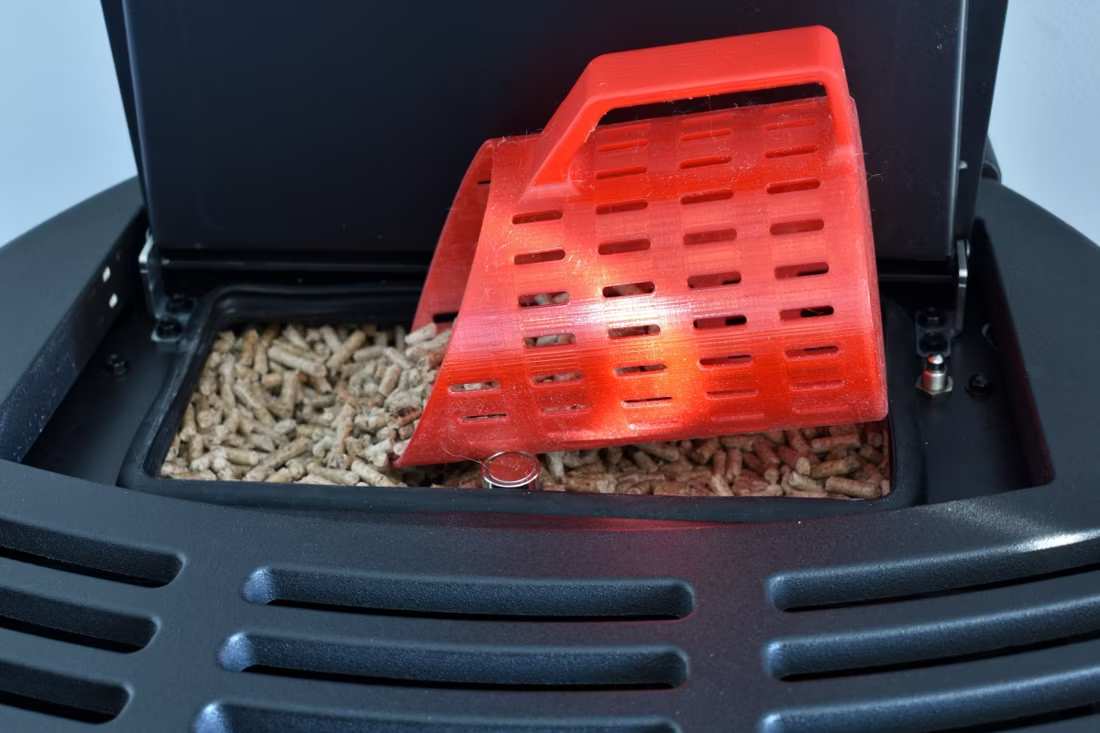
A clean pellet stove is a happy pellet stove. Plan on cleaning the burn pot about once a week when you're burning regularly—ash and clinkers gum up the air holes just like a pellet barbecue. Most pellet stove problems trace back to skipped cleaning that nobody explained up front. Some designs make it easy with a trapdoor burn pot: pull a lever and the gunk drops into the ash pan.
What is an in-home preview and do I need one?
It's a visit where a hearth professional measures your space, confirms the model you picked actually works in your home, and walks the specs—framing, gas line, venting, finish work—before anything is ordered. Some details you just can't know until you see the house. Never make a down payment without one; it's the single most-skipped step that burns buyers.
Should the dealer who sells my fireplace also install it?
Ideally, yes. A fireplace project involves vent pipe, gas line, electrical, and often tile or stone. Hire three or four separate trades and you own the liability and the game of telephone between them. One company selling and installing means one accountable party, start to finish—ask about factory training, on-time completion records, and what happens if an inspection fails.
Nearby Dealers
Hearth shops serving Wilson and the surrounding area.
Pellet Brands Stocked Around Wilson
Manufacturers will point you to the nearest stocking dealer.
Find your pellet stove in Wilson.
Tell us about your home and how you'd use it—backup heat, ambiance, or supplemental warmth—and we'll match you with a local dealer who genuinely stocks and services pellet appliances, plus a free Project Guide & Parts List with the exact venting kit and parts your installer will need.
Find Your Fireplace →