
Find your pellet stove in Warren County.
Consistent, hands-off heat for Warren County homes—from Warrenton to the Lake Gaston shoreline. We match you with a trusted local dealer who knows what actually vents and installs cleanly out here.
Every Project Starts From One of These Five Situations
Reliable, low-maintenance heat for lakeside and farm homes.
Warren County sits in North Carolina's Climate Zone 4A—a mixed-humid zone with a real, if not brutal, heating season. Winters here bring routine freezes and the occasional ice event off the Lake Gaston shoreline and the rural farmland around Norlina, Macon, and Littleton, but nothing close to the sustained sub-zero stretches you'd see in a place like Duluth or Fargo. That's exactly the kind of climate where a pellet stove earns its keep: enough cold to matter most of the winter, not so extreme that you need a 24-hour catalytic wood burn to survive the night.
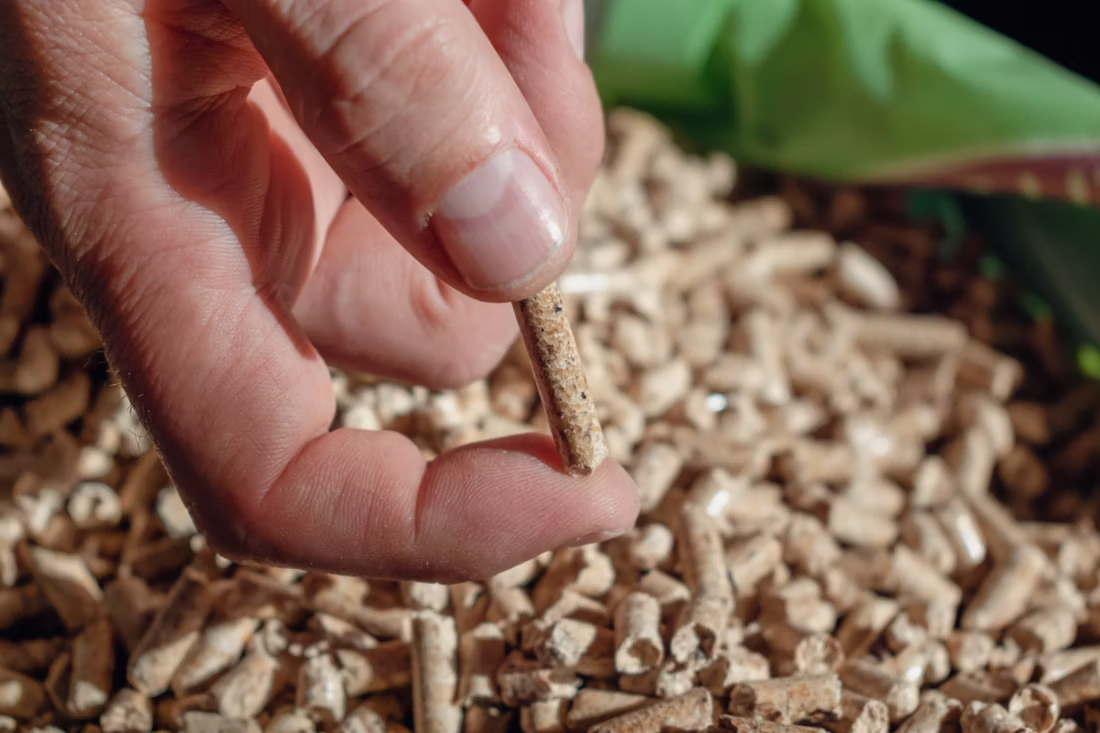
Warren County is sparsely populated and largely rural, which means fewer big-box options and more reliance on regional suppliers who actually know the area. Pellet brands like Lignetics, Hamer Pellet Fuel, and Greenway Renewable Energy circulate through this part of northeastern North Carolina, often using sawdust and waste from regional hardwood mills that process the same oak, hickory, and maple stands common to the county. With no air quality non-attainment issues on the books here, there's no seasonal burn curtailment to plan around—just a straightforward install and a hopper to keep filled.
Three steps. No salesperson until you're ready.
Tell us about your project
Your zip code, your situation, and the fuel you're leaning toward—or let the answers point you to one.
See what's actually available
The brands dealers within 100 miles genuinely carry—real options, never a catalog mirage.
Get your dealer & Project Guide
A trusted local dealer, plus the free Project Guide & Parts List that names every component of the job.
Frequently Asked Questions
How much does a pellet stove installation cost in Warren County?
Most pellet stove and insert installations in Warren County land in the $2,500 to $5,500 range, depending on whether you're installing a freestanding stove or converting an existing masonry fireplace with an insert, and whether new venting or an electrical outlet needs to be added near the unit. Because pellet stoves vent through a smaller, simpler pipe than wood stoves—often straight out a side wall rather than up a full masonry chimney—labor tends to run lower than a comparable wood installation. A local dealer can give you a firm number after seeing your fireplace or the wall/floor space you're working with, whether that's a lake house near Lake Gaston or an older farmhouse outside Warrenton.
What size pellet stove do I need for my Warren County home?
Sizing comes down to square footage, ceiling height, and how much of the load the stove needs to carry. For Warren County's Zone 4A winters, a smaller unit rated for 1,000 to 1,500 square feet handles a single living area or a lake cabin fine, while a 2,000+ square foot rating suits a larger farmhouse used as a primary heat source. Older homes around Warrenton and Norlina with less insulation and taller ceilings often need to size up a step compared to a newer, tighter build near the lake. A local dealer will walk your space and size it properly—oversizing wastes pellets and undersizing leaves you cold on the coldest nights of the season.
Where can I buy pellets in or near Warren County?
Pellet supply in a county as rural as Warren means planning ahead rather than grabbing a bag on the way home. Regional brands like Lignetics, Hamer Pellet Fuel, and Greenway Renewable Energy are common in this part of northeastern North Carolina and are typically sold by the ton or by the pallet (about 50 forty-pound bags) through farm supply stores, hardware stores, and hearth dealers serving the county. Buying a full ton or pallet ahead of the season—rather than a bag at a time—is standard practice here and usually saves money over single-bag pricing.
Will my pellet stove work during a power outage?
Not on its own. A pellet stove's auger, igniter, and combustion blower all run on standard household electricity, so a power outage stops the stove even with a full hopper—unlike a wood stove, which keeps burning with no power at all. For Warren County homes where outages can stretch during ice events near Lake Gaston or along rural feeder lines outside Warrenton, many owners pair a pellet stove with a small battery backup or portable generator sized for the stove's low wattage draw (most units use under 500 watts). If uninterrupted heat during outages is the priority, ask your local dealer about backup options, or consider a wood stove as a companion heat source.
Do I need a permit to install a pellet stove in Warren County?
Yes—a new pellet stove or insert installation typically requires a building permit through the county, since it involves new venting and, often, new electrical work for the outlet the stove plugs into. Most local dealers handle the permit application as part of the installation, so it's rarely something the homeowner has to manage directly. Because Warren County has no air quality non-attainment designation, there's no additional emissions review or curtailment period to navigate the way there is in some western states—the permit process here is mostly about venting and clearance code compliance.
Pellet stove vs. wood stove—which fits Warren County better?
Wood stoves burn cordwood, work with zero electricity, and are a natural fit given the oak, hickory, and pine common across Warren County's farmland and timber lots—useful if you want heat that keeps running through an outage. Pellet stoves trade that self-sufficiency for convenience: load the hopper, set a thermostat, get consistent heat with far less ash and no splitting or stacking. For homes near Lake Gaston used seasonally or homes where daily convenience matters more than backup independence, pellet is usually the better fit. For a primary rural residence where power reliability is a real concern, some owners keep a wood stove as backup even after installing a pellet unit for daily use.
Does a pellet stove need a chimney?
No—pellet stoves vent through a small-diameter pipe (typically 3 or 4 inches) that can run straight out an exterior wall or up through the roof, and they don't require a full masonry chimney the way a traditional wood fireplace does. This makes pellet stoves a practical option for Warren County homes without an existing chimney, including newer construction around Lake Gaston or additions to older farmhouses where building a full masonry flue isn't practical. If you do have an existing fireplace, a pellet insert can use that opening with a vent liner run to the outside.
How often does a pellet stove need to be cleaned and serviced?
Pellet stoves need more frequent light maintenance than wood stoves but far less heavy cleaning. The ash pan should be emptied every few days to weekly depending on use, the burn pot needs a quick scrape every week or two to keep the igniter working properly, and a full professional service—checking the auger motor, blower, and gaskets—is recommended once a year, usually before the season starts in early fall. For Warren County's moderate Zone 4A season, that annual service typically runs $100 to $200 through a local hearth dealer or service technician.
How much pellet storage space do I need for a Warren County winter?
A typical pellet stove used as a primary heat source through a full Warren County winter burns 2 to 3 tons of pellets, while supplemental use in a secondary space might only need half a ton to a ton. A ton of bagged pellets takes up roughly the space of a stacked cord of firewood cut in half—most owners store pallets in a garage, shed, or dry basement rather than outdoors, since pellets break down quickly if they get wet. Buying your full season's supply early from a regional supplier carrying Lignetics or Greenway Renewable Energy pellets avoids the risk of running short mid-winter when local stock can run thin in a low-population county like this one.
Why is a fireplace insert so efficient?
An insert does two things: it seals the chimney completely, so you stop losing air you already paid to heat, and it radiates warmth into the room through the firebox and glass. Most add a heat-exchange fan that pulls cool room air underneath, wraps it around the hot firebox, and pushes it back out warm. Your home is more efficient before you've even lit the first fire.
What's the difference between an insert and a zero-clearance fireplace?
An insert is a fireplace that slides into a pre-existing wood-burning fireplace—if you don't have one, there's nothing to insert it into. A zero-clearance fireplace is built into a framed wall, which makes it the answer for remodels and new construction. Simple test: existing masonry fireplace means insert; blank or framed wall means zero-clearance.
What is an in-home preview and do I need one?
It's a visit where a hearth professional measures your space, confirms the model you picked actually works in your home, and walks the specs—framing, gas line, venting, finish work—before anything is ordered. Some details you just can't know until you see the house. Never make a down payment without one; it's the single most-skipped step that burns buyers.
Should the dealer who sells my fireplace also install it?
Ideally, yes. A fireplace project involves vent pipe, gas line, electrical, and often tile or stone. Hire three or four separate trades and you own the liability and the game of telephone between them. One company selling and installing means one accountable party, start to finish—ask about factory training, on-time completion records, and what happens if an inspection fails.
Pellet Brands Stocked Around Warren County
Manufacturers will point you to the nearest stocking dealer.
Find your pellet stove in Warren County.
Tell us about your home and we'll match you with a trusted local dealer and send over your free Project Guide & Parts List—the exact parts, vent kit, and recommended installer for your Warren County pellet project.
Find Your Fireplace →