
Keep Your Family Warm and Safe—No Matter What
Oak and hickory heat that keeps a Summerfield home warm through ice storms and cold snaps. Find the right stove or insert, and connect with a trusted local dealer.
Every Project Starts From One of These Five Situations
Supplemental heat with Piedmont hardwood.
Summerfield sits in the rolling Piedmont of Guilford County at around 859 feet, where winter lows average a relatively mild 30°F and the region has a moderate winter heating season of about four to five months a year—nowhere near the extremes of a place like Burlington, VT, but cold enough that a good wood stove earns its keep for four or five months. Most homeowners here aren't burning wood out of survival; they're burning it because it's cheaper than running electric resistance heat on the coldest nights, and because Guilford County's ice storms have a habit of knocking out power for days at a time.
Oak, hickory, maple, and pine are all common locally—oak and hickory in particular are prized for their density and long, hot burn, and both are readily available from Piedmont tree services and land-clearing operations rather than public-land cutting permits, since there isn't national forest land nearby the way there is out west. Summerfield also has no air quality non-attainment issues or winter inversion problems, so there's no curtailment season to plan around. The area is served by both Duke Energy Progress and Duke Energy Carolinas, with residential rates running roughly $0.14 to $0.16 per kWh—a wood stove that can run without power is a real hedge against both the electric bill and the next ice storm outage.
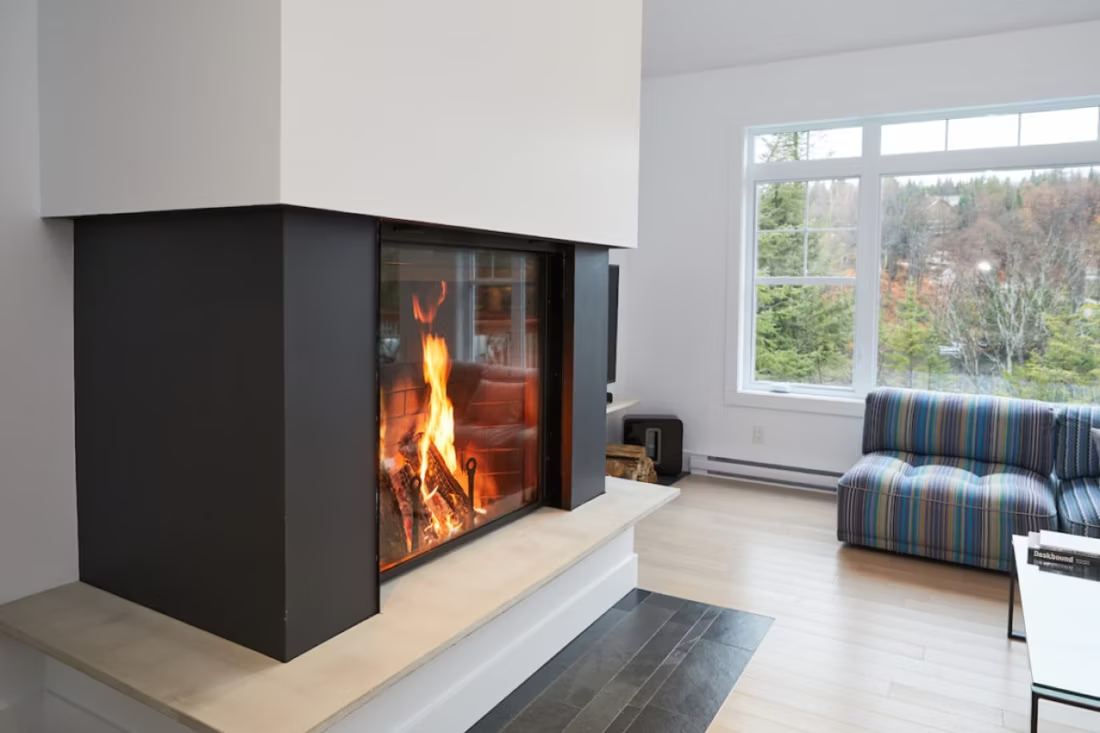
Three steps. No salesperson until you're ready.
Tell us about your project
Your zip code, your situation, and the fuel you're leaning toward—or let the answers point you to one.
See what's actually available
The brands dealers within 100 miles genuinely carry—real options, never a catalog mirage.
Get your dealer & Project Guide
A trusted local dealer, plus the free Project Guide & Parts List that names every component of the job.
Frequently Asked Questions
How much does a wood stove installation cost in Summerfield?
Most wood stove installations in the Guilford County area run $3,500 to $8,000, depending on the stove, whether you're venting through an existing masonry chimney or building new Class A pipe through a roof, and any hearth pad work needed for clearance-to-combustibles compliance. Installing into an existing fireplace chimney with a stainless liner tends to land on the lower end; new-construction installs with no existing chimney run higher once framing and roof penetration are factored in. A local hearth dealer will give you a firm number after seeing your home.
What size wood stove do I need for a Summerfield home?
Because Summerfield's winters are relatively mild—averaging 30°F lows and a moderate winter heating season—most homes here don't need the oversized, all-night-burn stoves you'd see in a colder climate like Bozeman or Fargo. A small to medium stove (rated for 1,000–1,800 square feet) is enough for most Piedmont homes, especially when the stove is supplementing central heat rather than replacing it. Homes using wood as primary heat, or larger farmhouses common in the area, may want a stove rated closer to 2,000 square feet. A local retailer can size it correctly based on your square footage and insulation during an in-home visit—sizing is the one thing worth getting a professional opinion on.
Where can I find certified wood stove installers near Summerfield?
Look for NFI (National Fireplace Institute) or CSIA (Chimney Safety Institute of America) certification—both indicate real training in wood-burning appliance clearances and venting, not just general contracting experience. Triad-area hearth retailers serving Guilford County typically employ certified installers and handle the sale and install together, which keeps warranty coverage and code compliance in one place. Skip general handyman installs for wood-burning units; improper chimney liner sizing or clearance mistakes are the most common cause of chimney fires in older Guilford County homes.
Wood stove or wood insert—which fits my home?
Many homes around Summerfield—especially older farmhouses and colonial-style homes common in Guilford County—already have a masonry fireplace, which makes a wood insert the more efficient choice. An insert uses your existing chimney (typically with a stainless liner) and turns a drafty, inefficient open fireplace into a real heat source. A freestanding wood stove makes more sense for newer homes without an existing fireplace, or for heating a detached space like a workshop or bonus room. Both options are worth pricing out with a local dealer before deciding.
Do I need a permit to install a wood stove in Summerfield?
Yes—new wood stove installations require a building permit, and in Summerfield that permit routes through Guilford County's code enforcement and inspections process rather than a separate town building department. The stove itself needs to meet current EPA emissions standards. Most local hearth dealers handle the permit application and inspection scheduling as part of the installation, so it's rarely something the homeowner has to manage directly. Unlike some Western states, there's no seasonal burn curtailment to worry about here—Summerfield has no listed air quality non-attainment issues.
What's the best wood stove for Summerfield's climate?
With average winter lows around 30°F, most Summerfield homes don't need an extreme long-burn catalytic stove built for sub-zero nights—a solid EPA-certified non-catalytic or hybrid stove from a brand like Jotul, Regency, or Vermont Castings will comfortably heat a Piedmont home. What matters more locally is reliability during outages: Guilford County sees periodic ice storms that can knock out power for several days, and a wood stove that doesn't depend on a blower or electric ignition keeps working when the grid doesn't. A local dealer can walk you through catalytic vs. non-catalytic tradeoffs based on how you plan to use the stove.
How often should my chimney be inspected in Summerfield?
The CSIA recommends an annual inspection for any wood-burning appliance, and that holds even for homes that only burn wood occasionally as supplemental heat. Oak and hickory—the two most common local species—burn hot and dense, but they can still build creosote, especially in stoves that are run at low, smoldering settings to stretch a load overnight. Plan on a fall sweep and inspection before burning season starts each year; a Level 1 inspection is usually all that's needed unless you're buying a home with an existing chimney of unknown history.
Where can I get firewood in the Summerfield area?
Since there's no national forest land nearby for cutting permits the way there is out west, most Summerfield firewood comes from local tree services, land-clearing operations, and seasoned firewood dealers across Guilford County. Oak and hickory are the most sought-after species for heat output and burn time, with maple and pine also common. Expect to pay roughly $200 to $300 per cord for seasoned hardwood, delivered and stacked; unseasoned or mixed loads run less. Buying a cord or two ahead of the season and letting it season through summer is the standard approach here rather than self-cutting on public land.
Wood stove or pellet stove—which makes more sense here?
Wood stoves work without electricity, which matters in Guilford County given how often winter ice storms take out power for days—you can keep burning oak or hickory from a local supplier regardless of the grid. Pellet stoves, using brands like Lignetics or the Fayetteville-area Hamer Pellet Fuel, are easier to load and run cleaner, but the auger and blower both need electricity, so they go dark in the same outages a wood stove shrugs off. For a Summerfield home where backup heat during storms is a real consideration, wood tends to be the more resilient choice; for a household that wants convenience and reliable electric service isn't a concern, pellet is worth a look. A local dealer carries both and can walk through the tradeoffs for your specific home.
Why won't my new wood stove get going like my old one?
New wood stoves are 70%+ efficient, so far less heat goes up the flue—which also means less draft to get a fire established. The rule: build a genuinely hot fire for about 45 minutes before you choke it down. Skip that and you get smoke in the room, creosote in the chimney, and a fire that never takes off. Most performance complaints trace straight back to this.
What's the difference between an insert and a zero-clearance fireplace?
An insert is a fireplace that slides into a pre-existing wood-burning fireplace—if you don't have one, there's nothing to insert it into. A zero-clearance fireplace is built into a framed wall, which makes it the answer for remodels and new construction. Simple test: existing masonry fireplace means insert; blank or framed wall means zero-clearance.
How much should I budget for a fireplace?
For an average home—covering the fireplace, the vent pipe, and basic installation—a budget between $3,900 and $5,500 gives you a lot of options across wood, gas, and pellet. By the time you add finish work, gas line, and electrical, the average complete installation lands between $5,000 and $12,000 all-in. In a remodel or new build, a good rule is to put about 2.5% of the total project cost toward the fireplace.
Can a fireplace actually lower my heating bill?
Yes—by creating a comfort zone. A furnace heats every square foot of the house just to warm the one room you're in; a gas fireplace on low burns roughly a sixth of the gas a typical furnace does. Set the furnace around 55–60 degrees as a baseline, then heat the rooms your family actually uses. Families who heat this way commonly save $20–$60 a month.
Nearby Dealers
Hearth shops serving Summerfield and the surrounding area. Every listing shows whether it is a WhyFire partner, a dealer we have verified as authorized for the brands we recommend, or a local business carrying hearth products. No manufacturer pays for placement. How we verify dealers →
Casual Furniture World
Blossman Gas And Appliance
Big Apple Farm Supply
Southern States Cooperative
Builder's Fireplace & Stone
Wayne's Landscaping
Ash Busters Chimney Service
Find your wood fireplace in Summerfield.
Tell us a bit about your home and we'll match you with a trusted local dealer and send over a free Project Guide & Parts List—the exact parts, including the vent kit, for your wood stove or insert project in Summerfield.
Find Your Fireplace →