
Find the right pellet stove for Scotland County.
Mild Sandhills winters mean Scotland County homeowners want efficient, low-maintenance heat without babysitting a woodpile. Get matched with a trusted local dealer who can size and install the right unit.
Every Project Starts From One of These Five Situations
Efficient heat for a mild-winter climate.
Scotland County sits in North Carolina's Sandhills region, climate zone 3A, with an average winter low around 33 degrees and roughly 2,651 heating degree days a year—a fraction of what a place like Bismarck ND or Burlington VT sees. That's not a climate that demands a wood-fired furnace running around the clock. It's a climate where a pellet stove can quietly handle supplemental or zone heating in a den, living room, or converted garage for a good chunk of the season without much fuss.
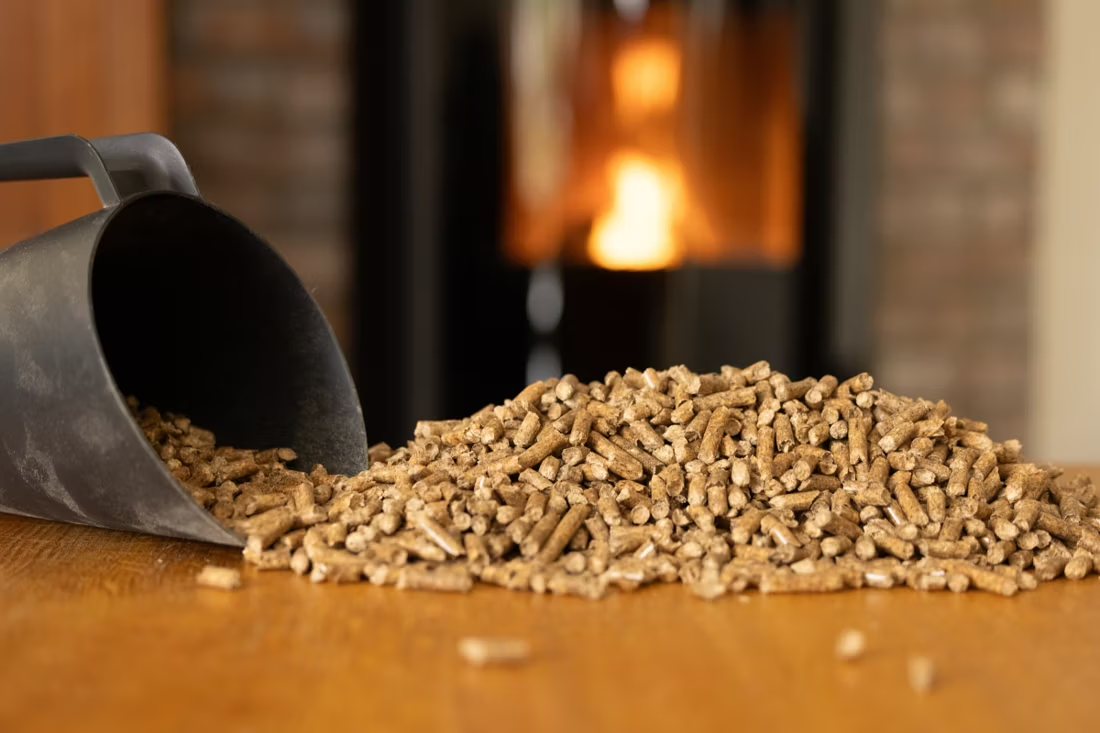
Local supply is solid: Lignetics, Hamer Pellet Fuel, and Greenway Renewable Energy all serve the region, and Scotland County's mix of oak, hickory, maple, and pine forest land means pellet feedstock and delivery options aren't hard to come by. With no air quality non-attainment issues in the county, there's also no curtailment-period red tape to navigate—pellet appliances here are simply a clean, thermostat-controlled way to take the edge off a Sandhills winter and cut the propane or electric bill along the way.
Three steps. No salesperson until you're ready.
Tell us about your project
Your zip code, your situation, and the fuel you're leaning toward—or let the answers point you to one.
See what's actually available
The brands dealers within 100 miles genuinely carry—real options, never a catalog mirage.
Get your dealer & Project Guide
A trusted local dealer, plus the free Project Guide & Parts List that names every component of the job.
Frequently Asked Questions
How much does a pellet stove installation cost in Scotland County?
Most pellet stove and insert installations in Scotland County run in the $2,500 to $6,000 range, depending on whether it's a freestanding stove venting through an exterior wall, or an insert going into an existing masonry fireplace. Because Scotland County's winters are relatively mild—averaging 33 degrees for a low and around 2,651 heating degree days—most homeowners here are installing for supplemental zone heat in a den or living room rather than whole-home primary heat, which keeps sizing (and cost) modest compared to colder-climate installs. A local dealer will confirm the number after seeing your venting path and hearth setup.
Is a pellet stove worth it in a mild climate like Scotland County?
Yes, for the right use case. With only about 2,651 heating degree days a year, Scotland County isn't a place where you need a stove running nonstop from October through April the way a home near Duluth MN would. But that's actually where pellet stoves shine as supplemental heat—set a thermostat, load the hopper every day or two, and take the load off your primary HVAC system during the cooler months (roughly November through February here) without committing to a full wood-burning setup. Many local homeowners run one in a den or bonus room and barely touch their heat pump on cold snaps.
What pellet brands are available near Scotland County?
Lignetics, Hamer Pellet Fuel, and Greenway Renewable Energy all distribute in the Scotland County area, giving local homeowners a reasonable range of hardwood and softwood blend options without relying on big-box shipments. Availability can shift seasonally, so it's worth confirming with your dealer which brand they stock consistently and whether they offer bulk-bag pricing for the season—buying 40-50 bags ahead of the mild Sandhills winter is common practice locally.
What's the difference between a pellet stove and a pellet insert?
A pellet stove is a freestanding appliance that vents through a wall or existing chimney and can go almost anywhere with proper clearances—a good fit for a den, garage conversion, or a home without an existing fireplace. A pellet insert is built to slide into an existing masonry fireplace opening, using that opening (with a proper liner) to vent, and it's the more common choice for Scotland County homes that already have a wood-burning fireplace they want to convert to something lower-maintenance. Either option needs electricity to run the auger and blower, which your local dealer will factor into placement near an outlet.
Do I need a permit to install a pellet stove in Scotland County?
Most jurisdictions require a building permit for a new pellet stove or insert installation, covering the venting and hearth clearance work, and Scotland County is no exception. The good news is that Scotland County has no air quality non-attainment designation and no winter inversion or wildfire smoke concerns, so there are no curtailment periods or burn-ban restrictions to worry about—unlike some Western counties where wood and even pellet appliances face seasonal burning limits. Most local dealers pull the permit as part of the installation, so it's rarely something the homeowner has to handle directly.
Will a pellet stove keep my house warm during a power outage?
Not without a backup power source. Pellet stoves rely on an electric auger to feed fuel and a blower to circulate heat, so they shut down when the power goes out—unlike a wood stove, which keeps burning regardless. For Scotland County homeowners who want heat during ice storms or hurricane-related outages (both realistic risks in this part of North Carolina), a small battery backup or generator sized for the stove's low wattage draw solves the problem, or pairing the pellet stove with a wood-burning option elsewhere in the home covers the gap.
How much pellet fuel will I need for a Scotland County winter?
For supplemental heat in a single room or zone, most Scotland County homeowners burn somewhere between 20 and 40 forty-pound bags over a typical heating season—noticeably less than a colder-climate home might use for primary heat, a reflection of the county's roughly 2,651 heating degree days and mild average low of 33 degrees. Homes using a pellet stove as more of a primary heat source in a well-insulated space might run higher, in the 60-100 bag range. Local suppliers carrying Lignetics, Hamer Pellet Fuel, or Greenway Renewable Energy can help estimate seasonal needs based on your square footage and how you plan to use the stove.
How often does a pellet stove need to be cleaned and serviced?
Plan on cleaning the ash pot and glass weekly during regular use, and a full professional service—burn pot, auger, exhaust fan, and venting—at least once a year, typically before the season starts in early fall. Pellet appliances produce far less creosote than wood stoves, so the maintenance burden is lighter, but the mechanical components (auger motor, igniter, blower) do need periodic attention to keep running reliably. A local dealer or service tech familiar with your specific brand and model is the best resource for keeping warranty coverage intact.
Pellet stove vs. wood stove—which makes more sense in Scotland County?
Wood stoves burn oak, hickory, maple, or pine—all common locally—offer the most heat output per load, and keep working through a power outage, which matters given the region's exposure to ice storms and hurricane remnants. Pellet stoves are more convenient day-to-day: load a hopper instead of splitting and stacking cordwood, set a thermostat, and get consistent, lower-maintenance heat, but they go dark without electricity. Given Scotland County's mild 2,651-HDD climate, many homeowners here lean pellet for the convenience of everyday supplemental heat and treat backup heat as a separate consideration.
What's the difference between an insert and a zero-clearance fireplace?
An insert is a fireplace that slides into a pre-existing wood-burning fireplace—if you don't have one, there's nothing to insert it into. A zero-clearance fireplace is built into a framed wall, which makes it the answer for remodels and new construction. Simple test: existing masonry fireplace means insert; blank or framed wall means zero-clearance.
Why is my open fireplace making my house colder?
Open fireplaces suck—literally. As the fire burns, it consumes air your furnace already paid to heat and pulls it out through the chimney, so the house is actually colder after the fire goes out than before you lit it. An insert fixes this: it seals the chimney, puts fixed glass across the front, and turns that hole in your house into a real heat source.
How much should I budget for a fireplace?
For an average home—covering the fireplace, the vent pipe, and basic installation—a budget between $3,900 and $5,500 gives you a lot of options across wood, gas, and pellet. By the time you add finish work, gas line, and electrical, the average complete installation lands between $5,000 and $12,000 all-in. In a remodel or new build, a good rule is to put about 2.5% of the total project cost toward the fireplace.
Should the dealer who sells my fireplace also install it?
Ideally, yes. A fireplace project involves vent pipe, gas line, electrical, and often tile or stone. Hire three or four separate trades and you own the liability and the game of telephone between them. One company selling and installing means one accountable party, start to finish—ask about factory training, on-time completion records, and what happens if an inspection fails.
Pellet Brands Stocked Around Scotland County
Manufacturers will point you to the nearest stocking dealer.
Find your pellet stove in Scotland County.
Tell us a bit about your home and we'll match you with a trusted local dealer and a free Project Guide & Parts List—sized for your space, with the vent kit and parts spelled out.
Find Your Fireplace →